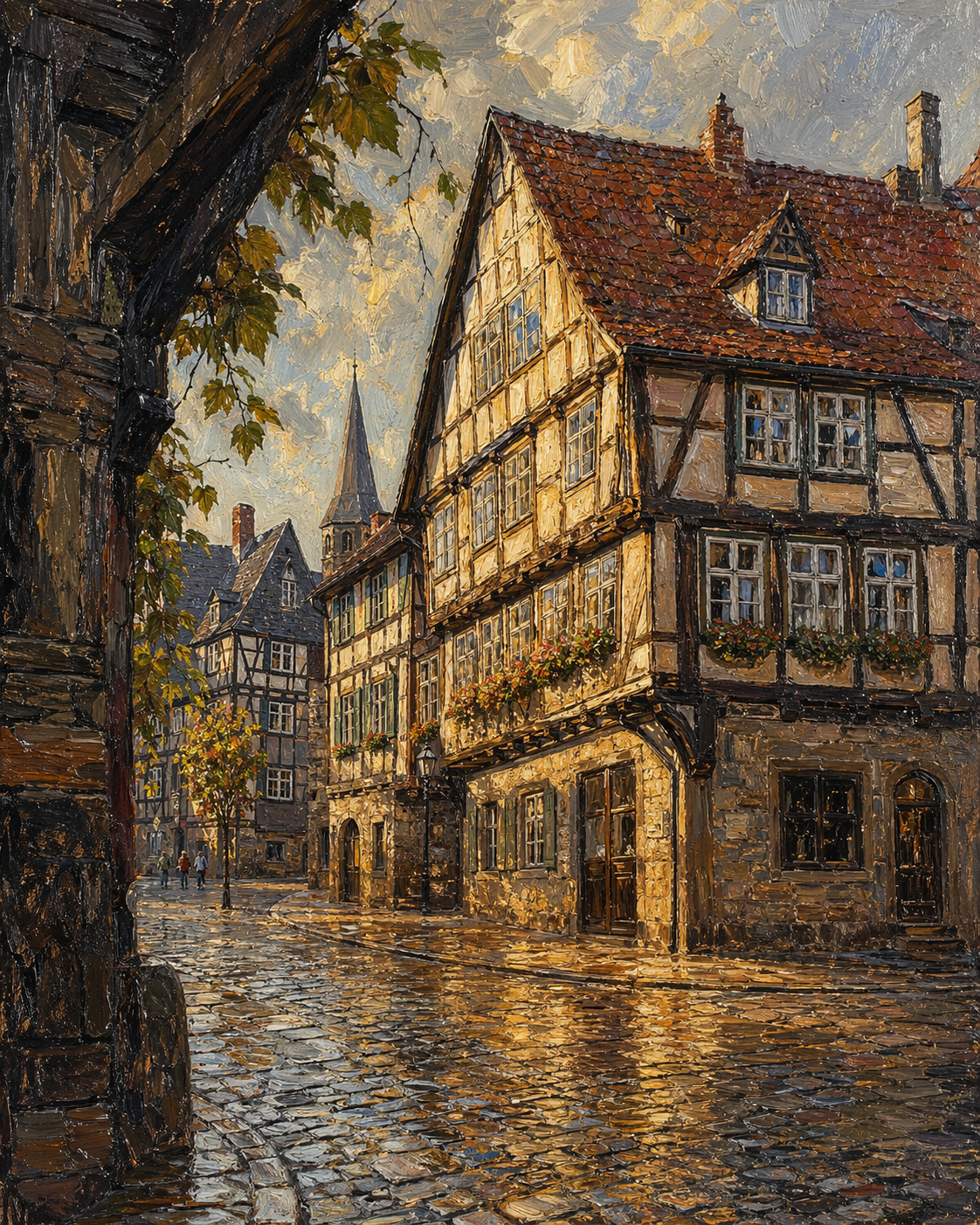
Golden Resonance on the Cobblestones
Critique
1. Introduction This oil painting presents a captivating view of a historic European square, characterized by meticulously detailed half-timbered architecture and a glistening cobblestone street. The composition centers on a prominent multi-story building that serves as a testament to regional craftsmanship and enduring urban history. Through an expressive use of light and shadow, the artist creates a scene that feels both timeless and vibrantly alive. 2. Description The main subject is a large, gabled house on the right, featuring intricate wooden framing and window boxes filled with vibrant flowers. To the left, a dark stone archway partially frames the view of a distant church spire and other historical dwellings. The ground is composed of uneven cobblestones that reflect the warm, golden light of the setting sun, creating a wet, mirror-like surface that anchors the architectural forms. 3. Analysis The artist utilizes a rhythmic distribution of vertical and horizontal lines through the timber framing to establish a strong structural foundation. Thick, impasto strokes are applied with precision to mimic the rough texture of stone, wood, and damp pavement, enhancing the physical presence of the environment. The color palette revolves around earthy browns, warm ochres, and cool grays, which are harmonized by the pervasive golden-hour illumination. 4. Interpretation and Evaluation This work excels at capturing the quiet majesty of a historical town while imbuing it with a sense of atmospheric intimacy. The technical proficiency displayed in the various textures—from the fragile blossoms in the window boxes to the solid masonry of the walls—demonstrates a high level of artistic control. The choice of perspective invites the viewer to step into the quiet, rain-washed street and contemplate the layered history of the city. 5. Conclusion Ultimately, the painting serves as a masterful exploration of light as a transformative force in landscape art. By blending rigorous architectural rendering with a free, tactile application of paint, the artist achieves a unique balance between realism and expressionism. This initial impression of a quaint architectural study deepens into a profound appreciation for the ephemeral beauty of light on enduring stone.
Same Subcategory
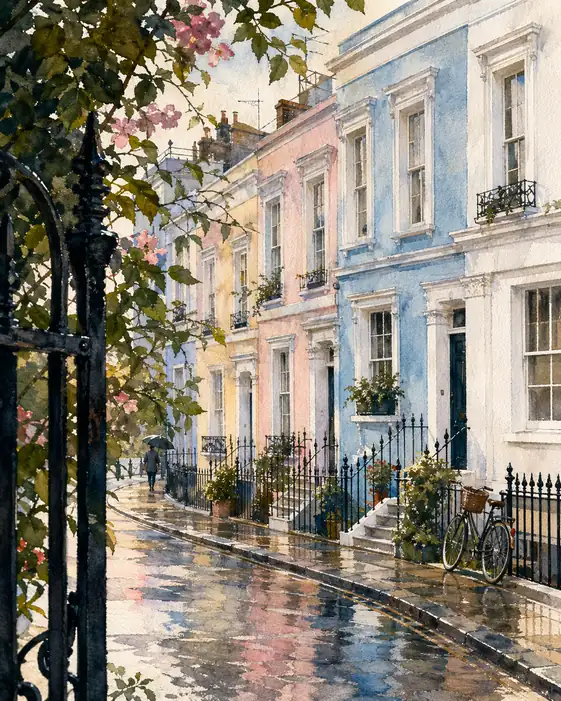 Rain-Washed Reflections of the City
Similar Artworks
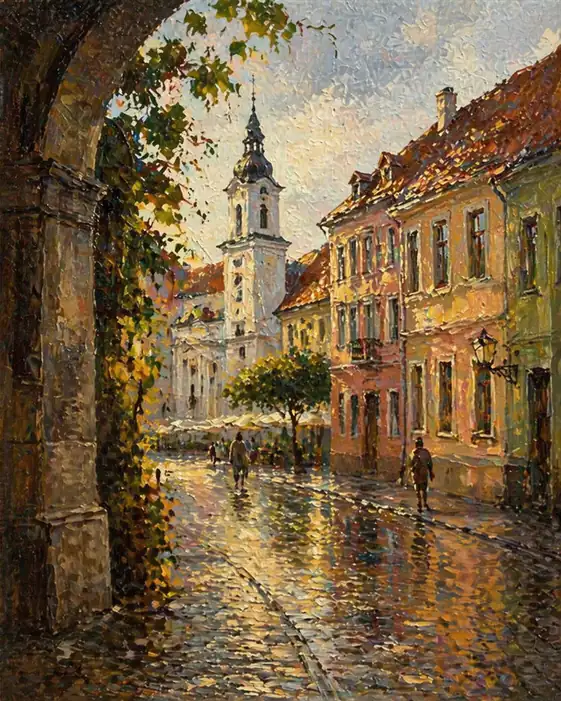 Through the Arch of Time
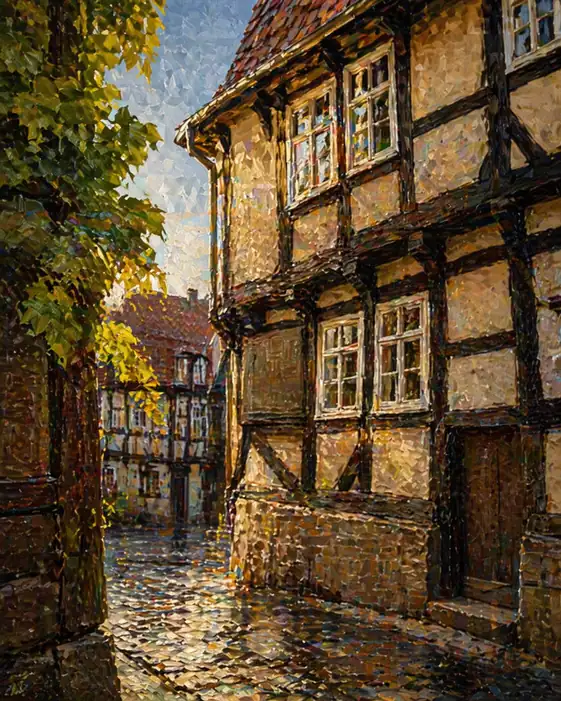 Whispers of the Half-Timbered Alley
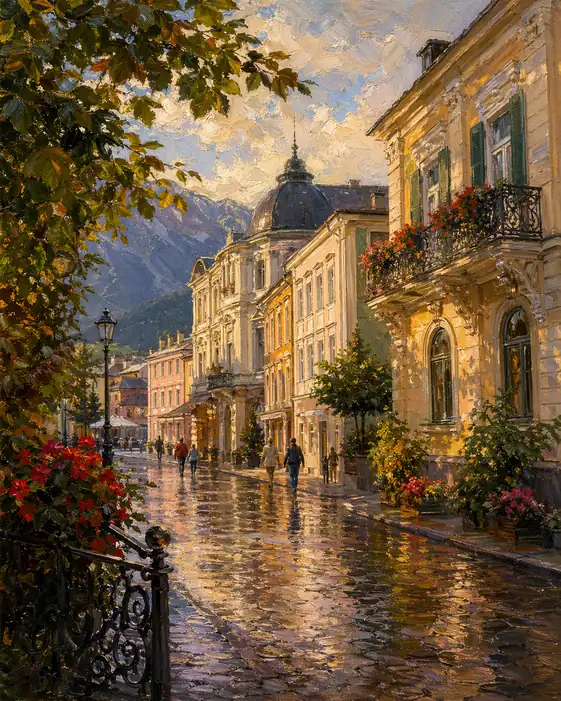 Rainy Street Reflection
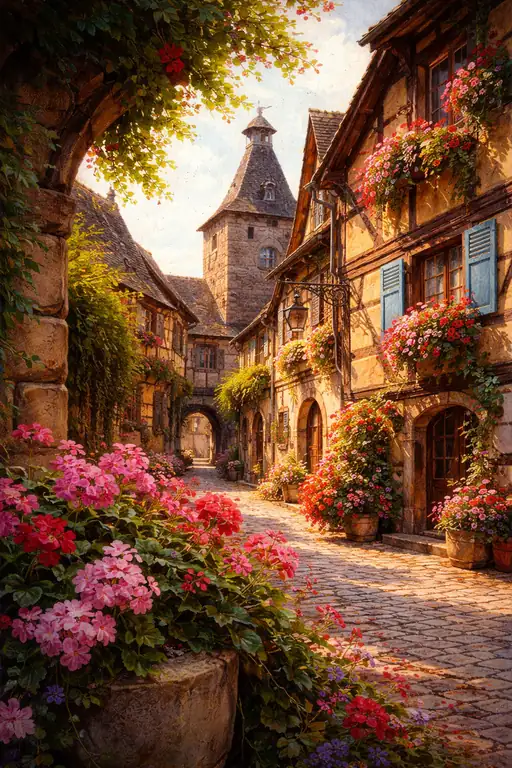 Floral Symphony in the Medieval Alley
 The Lantern's Lullaby
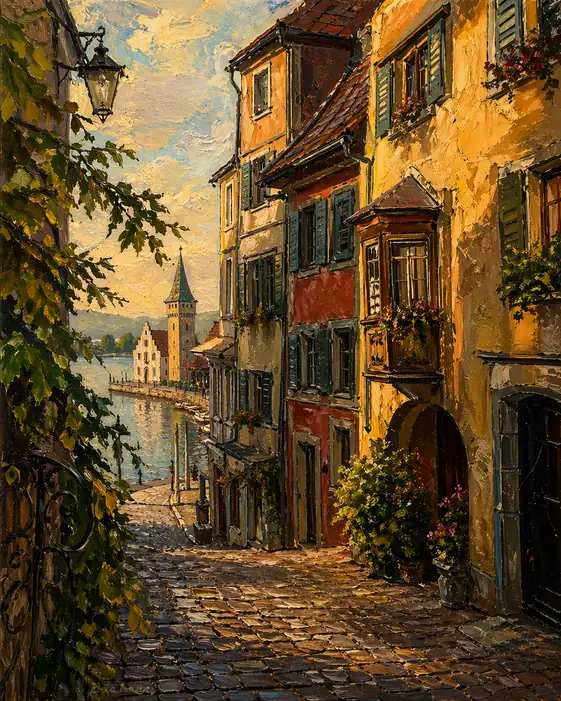 Twilight Path to the Timeless Shore
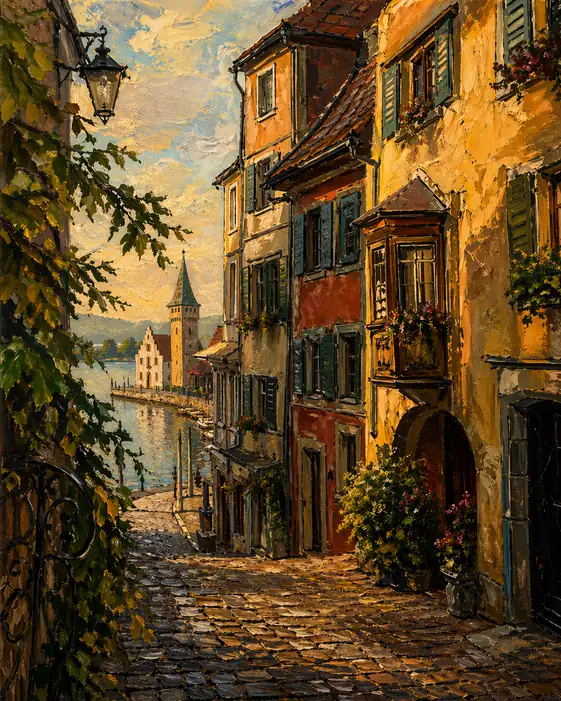 Descending the Cobblestone Path to the Lake
 Archway to the Gilded Sanctuary
 Summer Shadows in the Piazza
 Nostalgic Light of the Old Town