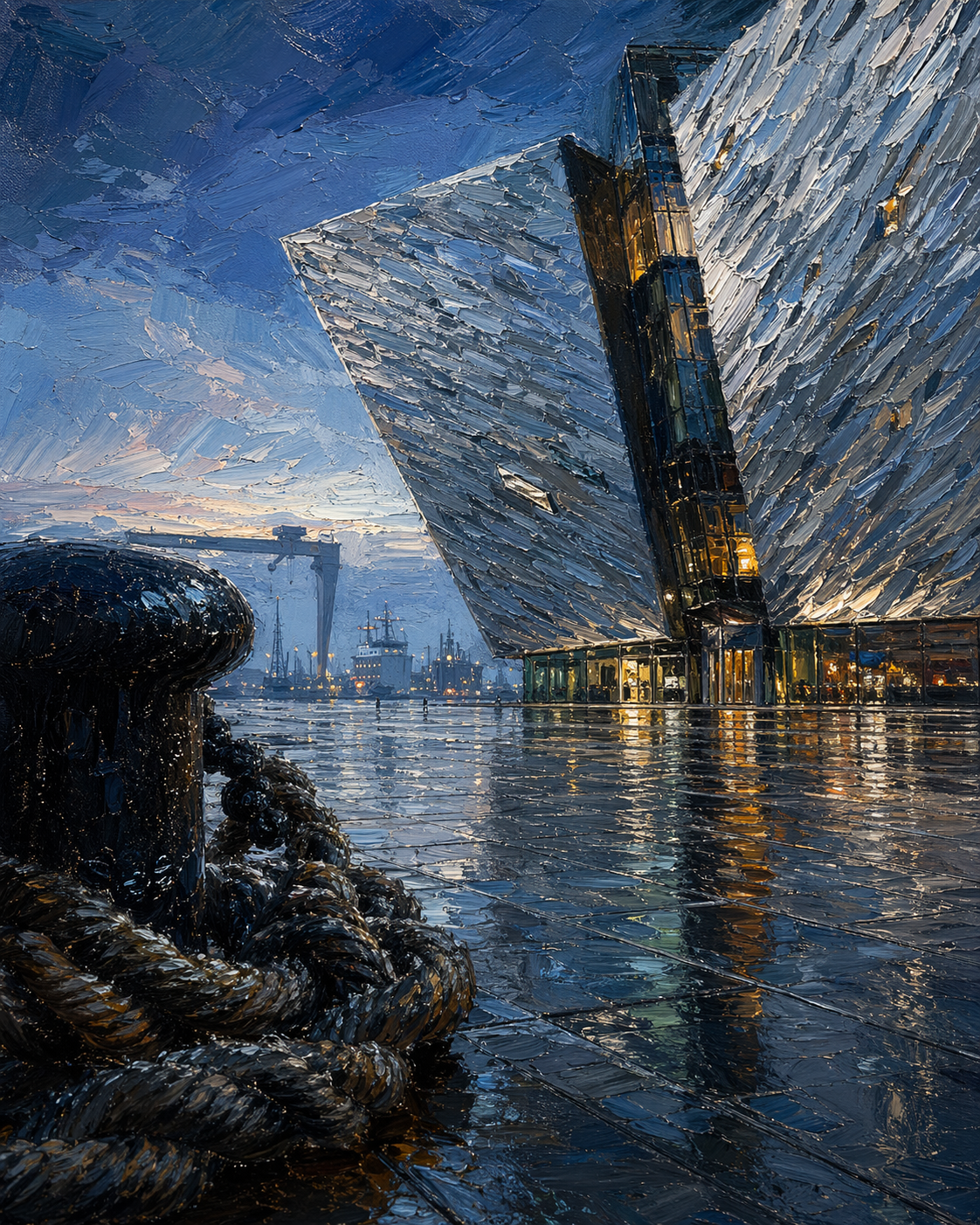
Titanic Belfast in Twilight
Critique
1. Introduction This vertical oil painting features a striking modern architectural landscape situated within a bustling industrial harbor. The composition centers on a prominent, angular building with multifaceted silver surfaces, which stands in dramatic contrast to the functional maritime environment surrounding it. Through a bold application of paint and a keen focus on light, the work captures a transition between the traditional port elements and the sleekness of contemporary design during the blue hour of evening. 2. Description In the immediate foreground, a massive black mooring bollard wound with a thick, heavy rope establishes a strong anchor for the scene. The midground is dominated by the geometric, shard-like facets of the building, which reflect the cool twilight sky and the warm interior lights glowing from its base. In the background, the silhouettes of ships and a large industrial gantry crane are visible, adding to the harbor's character. The wet pavement beneath the building is rendered with expressive strokes, mirroring the lights and the sky in its reflective surface. 3. Analysis The painting employs a vigorous impasto technique, where thick, physical ridges of paint define the edges of the architecture and the texture of the mooring rope. A palette of deep indigo, slate blue, and silver is punctuated by vibrant bursts of warm ochre and yellow from the windows and their reflections. The sharp diagonal lines of the building create a sense of dynamic upward movement, while the circular forms of the bollard and rope provide a necessary visual counterpoint. The lighting is particularly effective, emphasizing the metallic sheen of the facade against the soft gradients of the sky. 4. Interpretation and Evaluation The work successfully balances the gritty reality of an industrial port with the ethereal beauty of modern architecture. The artist has skillfully used texture to evoke the diverse materials of the scene, from the coarse fiber of the rope to the smooth, reflective surfaces of steel and glass. The composition highlights the intersection of history and progress, framing the new structure within the enduring context of maritime commerce. The technical execution of the reflections on the wet ground demonstrates a sophisticated understanding of light and atmosphere, elevating the industrial subject to a level of poetic resonance. 5. Conclusion In summary, this work is a powerful exploration of urban and industrial form through the lens of modern Impressionism. The physical presence of the impasto and the dramatic lighting combine to create a landscape that is both grounded and visionary. While the initial focus may be on the impressive building, the carefully rendered details of the harbor environment ensure a balanced and satisfying visual experience. The piece stands as a compelling testament to the beauty found in the technological and maritime foundations of contemporary city life.
Same Subcategory
Similar Artworks
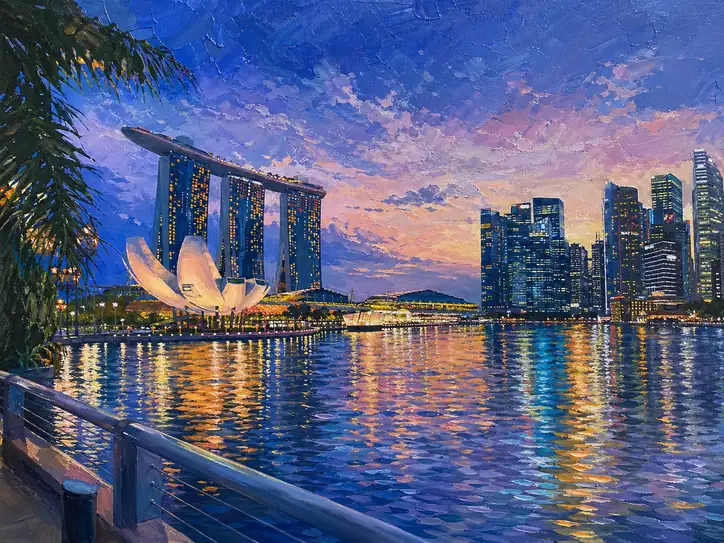 Mirrored Dreams of the Metropolis
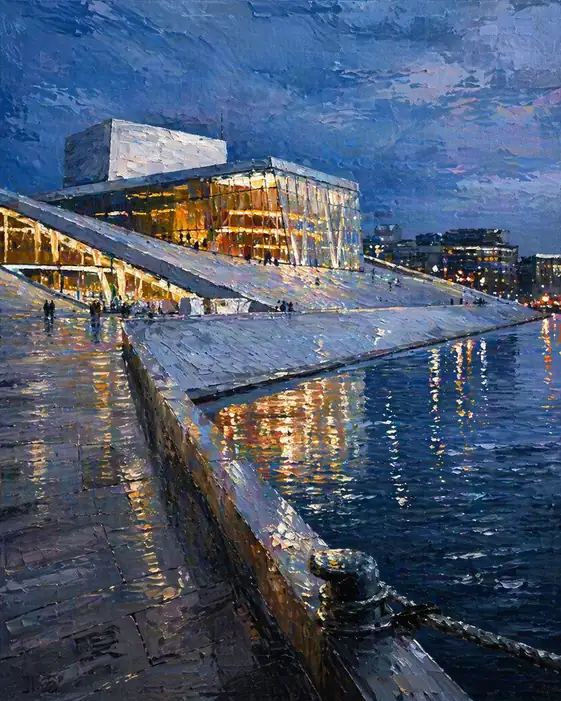 Winter's Warm Embrace
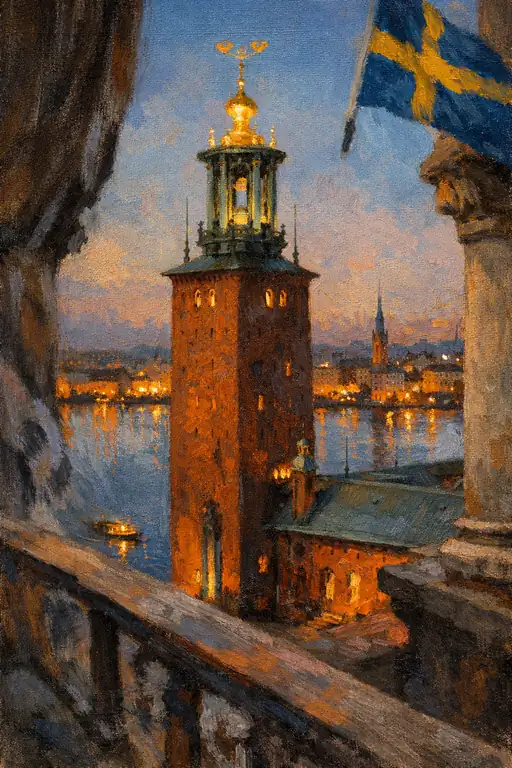 Stockholm City Hall: Nightfall Serenade
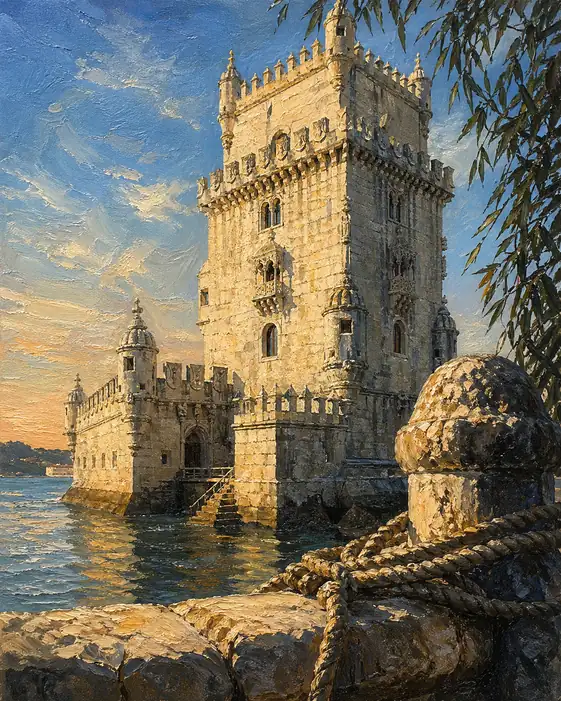 The Sentinel of the Golden Tide
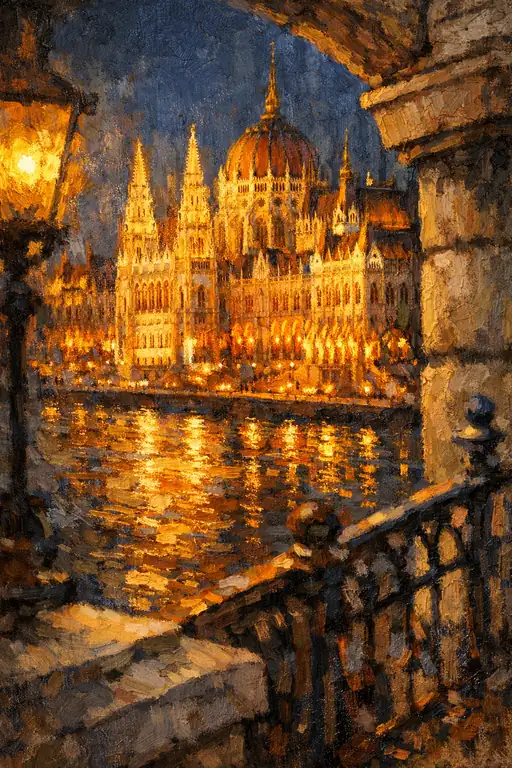 The Night Sings in Gold and Indigo
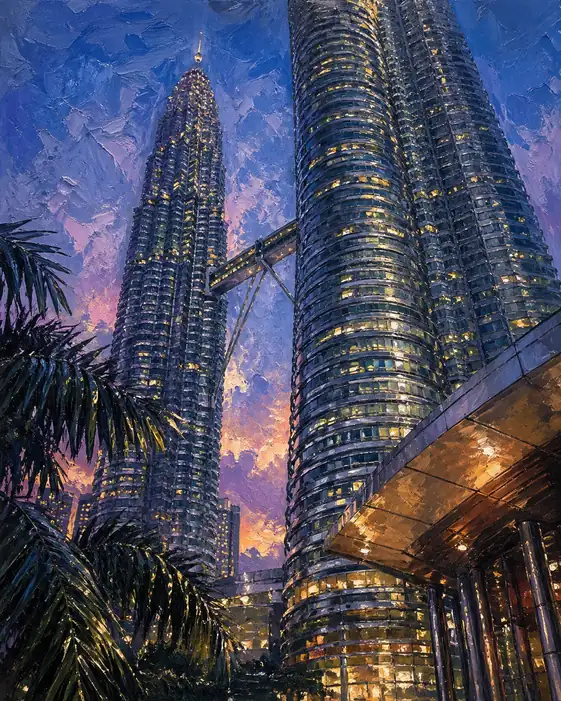 Beacons of Ambition Under the Setting Sun
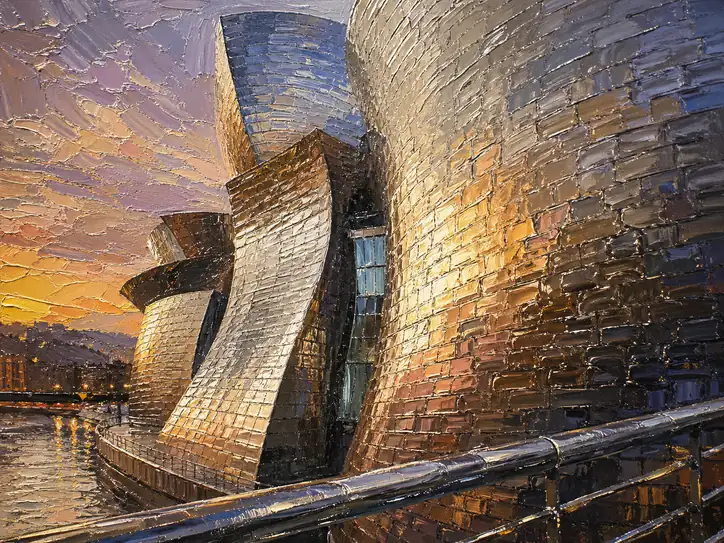 The Titanium Muse in Gilded Light
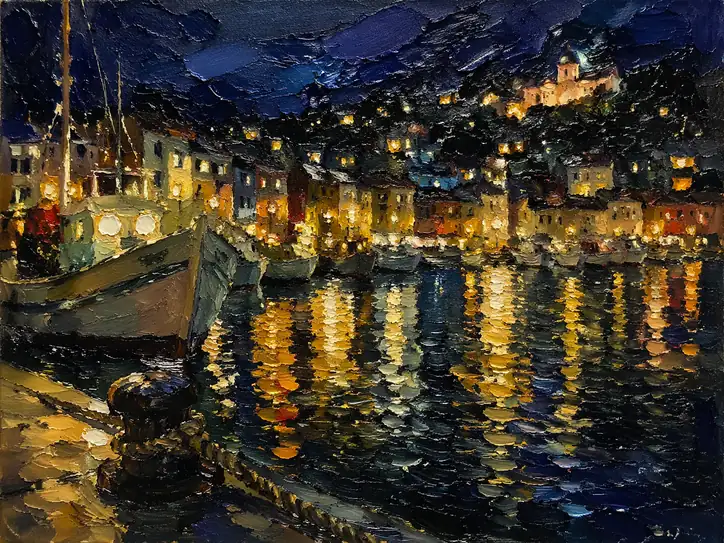 Golden Threads of the Nocturnal Harbor
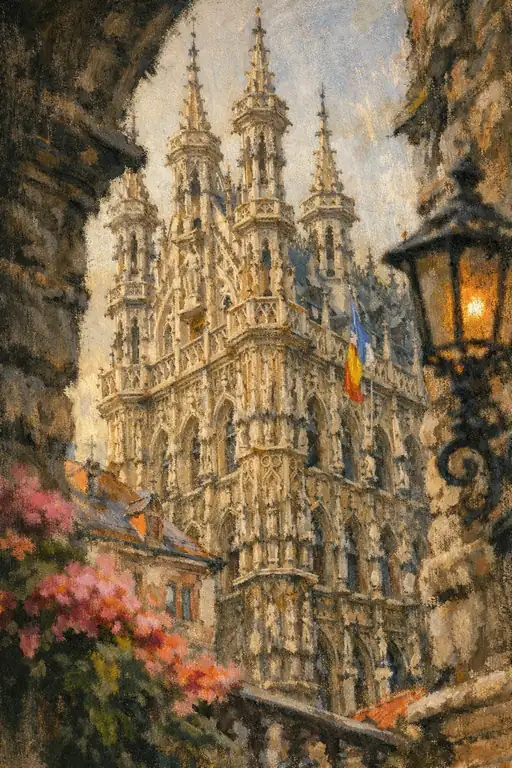 The Grand Place in Golden Light
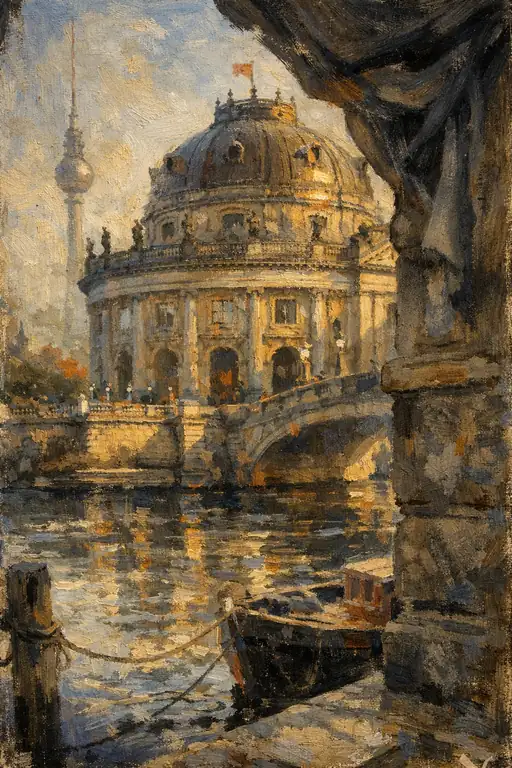 Golden Glow Upon the Riverfront Dome