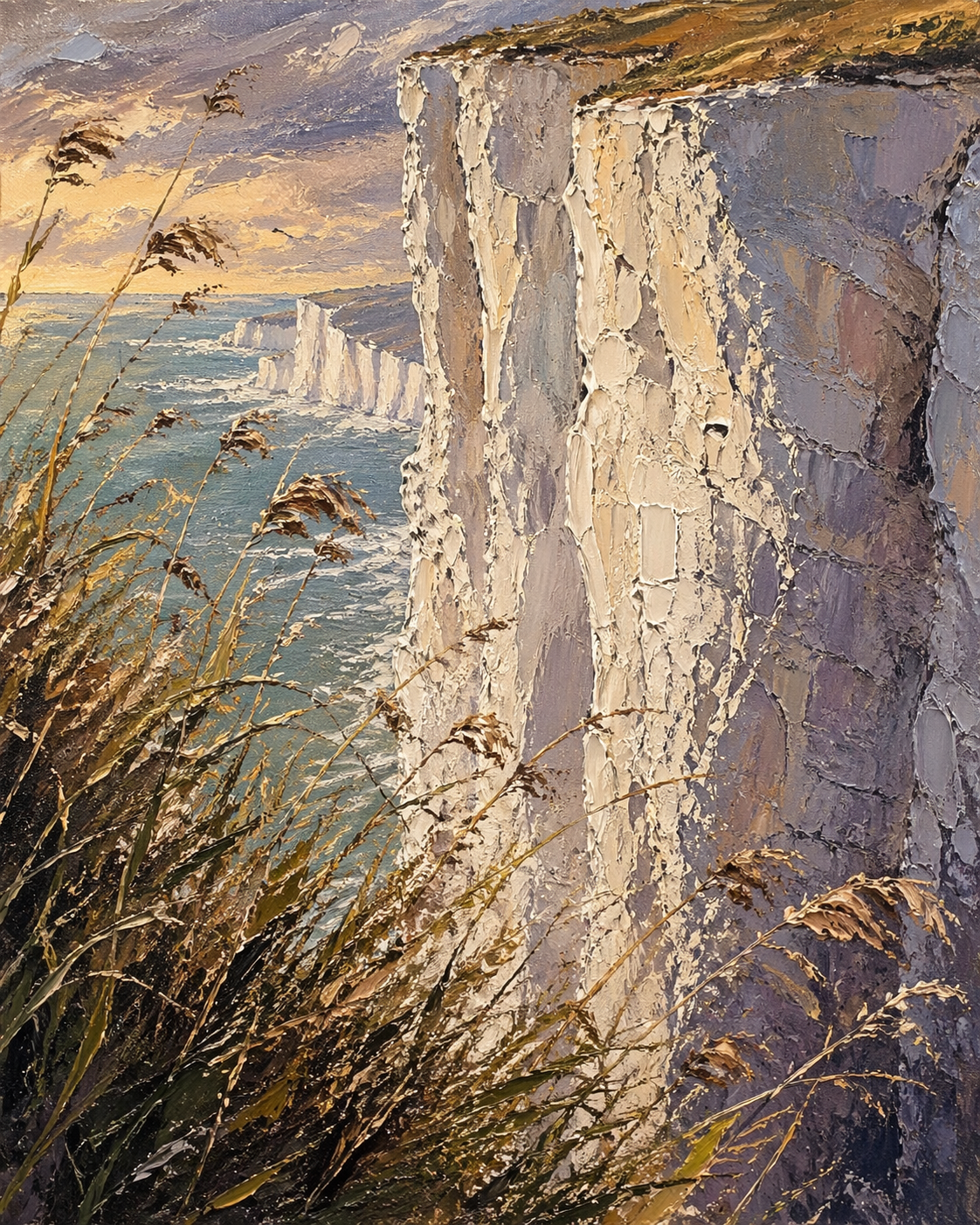
Symphony of the White Cliffs
Critique
1. Introduction This textural landscape painting presents a dramatic view of coastal white cliffs, executed with a robust and expressive oil technique. The composition emphasizes the verticality and imposing presence of the geological formations against the fluid expanse of the sea and sky. Through the heavy application of paint, the work captures the raw, elemental energy of the natural world. It stands as a compelling study of light and landform, where the physical substance of the medium mirrors the ruggedness of the terrain itself. 2. Description The right portion of the canvas is dominated by a sheer, towering cliff face, rendered in thick layers of white, violet, and grey. Its surface is fractured and uneven, suggesting the weathered texture of chalk or limestone under a shifting sky. In the far distance, a series of similar cliffs recede into a hazy coastline, bordering a dark, turbulent sea. The foreground is filled with tall, wind-swept grasses of gold and green that lean toward the left, indicating a strong coastal breeze. Above, a turbulent sky of purple and orange suggests either a rising or setting sun. 3. Analysis The most striking feature of this work is the extensive use of impasto, likely applied with a palette knife to create a sculptural quality. The thick ridges of paint on the cliff face catch the light, creating actual shadows that enhance the sense of three-dimensional form. A limited but effective color palette uses cool purples and blues to define the shadows of the rock, contrasted by warm ochre and earth tones in the foreground vegetation. The diagonal lines of the grasses provide a sense of movement that offsets the static, monumental mass of the cliffs. 4. Interpretation and Evaluation This piece successfully translates the sensory experience of a coastal environment into a highly tactile visual form. The artist’s decision to emphasize texture over fine detail allows for a more visceral connection with the subject matter, highlighting the solidity of the earth. The technical skill evidenced in the layering of thick pigments demonstrates a deep understanding of how to build light and shadow through physical volume. The composition is dynamic, using the foreground elements to lead the viewer’s eye toward the vast and atmospheric background scenery. 5. Conclusion This painting offers a powerful exploration of the interplay between the permanence of stone and the transience of wind and light. What initially appears as a chaotic arrangement of thick paint resolves into a coherent and evocative representation of a specific geographical spirit. The final result is a work that celebrates the material possibilities of oil paint while remaining deeply rooted in observational landscape traditions. It leaves the viewer with a profound sense of the rugged beauty and enduring strength found at the edge of the sea.
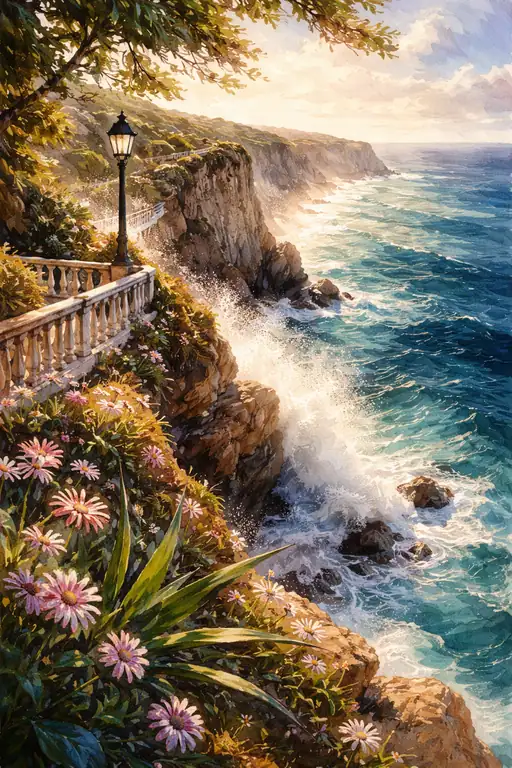 Where the Sea Greets the Sky
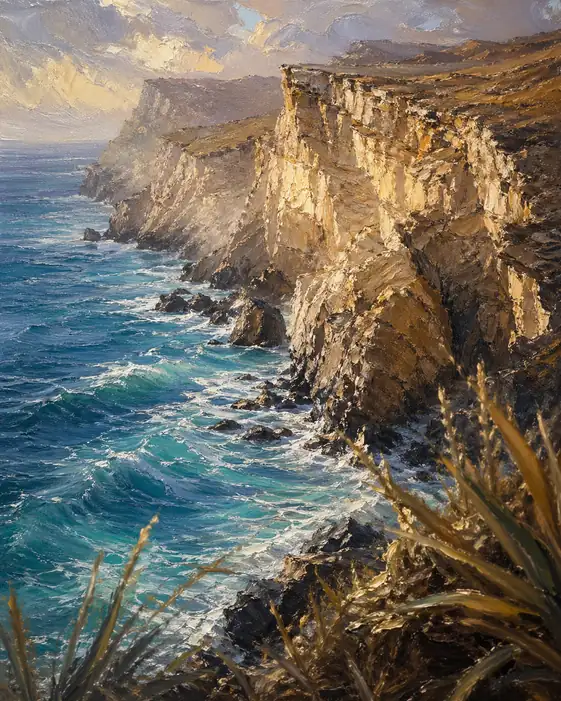 Collision of Earth and Ocean
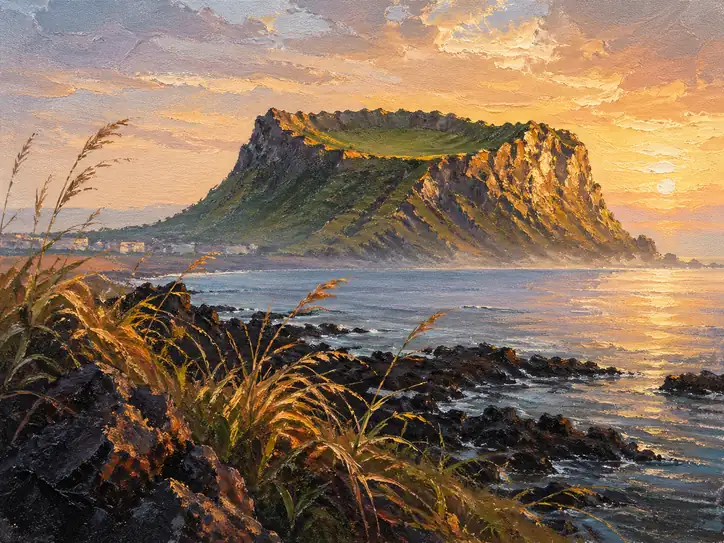 Golden Dawn on the Crater's Edge
 Sentinel of the Fiery Twilight
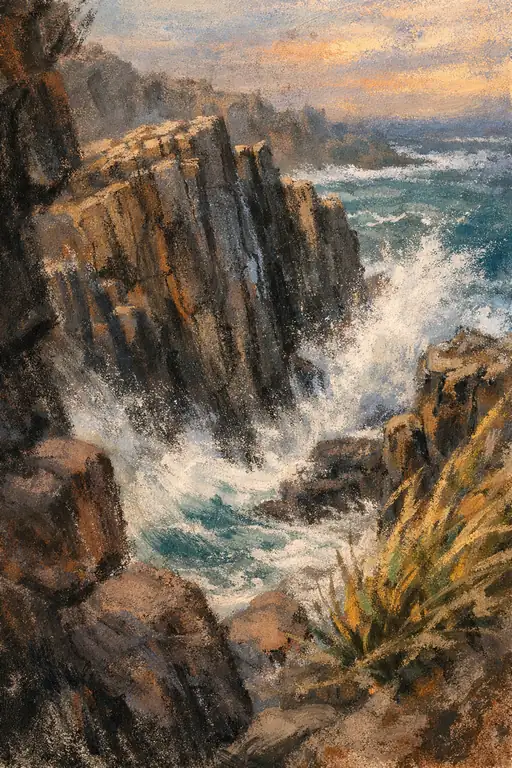 Echoes of the Enduring Coast
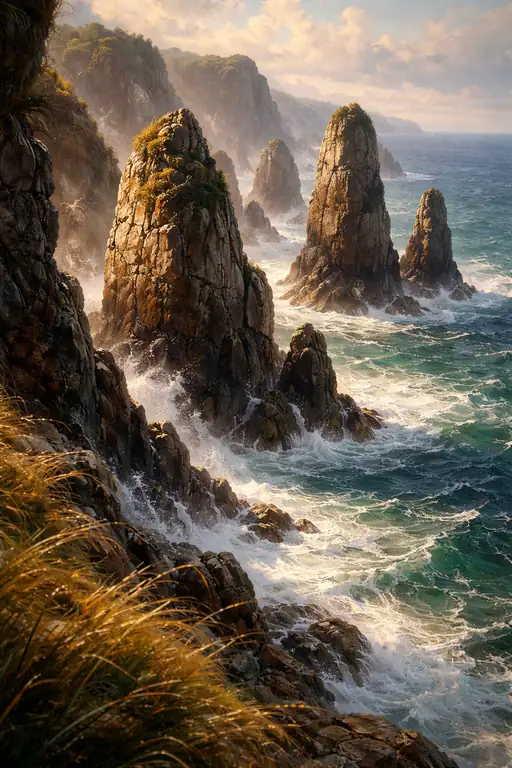 The Eternal Embrace of the Waves
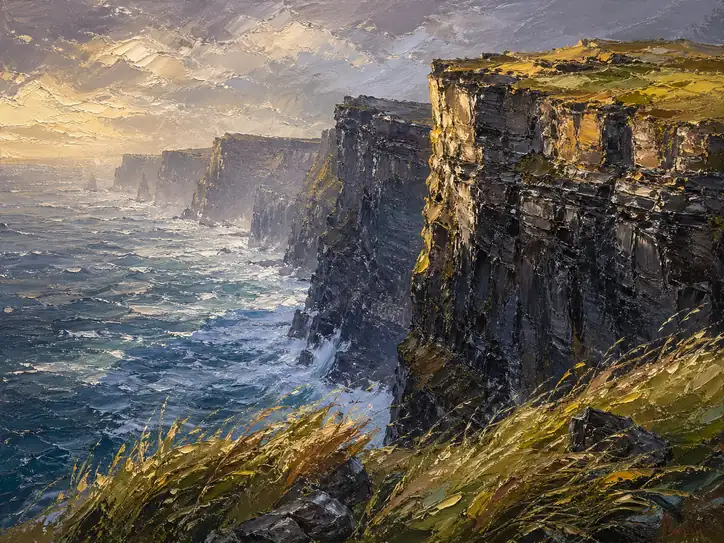 Edge of Eternity
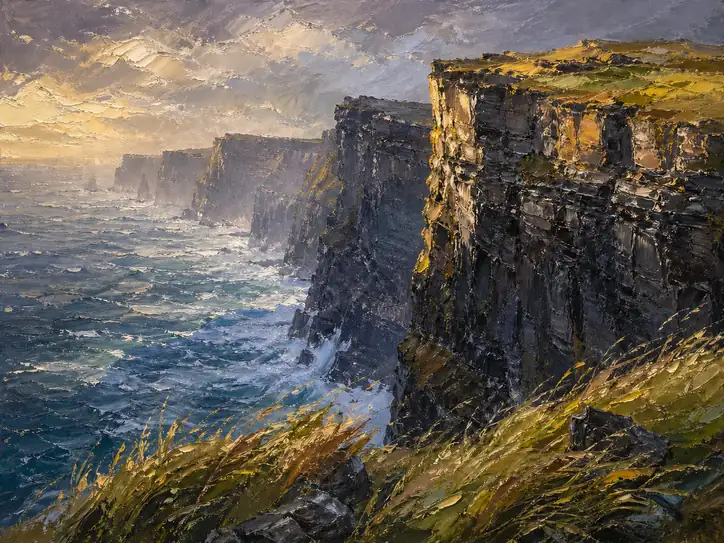 Golden Ascent
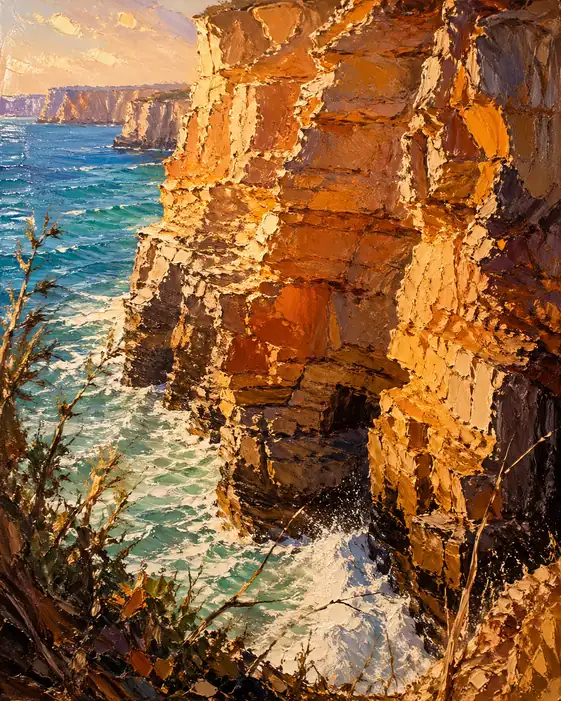 Where the Sun Embraces the Earth
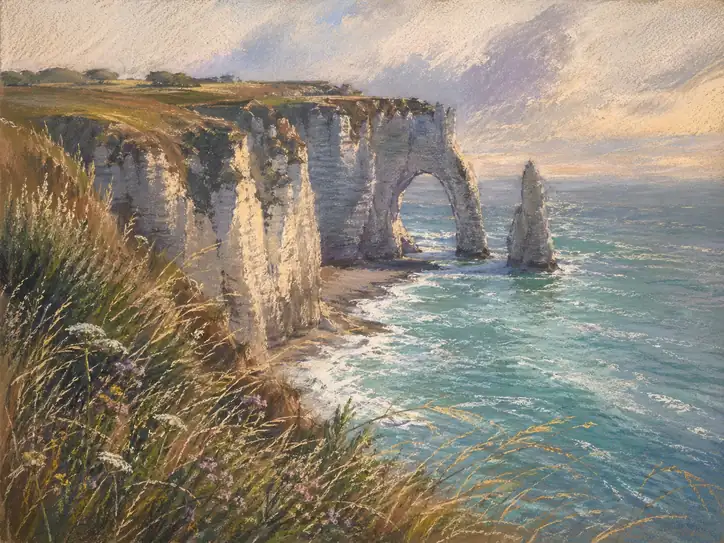 Whispers of the Chalk Gate
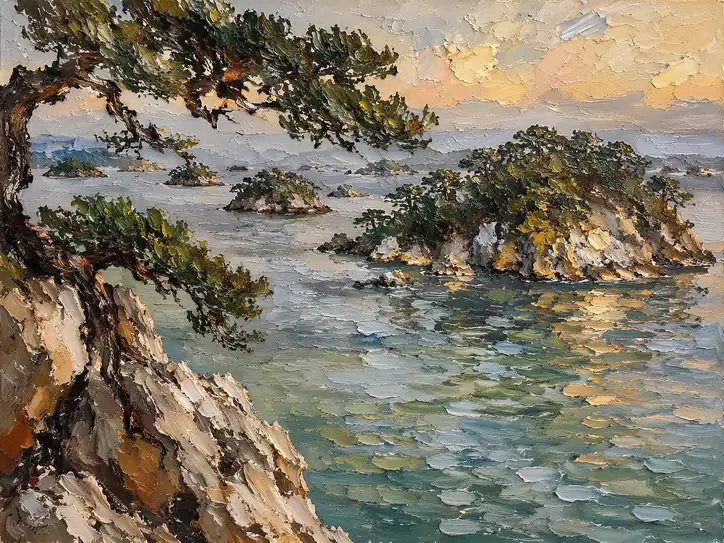 The Golden Horizon's Embrace
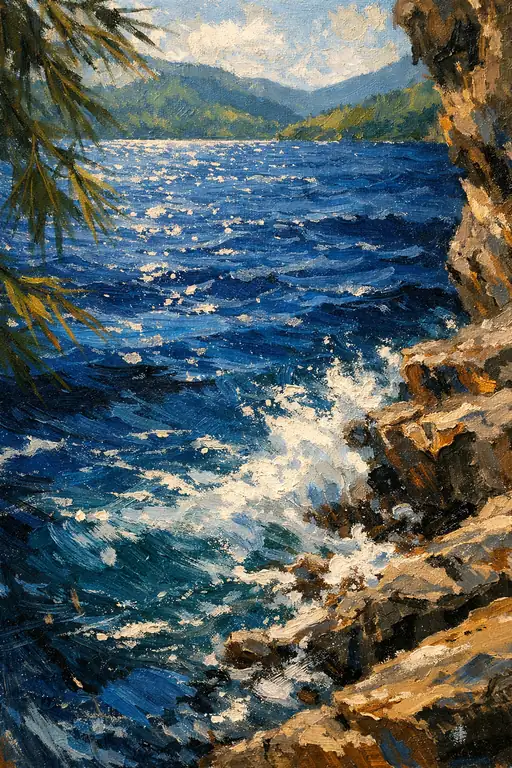 Sparkle on the Cobalt Cliffs