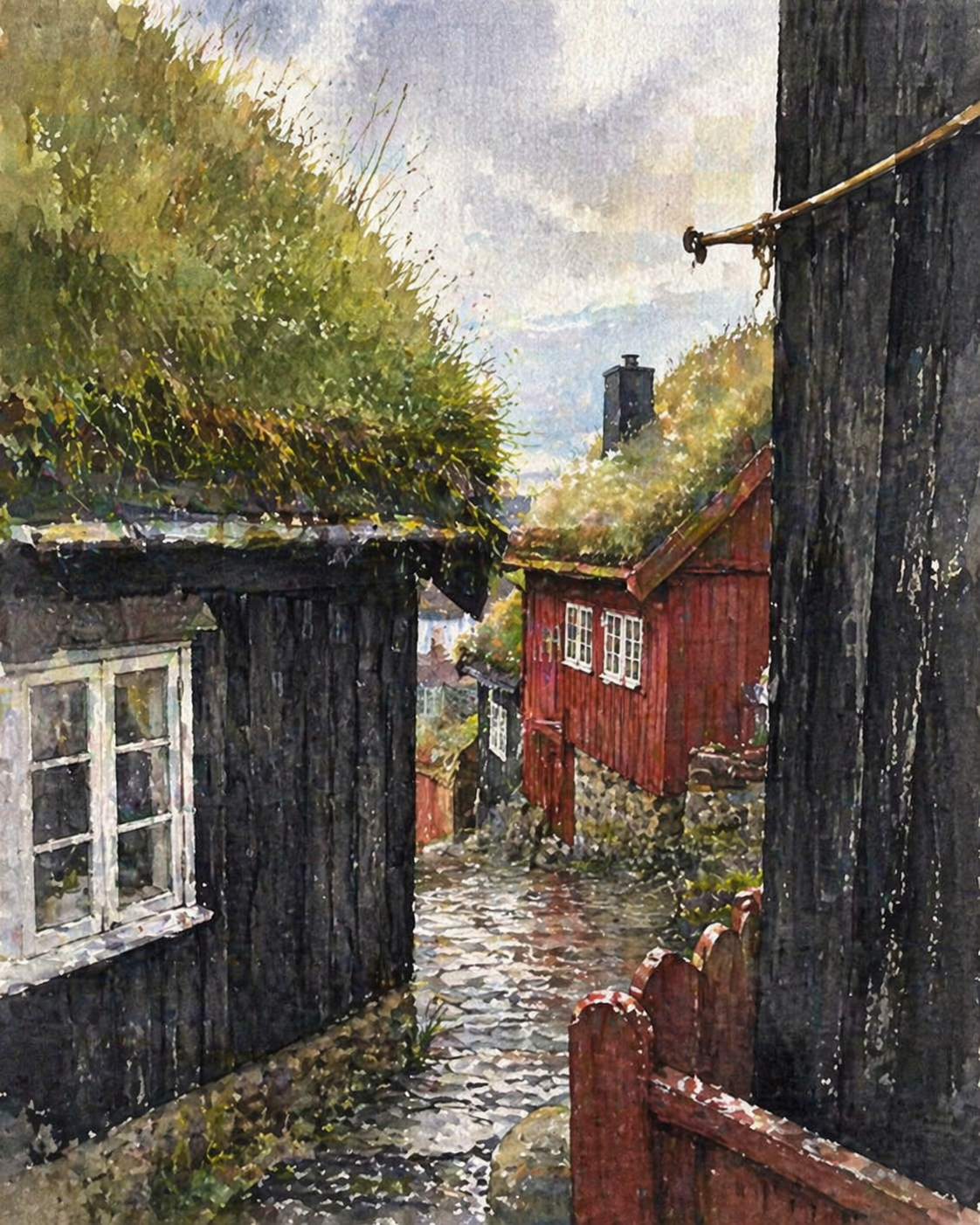
Whispers of the Turf Roof
Critique
1. Introduction This evocative watercolor painting captures the intimate charm of a traditional Nordic village lane, as if inviting the viewer into a lived-in history. The composition features wooden houses with sod roofs flanking a narrow cobblestone path, symbolizing a unique way of life shaped by both culture and climate. The artist skillfully portrays the intersection of historic architecture and the natural world from a close, personal perspective. It is a work that resonates with nostalgia, inviting a deep appreciation for the quiet, enduring beauty of remote settlements. 2. Description The left foreground is dominated by the dark, weathered facade of a black-stained wooden cottage, punctuated by a bright white window frame. Its roof is covered in a thick, vibrant layer of grass, rendered with energetic strokes that suggest life and movement. Across the slender path, a contrasting reddish-brown house stands in the middle ground, its chimney rising against a soft, overcast sky. The cobblestone street beneath reflects a diffused light, appearing damp and rich with textural variety. A weathered wooden fence in the lower right further frames the scene, enhancing the sense of localized depth. 3. Analysis From a formal standpoint, the painting excels in its ability to differentiate the diverse textures of wood, turf, and stone. The vertical grain of the siding, the soft tufts of the sod roofs, and the hard, rounded forms of the paving stones are all meticulously depicted using varied watercolor techniques. The tight, focused composition emphasizes density over expansive space, highlighting the physical presence and historical weight of the structures. Color-wise, the bold blacks and reds are balanced by the natural greens and the cool grays of the sky, creating a robust yet harmonious environment. 4. Interpretation and Evaluation This artwork serves as a tribute to an architectural heritage born of necessity and environmental integration. The proximity of the contrasting houses evokes a feeling of warmth and community resilience amidst a presumably harsh climate, imbuing the scene with a poetic narrative. Technically, the artist’s attention to subtle details—such as the soft reflections in the window panes and the nuanced shadows on the timber—demonstrates a high level of observational skill. By treating the organic turf roofs with the same importance as the buildings themselves, the work achieves a dynamic and successful synthesis of elements. 5. Conclusion In conclusion, the painting is a masterful realization of the quiet dignity inherent in traditional village life. While the initial impression is one of simple rustic beauty, a deeper examination reveals a sophisticated understanding of light and material character. The artist effectively places the viewer within the scene, allowing them to sense the cool air and the tactile surfaces of the historic town. It is a sensitive and highly proficient work that captures not just a view, but the very soul of a specific cultural landscape through a refined artistic lens and masterful execution.
Same Subcategory
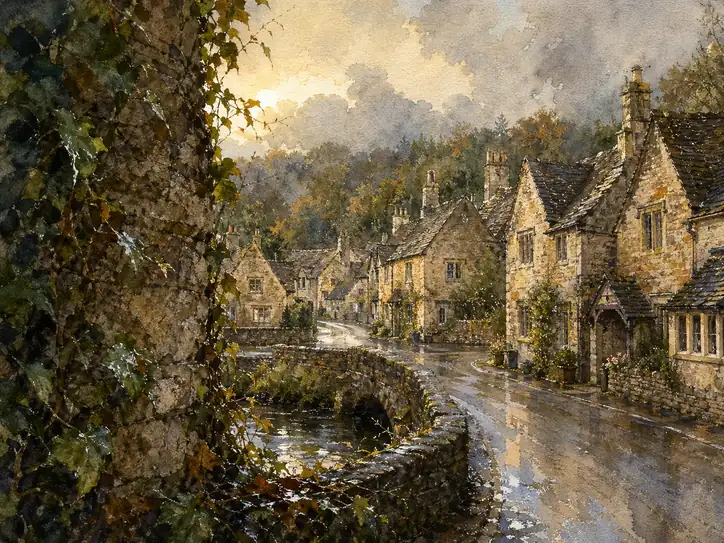 Misty Morning in Castle Combe
Similar Artworks
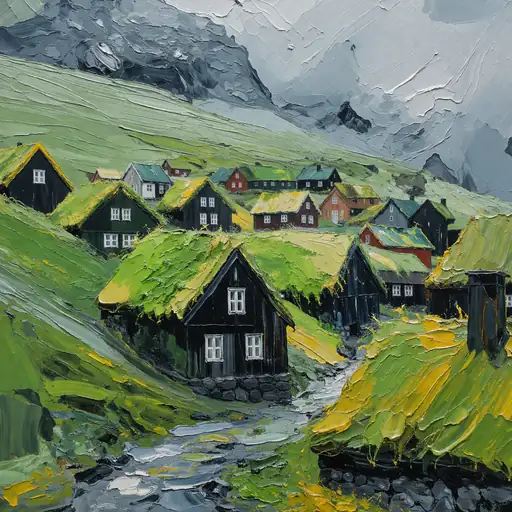 Embrace of the Slumbering Mountains
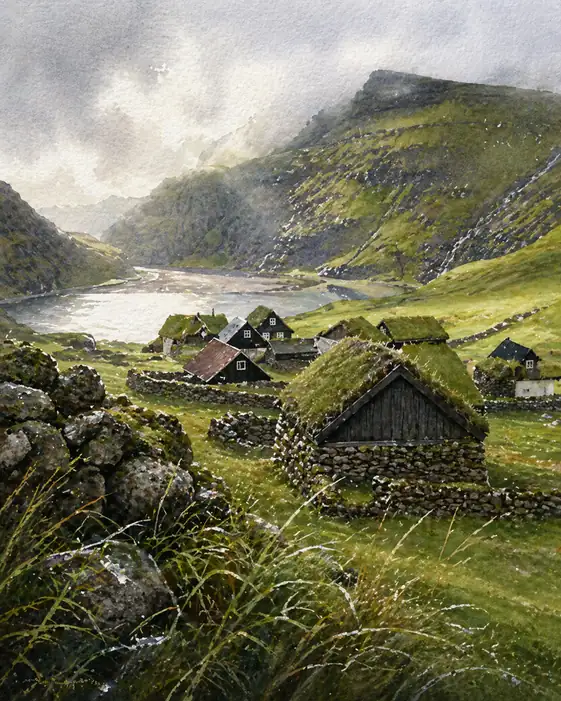 Valley of Quiet Time
 A Charming Alpine Village Glistening Under a Gentle Rainfall
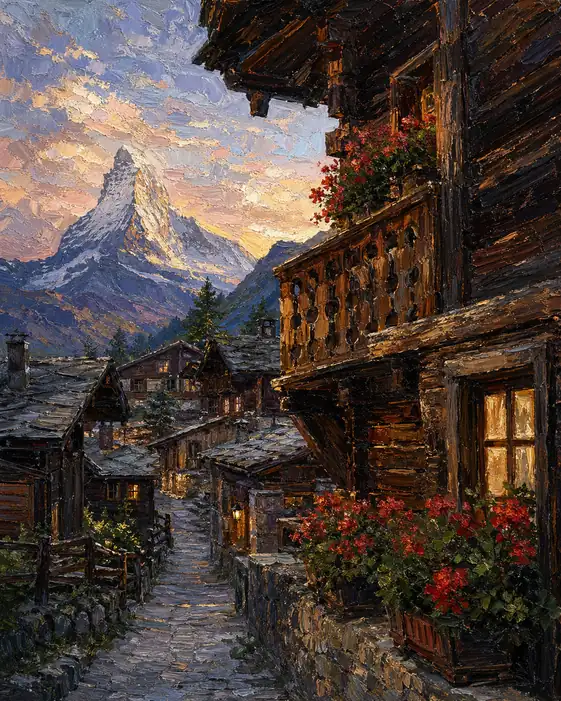 Golden Echoes of the Peak
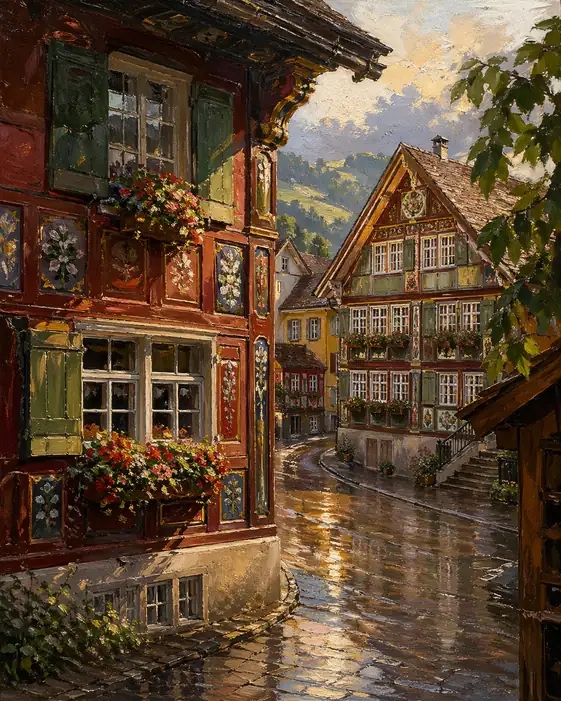 Fence Line to the Snow-capped Majestic Peaks
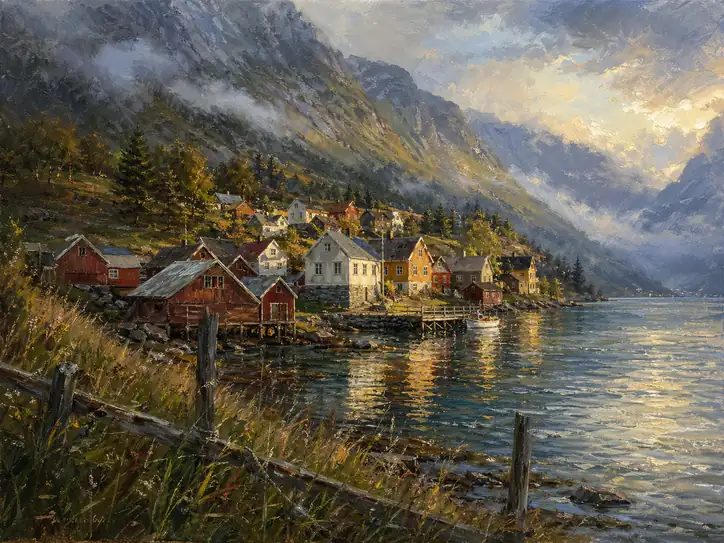 Mist and Wood
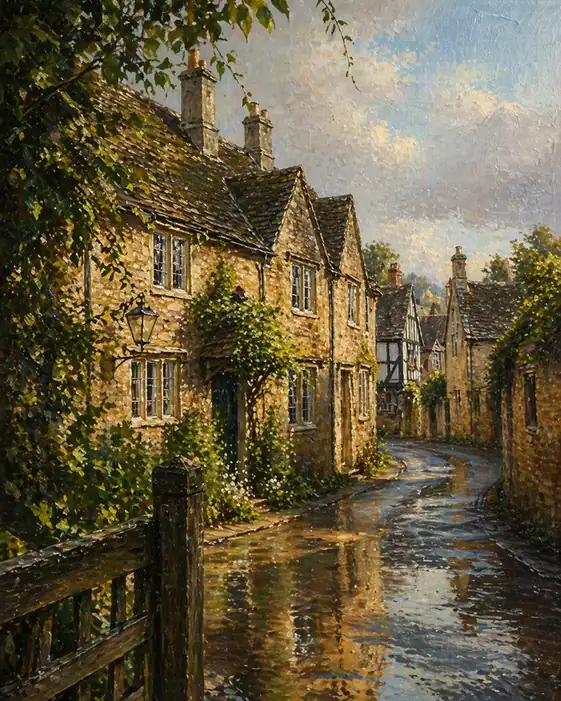 Rainy Cotswolds Street
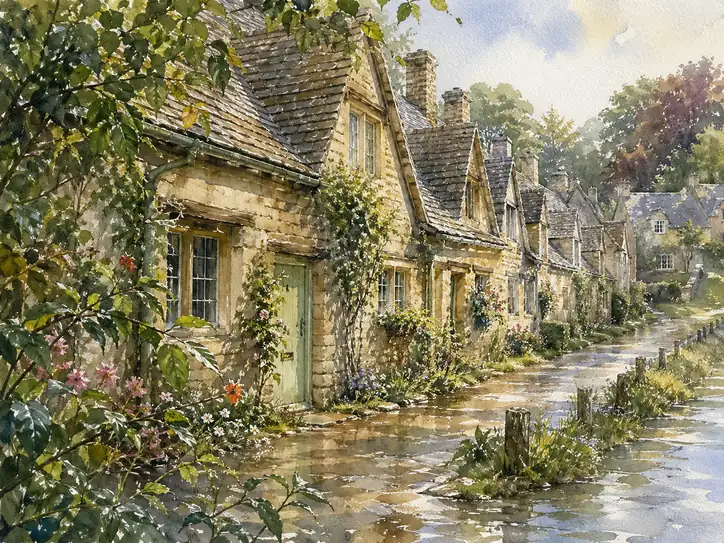 After the Rain: A Quiet Nostalgia
 Rhythm of the White Houses
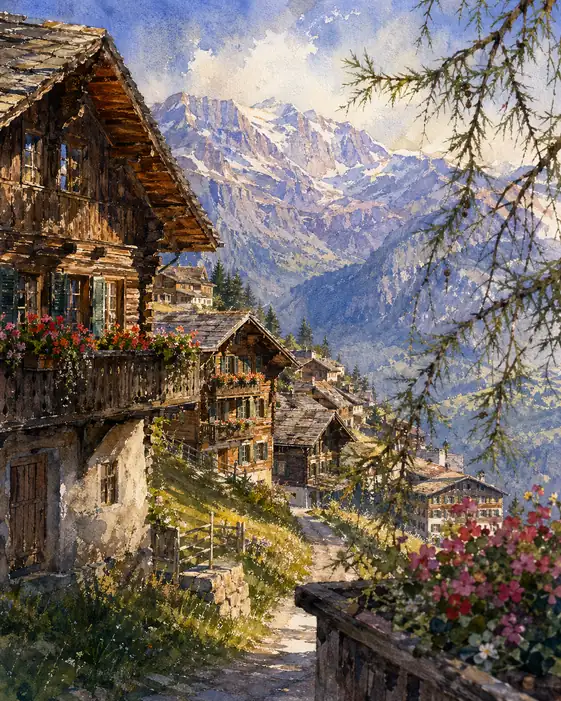 Luminous Alpine View with a Chalet Balcony