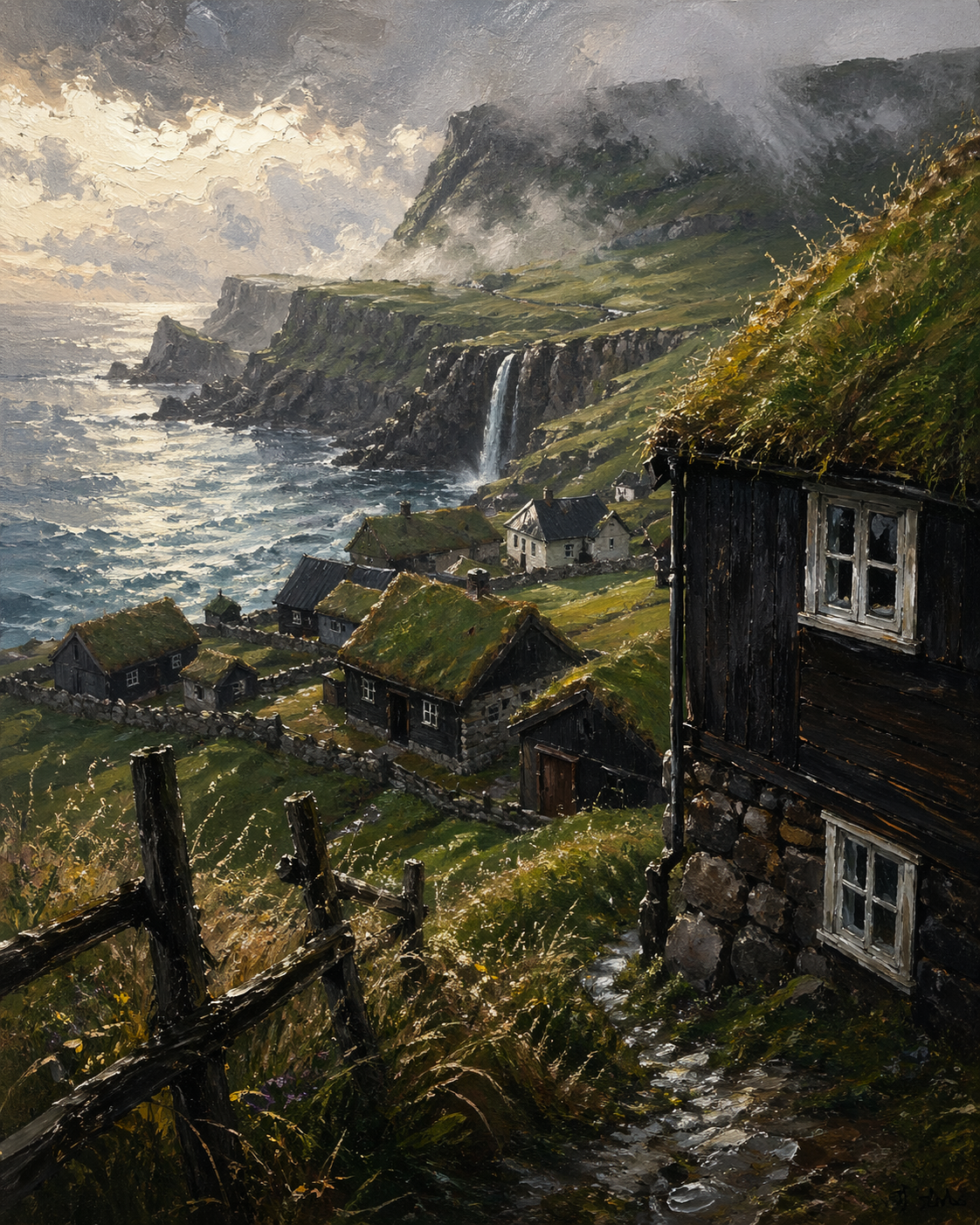
The Waterfall's End
Critique
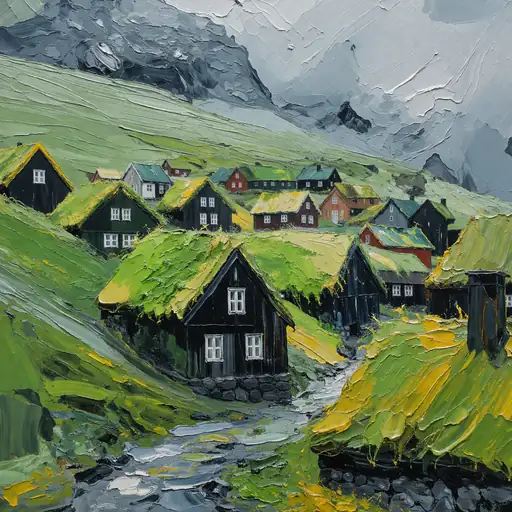
1. Introduction This powerful oil painting depicts a remote coastal village nestled against a backdrop of towering cliffs and a turbulent sea. The artist employs a heavy impasto technique, creating a rich texture that emphasizes the rugged energy of a Nordic landscape. In the distance, a grand waterfall plunges directly into the ocean, serving as a focal point for the sublime power of nature. From a high-ground perspective, the viewer overlooks the cluster of traditional dwellings, feeling the immense scale and atmospheric weight of this dramatic environment. 2. Description On the right foreground, a large portion of a traditional stone and wood house dominates the frame, featuring a thick carpet of green turf on its roof. Similar dwellings with grass roofs are scattered across the verdant slope in the middle ground, connected by weathered stone walls. Behind them, steep, mist-shrouded cliffs rise abruptly, with a single, brilliant white waterfall adding dynamic movement to the scene. The sky is filled with heavy, churning clouds, through which a sharp, silvery light breaks, illuminating the white crests of the ocean waves with intense contrast. 3. Analysis The formal quality of the artwork is defined by the bold use of palette knives and broad brushes, which give the surface a tactile, three-dimensional quality. This materiality perfectly translates the stony textures of the cliffs and the density of the wind-swept grass. The color palette is somber yet rich, composed of deep greens, earthy browns, and cool grays, which are set off by the luminous whites of the sea foam and sunlight. A strong diagonal composition, established by the foreground house and fence, creates an expansive sense of depth and scale. 4. Interpretation and Evaluation This work captures the profound relationship between human habitation and the overwhelming forces of nature. The smallness of the village in comparison to the sheer cliffs and the waterfall evokes a sense of the sublime, highlighting human resilience in a harsh climate. The balance between representational form and expressive abstraction is masterfully handled, allowing the texture of the paint itself to suggest the sound of the wind and the salt of the spray. The technical proficiency in manipulating light contributes to a highly emotive and successful visual narrative. 5. Conclusion Ultimately, the painting is a remarkable synthesis of physical texture and atmospheric depth, capturing the very soul of a rugged coastline. While the initial impression is one of raw, untamed nature, further observation reveals a carefully considered harmony within the composition. The artist’s tactile approach ensures that the landscape is not merely seen but felt by the observer. It stands as a testament to the enduring beauty and severity of the natural world, leaving a lasting impact through its visceral and evocative execution.
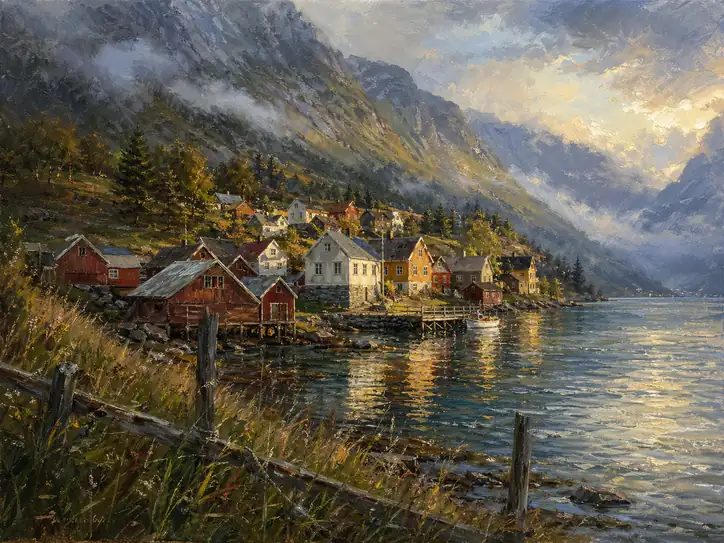 Mist and Wood
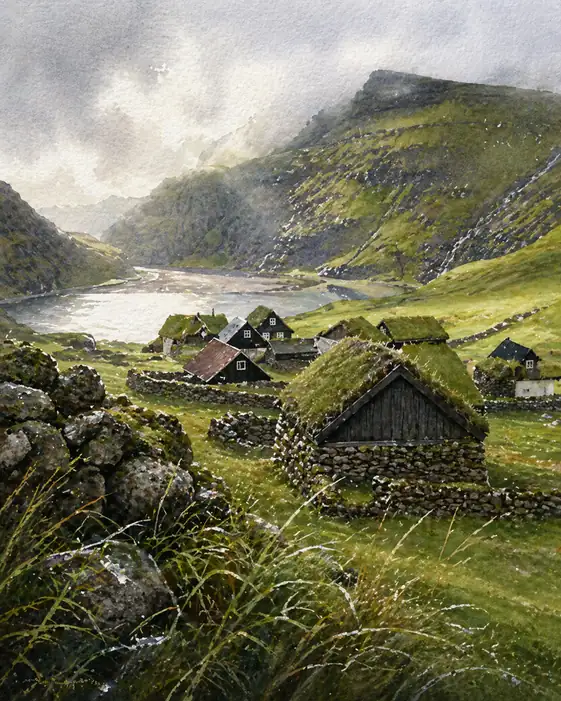 Valley of Quiet Time
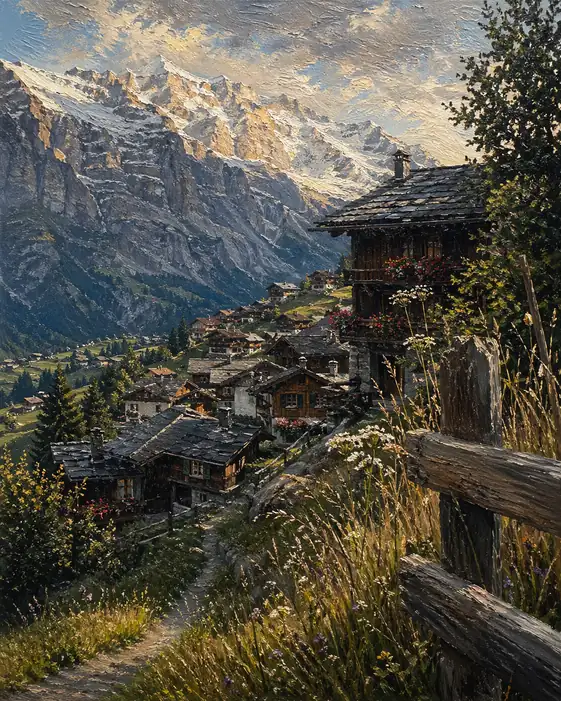 Red Geraniums Against the Pale Mountain Sky
 Embrace of the Slumbering Mountains
 Golden Embrace of the Mountain Village
 Golden Echoes of the Peak
 Village at the Base
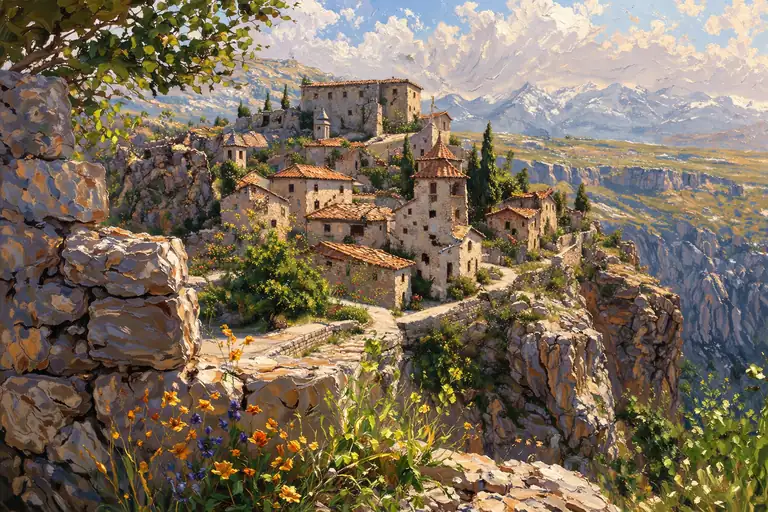 Fortress Among the Alpine Flora
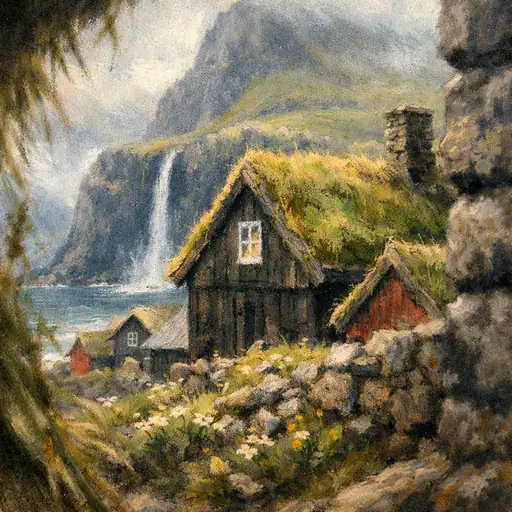 Elegy of the Cliffside Haven
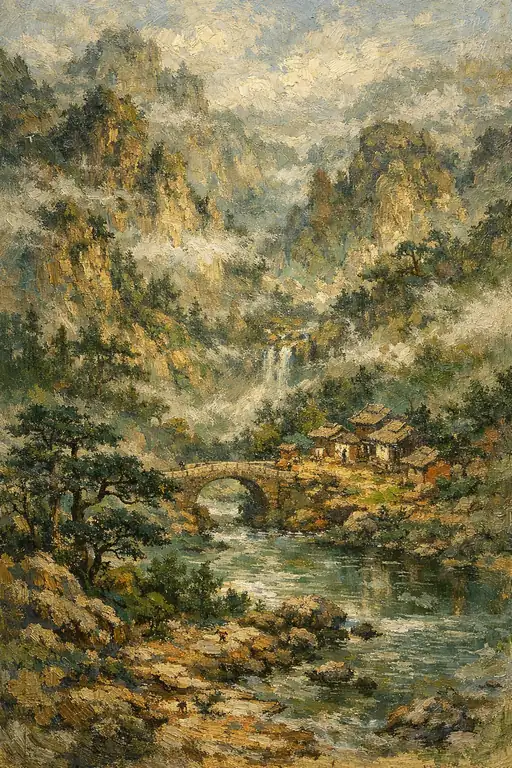 Whispers of the Fading Horizon