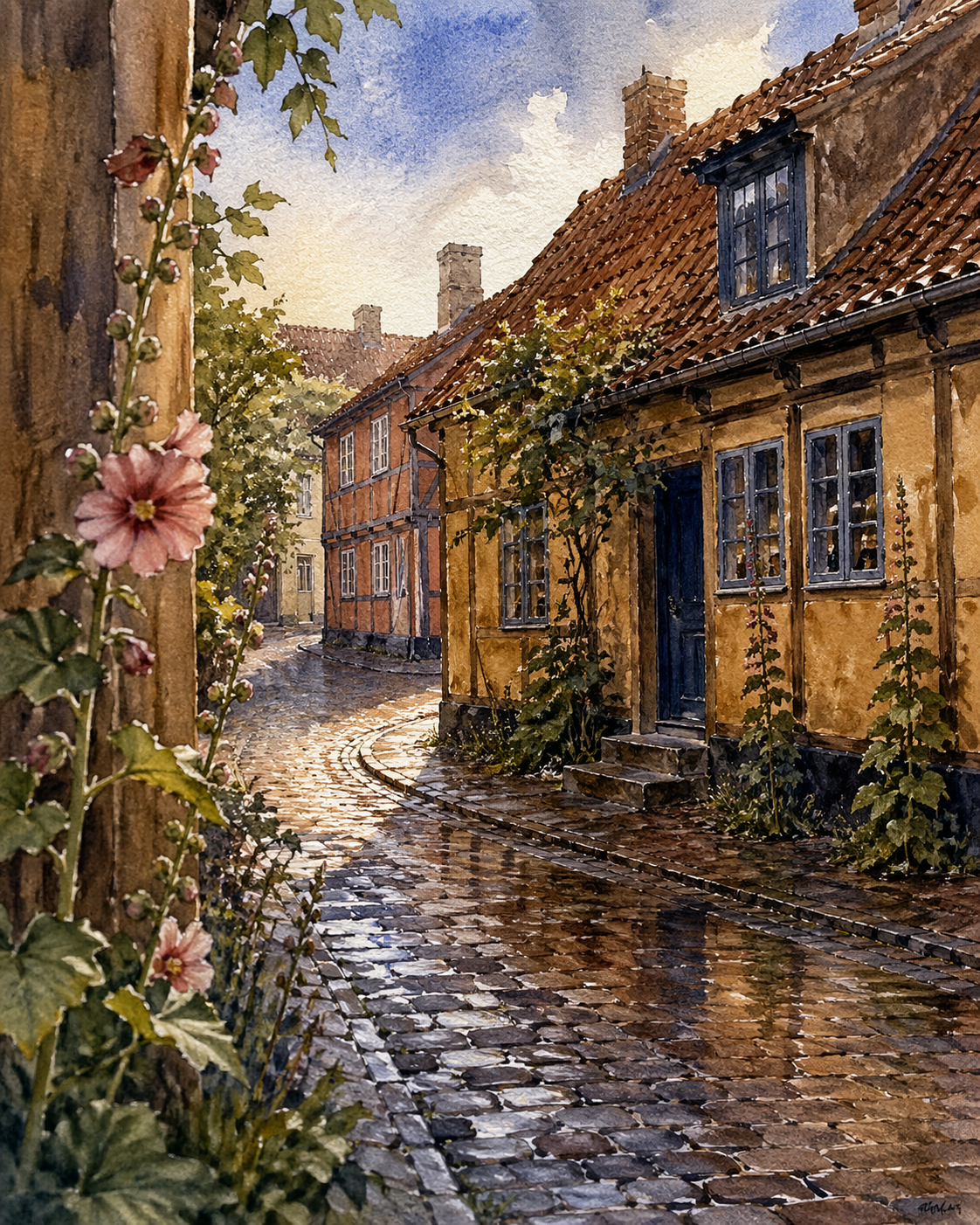
The Silent Charm of the Old Lane
Critique
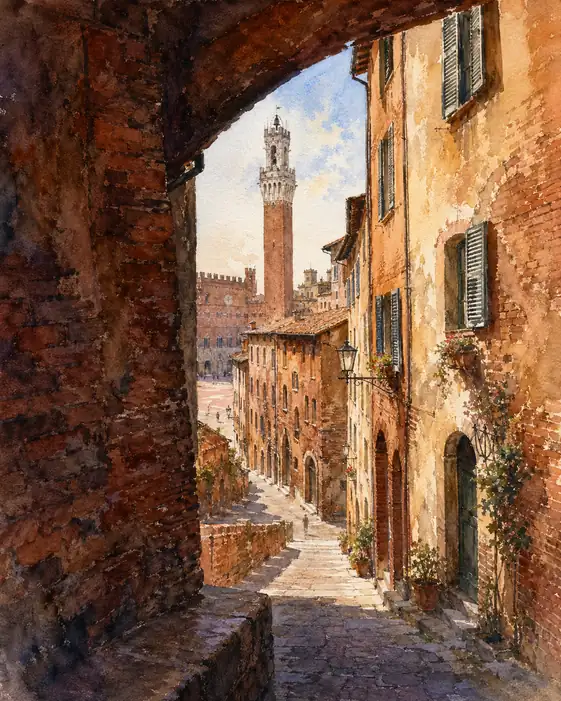
1. Introduction This watercolor painting presents a serene scene of a traditional European street, likely capturing a quiet moment after a rainfall. A narrow cobblestone path winds through the center of the composition, flanked by historic half-timbered houses that evoke a sense of timelessness. The artist masterfully utilizes the fluid properties of watercolor to depict the atmospheric quality of a sunlit afternoon in a quaint town. It is a work that invites the viewer into a nostalgic and peaceful environment. 2. Description The right side of the frame features a prominent yellow building with distinct dark trim and blue window frames. The red-tiled roof adds a warm tonal contrast to the cool shadows cast along the walls. The cobblestone road below is wet, glistening with reflections of the sky and the surrounding structures, rendered with remarkable precision. In the left foreground, tall stalks of pink hollyhocks stretch upward, adding a burst of floral color and vertical interest. The street recedes into the background, where distant houses are painted in softer, hazy tones. 3. Analysis From a formal perspective, the painting’s success lies in its sophisticated handling of light and perspective. The diagonal path of the street creates a strong sense of depth, drawing the eye deep into the urban landscape. The color palette is centered on the harmonious interplay between the warm yellows of the architecture and the cool blues of the sky and shadows. The artist’s control over watercolor washes allows for both the crisp details of the timber frames and the soft, diffused light reflecting off the damp stones. 4. Interpretation and Evaluation This piece transcends mere architectural study, capturing the essence of an atmosphere and the lingering feeling of rain. The reflections on the ground serve as a focal point, demonstrating a high level of technical proficiency in representing transparency and moisture. The composition is well-balanced, with the foreground flora providing a natural frame that enhances the intimacy of the scene. The work is highly successful in its ability to translate a commonplace view into a poetic visual experience through refined technique and sensitive observation. 5. Conclusion In conclusion, the painting is a captivating example of modern watercolor landscape art that balances realism with lyrical expression. While the initial impression is one of charming aesthetic beauty, closer inspection reveals a rigorous attention to the nuances of light and shadow. The piece effectively summarizes the quiet dignity of historic urban life. It leaves the viewer with a profound appreciation for the subtle beauty found in the aftermath of a passing storm, moving beyond a simple visual record to a true artistic synthesis.
Same Subcategory
Similar Artworks
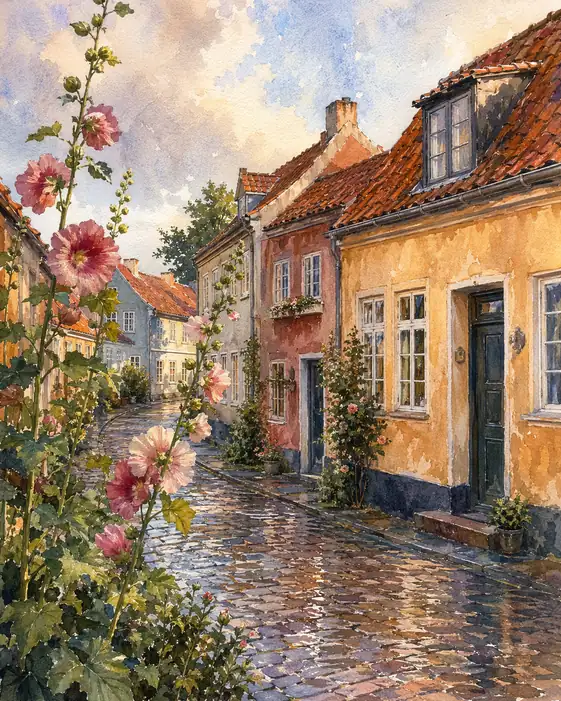 After the Rain, A Pastel Melody
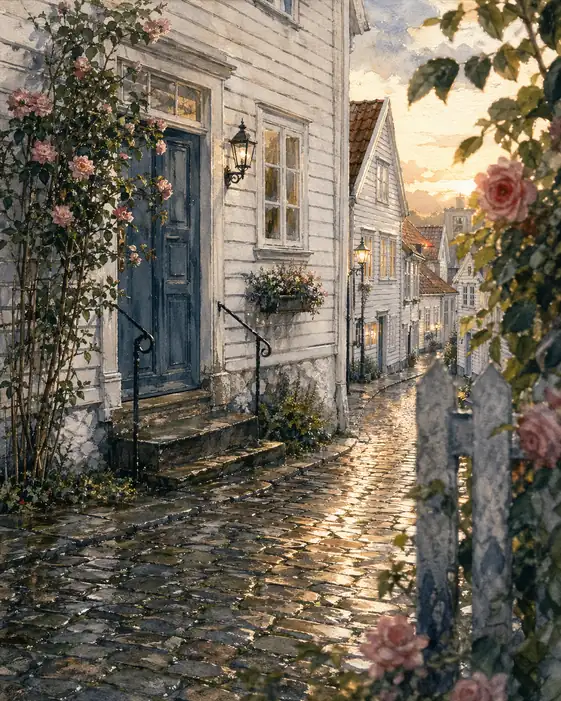 Golden Hour Reflections
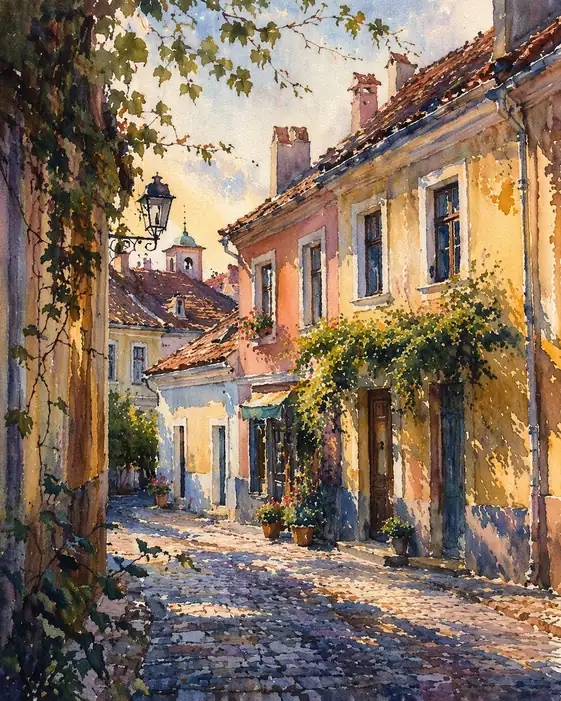 Sunlit Path: A Cobblestone Memory
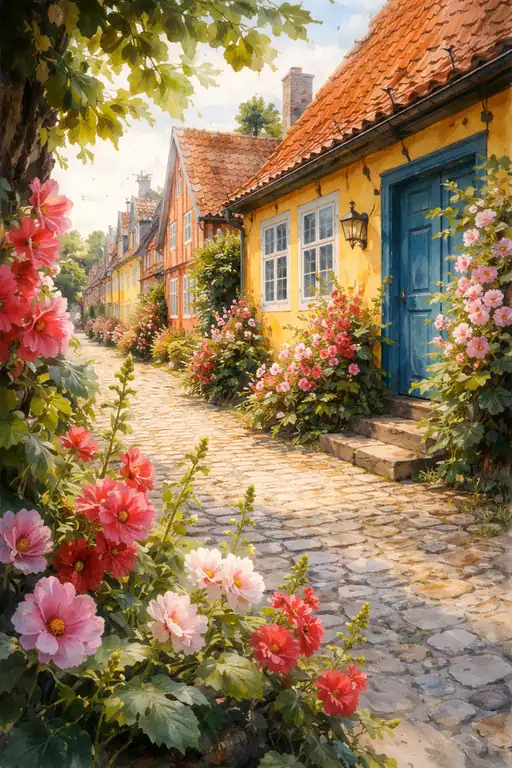 Sunlit Memories of a Summer Lane
 Symphony of Color on a Morning Lane
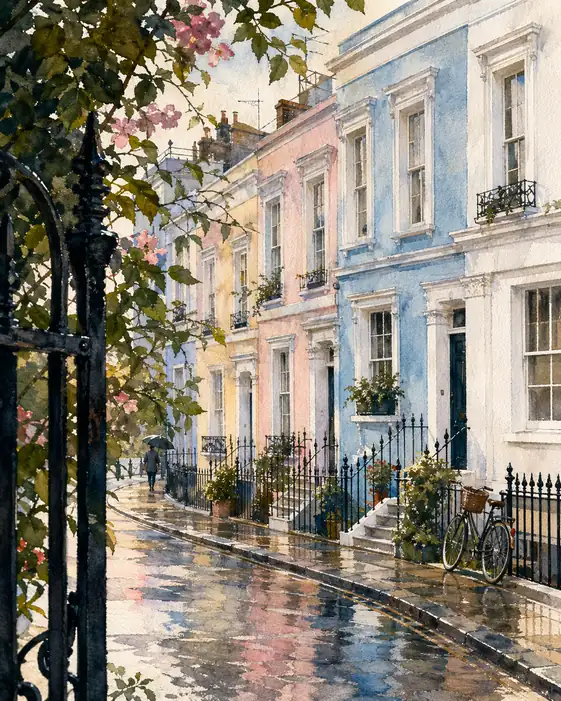 Rain-Washed Reflections of the City
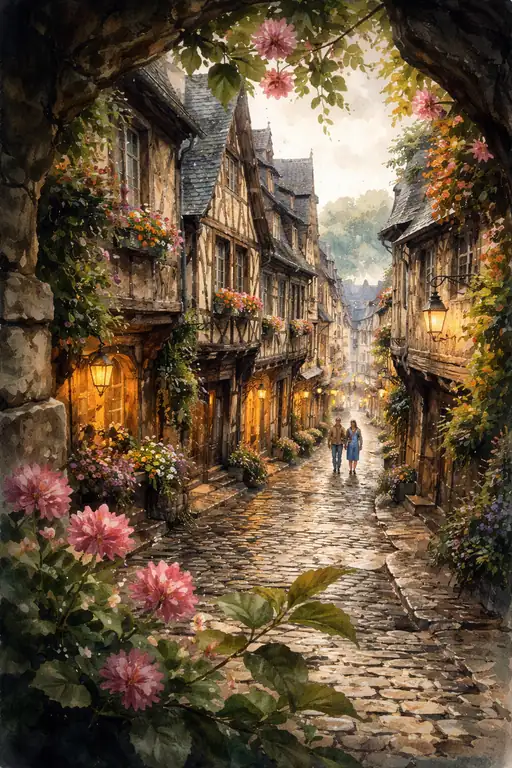 Romance in the Twilight Rain
 Gateways to the Blue Horizon
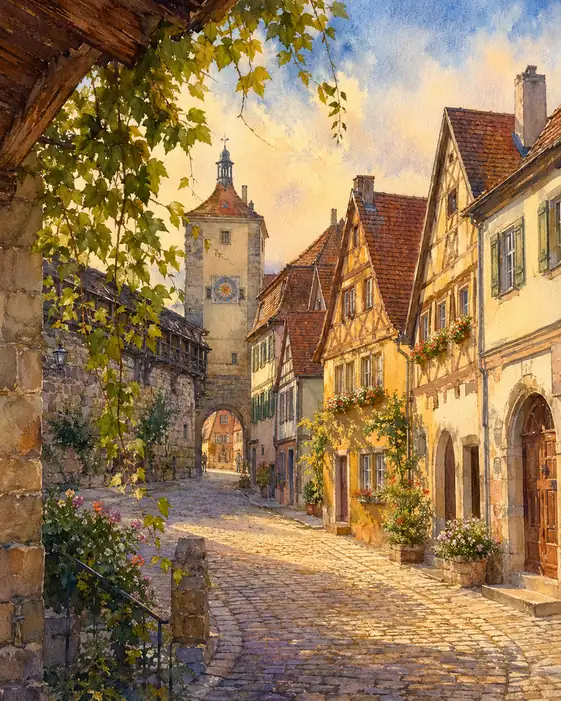 A Heartwarming Stroll Down a Nostalgic European Cobblestone Lane
 Archway to the Gilded Tower