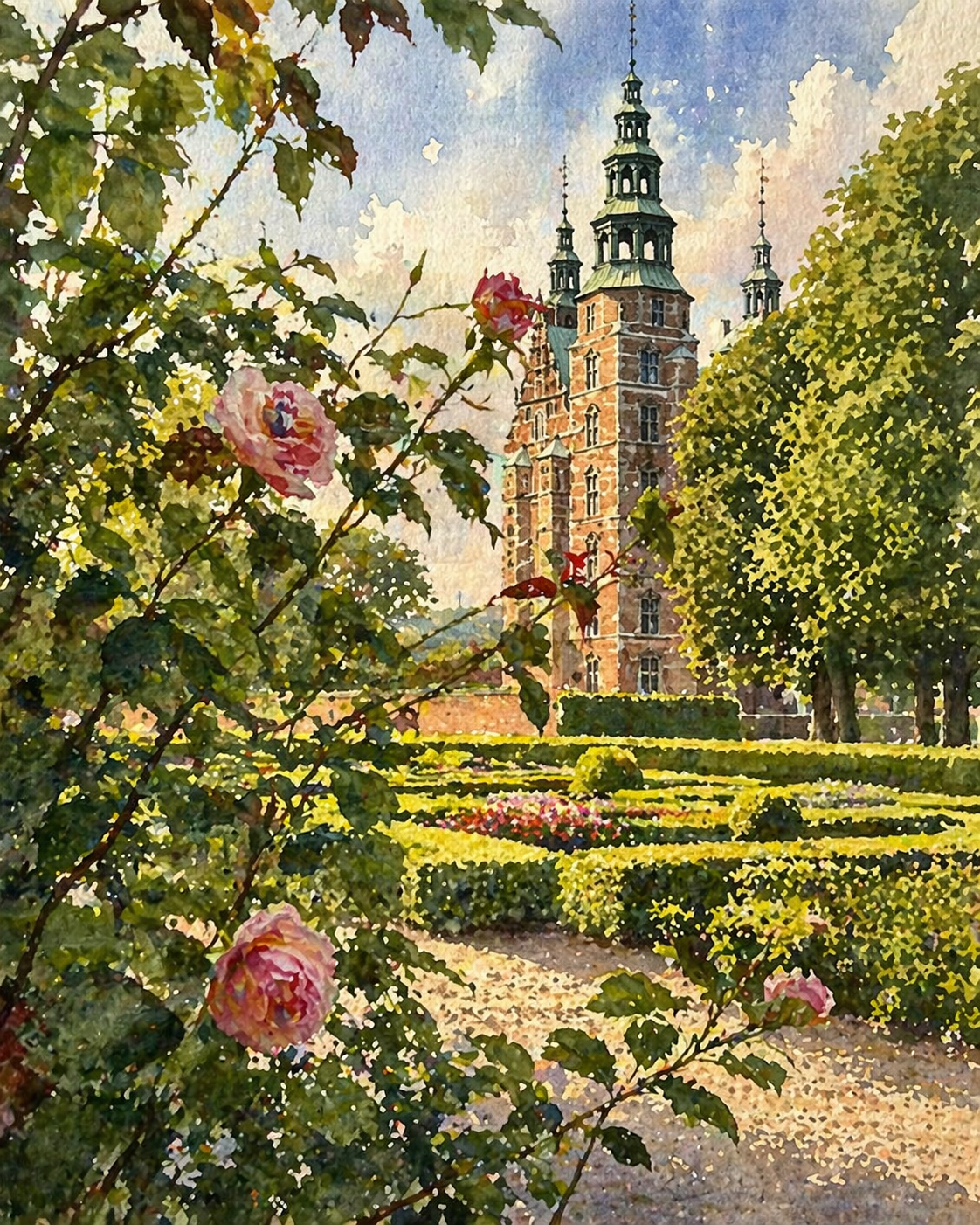
The Blush of Rosenborg
Critique
1. Introduction This watercolor painting masterfully captures a picturesque scene featuring a grand historical castle and its surrounding formal gardens under a bright, clear sky. The artwork exhibits a remarkable balance between detailed architectural rendering and the fluid, expressive qualities inherent to the watercolor medium. By situating traditional motifs within a vibrant, luminous atmosphere, the artist creates a bridge between classical landscape traditions and a contemporary sense of light and space. 2. Description In the immediate foreground on the left, a cluster of blooming pink roses and lush greenery frames the view, providing a rich focal point and established depth. The midground and background are dominated by a monumental brick palace with distinct green-roofed spires and ornate facades, characterized by meticulous attention to masonry and ornamentation. A meticulously manicured garden with geometric hedges stretches across the lower half of the frame, bisected by a sunlit gravel path that draws the viewer’s eye toward the structure. 3. Analysis The color palette is defined by the warm, terracotta tones of the brickwork juxtaposed with the oxidized copper green of the towers, creating a sophisticated tonal harmony. The artist employs a variety of watercolor techniques, including delicate washes for the cloud-filled sky and dapple-like brushwork to represent the shifting light on the foliage and garden surfaces. The strong verticality of the ascending towers provides a rhythmic contrast to the horizontal layers of the hedges, instilling the composition with a profound sense of architectural order. 4. Interpretation and Evaluation The primary strength of this work lies in its ability to synthesize atmospheric qualities with a rigorous structural foundation. The nuanced treatment of light—evident in the way shadows fall across the turrets and the path—demonstrates a sophisticated understanding of optical effects and spatial relationships. By integrating the organic vitality of the roses with the rigid permanence of the palace, the artist achieves a poetic dialogue between nature and artifice, marking it as a distinguished example of modern scenic representation. 5. Conclusion Upon close examination, the viewer discovers a wealth of subtle variations in tone and texture that reflect the fleeting nature of light within a static scene. The painting succeeds in conveying a sense of timeless elegance while maintaining a fresh, spontaneous energy through its spirited execution. The initial impact of its vibrant colors eventually gives way to an appreciation for its complex composition, leaving a lasting impression of technical proficiency and aesthetic depth.
Same Subcategory
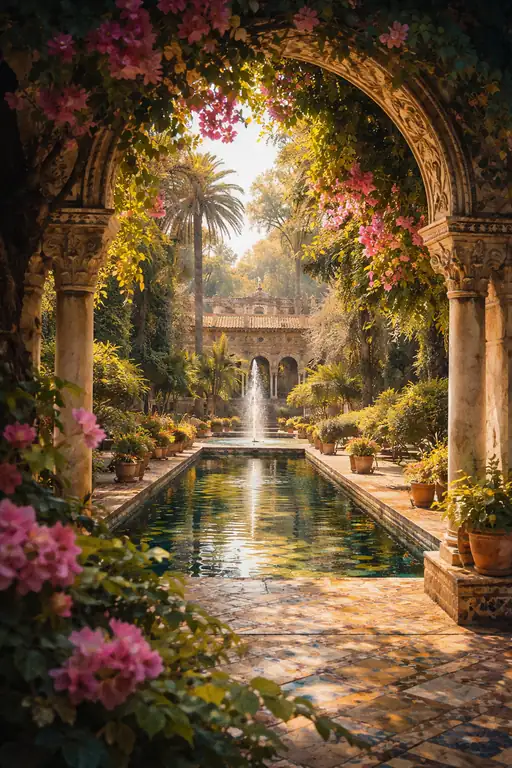 Sanctuary of Whispering Palms and Sunlit Waters
Similar Artworks
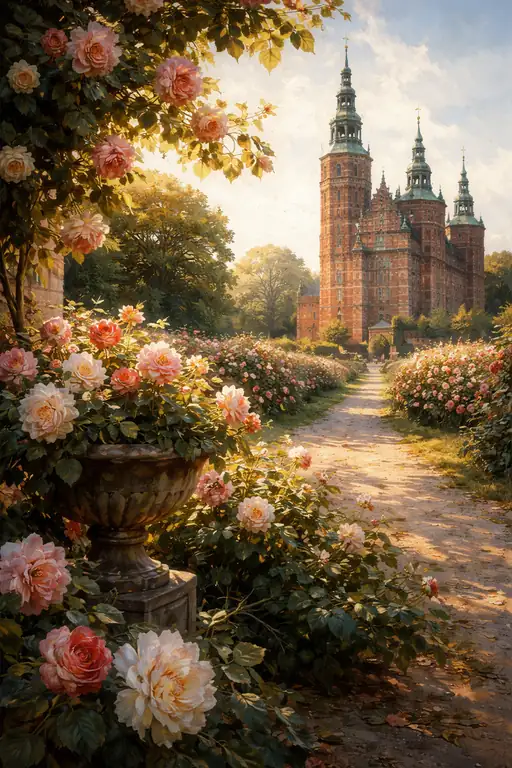 Secret Path to the Rose Citadel
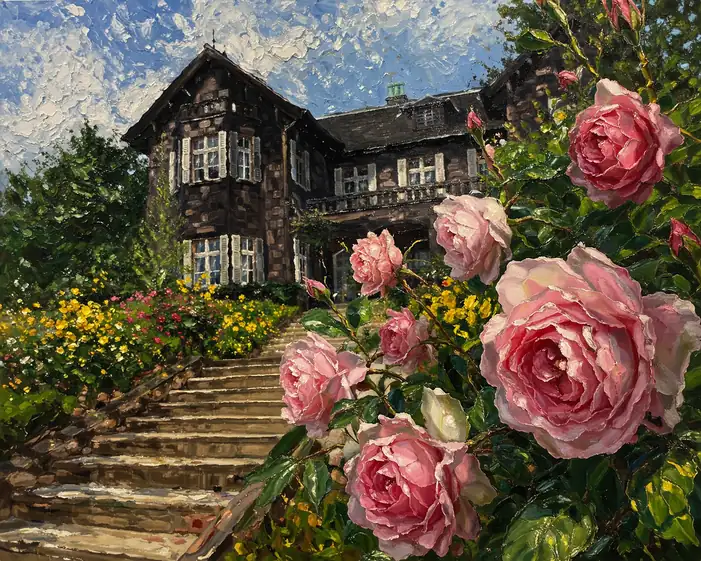 The Manor Embraced by Vibrant Blooms
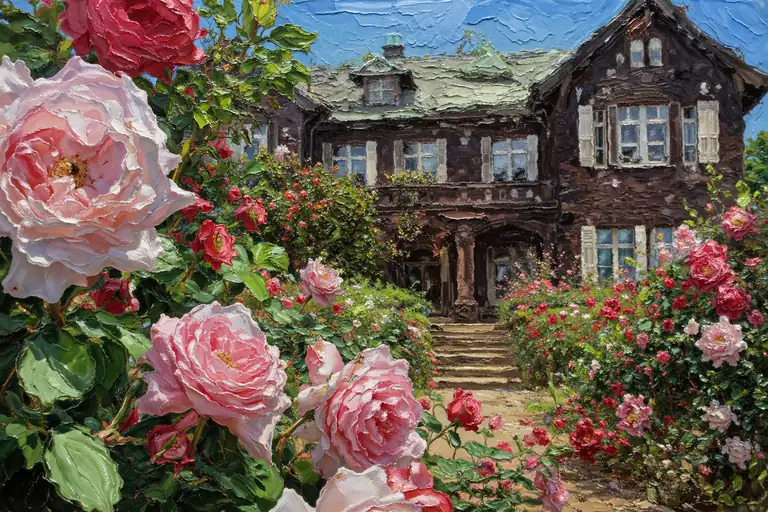 Gigantic Blooms Guarding the Historic Estate
 Spring's Radiant Path to the Snowy Summit
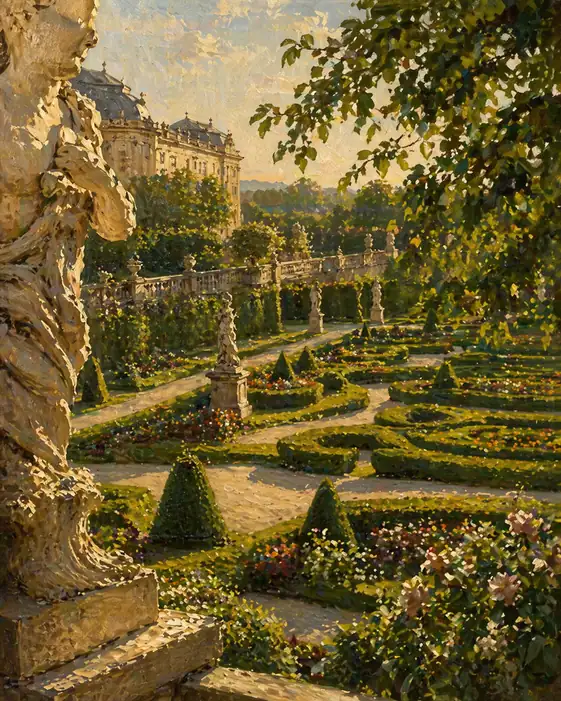 The Golden Hour Formal Garden
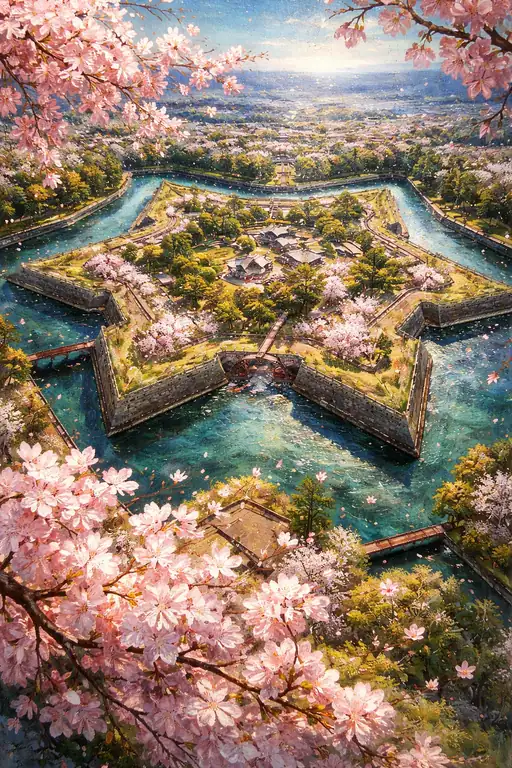 A Celestial Bloom upon the Earth
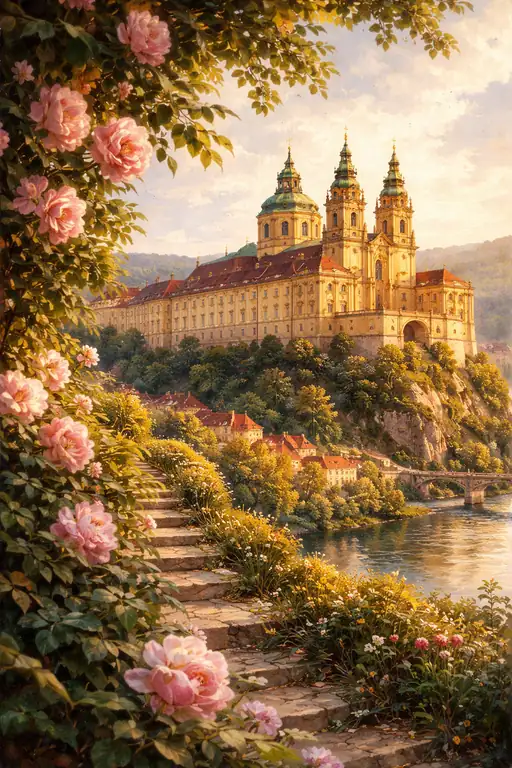 A Walk Through the Gilded Age
 Whispers of a Sunlit Summer Afternoon
 A Hymn of Life in the Cradle of Sunlight
 Serenity Within the Sunlit Archways