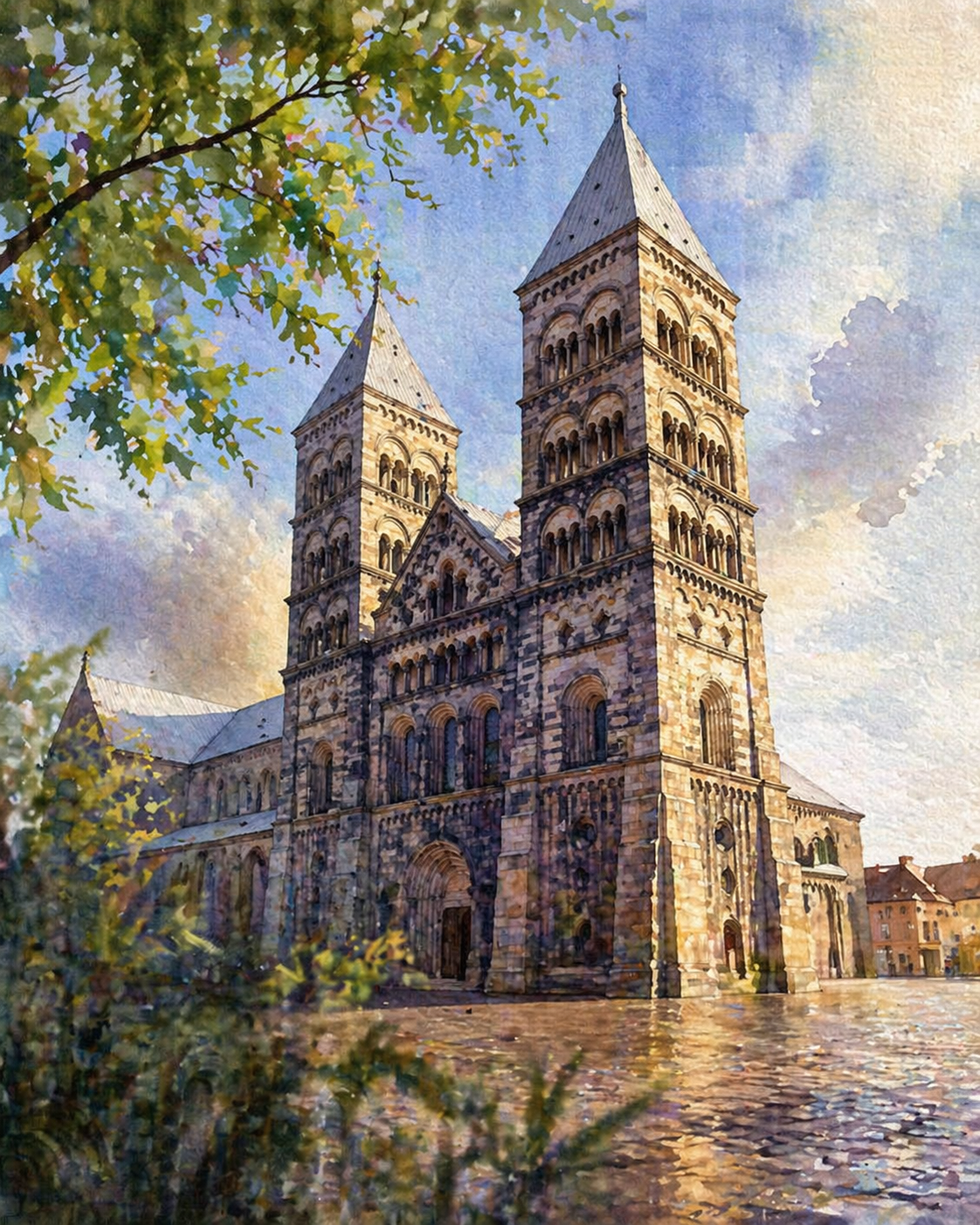
Echoes in the Stonework
Critique
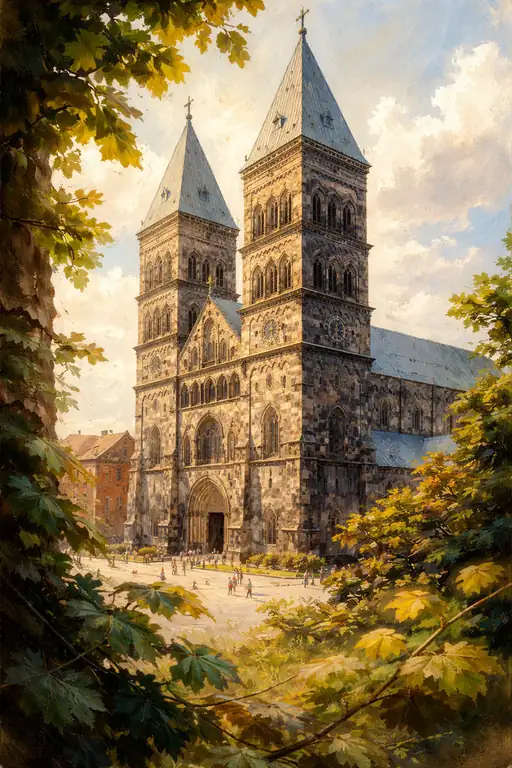
1. Introduction This watercolor painting depicts a grand Romanesque cathedral with twin spires, capturing the majestic presence of historical architecture under a soft, afternoon light. The work focuses on the harmonious relationship between the massive stone structure and its surrounding environment, including a leafy foreground and a reflective plaza. It serves as a study of architectural detail and the transient effects of light on weathered surfaces. 2. Description The vertical composition is centered on the cathedral's facade, characterized by multiple levels of arched windows and two prominent towers that reach toward the sky. On the left, a large deciduous tree with vibrant green foliage partially frames the building, adding a natural contrast to the stone. In the foreground, the wet cobblestone ground reflects the warm glow of the sun and the building’s silhouette, while the background reveals a glimpse of neighboring historical houses under a pale blue sky. 3. Analysis The artist employs a sophisticated range of transparent washes, particularly in the rendering of the sky and the water-slicked ground. The color palette is composed of warm ochres and siennas for the masonry, which are balanced by the cool blues and greys of the atmosphere. Light is handled with great sensitivity, with the sun hitting the towers at an angle to create deep shadows that emphasize the three-dimensional form of the architectural ornaments. 4. Interpretation and Evaluation The reflection in the foreground acts as a visual echo of the cathedral’s grandeur, doubling its impact and suggesting a moment of quiet after rain. The inclusion of the tree in the foreground provides a sense of human scale and situates the monument within a living, breathing urban context. Technically, the precise drawing of the individual stone blocks and arched galleries demonstrates a high level of craftsmanship, while the fluid handling of the reflections adds a poetic depth to the overall scene. 5. Conclusion In summary, the painting offers a serene and dignified tribute to historical architecture through its masterly use of watercolor. The initial impression of a solid, imposing monument gradually transforms into an appreciation for the delicate interplay of light, shadow, and environmental reflections. It remains an evocative example of how architectural subjects can be imbued with atmosphere and emotional resonance.
Same Subcategory
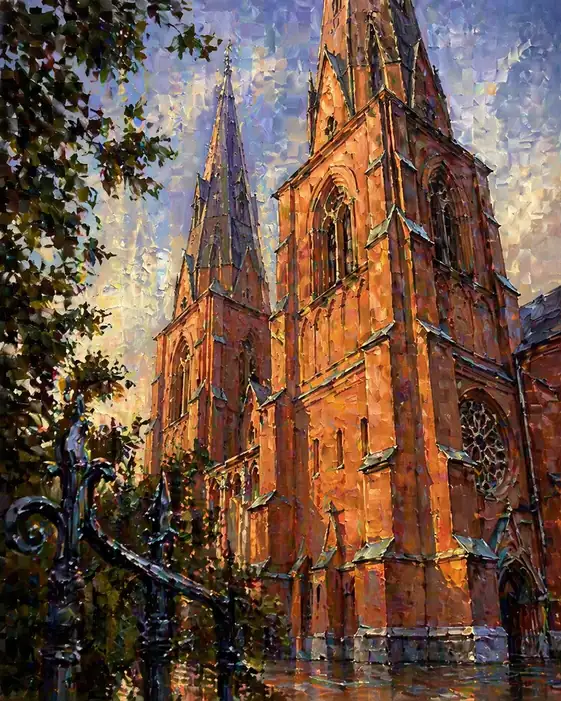 Dancing Bricks at Twilight
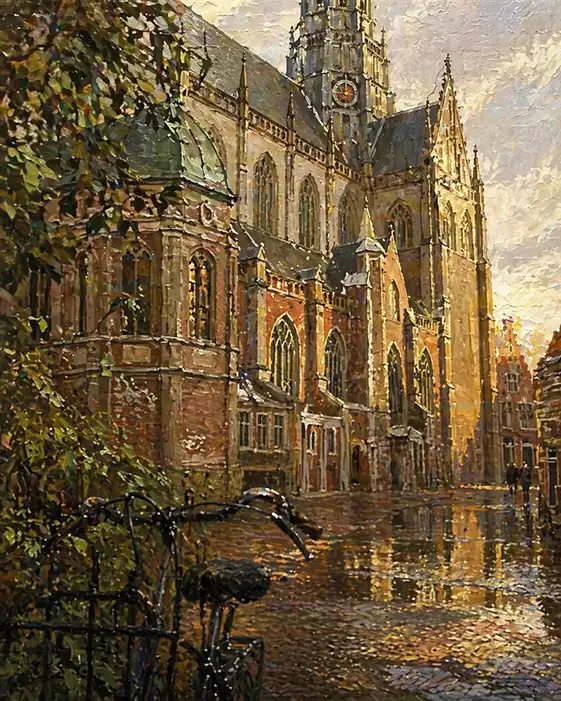 Golden Cathedral After the Rain
Similar Artworks
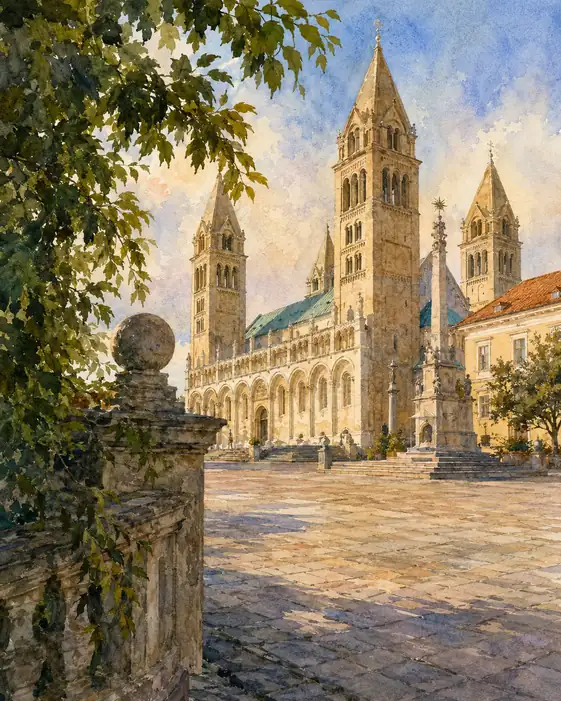 Golden Silence of the Cathedral Square
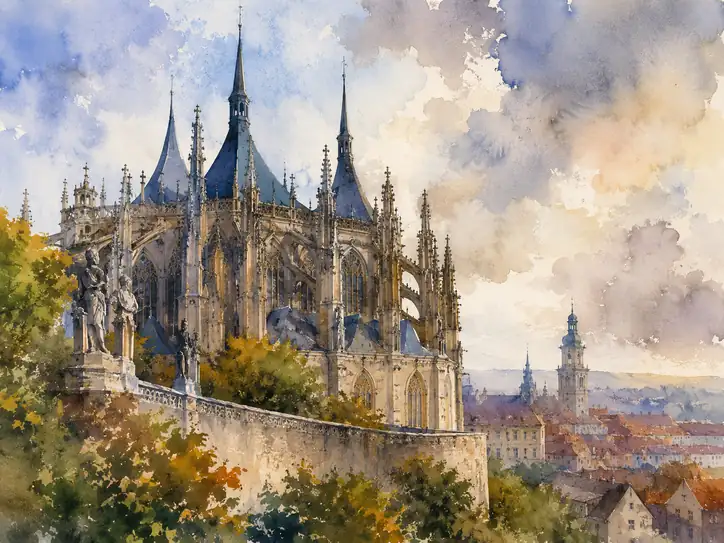 Cathedral of Gold and Amber
 Reflections of the Sacred Spires
 Shadows of Devotion Under the Canopy
 Spires of Eternal Light
 Echoes in the Rain-Washed Sanctuary
 Path to the Golden Twilight
 A Golden Blessing After the Rain
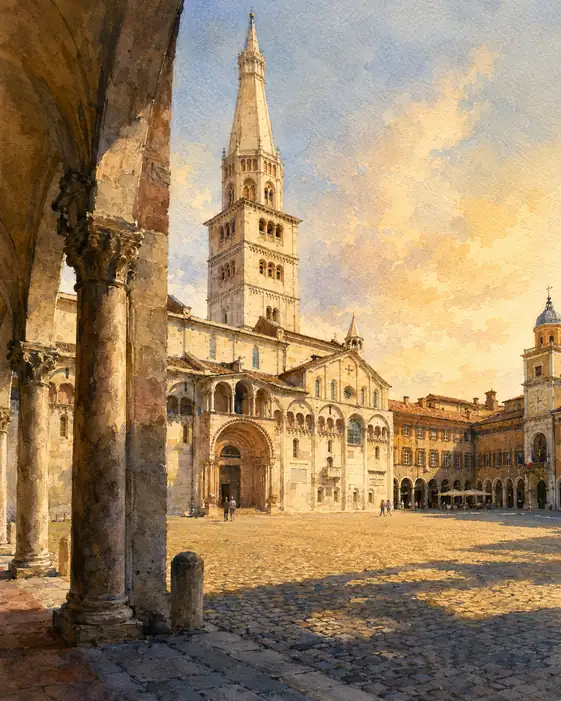 Sun-Kissed Stones of Modena
 Spires of Silent Prayers