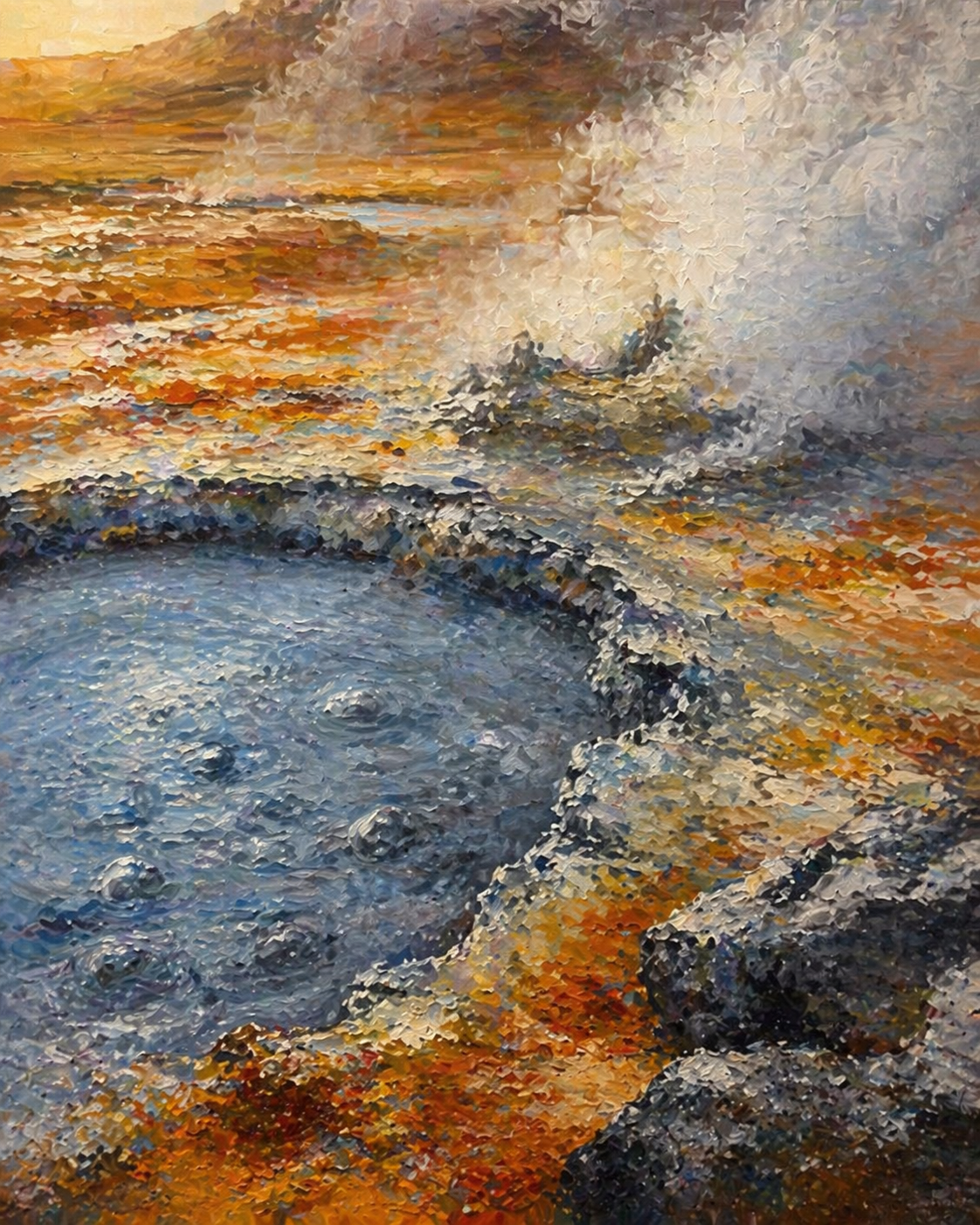
Earth's Breath
Critique
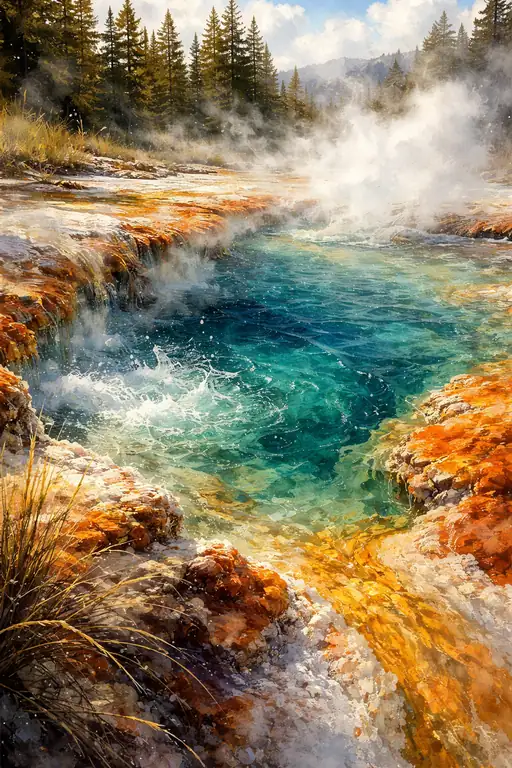
1. Introduction This vibrant oil painting captures a geothermal landscape, focusing on a bubbling hot spring set within a mineral-rich crystalline terrain. The artist utilizes an expressive, post-impressionist style to convey the raw energy and heat of the earth's surface. Through a combination of bold color and vigorous texture, the work explores the dynamic interplay between water, steam, and volcanic earth. 2. Description The lower left of the vertical composition features a circular pool of turquoise water, its surface disturbed by active bubbles and ripples. Surrounding the spring is a desolate landscape of textured rock and earth, rendered in varying shades of orange, yellow, and deep brown. In the background, thick plumes of white steam billow upward, partially obscuring the distant mountains that are bathed in a soft, golden afternoon light. 3. Analysis The artist employs a heavy impasto technique, with short, rhythmic brushstrokes that create a shimmering, agitated surface. The color palette is built upon a high-contrast scheme, pitting the cool cerulean of the pool against the warm, earthy tones of the surrounding ground. This juxtaposition emphasizes the unique chemical and thermal properties of the geothermal site, while the textured application of white paint effectively suggests the density and movement of rising vapor. 4. Interpretation and Evaluation The bubbling pool serves as a central point of vitality, representing the hidden power of subterranean forces. The choice to omit human presence reinforces the primeval and untamed nature of the environment, inviting the viewer to consider the earth as a living, breathing entity. Technically, the sophisticated handling of light and texture successfully translates a fleeting geological event into a permanent and tactile visual experience, demonstrating a strong command of color theory. 5. Conclusion In summary, the painting offers a powerful and sensory-driven interpretation of a geothermal wonder through its energetic brushwork and vivid palette. The initial impression of chaotic activity eventually gives way to an appreciation for the complex beauty of the earth's natural processes. It remains a compelling example of how traditional landscape subjects can be revitalized through a modern, expressive lens.
Same Subcategory
Similar Artworks
 The Pulsing Veins of a Primordial World
 Earth's Breath: The Steaming Heart of the Geothermal Valley
 The Eye of Primordial Light
 When Shadows Learn to Paint
 The Turquoise Eye of the Geyser
 Whispers of the White Terraces
 Heaven and Earth Ablaze
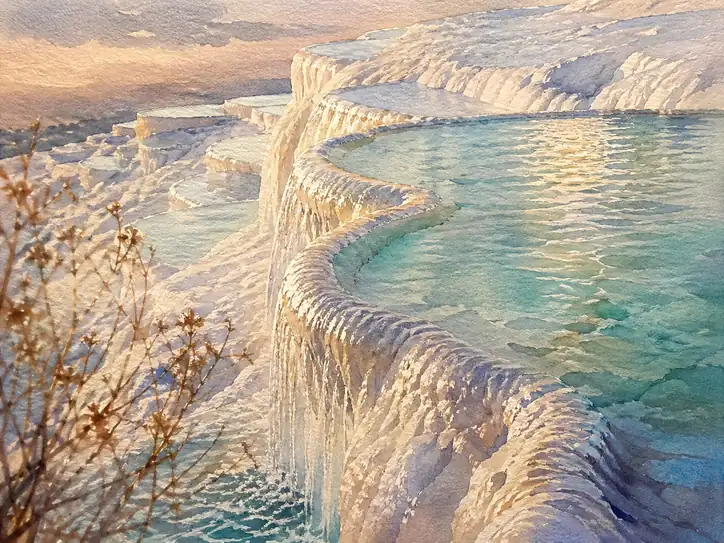 Sanctuary of Water and Stone: A Fleeting Eternal Glow
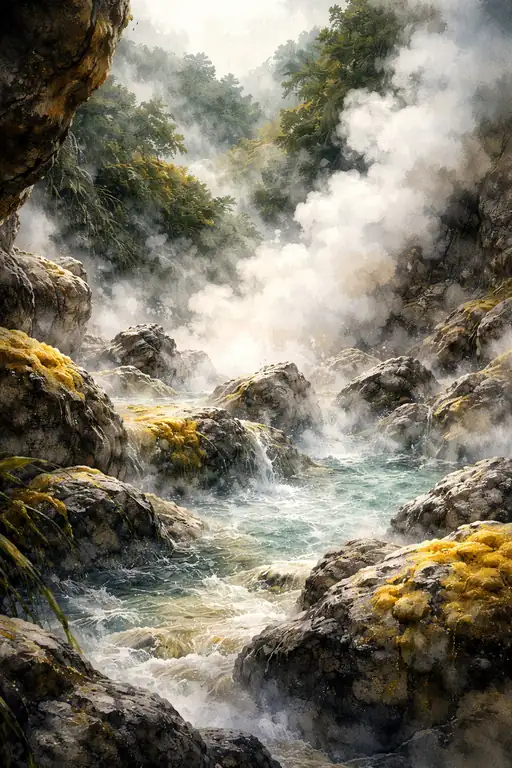 The Ethereal Breath of the Hidden Springs
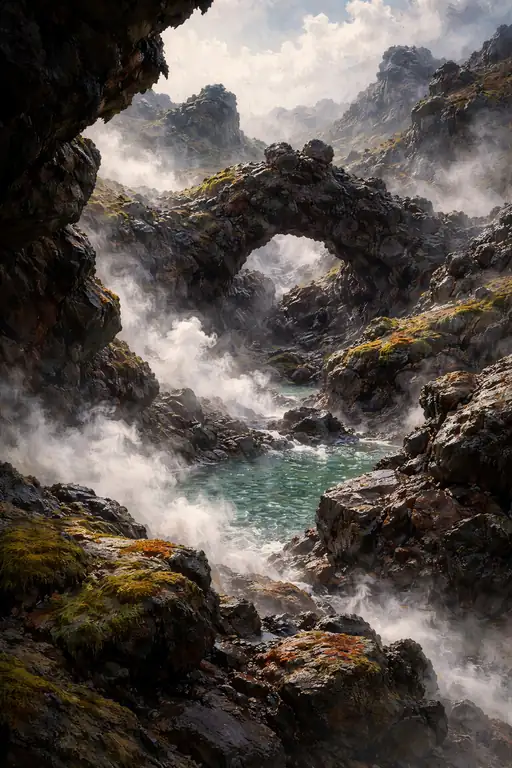 Breath of the Ancient Arch