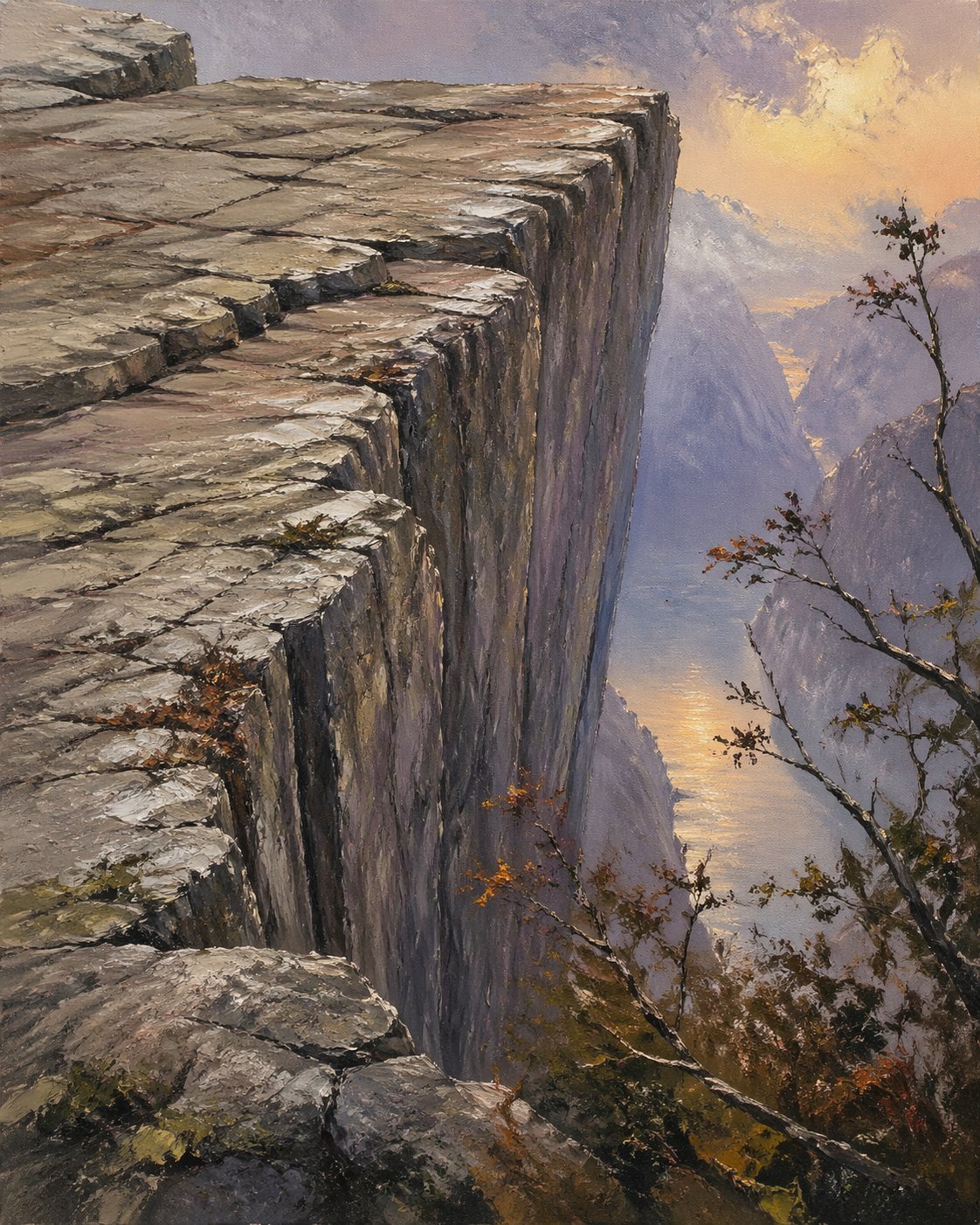
Edge of the Abyss
Critique
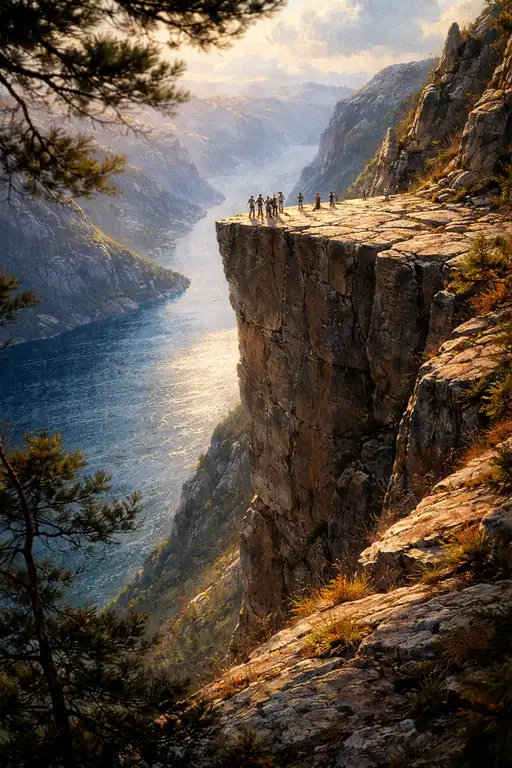
1. Introduction This evocative oil painting depicts the iconic Preikestolen plateau, a flat-topped cliff overlooking a deep Norwegian fjord. The composition is strikingly vertical, emphasizing the terrifying yet beautiful height of the jagged stone formation. By placing the viewer directly on the edge of the plateau, the work creates an immersive experience of the vastness and power of the natural landscape. 2. Description The left side of the canvas is dominated by the gray, fractured surface of the rock plateau, rendered with thick, tactile brushstrokes that suggest ancient weathering. Below the cliff's sheer drop, a winding fjord reveals water shimmering with the golden light of a low-lying sun. On the right, slender branches with sparse, autumnally-colored leaves reach into the frame, providing a delicate contrast to the heavy mass of the stone. 3. Analysis The artist employes a sophisticated use of atmospheric perspective, rendering the distant mountains in soft lavender and blue tones that recede into the golden haze. The color palette revolves around a core contrast between the cool, stony grays of the foreground and the warm, ethereal glows of the sky and reflected water. The sharp diagonal line of the plateau creates a dynamic sense of movement, guiding the eye toward the luminous background. 4. Interpretation and Evaluation This work masterfully captures the "sublime"—a quality characterized by the simultaneous feeling of beauty and overwhelming power or danger. The technical execution of the rock textures is exceptional, providing a grounded reality that balances the dreamlike, hazy quality of the far-off fjords. The composition successfully balances heavy terrestrial elements with fluid light and empty space. 5. Conclusion In summary, the painting is a powerful testament to the grandeur of the natural world and the emotional impact of its dramatic formations. The artist’s ability to manipulate light and texture transforms a geographical feature into a space of aesthetic contemplation. What begins as a study of stone and water ultimately becomes an exploration of perspective and the limits of human perception.
Same Subcategory
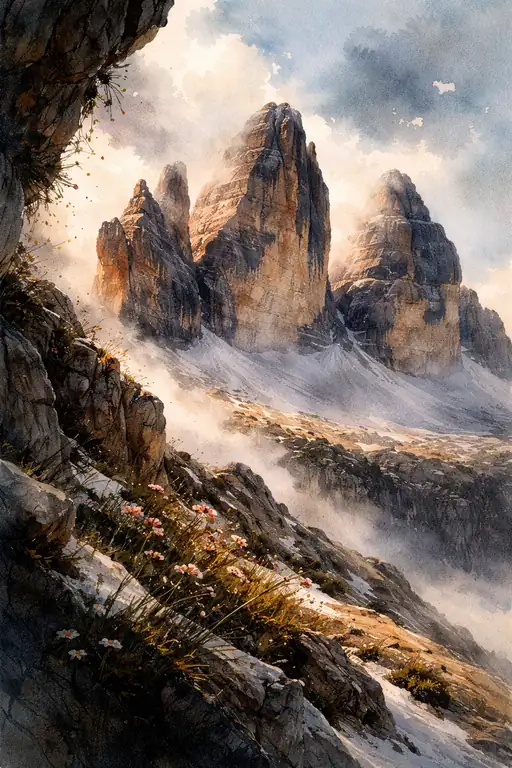 Majesty in Mist: The Awakening of the Crags
Similar Artworks
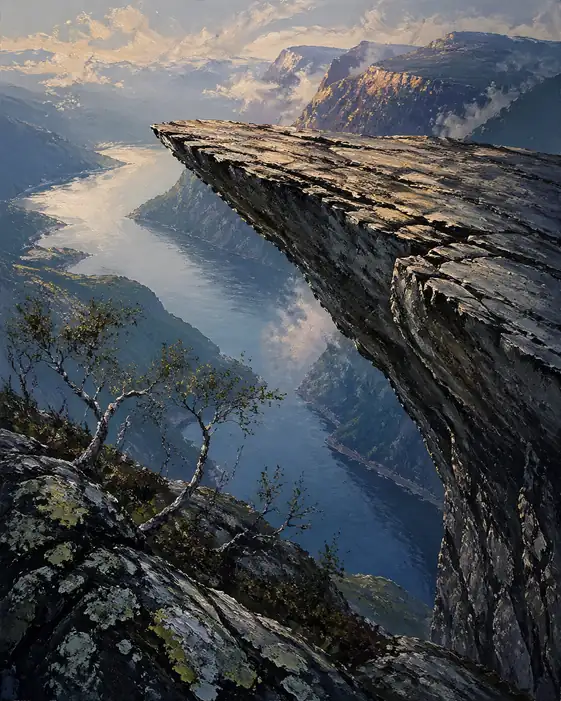 Suspended Over Eternity
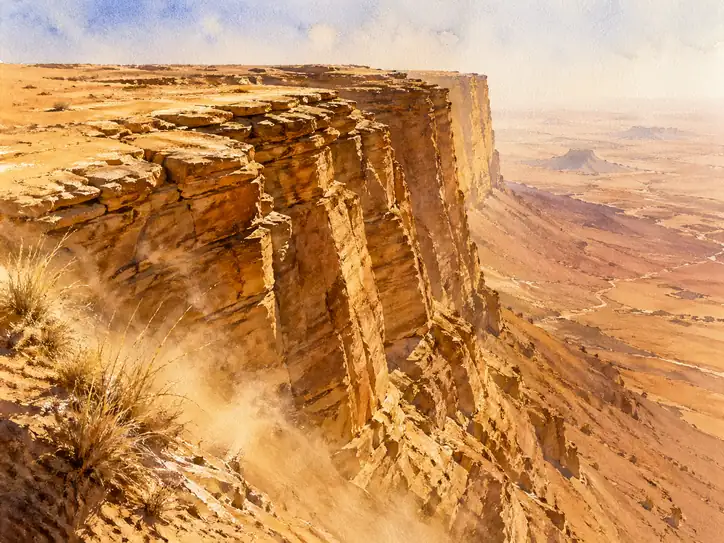 The Wind's Whisper: Dust over the Expanse
 Echoes of the Ancient Sun
 The Fjord's Embrace
 The Edge of Silence
 Glowing Magic: An Open Book in the Library
 Canyon of Enduring Power: Cacti Flourishing in the Desert's Golden Light
 Echoes of the Red Earth
 Soliloquy of the Desert: A Dialogue in Light and Shadow
 Echoes of the Burning Horizon