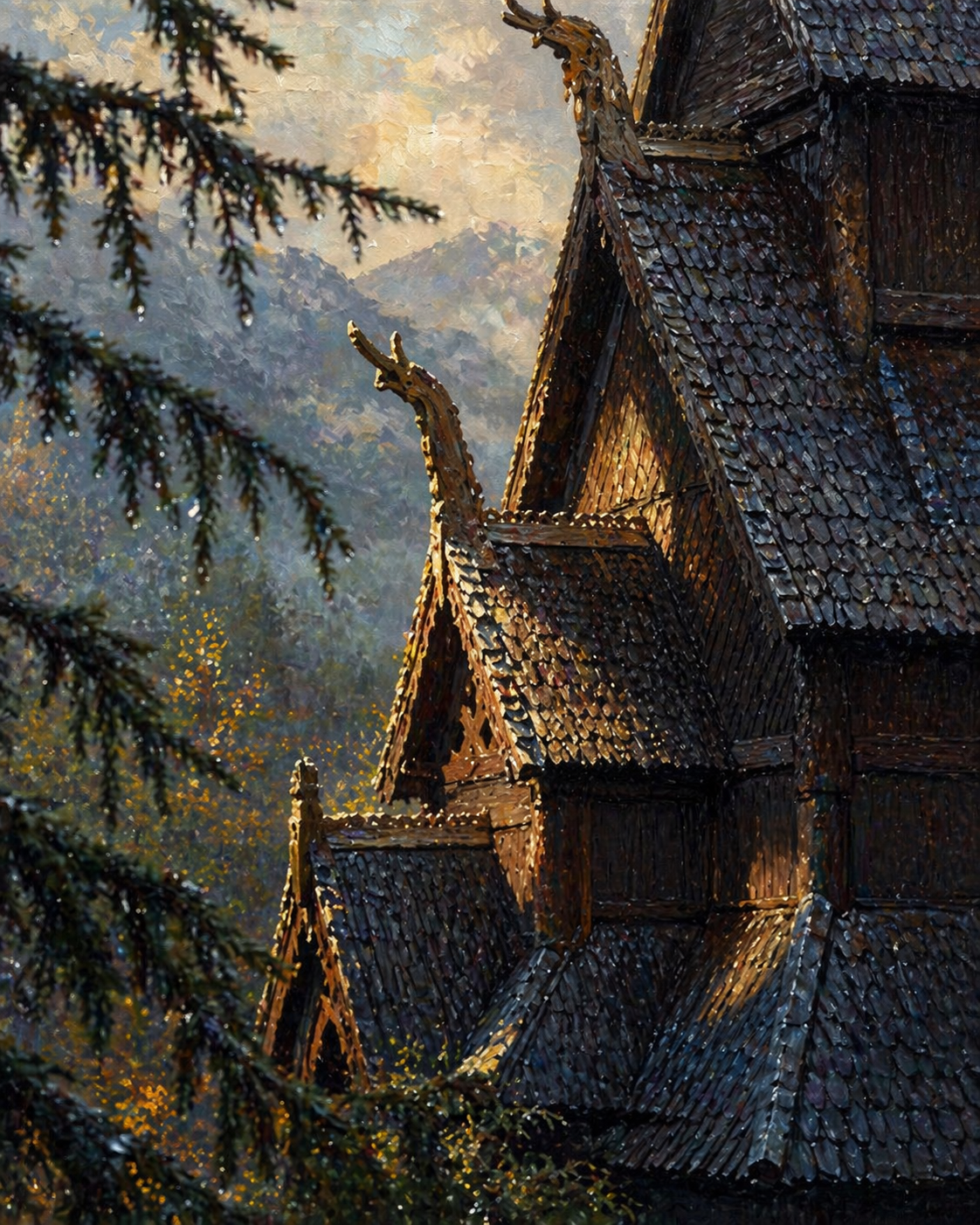
Ancient Scales of the Forest
Critique
1. Introduction This architectural oil painting provides an intimate, close-up view of a traditional Nordic stave church nestled within a forest. The work emphasizes the intricate woodwork and symbolic carvings of the structure, using a rich, impasto technique to highlight the intersection of cultural heritage and natural light. It successfully conveys the mystical atmosphere of the Northern landscape, where ancient human constructions seem to grow organically from the surrounding woodland environment. 2. Description The composition is dominated by the steep, shingled roofs of the church, which rise diagonally across the right side of the frame. The shingles are rendered as individual, scale-like plates of dark, weathered wood that create a rhythmic visual pattern. Distinctive carved dragon heads protrude from the gables, silhouetted against a misty mountain background. Bright, golden sunlight filters through the canopy, creating brilliant highlights on the roof surfaces. In the foreground, the dark branches of a coniferous tree frame the view. 3. Analysis The artist employs a heavy application of paint, using short, thick strokes to create a tactile surface that mimics the rough texture of ancient wood. The color palette is composed of deep umbers and siennas, contrasted with bright ochres and pale yellows where the light strikes. This play of light is crucial, as it defines the form and volume of the complex roof structure. The background mountains are rendered in soft, muted tones, providing a sense of atmospheric depth and isolation within the frame. 4. Interpretation and Evaluation The painting evokes the mystical and historic atmosphere associated with ancient Northern European architecture. The choice to focus on the dragon-headed gables highlights the unique fusion of diverse symbolic traditions within the stave church architecture. The execution is masterful, particularly in the way the sunlight is captured as a material force that transforms the dark wood into something glowing and alive. The work demonstrates high technical skill in texture rendering and deeply focused observational detail. 5. Conclusion Through its bold application of color and light, the piece offers a powerful tribute to historical craftsmanship. It succeeds in capturing the enduring spirit of a structure that has weathered centuries within the wild. My initial fascination with the geometric repetition of the shingles evolved into a deeper appreciation for the spiritual stillness and historical weight the church embodies. The painting serves as an evocative reminder of the timeless dialogue between architectural form and the natural world.
Same Subcategory
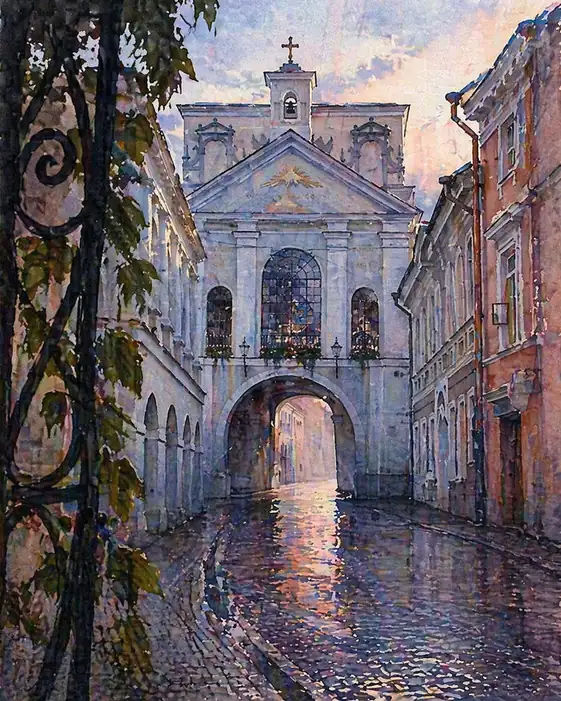 Gateway to Stillness
Similar Artworks
 Wooden Resonance: Close-up of an Acoustic Guitar
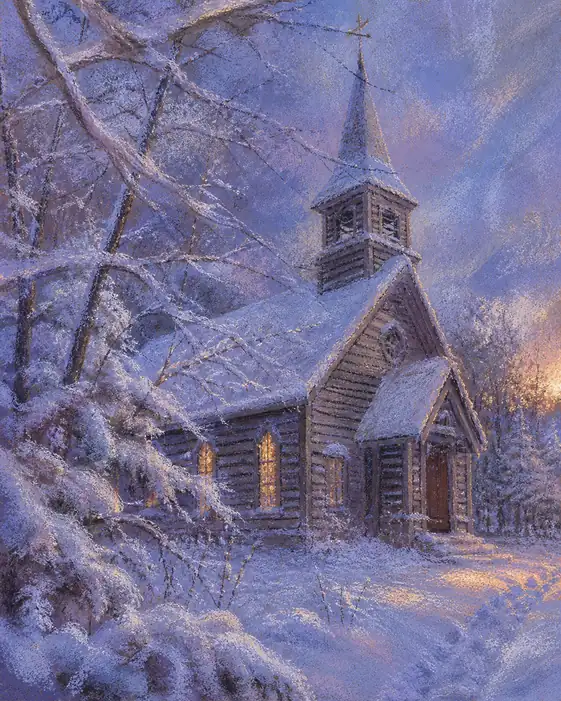 Quiet Sanctuary in the Twilight Snow
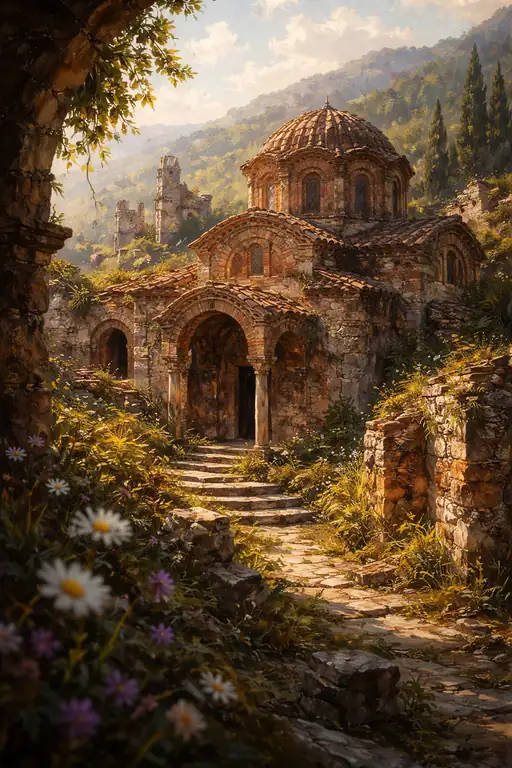 Footsteps of Time: The Sanctuaries' Slumber
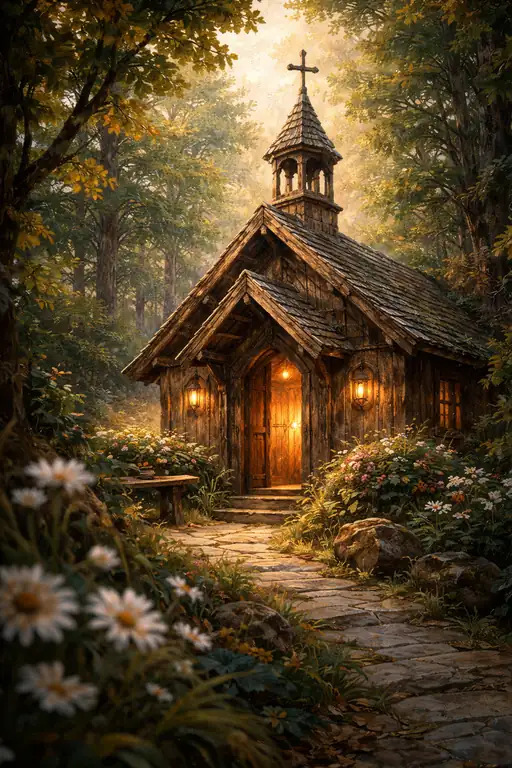 Dusk’s Golden Promise Within the Forest Sanctuary
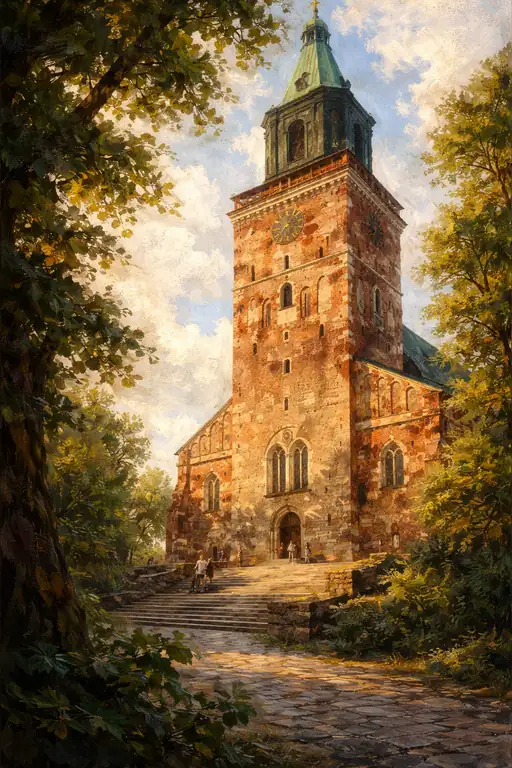 Sunlit Path to Turku Cathedral
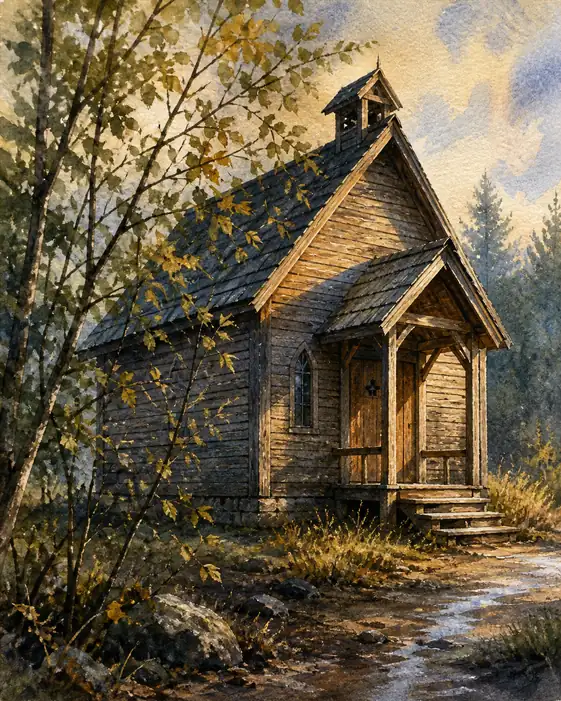 Sanctuary of the Whispering Woods
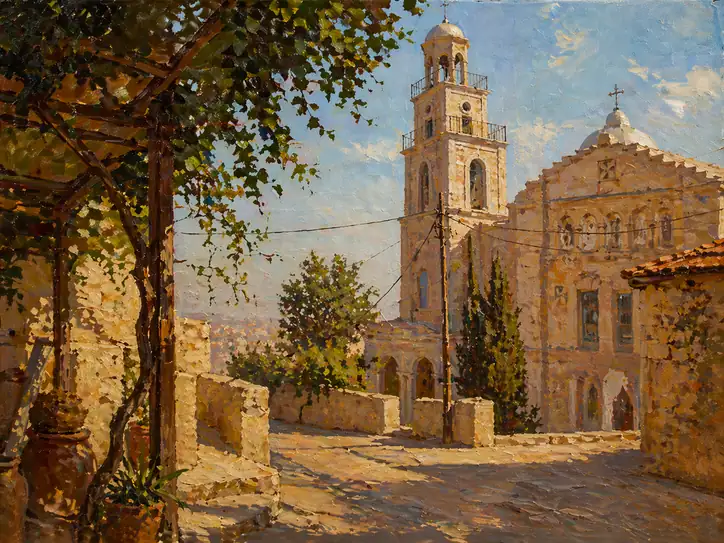 A Mediterranean Summer Song
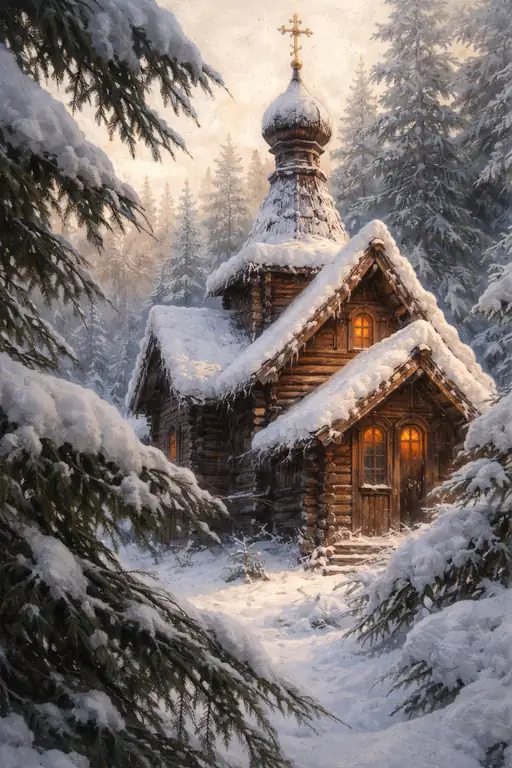 Warm Glow in the Silent White Forest
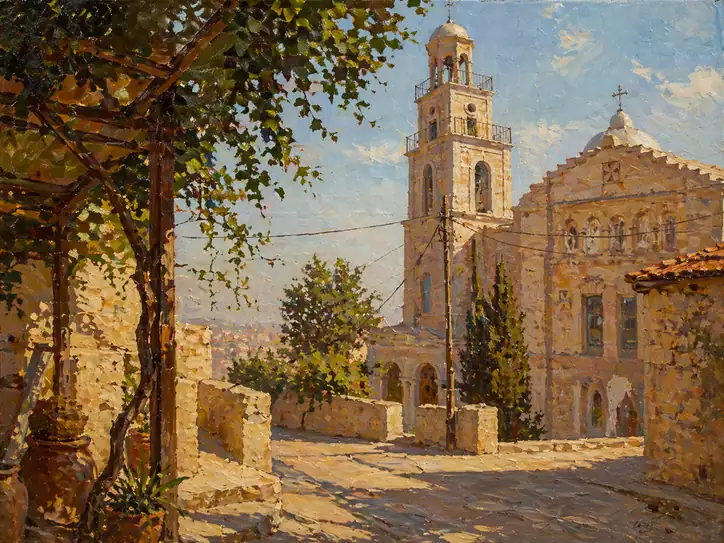 Under the Vineyard's Watch
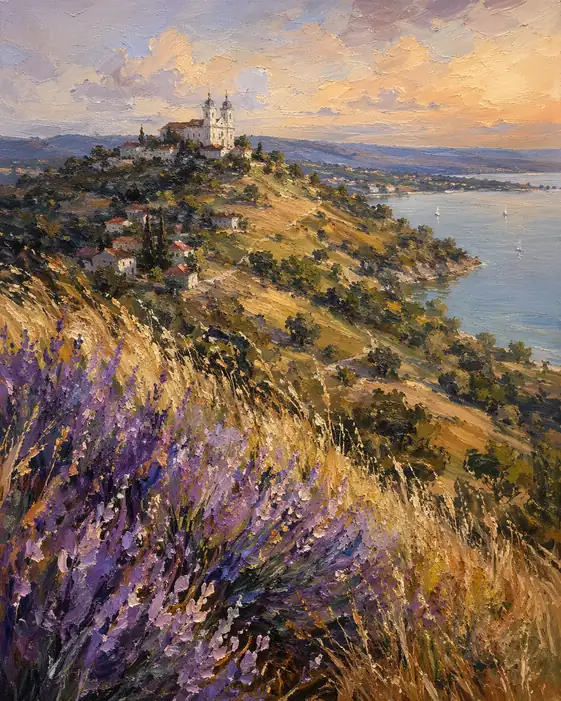 Lavender Bloom over the Azure Sea