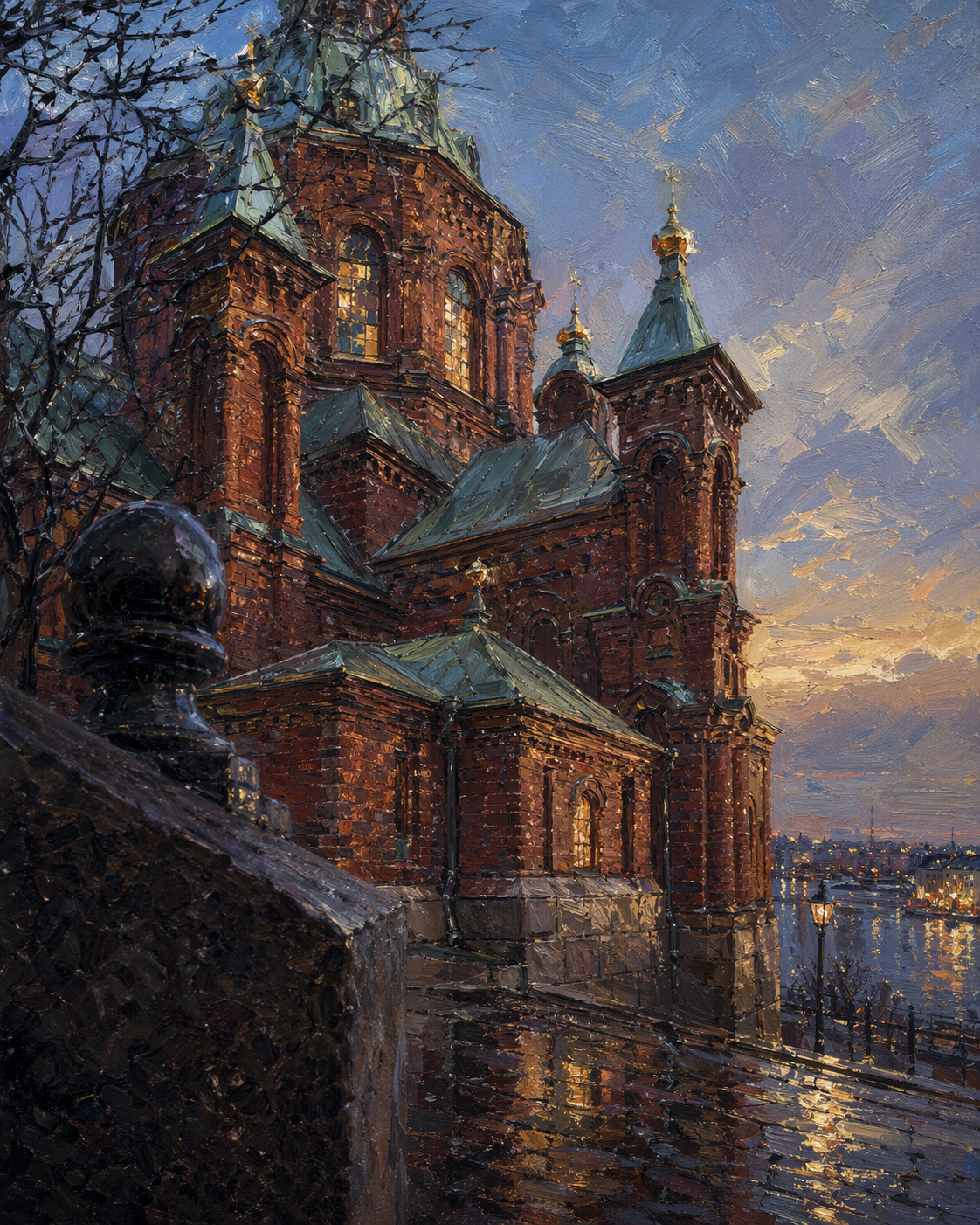
Golden Gaze of the Fortress
Critique
1. Introduction This powerful architectural painting features a grand red brick cathedral at the height of a sunset, overlooking a coastal city. The work dramaticizes the monumentality of the structure through a low perspective and intense color saturation. It serves as an exploration of the emotional resonance between cultural landmarks and the natural spectacle of the evening sky. 2. Description The cathedral, characterized by its ornate brickwork and distinctive green domes topped with gold crosses, occupies the left and central portions of the canvas. In the lower left foreground, a dark, heavy balustrade provides a strong structural anchor and a sense of immediate proximity. Behind the church, the sky is filled with swirling clouds illuminated by the setting sun in shades of orange, gold, and deep blue. To the right, a glimpses of a distant harbor and city lights are visible, their reflections shimmering on a wet walkway in the foreground. 3. Analysis The artist employs a vigorous impasto technique, with thick slabs of paint creating a rugged, tactile surface that mirrors the weathered texture of brick and stone. The composition utilizes a soaring verticality, emphasizing the cathedral’s height and dominance over the surrounding landscape. A dynamic use of light—where the warm sunset glow hits the building's edges—creates a rhythm of highlights and deep shadows that defines the complex geometry of the architecture. The brushwork in the sky is particularly expressive, conveying a sense of movement and atmospheric energy. 4. Interpretation and Evaluation The work successfully conveys a sense of awe and spiritual gravity through its bold application of color and texture. By contrasting the solid, enduring mass of the cathedral with the fleeting, vibrant light of the sunset, the artist highlights a theme of timelessness within a changing world. The technical skill is apparent in the handling of the varied textures, from the rough masonry to the liquid reflections on the pavement. The painting is a triumphant example of how expressive technique can elevate a traditional architectural subject into a dramatic and modern visual statement. 5. Conclusion In conclusion, the painting is a masterful synthesis of architectural precision and emotional expression. The initial impression of a historical monument is transformed into a visceral experience of light and form through the artist's distinctive style. It remains a compelling study of how the interplay between man-made grandeur and natural beauty can be captured with such intensity and physical presence.
Same Subcategory
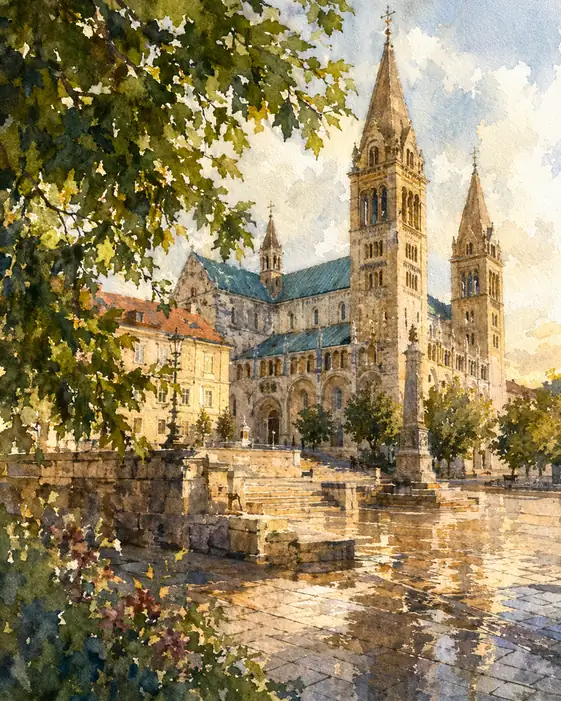 Golden Cathedral After the Rain
Similar Artworks
 Vibrant Rhythm of the Harbor and the Sacred Heights
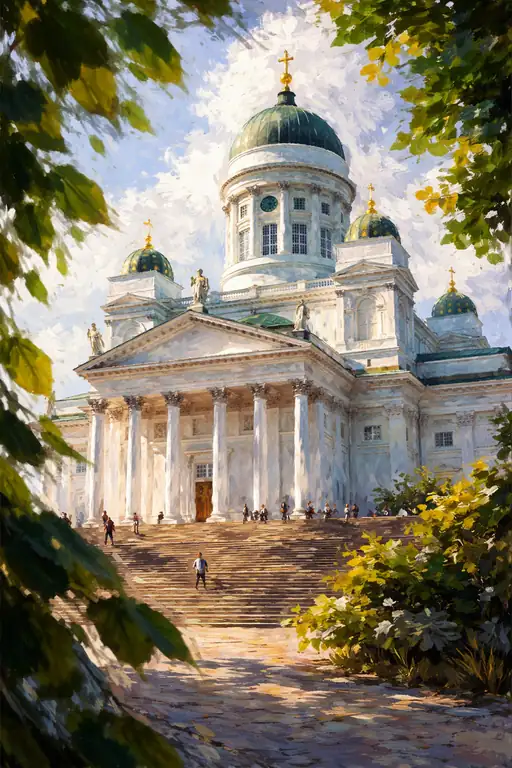 White Majesty: Helsinki Cathedral
 A Breathtaking Twilight View Over the Historic Silhouette of Dresden
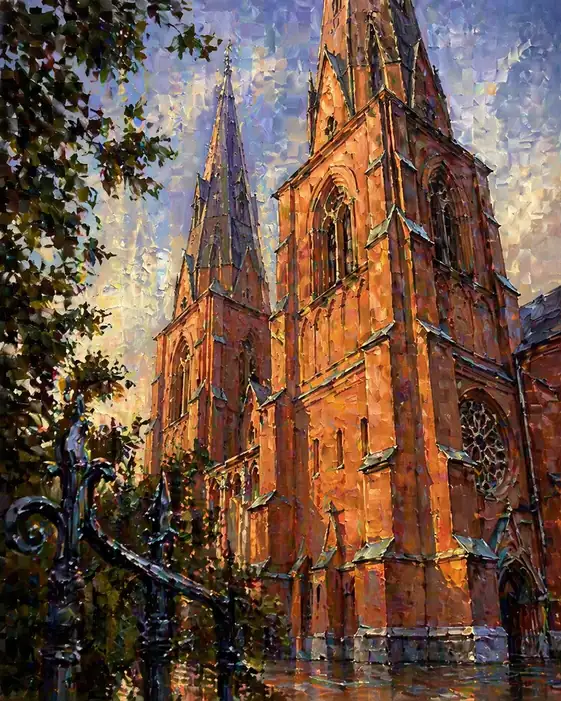 Dancing Bricks at Twilight
 Spring's Serenade to the Red Brick Guardian
 Hymn to the Eternal Light
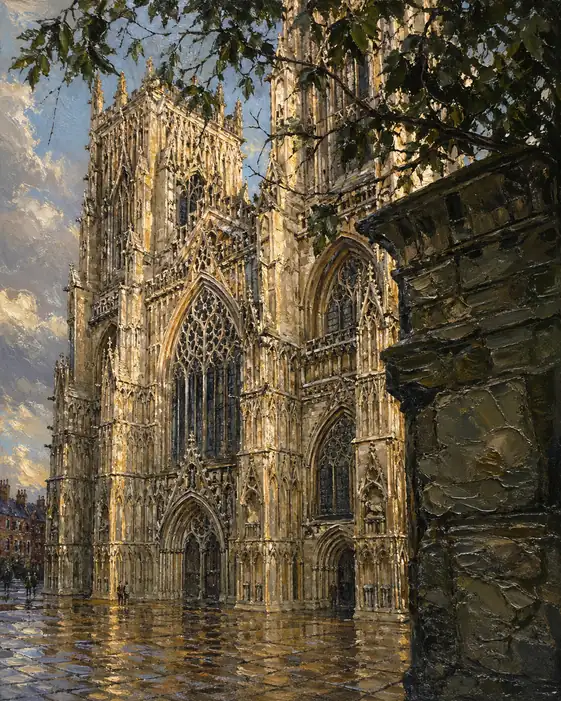 Prayers Reflected in the Rain-Slicked Stones
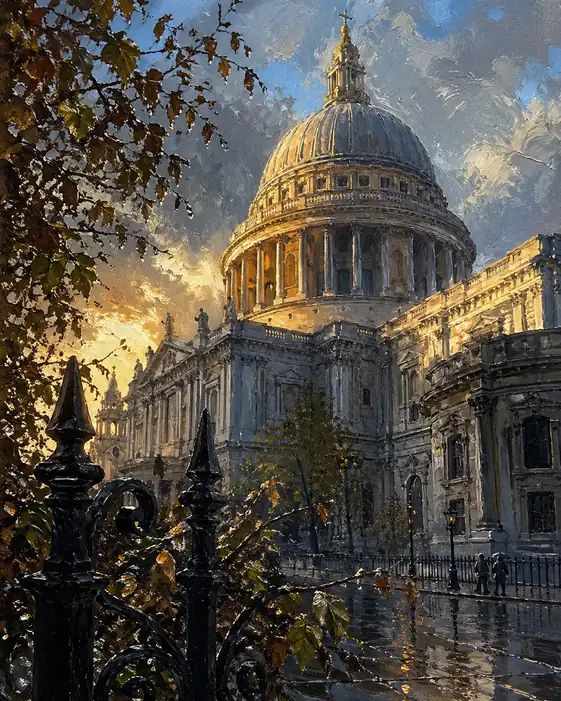 Sacred Autumn in the Heart of London
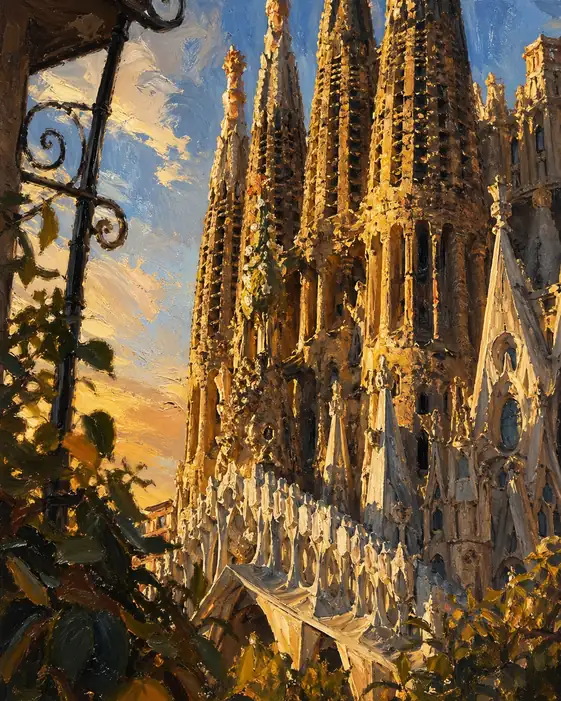 The Spire that Reaches for the Golden Heavens
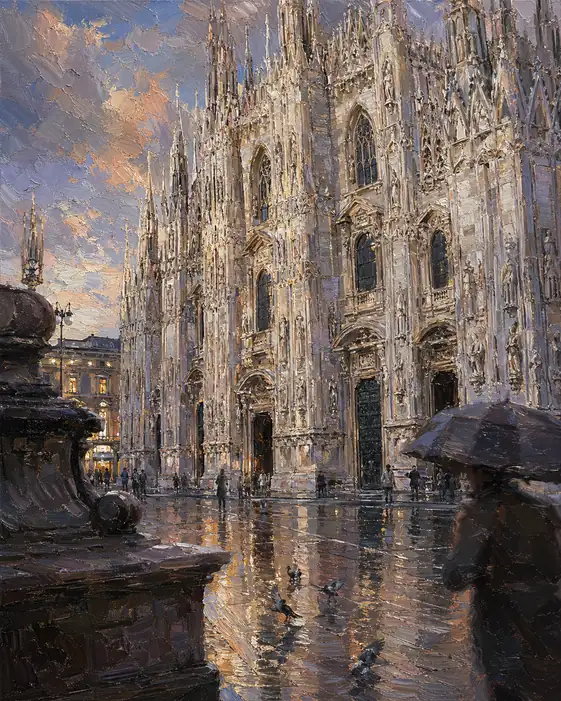 Solitude Beneath the Golden Spires