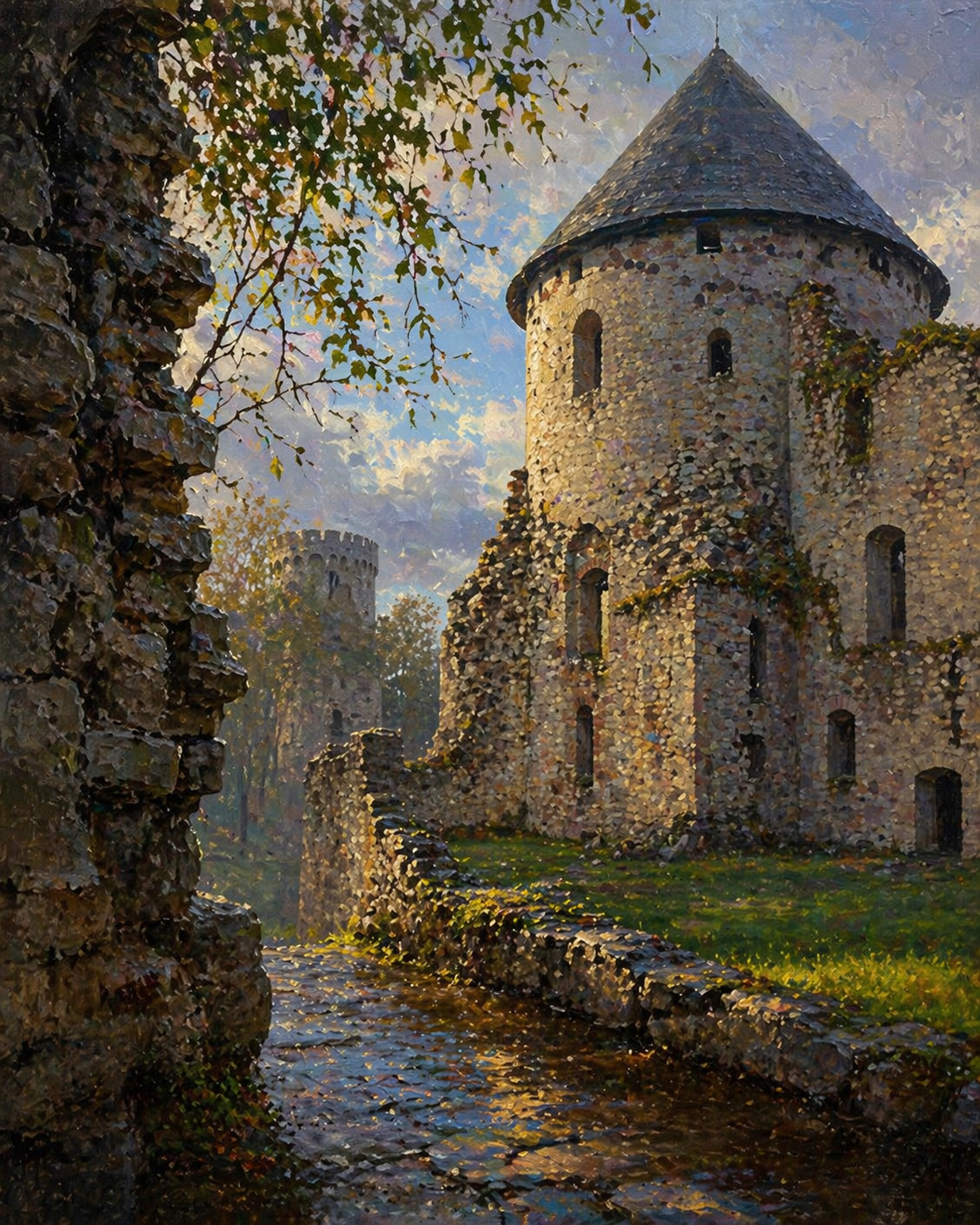
Autumn Light on Forgotten Stones
Critique
1. Introduction This oil painting presents a captivating view of ancient stone ruins set against a vibrant, light-filled sky. The composition centered on a robust circular tower evokes a sense of historical grandeur and the quiet passage of time. The artist employs an impressionistic technique characterized by thick, tactile brushstrokes that imbue the scene with dynamic energy and life. 2. Description The focal point is a towering cylindrical structure built from weathered, multi-colored stones, topped with a dark conical roof. To its left, a crumbling wall and another distant tower emerge from a misty backdrop of autumn foliage. In the foreground, a sun-drenched stone path or narrow watercourse leads the viewer’s eye toward the central ruins, while overhanging branches frame the upper left corner. 3. Analysis The artist utilizes a warm, earthy palette dominated by ochre, grey, and deep browns, contrasted sharply with the brilliant blues and whites of the sky. Light plays a critical role, catching the uneven surfaces of the masonry to create a complex mosaic of highlights and shadows. The heavy impasto application of paint adds a three-dimensional quality, emphasizing the rugged texture of the ruins and the organic forms of the surrounding nature. 4. Interpretation and Evaluation The work brilliantly captures the tension between the enduring strength of stone architecture and the inevitable reclamation of human structures by nature. There is a nostalgic yet serene mood created through the interaction of soft, atmospheric lighting and solid, heavy forms. The technical execution is exceptional, showing a masterly control over color harmony and the expressive potential of physical paint texture. 5. Conclusion Through this detailed study of ruins, the painting invites a deep contemplation on the relationship between history and the natural environment. The initial impression of a simple landscape transforms into a profound exploration of light, texture, and the concept of permanence. It serves as a powerful testament to the beauty found in decay and the lasting vitality of the past.
Same Subcategory
Similar Artworks
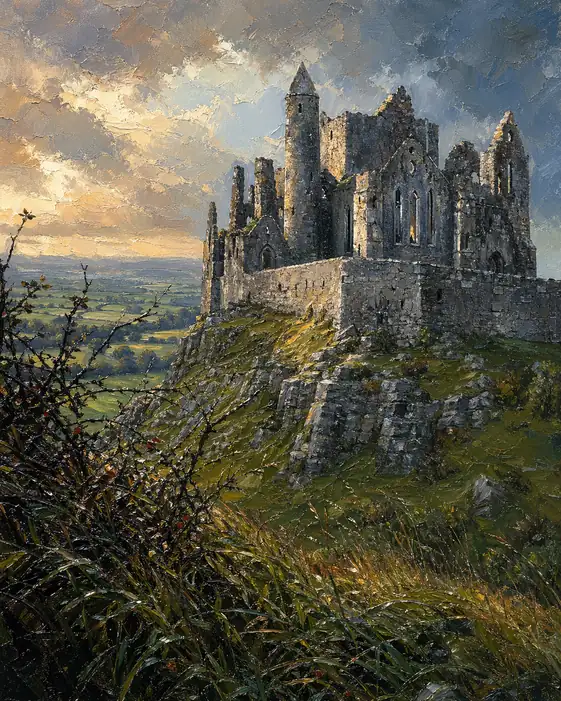 The Silent Watcher: A Castle in the Sky
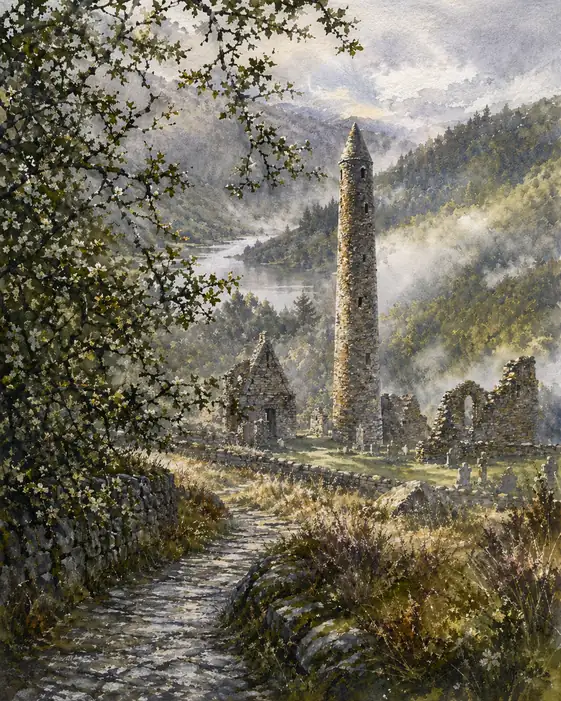 Mystic Tower: A Walk Through Time
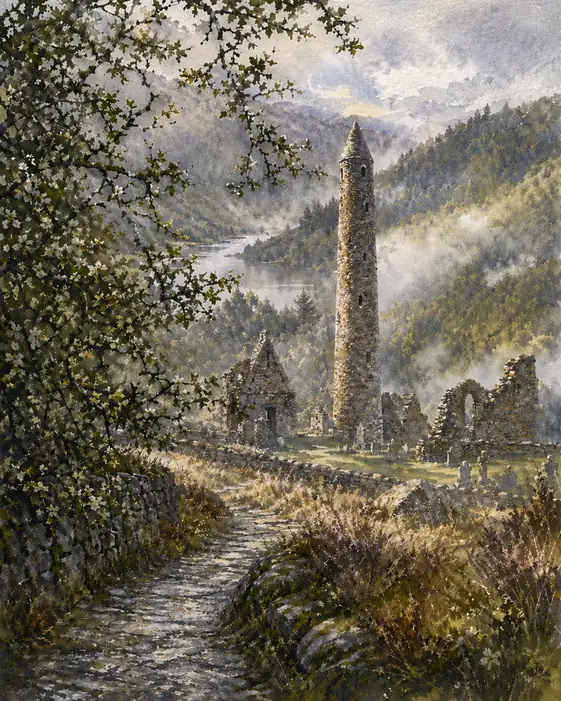 Echoes of Eternity: The Monastic Ascent
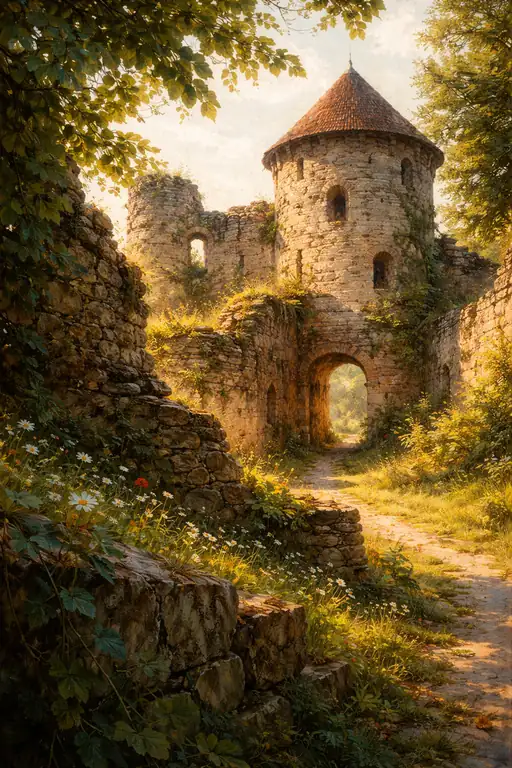 Nature's Embrace of the Ruined Tower
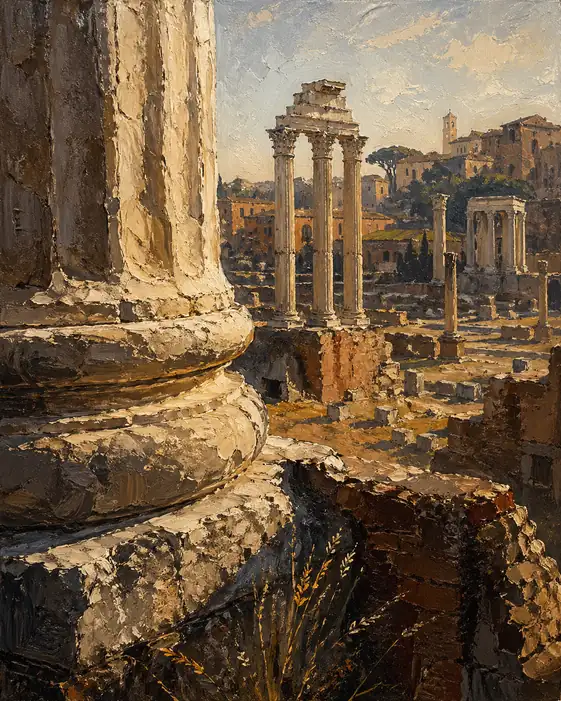 Whispers of the Gilded Forum
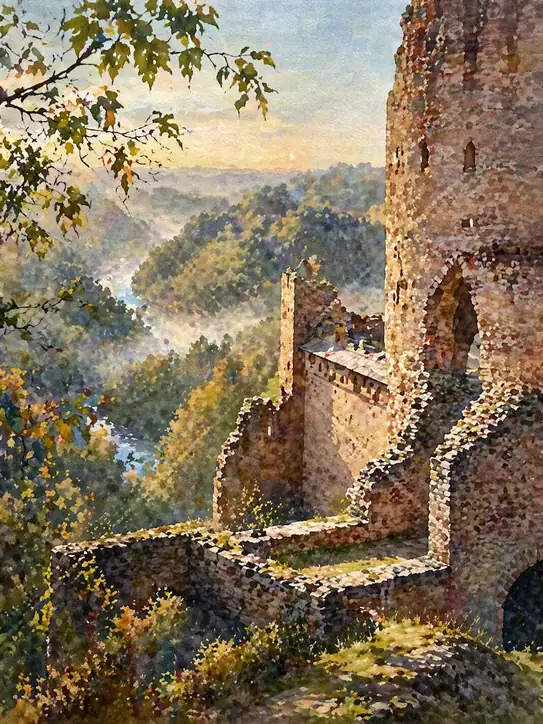 Fortress in the Mists
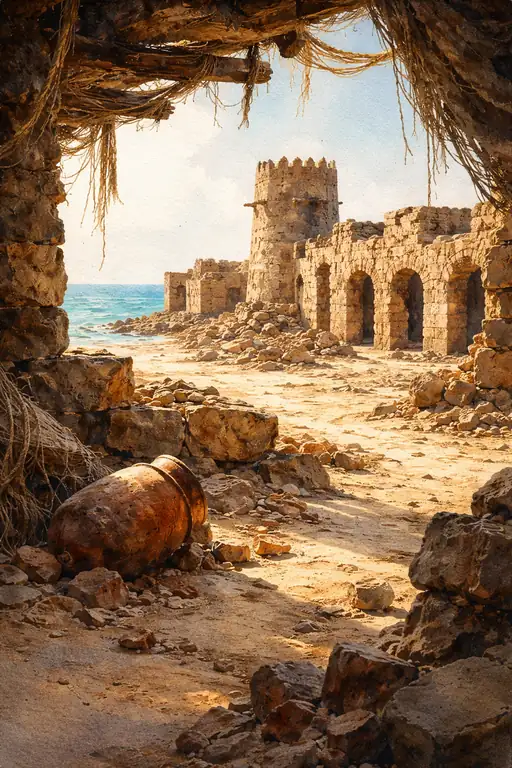 Lifeblood of the Sunlit Sands
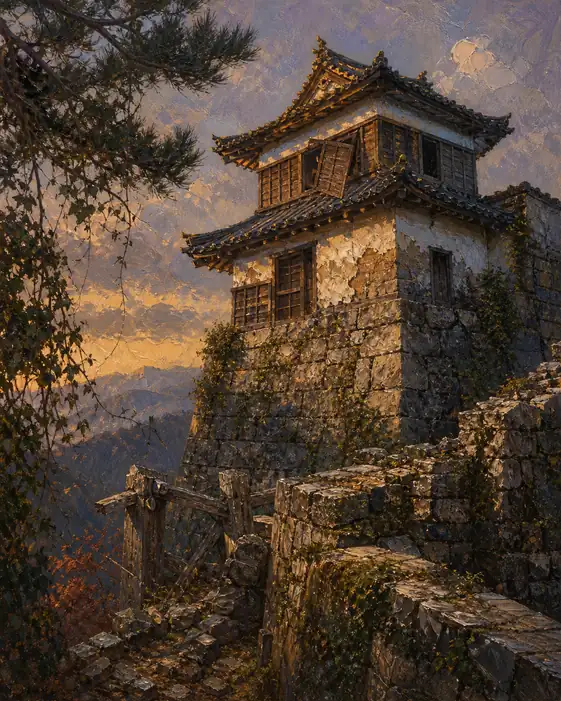 Silent Resilience on the Ancient Ramparts
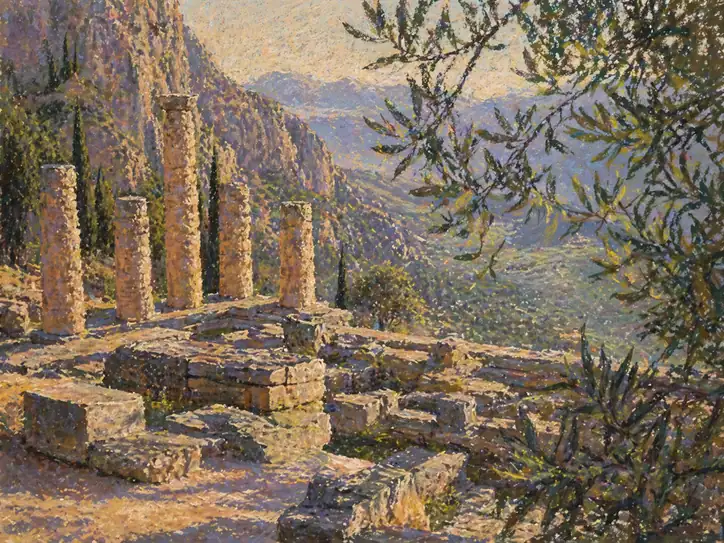 Where Time Dissolves in Morning Gold
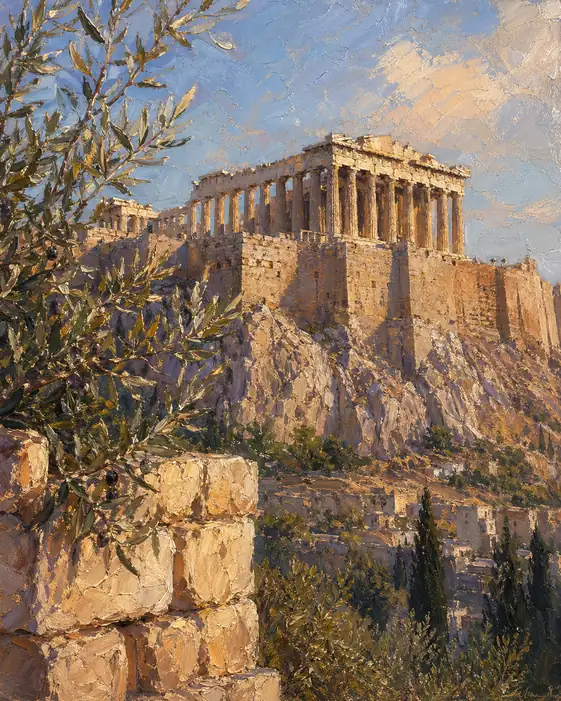 Whispers of Eternal Stone