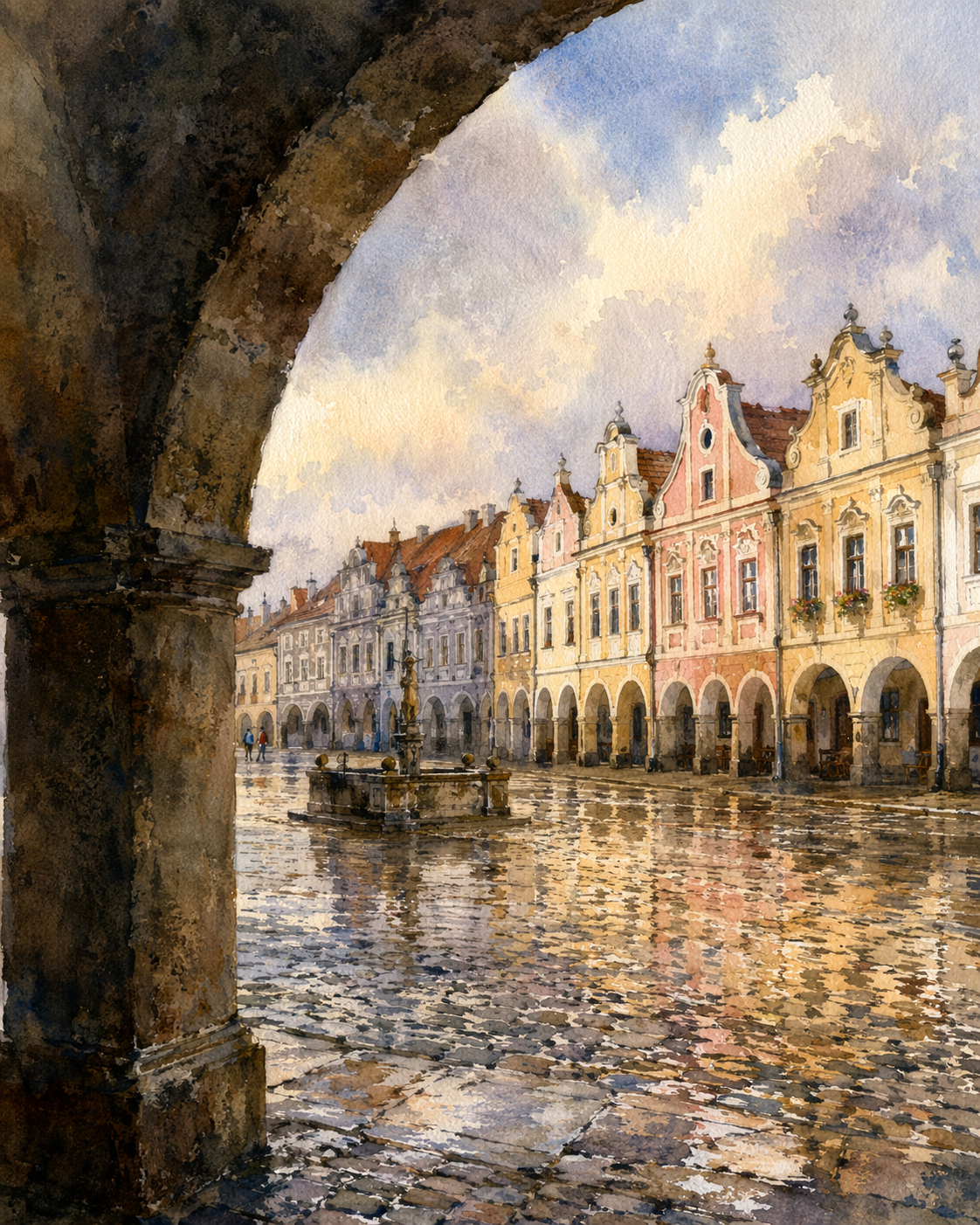
The Last Dance
Critique
Introduction This watercolor painting presents a scenic view of a European town square viewed through the dark, monumental arch of a stone gateway. The scene captures an array of historic buildings with ornate gables and arcaded ground floors, all rendered under a soft, post-rain sky filled with luminous clouds. Description The foreground is dominated by the textured, shadowed surface of a massive archway on the left, which serves as a frame for the central vista. Beyond the arch, a wide cobblestone plaza stretches out, its wet surface shimmering with reflections of the surrounding architecture. A line of colorful facades in shades of pink, ochre, and pale orange recedes into the distance, while a stone fountain stands prominently in the middle ground. Analysis The composition effectively utilizes a "repoussoir" technique, where the dark foreground element pushes the brightly lit background further away to create a profound sense of depth. Linear perspective is established by the rhythmic repetition of the arcades and gabled roofs that converge toward the far horizon. The use of watercolor allows for a delicate transition between the sharp architectural details and the ethereal, atmospheric quality of the sky. Interpretation and Evaluation The artist demonstrates a sophisticated understanding of light and atmosphere, particularly in the way the damp plaza mirrors the sky's warmth. The interplay between the solid, enduring nature of the stone buildings and the transient quality of the reflections suggests a deep appreciation for the passage of time. Technical skill is evident in the controlled washes and the ability to convey complex textures without losing the medium's inherent transparency. Conclusion Starting from the somber enclosure of the arch, the viewer’s eye is led toward the light-filled expanse of the square, mirroring a sense of personal discovery. This painting succeeds as both a precise architectural study and a poetic evocation of place, leaving a lasting impression of tranquility.
Same Subcategory
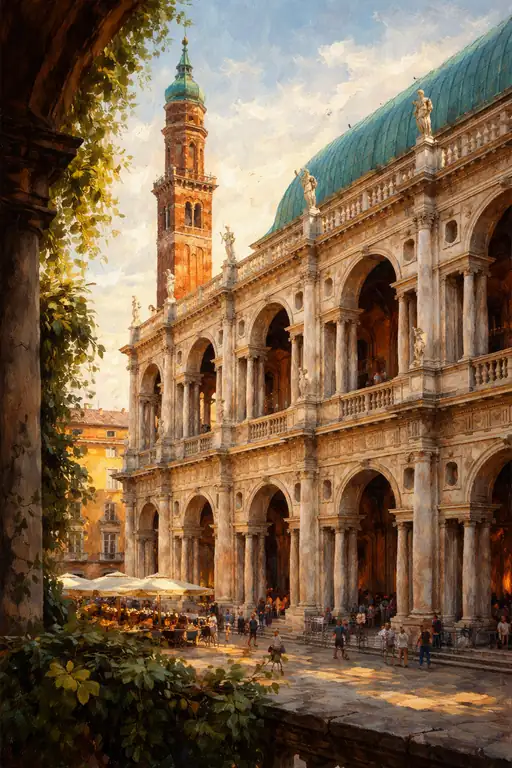 Life Beneath the Turquoise Dome
Similar Artworks
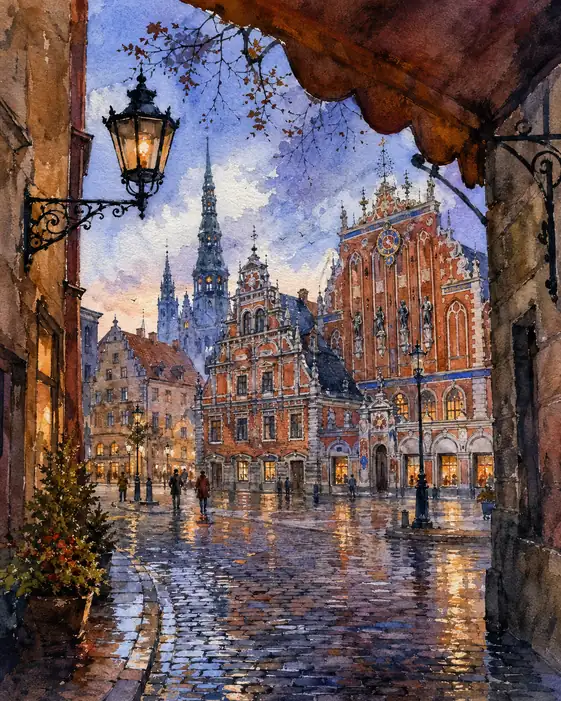 Riga Reflections After the Rain
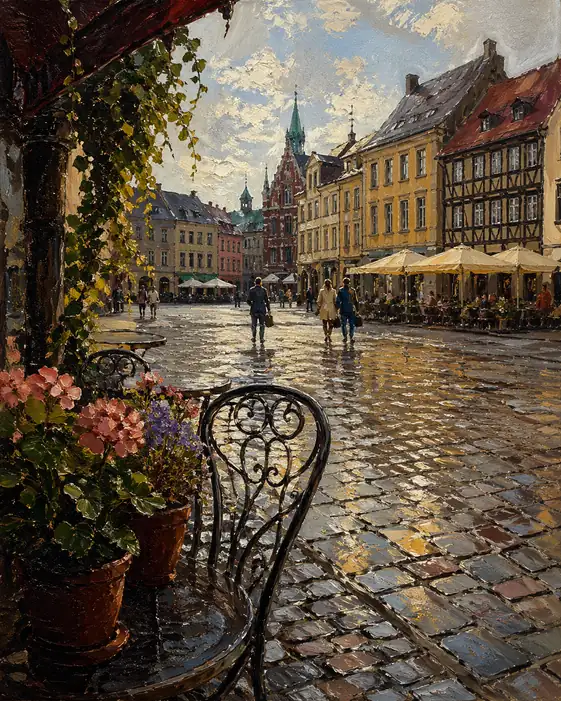 Whispers of the Wet Cobblestones
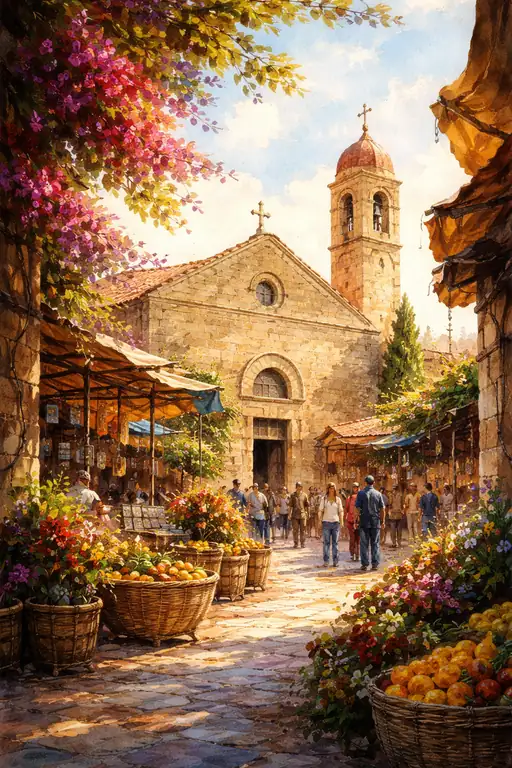 Bustling Marketplace Beside an Old Stone Church
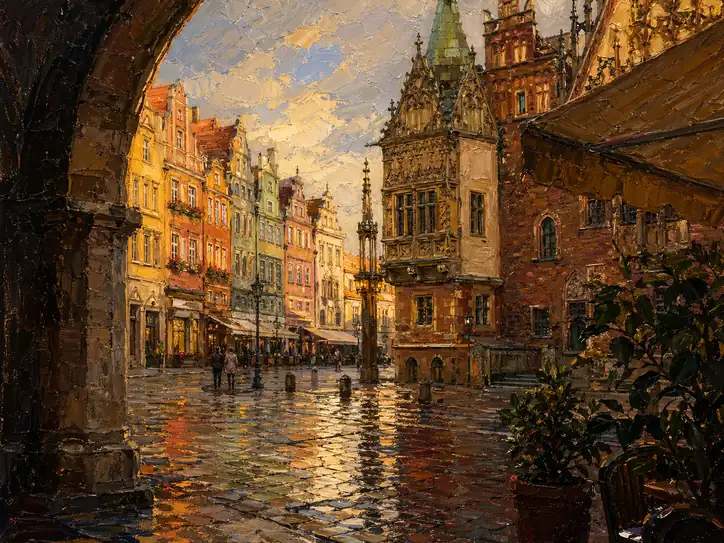 Golden Tears of the Old Town
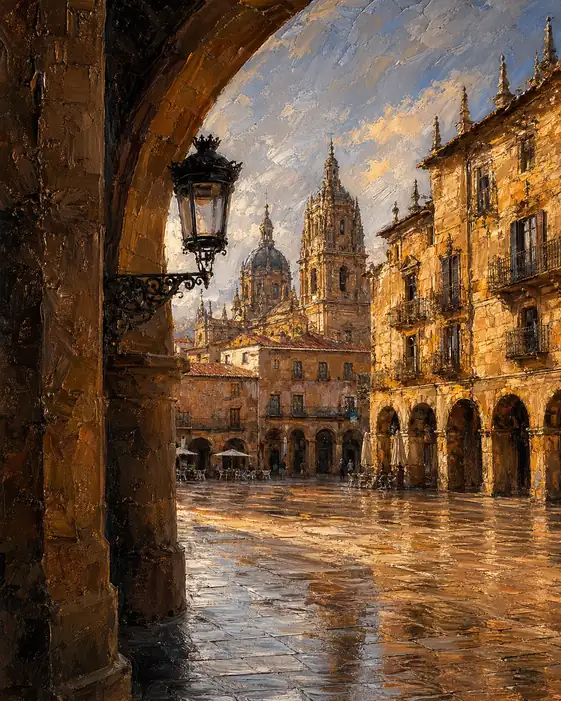 Gateway to the Gilded Square
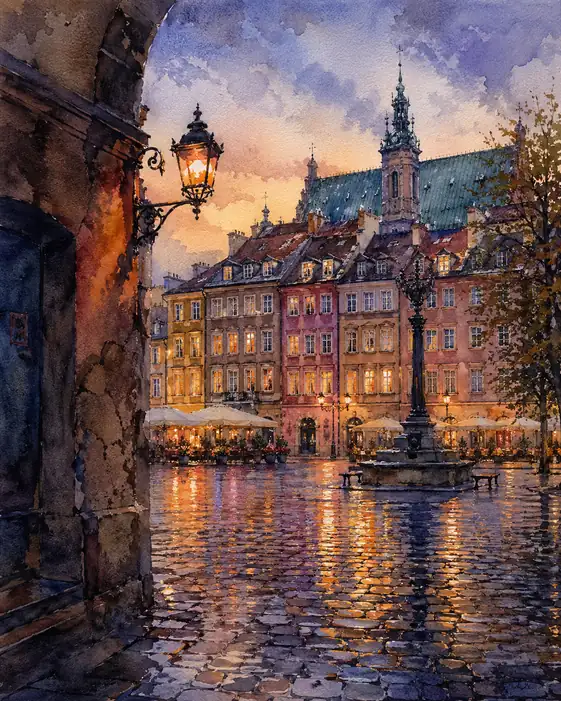 Raindrops and Nostalgic Reflections
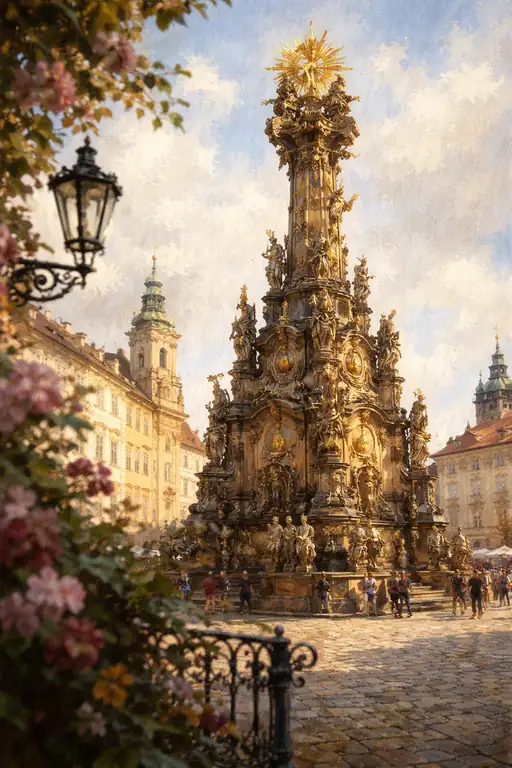 Baroque Whispers in the Sunlit Square
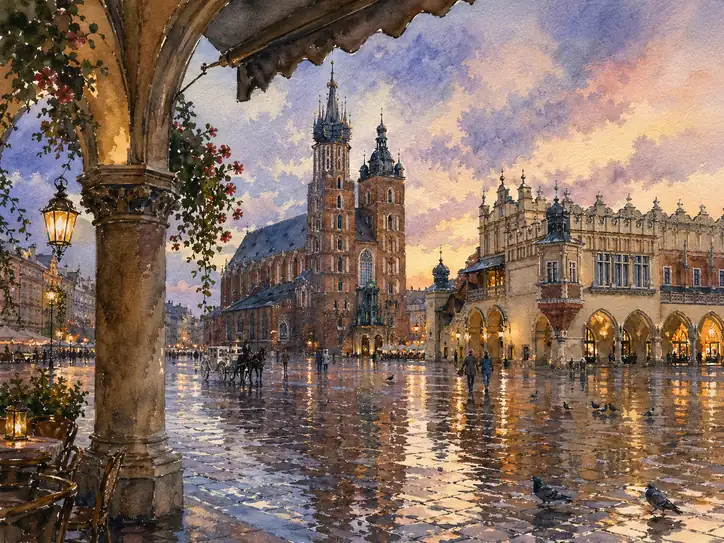 Embraced by the Twilight of Krakow
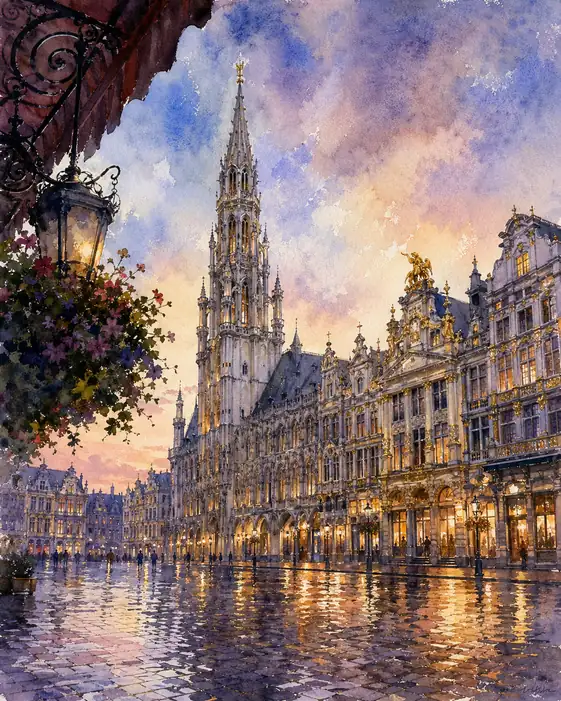 When History Glows in the Rain
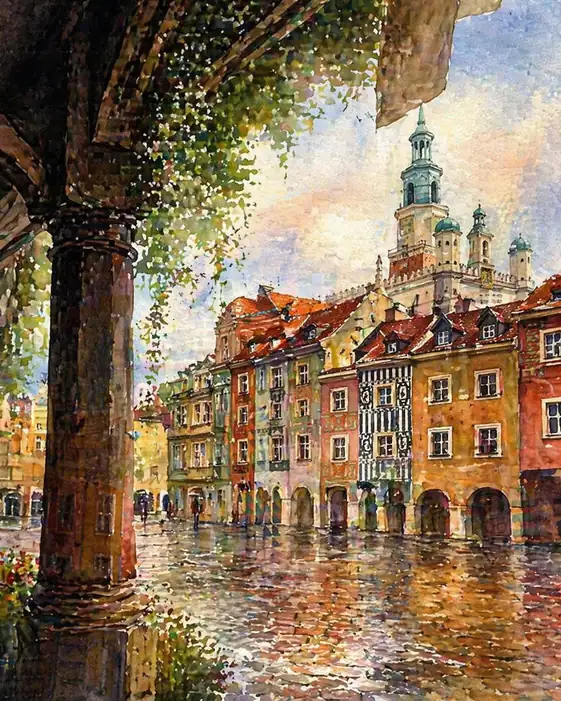 The Archway to Sunlit Yesterdays