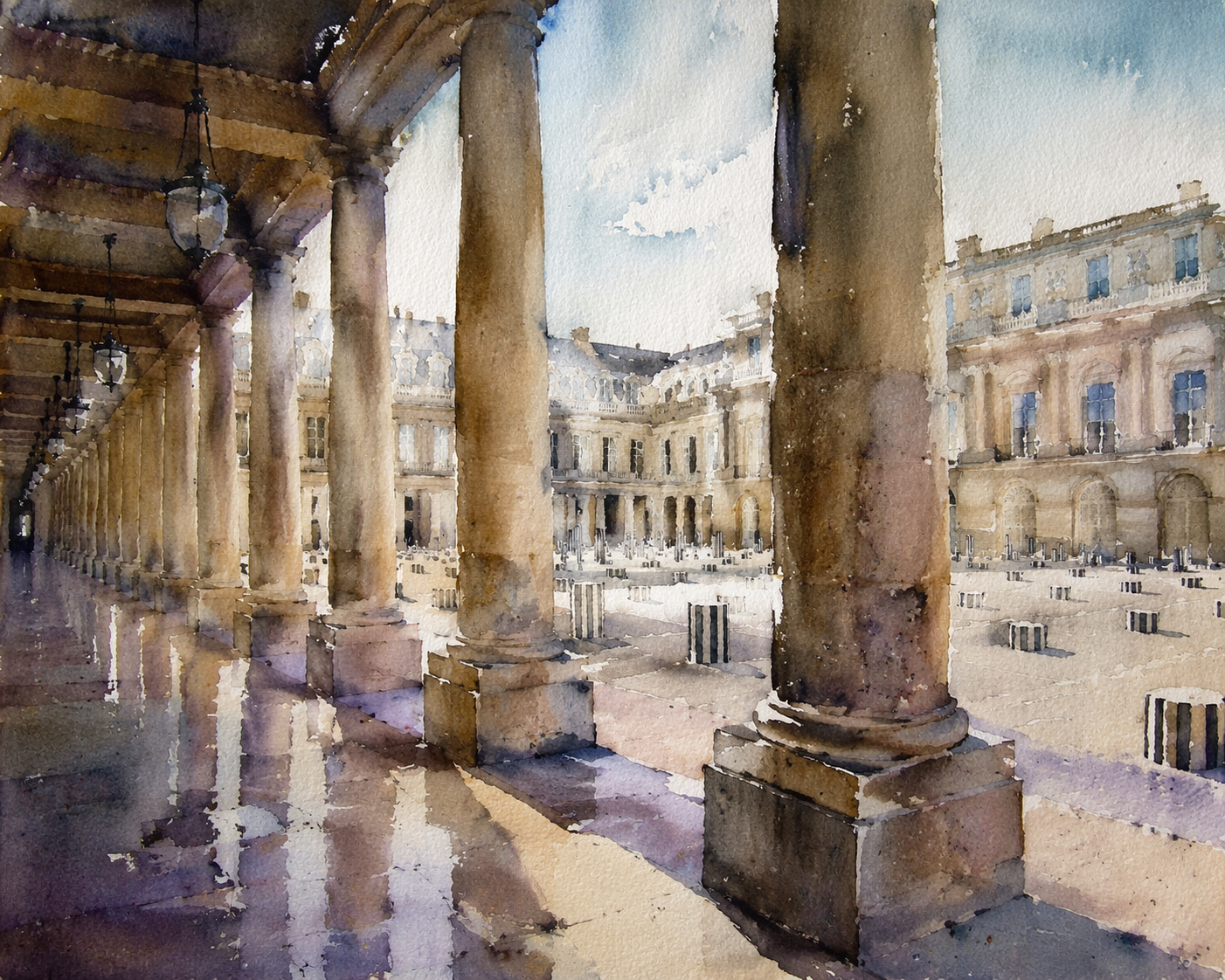
Palais-Royal: Shadows and Striped Reflections
Critique
1. Introduction This luminous watercolor painting captures the historic courtyard of the Palais-Royal in Paris. The composition skillfully blends the classical colonnades with the contemporary striped columns of Daniel Buren’s installation, all bathed in a soft, atmospheric light. This critique examines the technical handling of the watercolor medium, the rhythmic composition, and the stylistic choices that define this serene architectural study. 2. Description The left and foreground areas are dominated by heavy stone pillars that lead the eye into a central plaza surrounded by multi-story classical buildings. Scattered across the ground are numerous black-and-white striped cylindrical stumps of varying heights, their forms reflected on the wet, shimmering pavement. Antique lanterns hang from the arched ceiling of the gallery, casting subtle shadows. The color palette consists of warm ochres, deep ambers, and cool purples used for the complex shadows, contrasting with a pale, cloud-streaked sky. 3. Analysis The artist employs a strong one-point perspective through the sequence of columns, creating a sense of grand scale and deep recession into the space. Long diagonal shadows cast by an unseen sun suggest a specific time of day and add a dynamic structural element to the ground plane. The use of the wet-on-wet technique for the ground reflections provides a fluid, painterly quality that contrasts with the detailed, dry-brush textures of the weathered stone. Tonal transitions are handled with great sensitivity, capturing the ephemeral play of light and the stillness of the courtyard. 4. Interpretation and Evaluation The juxtaposition of centuries-old architecture with modern artistic interventions serves as a metaphor for the enduring and evolving nature of urban history. By rendering this scene in watercolor, the painter emphasizes the delicacy and lightness of the space, inviting a contemplative response from the viewer. The technical execution is exceptional, demonstrating a mastery over transparency and pigment layering. This work is highly original in its ability to transform a well-known tourist site into a subjective experience of light and atmosphere. 5. Conclusion This painting successfully translates the architectural dignity of the Palais-Royal into a vibrant and emotive visual language. While initial attention is drawn to the dramatic perspective, subsequent observation reveals the intricate harmony of color and the poetic treatment of the reflective surfaces. Ultimately, the work stands as a sophisticated tribute to Parisian heritage, capturing a fleeting moment of tranquility where the past and the present coexist in perfect balance.
Same Subcategory
Similar Artworks
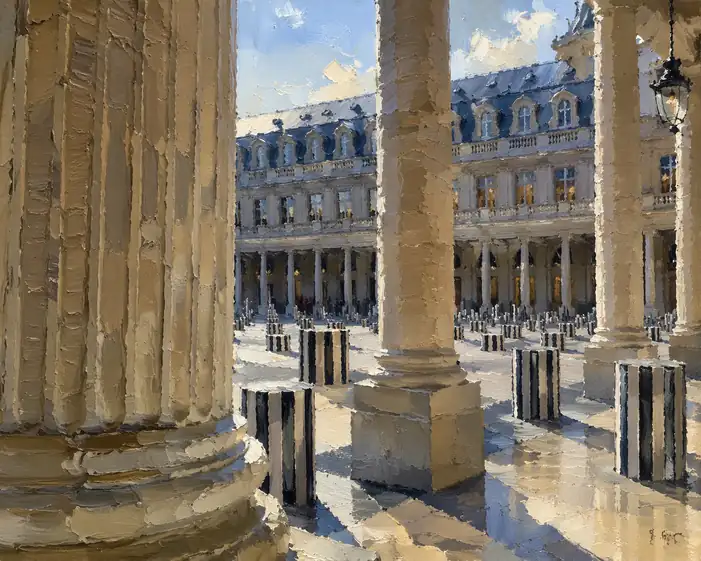 Timeless Steps: The Sunlit Alley's Descent
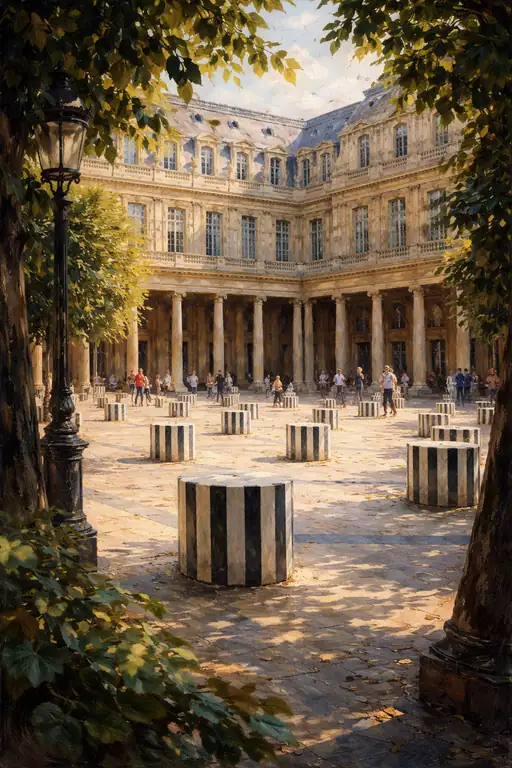 Symphony of Stripes and Shadows
 Sunlit Echoes in the Corridor
 The Sunlit Soul of Stone
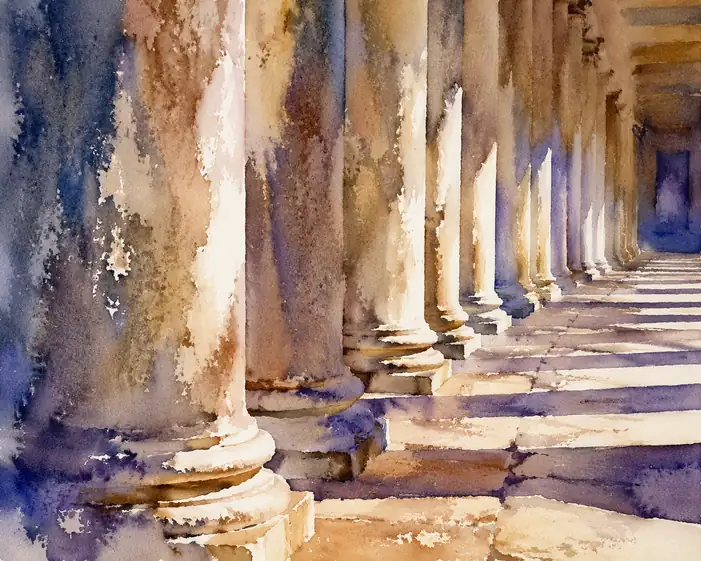 Whispers in the Colonnade
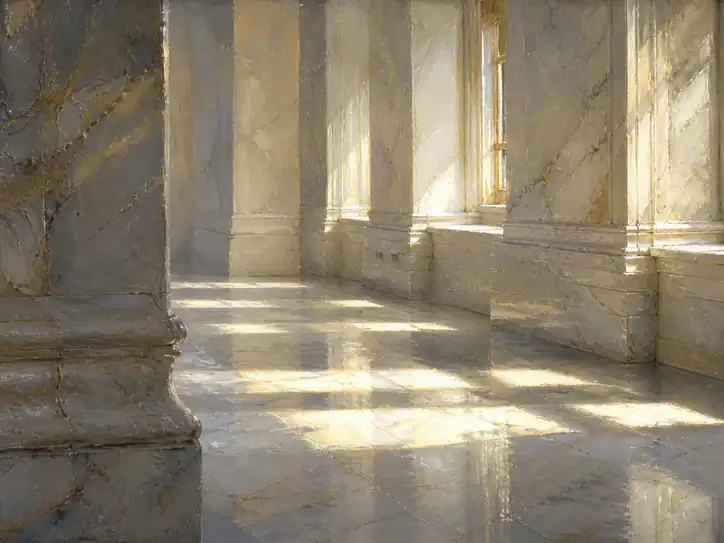 Where Light Breathes in Stone
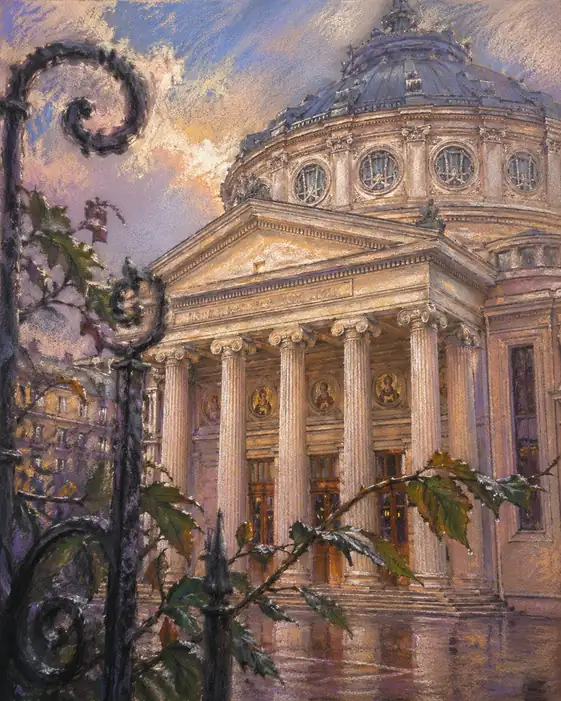 The Twilight Symphony of Stone
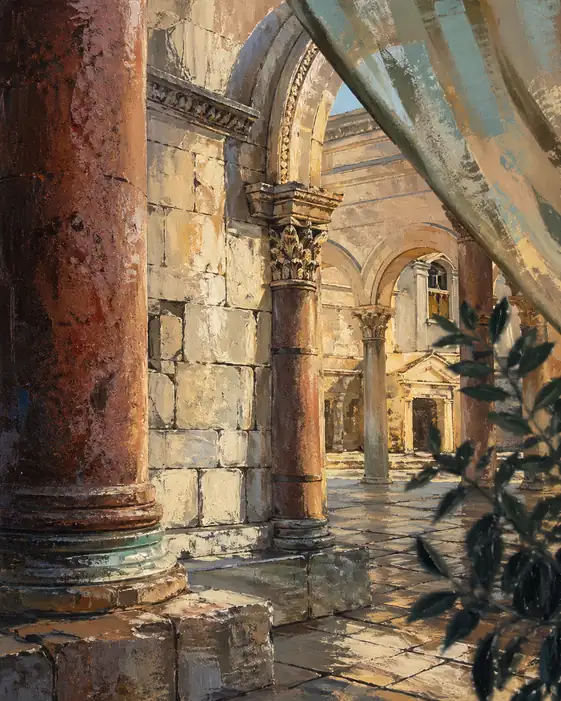 Echoes in the Sunlit Corridor
 Majesty of the Corinthian Gold
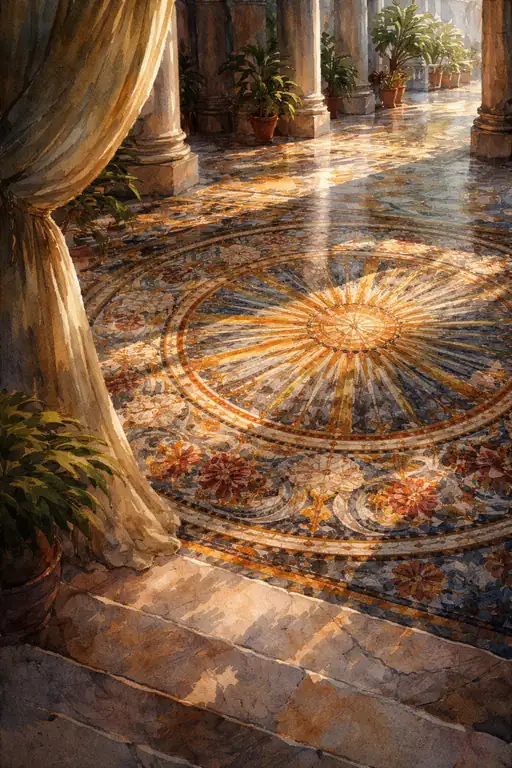 Silent Echoes in the Grand Hall