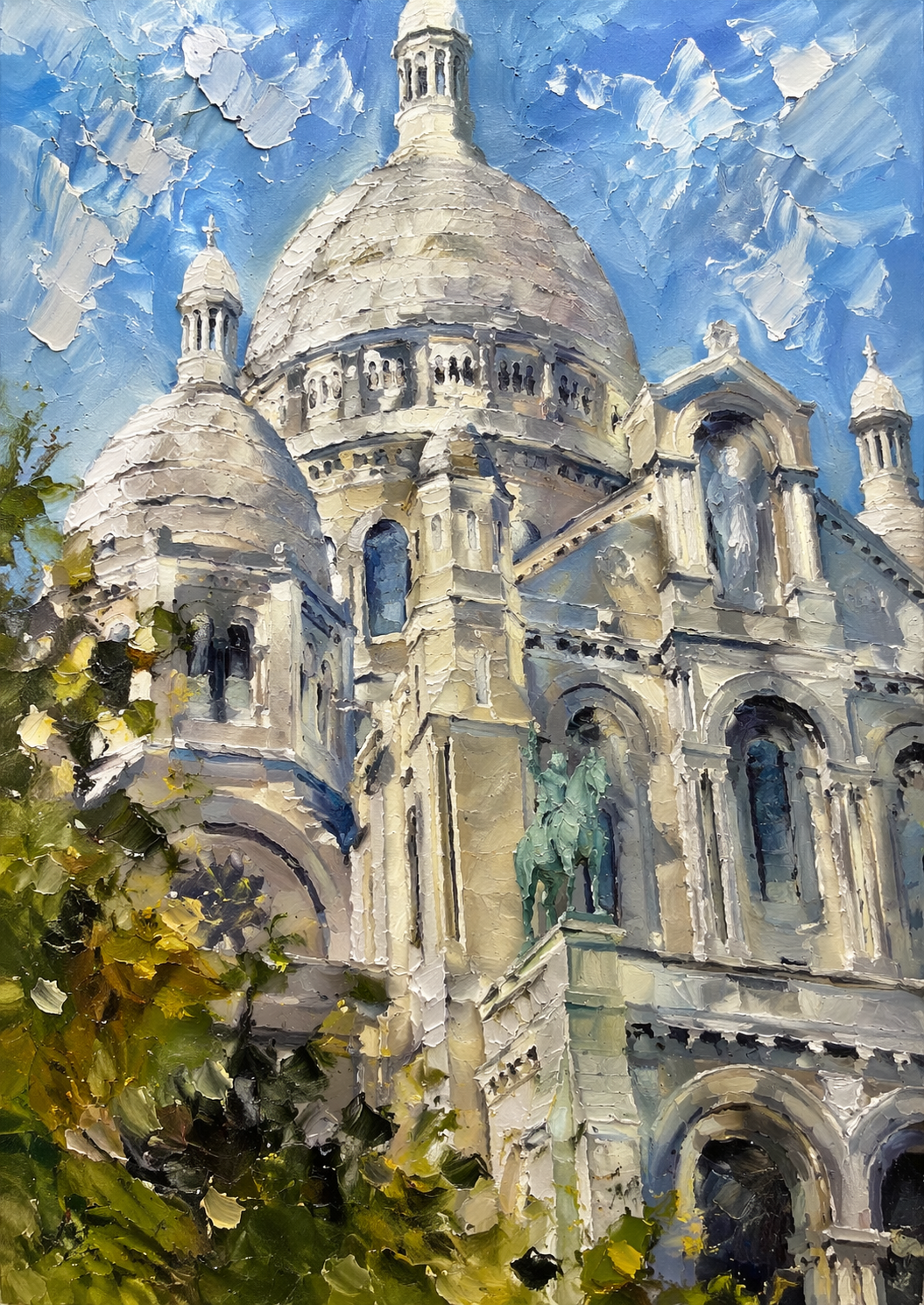
Majesty in Impasto: A Cathedral's Gaze
Critique
1. Introduction This oil painting features a grand white cathedral rising against a vibrant blue sky. The work utilizes a heavy impasto technique to produce a powerful depiction of architectural majesty and light. This critique examines the formal elements and expressive qualities of the painting to understand its overall impact. 2. Description The composition is dominated by the massive dome and intricate facade of a limestone basilica, rendered with thick layers of paint. A green equestrian statue stands prominently on a ledge near the center, while arched entrances and windows define the lower sections of the structure. In the foreground, foliage in shades of yellow and deep green frames the left side of the canvas. The background consists of a bright blue sky filled with swirling white clouds applied with vigorous brushstrokes. 3. Analysis The vertical orientation of the piece emphasizes the soaring height and grandeur of the sanctuary. The artist employs a palette knife or broad brushes to create a rugged surface texture that mimics the weathered quality of stone while capturing the play of sunlight. High-contrast values between the brilliant white architecture and the saturated blue sky create a sense of clarity and depth. The rhythmic application of paint introduces a dynamic movement, contrasting the inherent stillness of the building with the fluidity of nature and atmosphere. 4. Interpretation and Evaluation The physical weight of the impasto mirrors the enduring presence of the church as a spiritual monument. By focusing on the interplay of texture and light, the work elevates a traditional landscape subject to a more visceral and modern level of expression. The technical mastery shown in the handling of oil paint allows for a harmonious balance between structural precision and gestural freedom. This approach results in a highly original work that values both the materiality of the medium and the ethereal quality of the scene. 5. Conclusion This painting successfully captures a fleeting moment of illumination within the permanent form of the cathedral. While the initial impression is one of raw energy, further observation reveals a disciplined control over color and form. Ultimately, the work stands as a testament to the power of texture in conveying architectural dignity and the transformative potential of light.
Same Subcategory
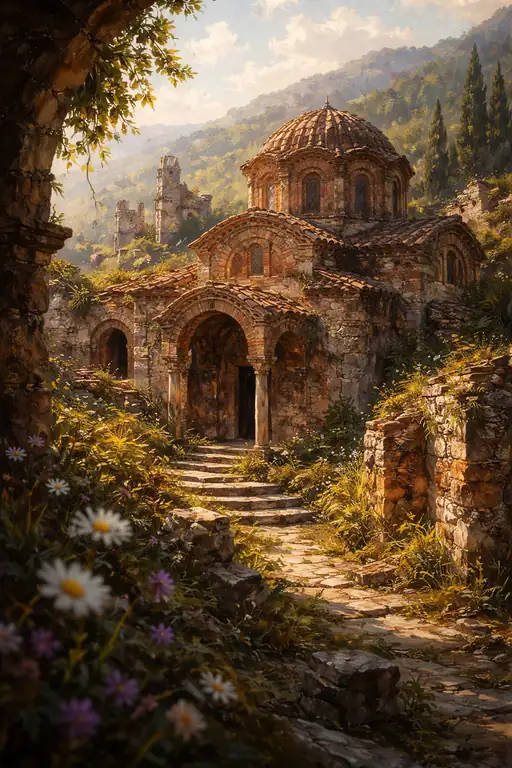 Footsteps of Time: The Sanctuaries' Slumber
Similar Artworks
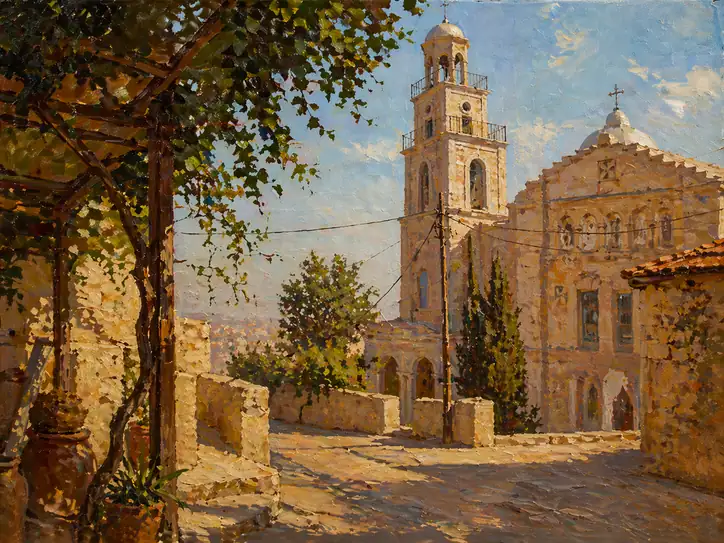 A Mediterranean Summer Song
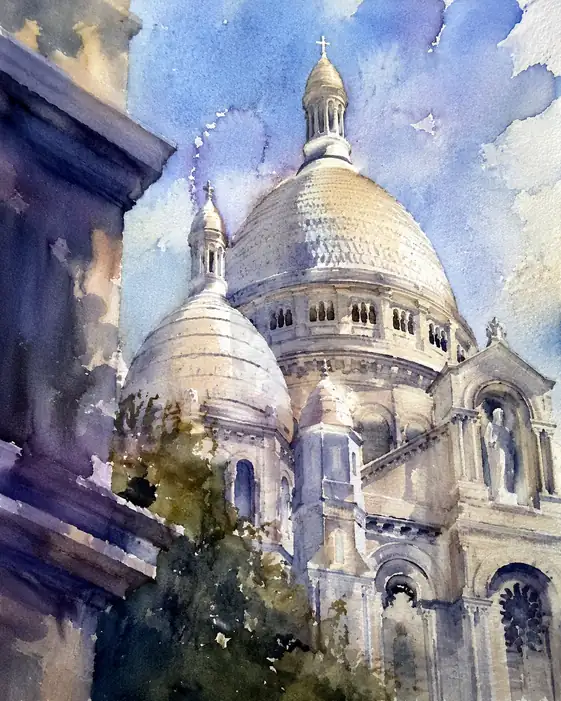 Sacré-Cœur: Ascending into the Violet Sky
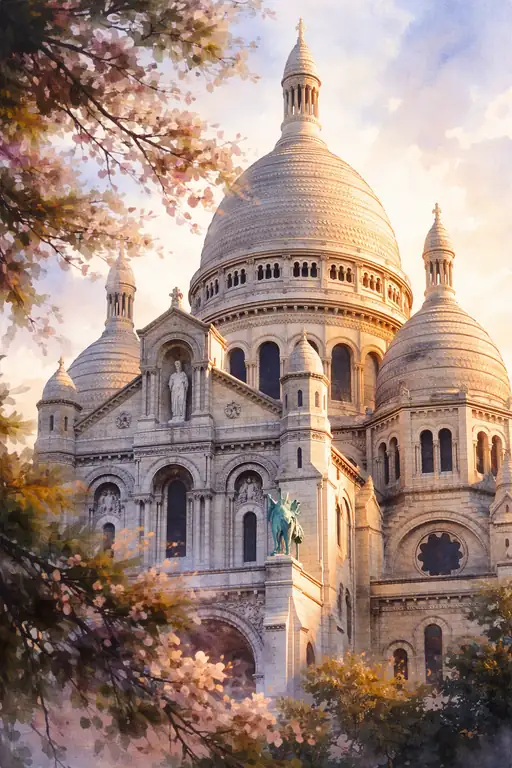 Cherry Blossoms Embracing the Sacred Dome
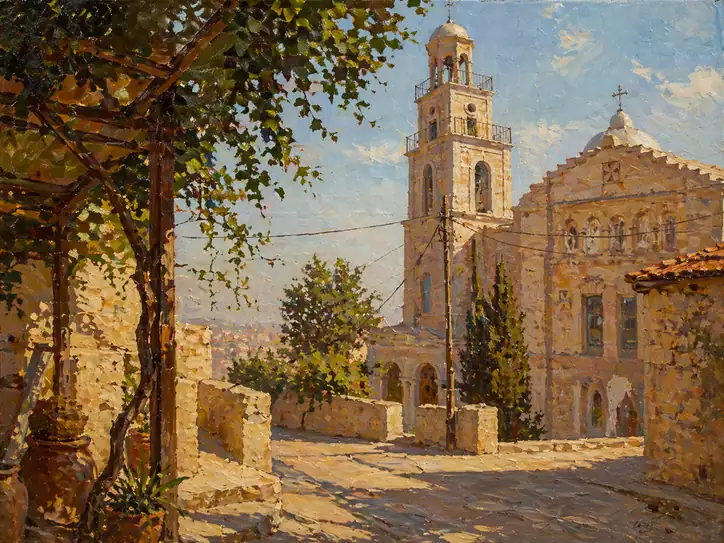 Under the Vineyard's Watch
 Sanctuary of the Whispering Woods
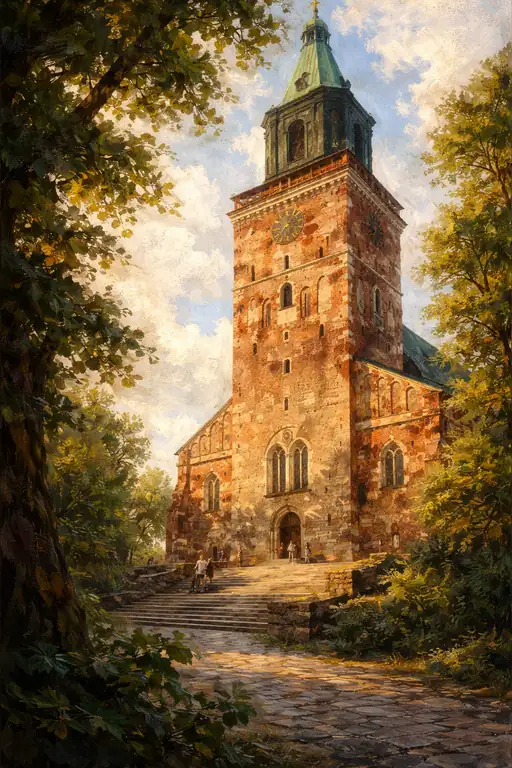 Sunlit Path to Turku Cathedral
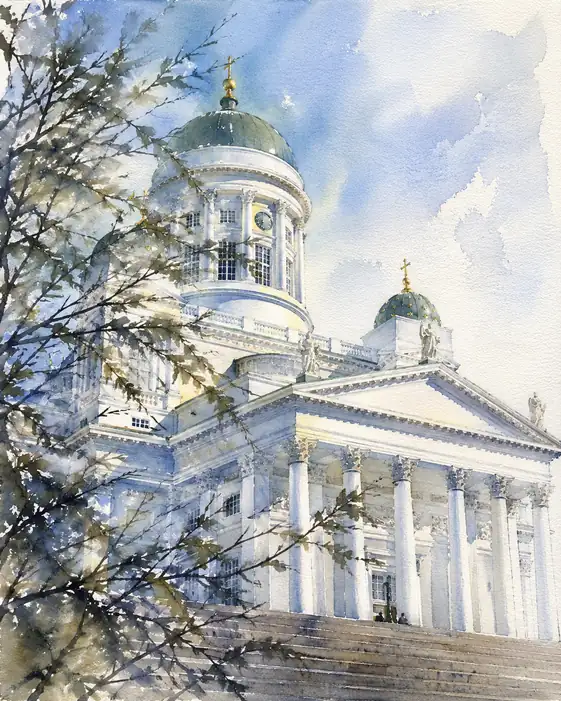 The Grand White Cathedral of Helsinki
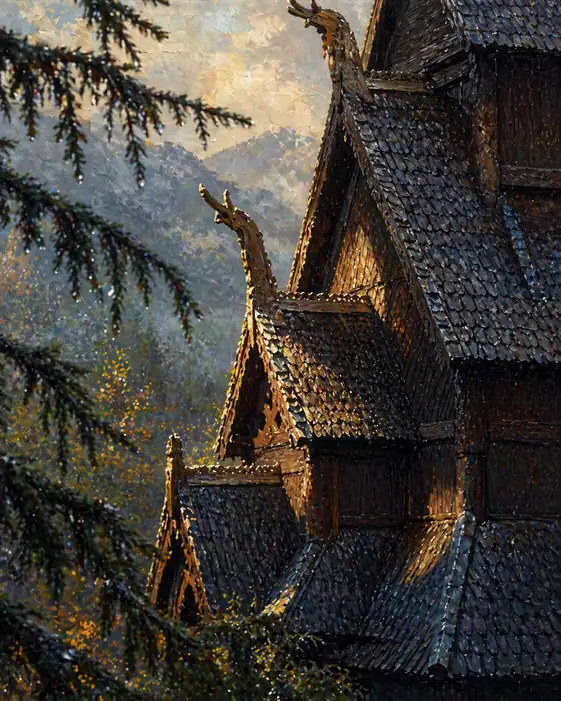 Ancient Scales of the Forest
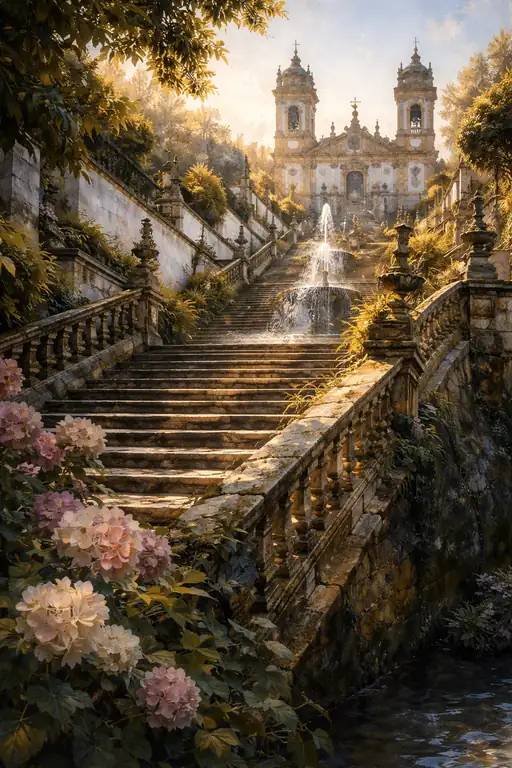 Ascension to the Gilded Sanctuary
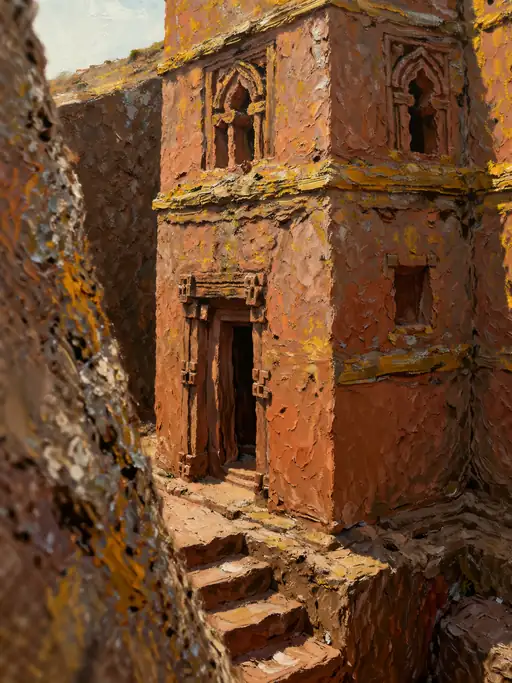 Fire in the Sky: Flight of the Dragon