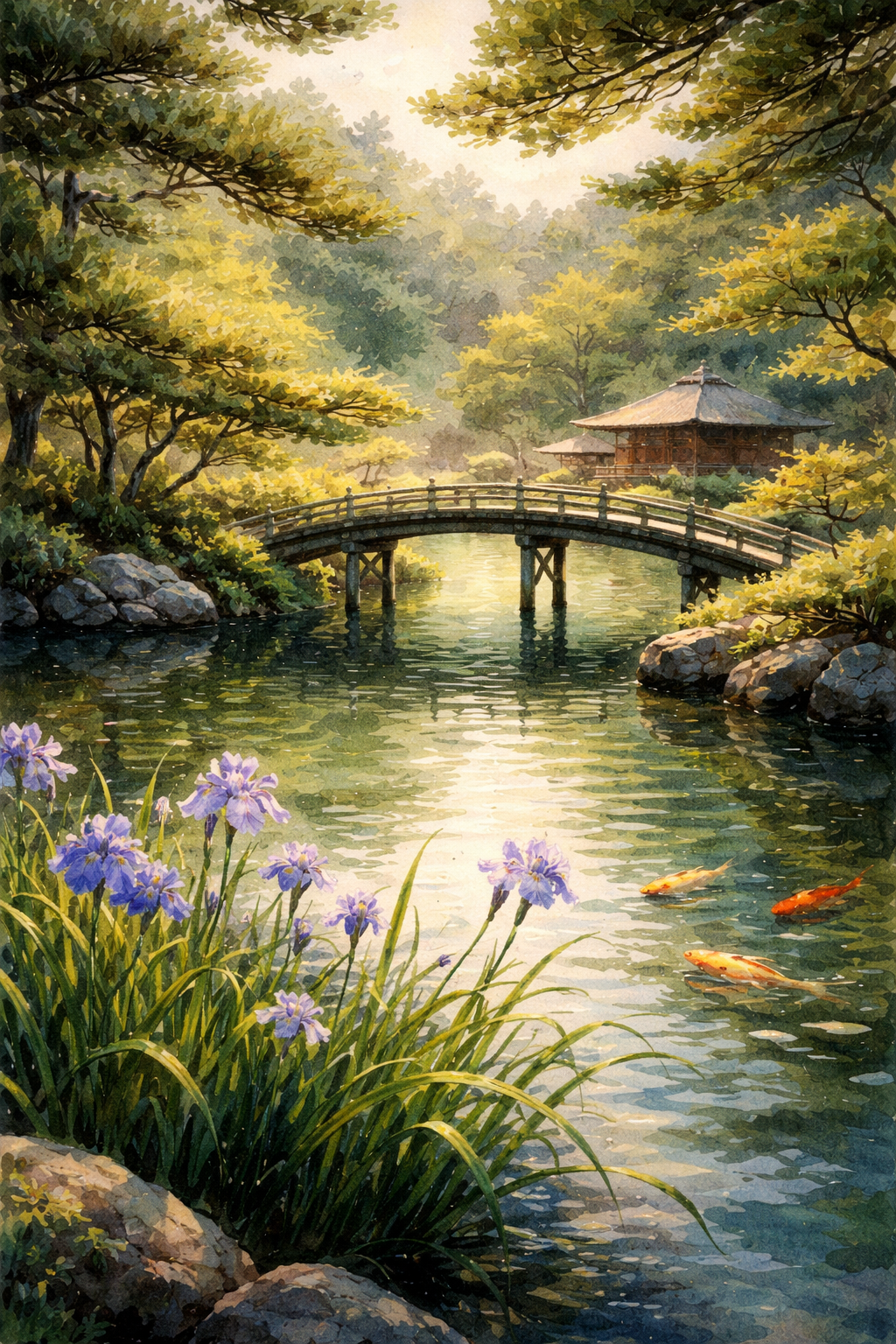
Whispers of the Golden Pond
Critique
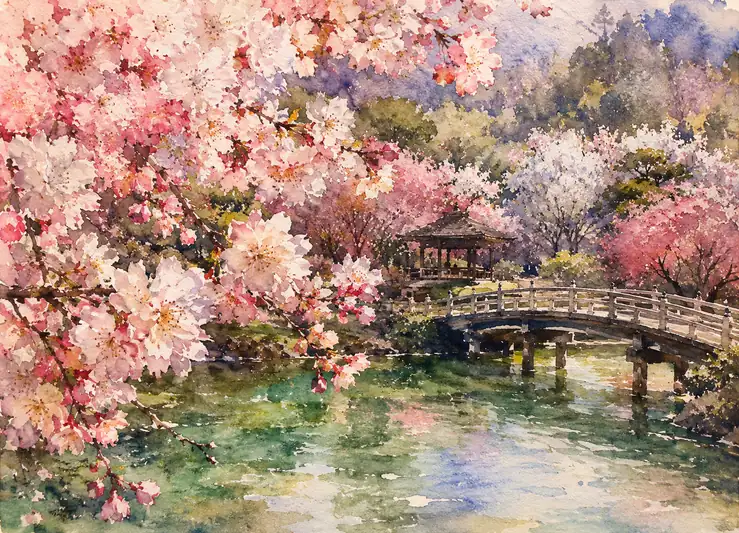
1. Introduction This watercolor painting depicts a serene Japanese garden scene, capturing a moment of tranquility amidst lush nature. The composition features a harmonious blend of architectural elements and botanical details, centered around a reflective pond. It presents a classic landscape that emphasizes the peaceful coexistence of human-made structures and the organic environment. 2. Description The foreground is dominated by a cluster of vibrant purple irises growing along the rocky edge of a pond. In the clear water, three orange and gold koi fish swim near the surface, leaving delicate ripples. A traditional wooden arched bridge spans the center of the pond, leading towards a rustic pavilion nestled among dense, sun-dappled trees. The background is filled with layered foliage that glows with filtered sunlight. 3. Analysis The artist utilizes a delicate watercolor technique, characterized by soft washes and rhythmic brushstrokes that suggest texture without harsh outlines. A warm light source from the upper center creates a luminous path across the water and highlights the vibrant greens of the trees. The cool blues and purples in the foreground provide a balanced contrast to the warm yellows and earthy tones of the background. 4. Interpretation and Evaluation This work successfully evokes a sense of meditative calm through its balanced composition and masterful use of light. The inclusion of the koi and irises adds symbolic depth, representing longevity and seasonal beauty within the garden. The painter demonstrates high technical skill in rendering water reflections and the dappled light effect, creating a cohesive and inviting atmosphere. It is an excellent example of traditional landscape representation. 5. Conclusion In conclusion, the painting offers a sophisticated invitation into a quiet, idealized natural space. The careful attention to detail in the flora and fauna enhances the overall sense of life and movement. This piece provides a lasting impression of peace, showing how a structured garden can mirror the subtle complexities of the natural world.
Same Subcategory
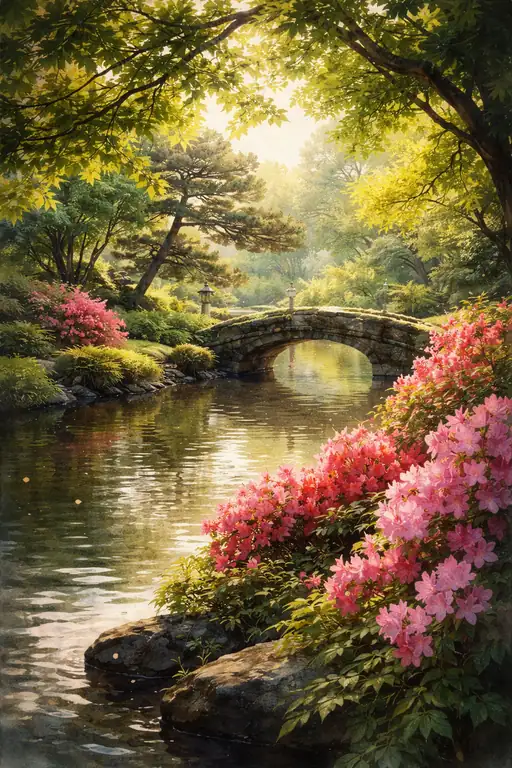 Spring Sunlight Over the Stone Bridge
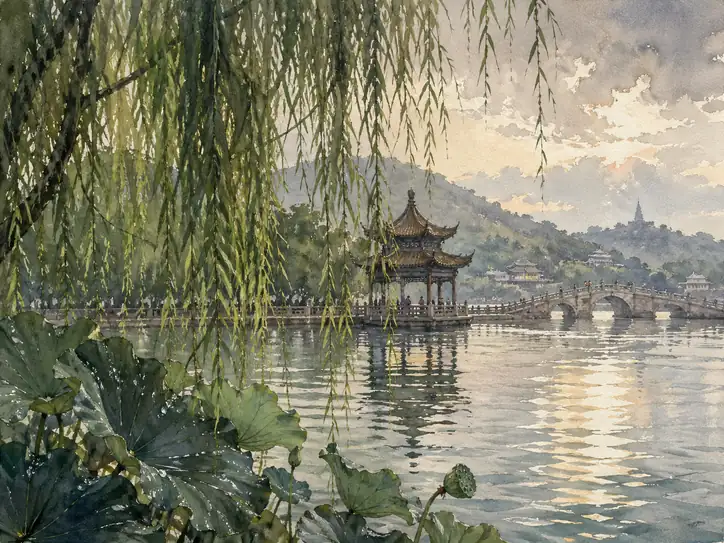 Golden Harmony at West Lake
Similar Artworks
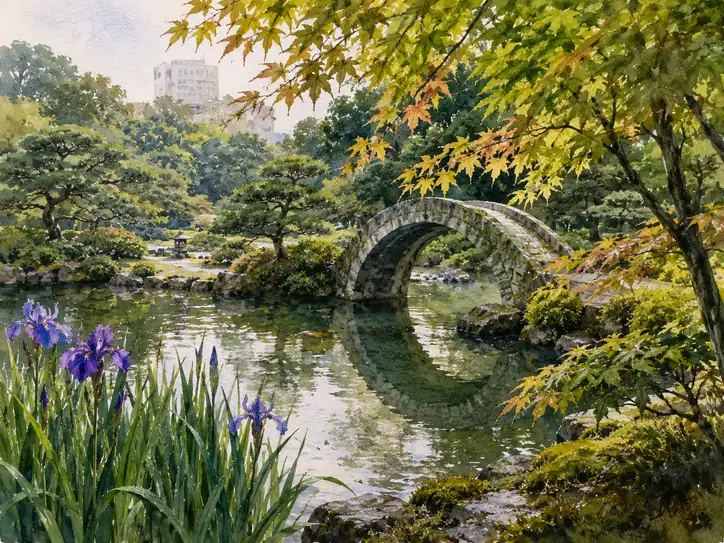 Where the Heart Finds Its Circle
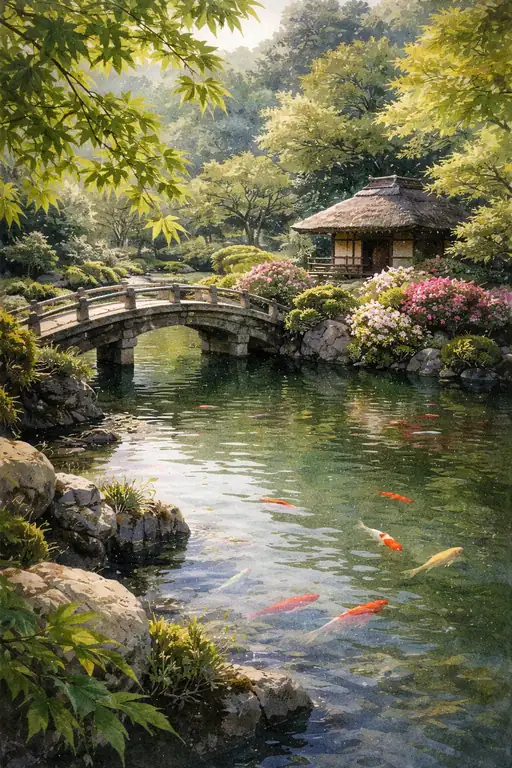 Harmony in the Sunlit Ripples
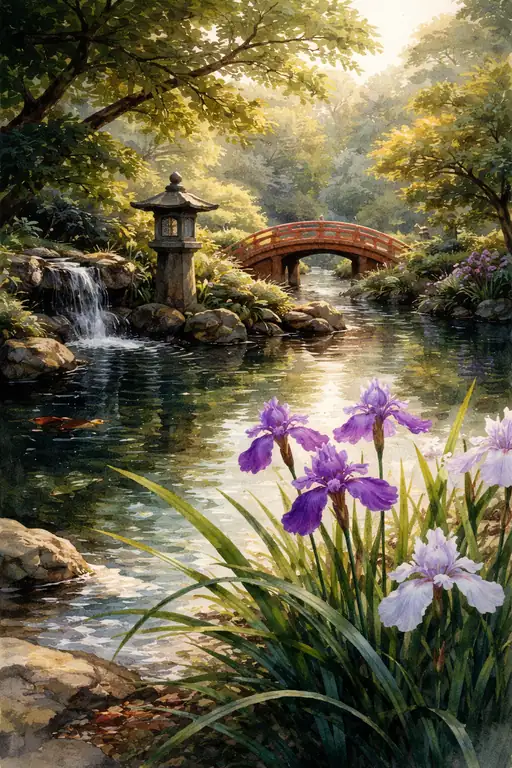 Sunlit Melody of the Arch and Lantern
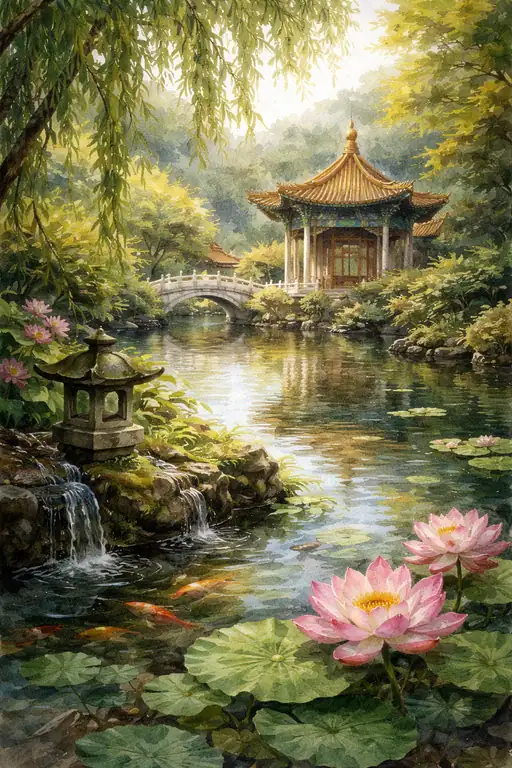 Serenity of the Gilded Pavilion
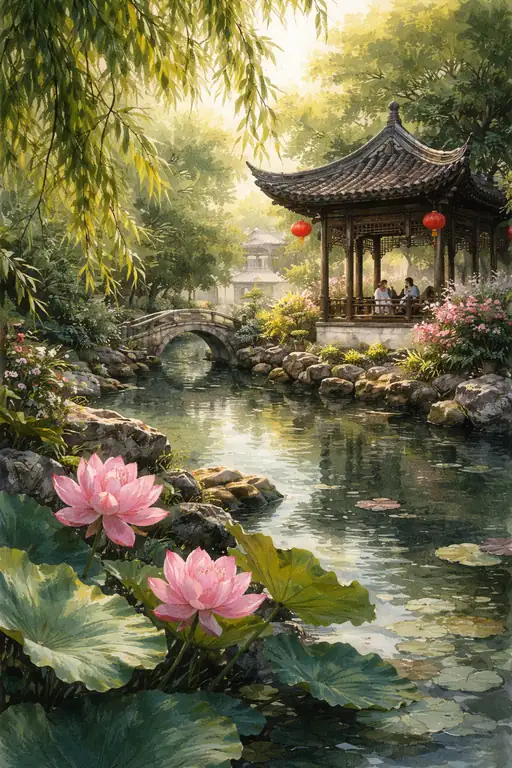 Tranquility in Bloom: The Lotus Pavilion
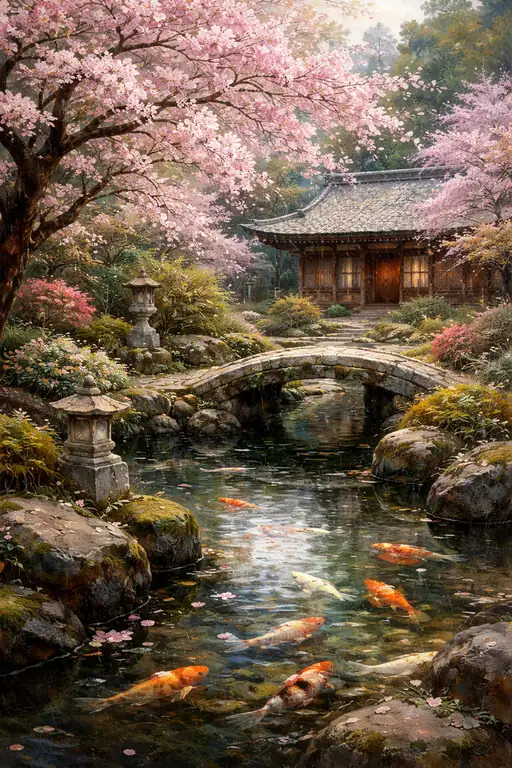 Reflections in the Koi Pond
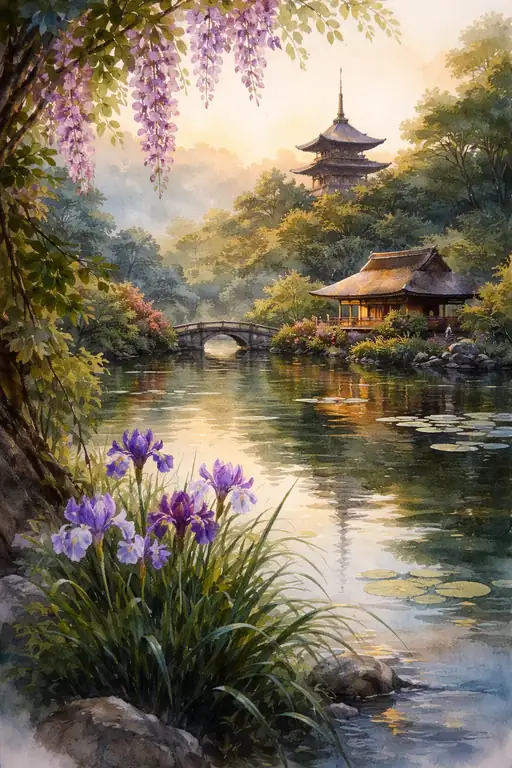 Sunset Harmony in the Temple Garden
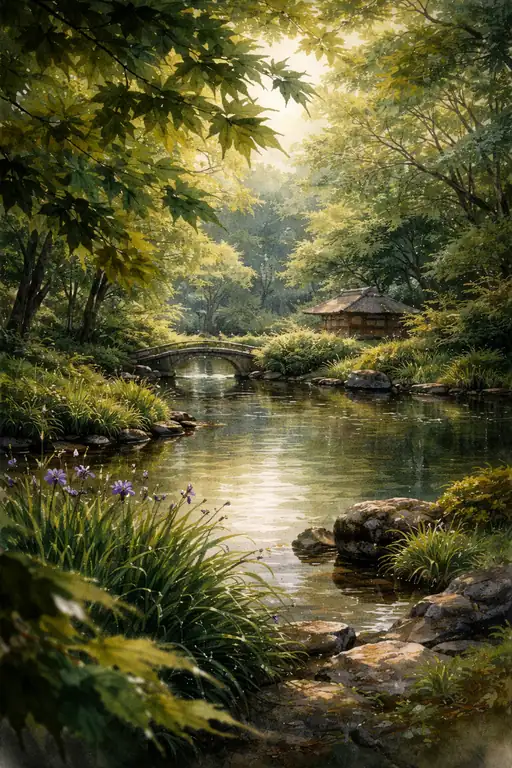 A Secluded Symphony of Iris and Stone
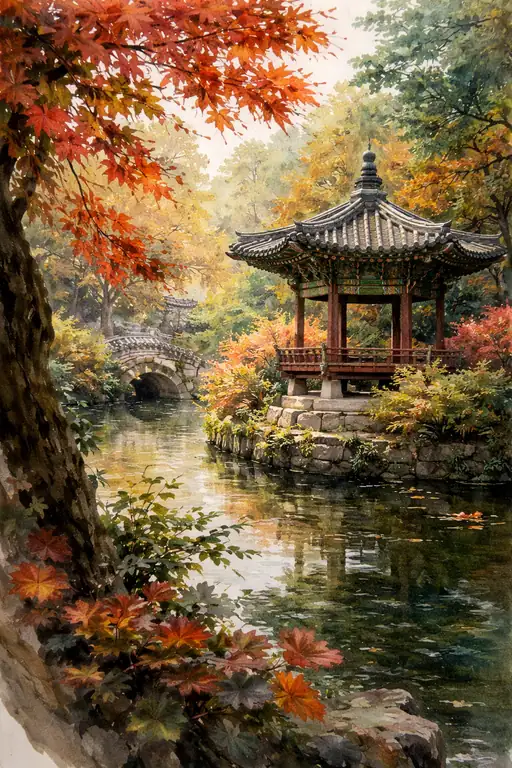 Crimson Leaves Reflected in Autumn's Mirror
 The Waltz of Sakura and Stone