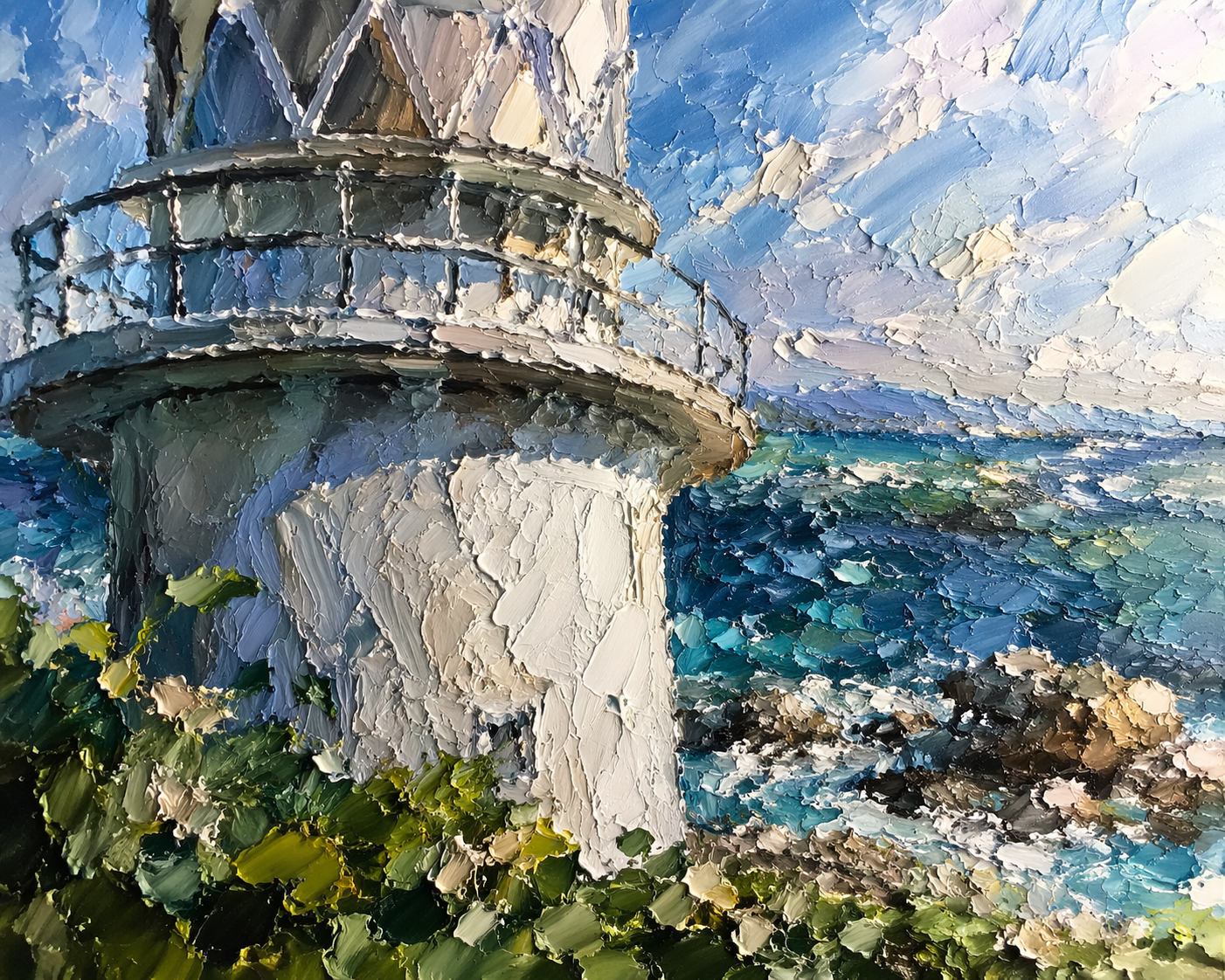
Sculpting the Ocean's Breath
Critique
1. Introduction This striking oil painting captures a coastal lighthouse through an extraordinary application of heavy impasto technique. The artwork transforms a traditional maritime scene into a highly tactile, almost sculptural experience where the paint itself becomes the primary subject. It conveys both the severity of the natural environment and the steadfastness of the structure. 2. Description A massive white lighthouse dominates the left side of the composition, its balcony and railings rendered with bold, decisive strokes. On the right, a turbulent sea of deep blues and teals stretches toward a sky filled with fragmented white clouds and bright light. Dark green foliage and rugged rocks at the base of the tower ground the architecture within its wild setting. 3. Analysis The defining characteristic of this piece is the extreme texture created by a palette knife. Every surface, from the solid tower to the fluid water, is composed of thick ridges and troughs of oil paint that physically catch and reflect light. The strong verticality of the lighthouse creates a stable anchor against the frantic, horizontal movement of the waves. 4. Interpretation and Evaluation This work moves beyond mere visual representation to record the artist's physical engagement with the medium. Despite a restricted color palette of white, blue, and green, the sophisticated blending of tones creates a remarkable sense of depth and atmosphere. The contrast between the rigid man-made structure and the chaotic natural elements illustrates a compelling artistic dialogue. 5. Conclusion The complex layers of paint reveal an abstract beauty that becomes more apparent as one approaches the canvas. While the initial impact is derived from the lighthouse's solid form, a distant view allows the elements to coalesce into a vivid reality. Ultimately, this painting stands as a profound exploration of light and matter, pushing the boundaries of traditional landscape art.
Same Subcategory
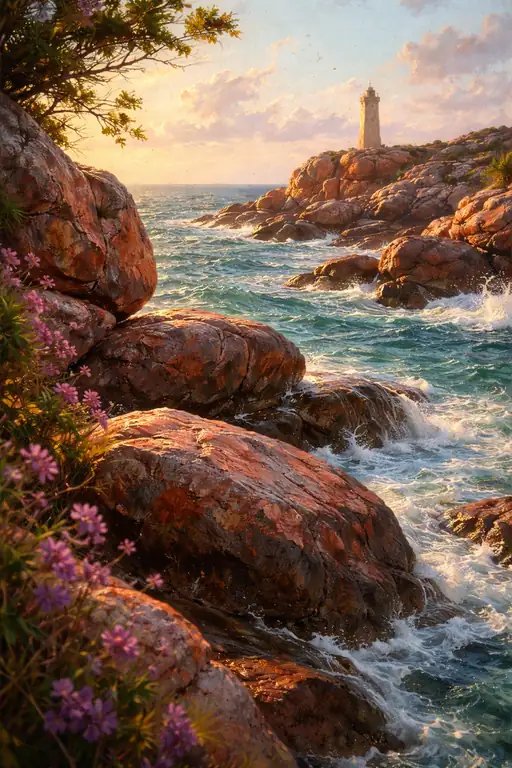 Solitary Sentinel of the Coast
Similar Artworks
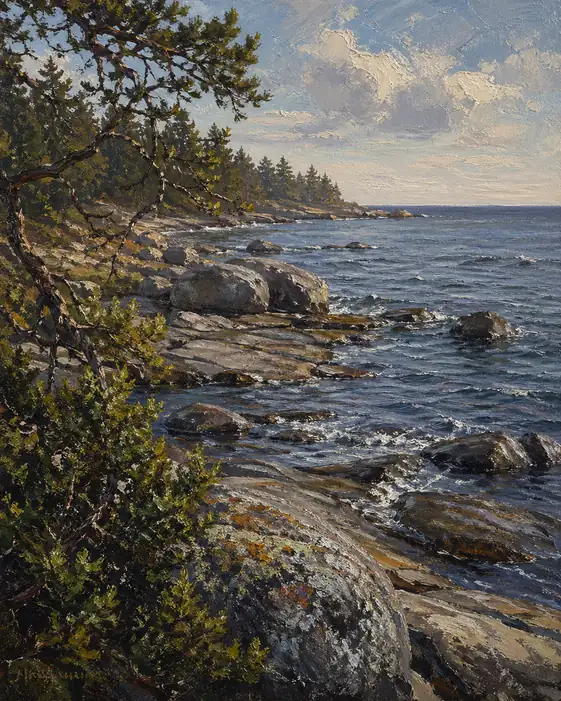 Golden Sunset Over the Rugged Coast
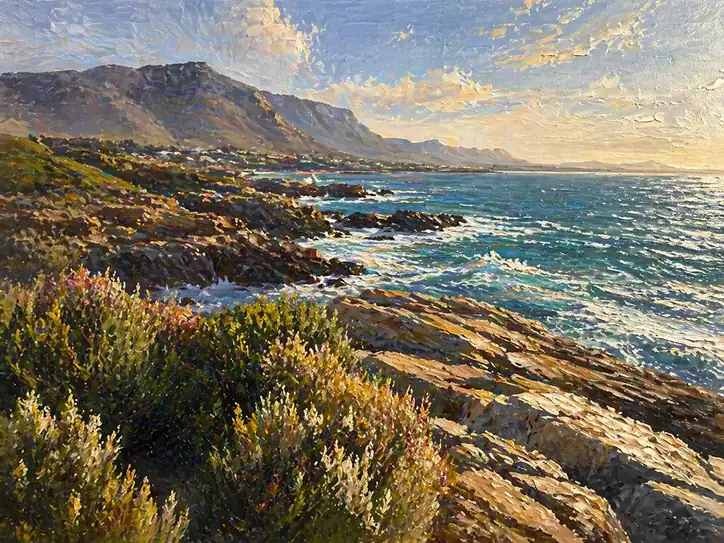 Where the Silence of the Peak Meets the Song of the Sea
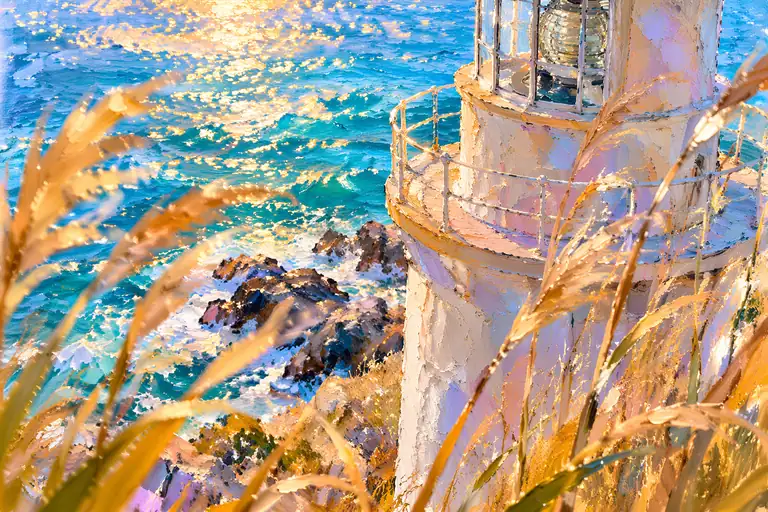 Sentinel of the Gilded Breeze
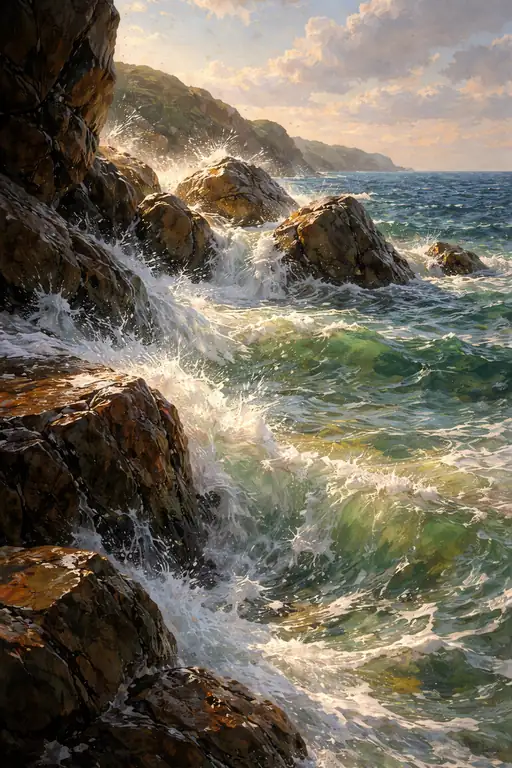 Whispers of the Eternal Tide
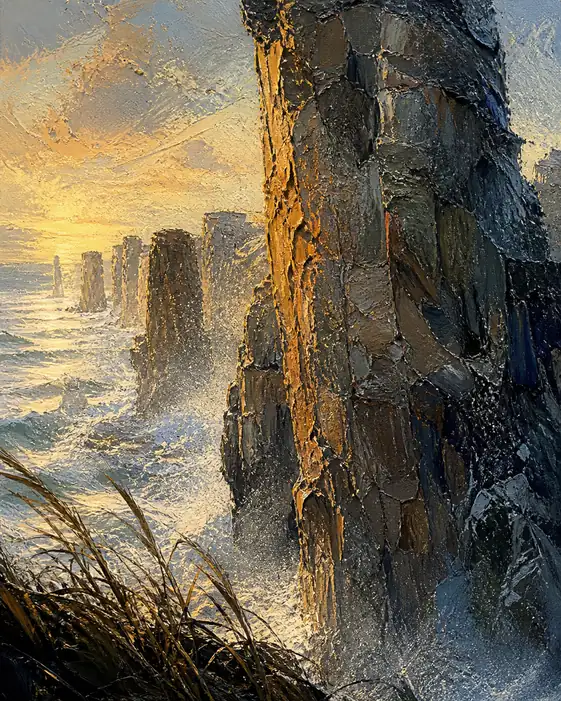 Sentinels of the Surging Tide
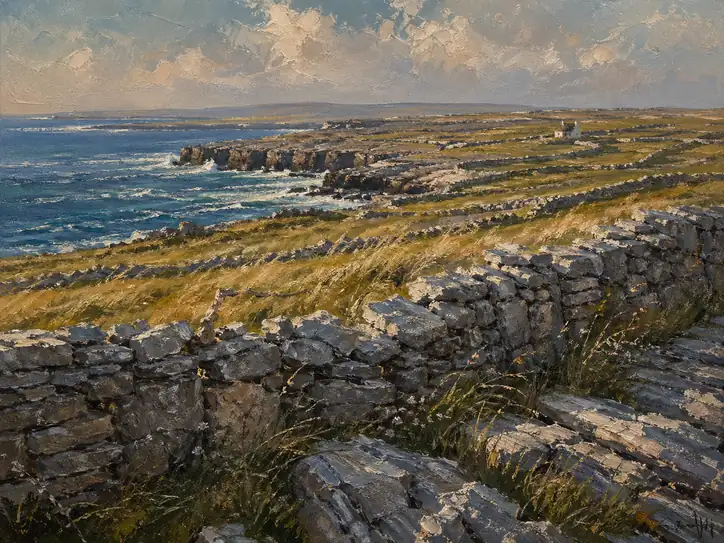 Echoes of the Stones
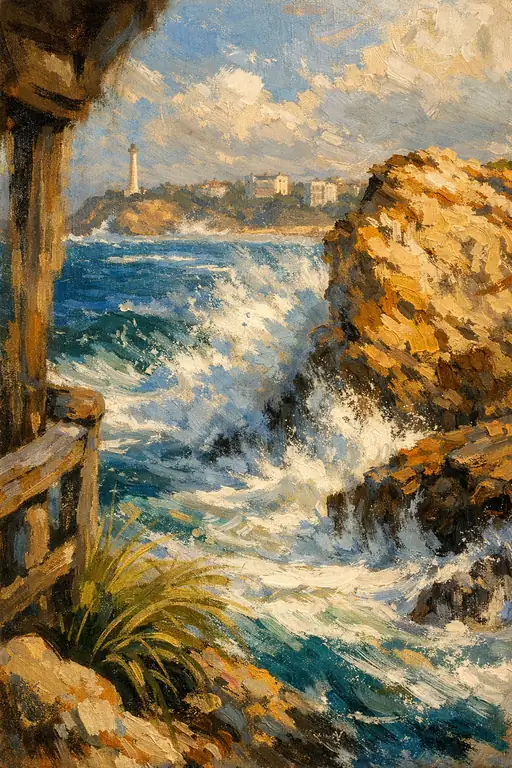 The Unrelenting Tide
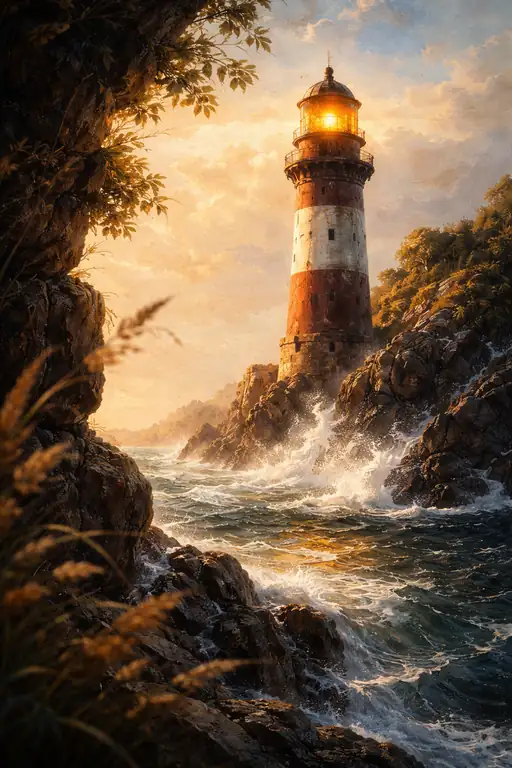 Guardian of the Roaring Sea
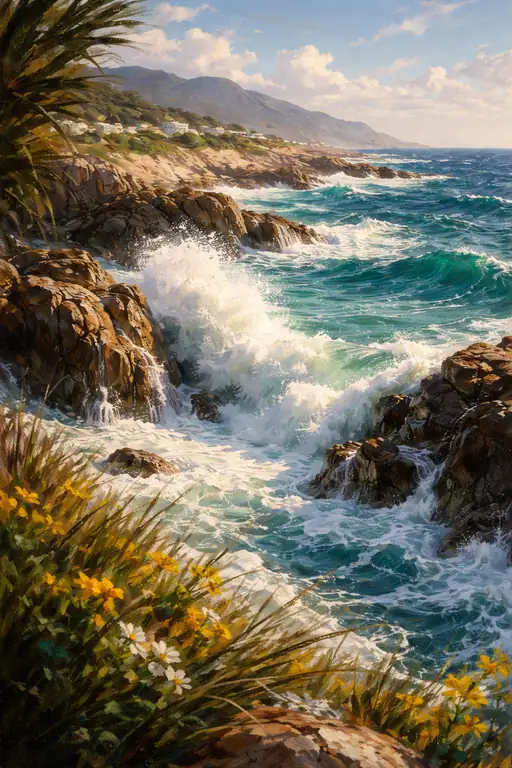 The Roaring Sea Beyond the Daisies
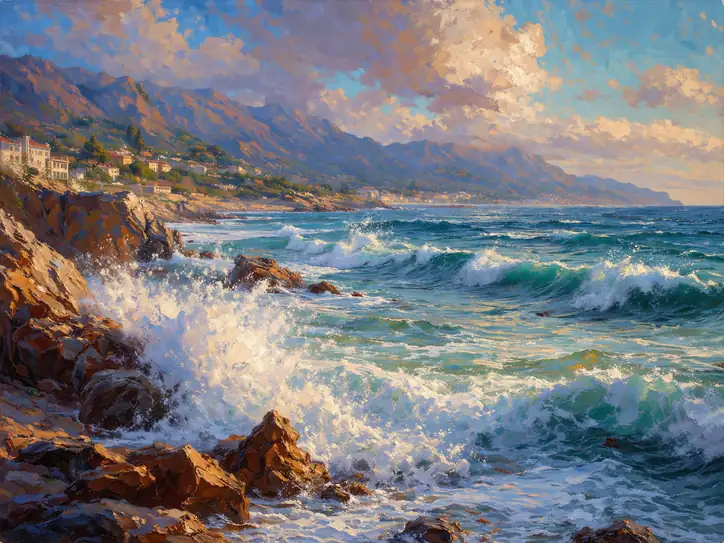 The Majestic Dance of the Golden Shore