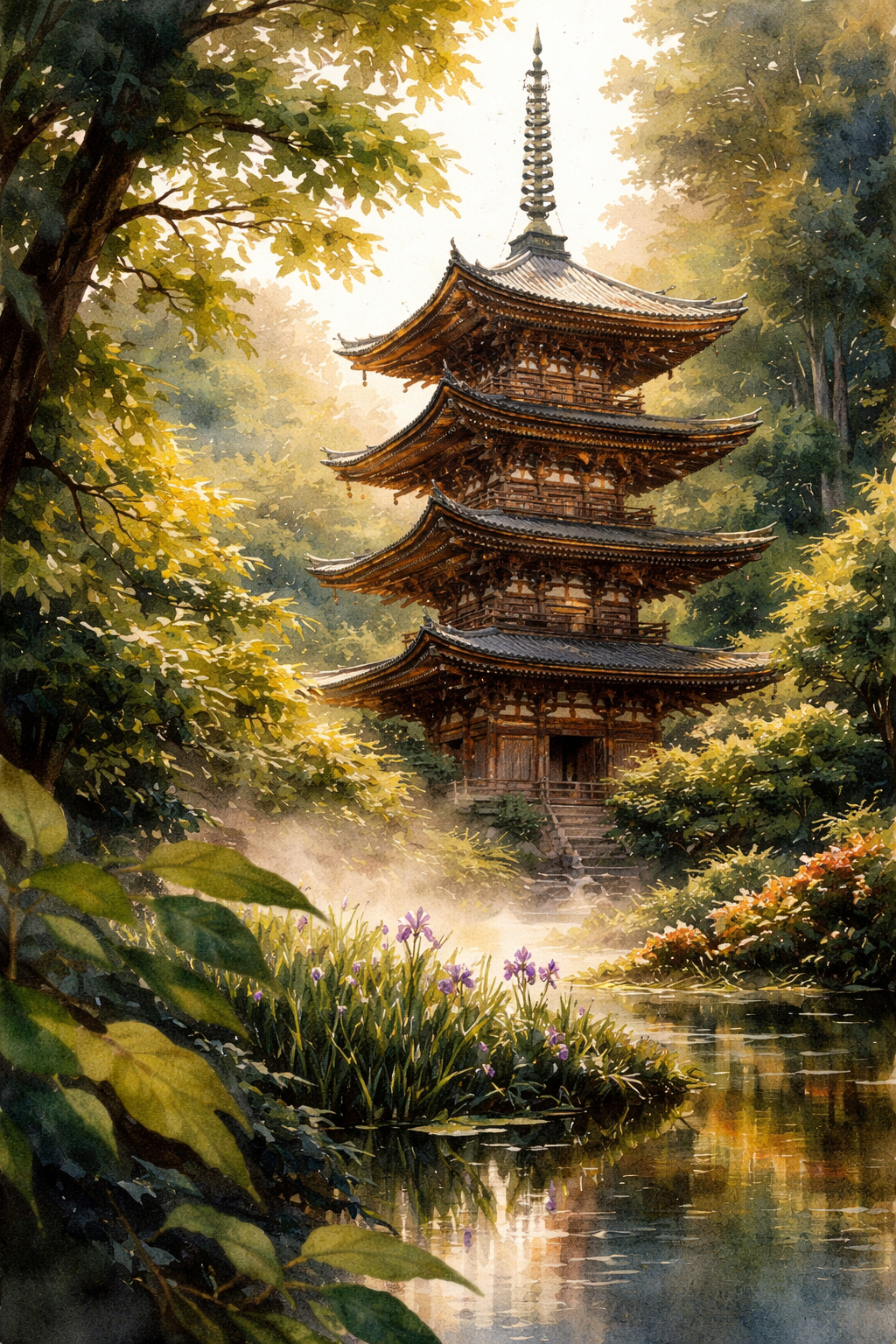
Sacred Resonance in the Morning Mist
Critique
1. Introduction This watercolor painting presents a serene depiction of a traditional Japanese three-story pagoda nestled within a lush, misty forest landscape. The work serves as a tranquil exploration of the relationship between spiritual structures and the overwhelming beauty of the natural world. By employing a vertical composition, the artist effectively emphasizes the grace of the architectural centerpiece against its organic surroundings. 2. Description The central focus is a wooden triple pagoda, characterized by intricate rooflines and weathered textures, standing atop stone steps. To its left and right, dense trees with golden and green foliage filter the soft morning light, creating a hazy atmosphere. In the foreground, a cluster of purple irises blooms beside a calm pond that reflects the warm hues of the pagoda and the forest canopy. 3. Analysis Technically, the artist utilizes a sophisticated interplay of light and shadow, with golden pigments highlighting the edges of leaves and the pagoda’s ridges. The use of soft focus in the background and foreground creates a sense of spatial depth, drawing the viewer’s eye toward the central tower. The color palette is harmoniously balanced between earthy neutrals and vibrant accents of violet and gold. 4. Interpretation and Evaluation The mastery of watercolor is evident in the delicate washes used to represent the mist and reflected light on the water. This piece demonstrates exceptional skill in architectural rendering, as the pagoda's complex geometry remains clear despite the overall atmospheric softness. The composition successfully evokes a sense of timelessness, suggesting a sacred space untouched by the modern world. 5. Conclusion Ultimately, the painting achieves a perfect synthesis of structure and atmosphere, capturing a specific emotional state. Initial impressions of scenic beauty are replaced by a deeper appreciation for the artist's ability to render light as a palpable presence. This work stands as a testament to the enduring power of classic landscapes to inspire quiet contemplation and spiritual renewal.
Same Subcategory
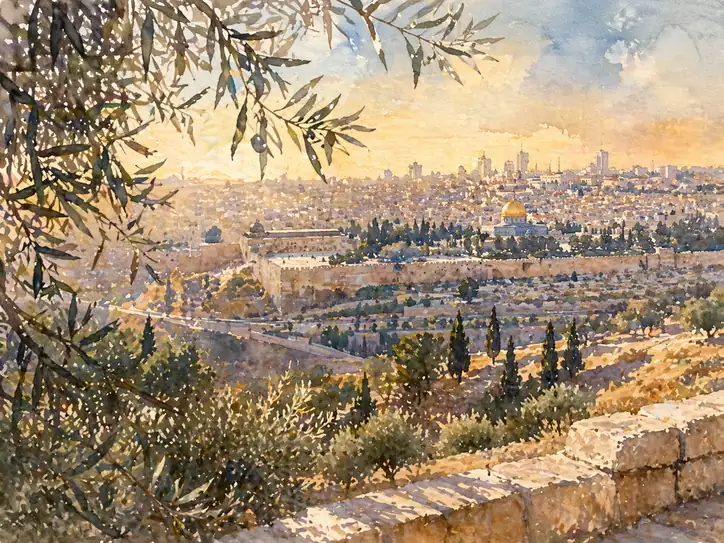 Jerusalem's Golden Radiance
Similar Artworks
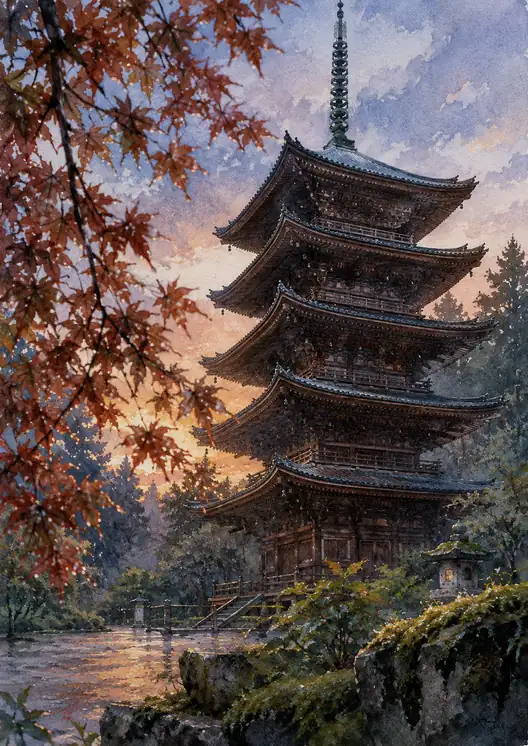 Autumn twilight, the Pagoda’s Silent Prayer
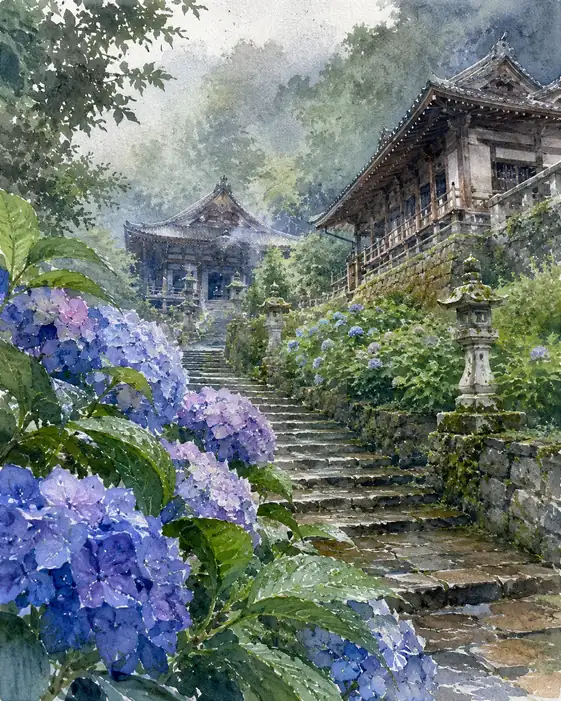 Lullaby in the Azure Rain
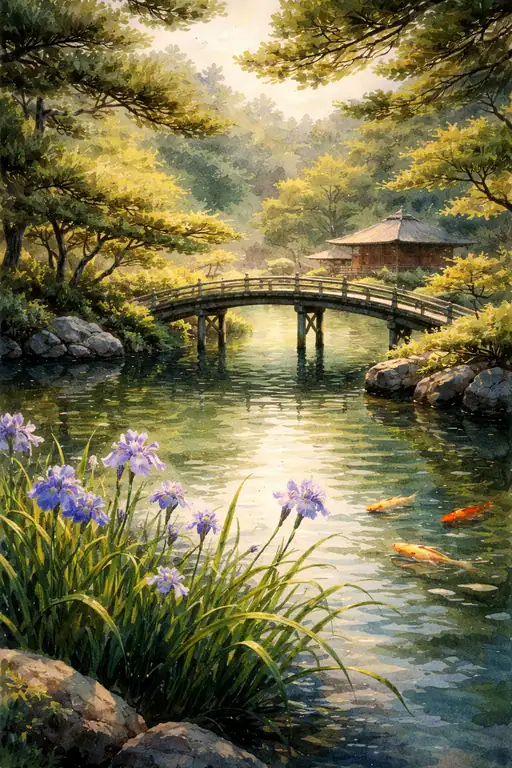 Whispers of the Golden Pond
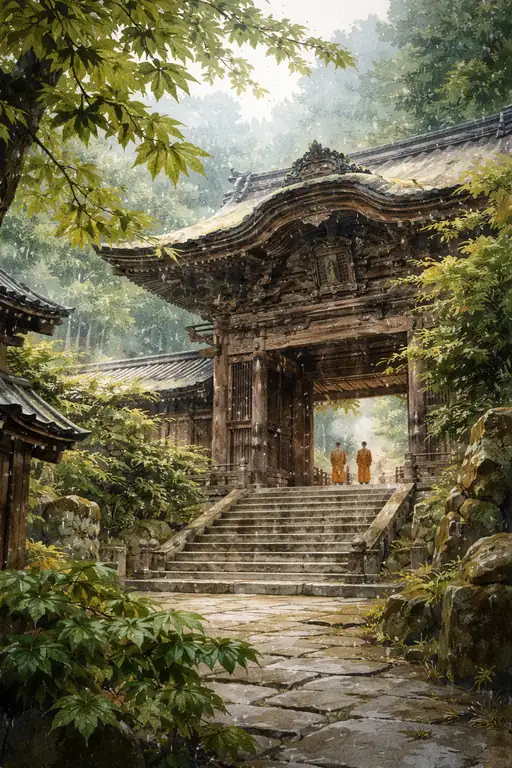 Rain's Serenade in the Sacred Grove
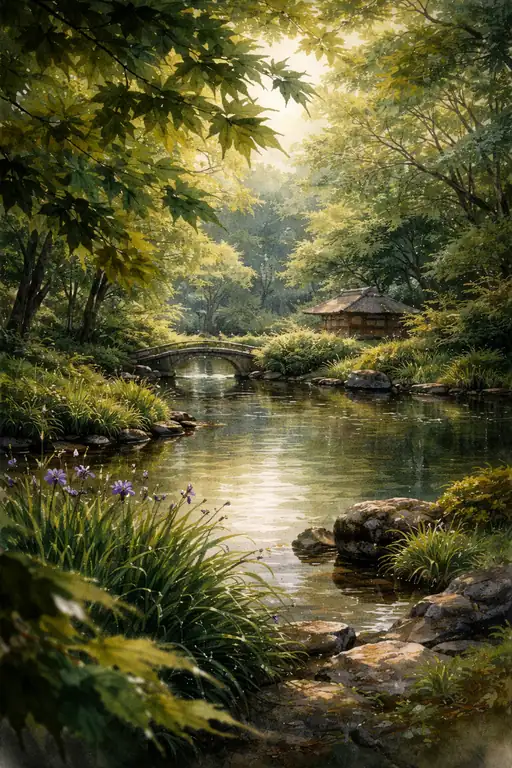 A Secluded Symphony of Iris and Stone
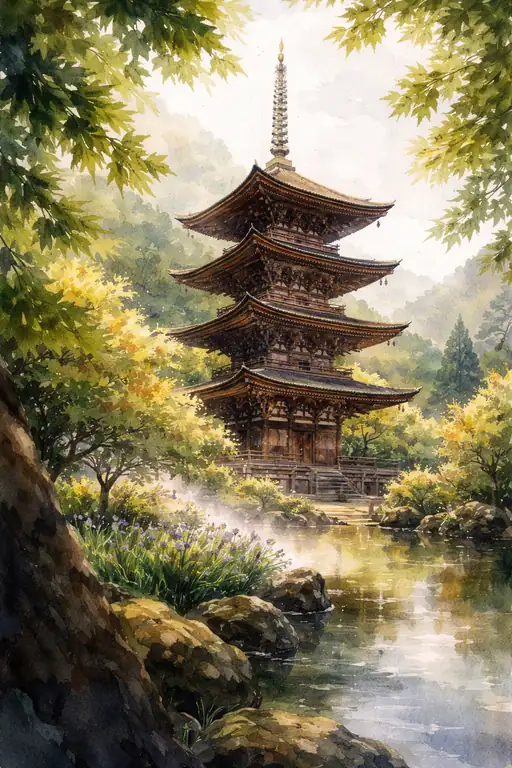 Reflection of the Silent Pagoda
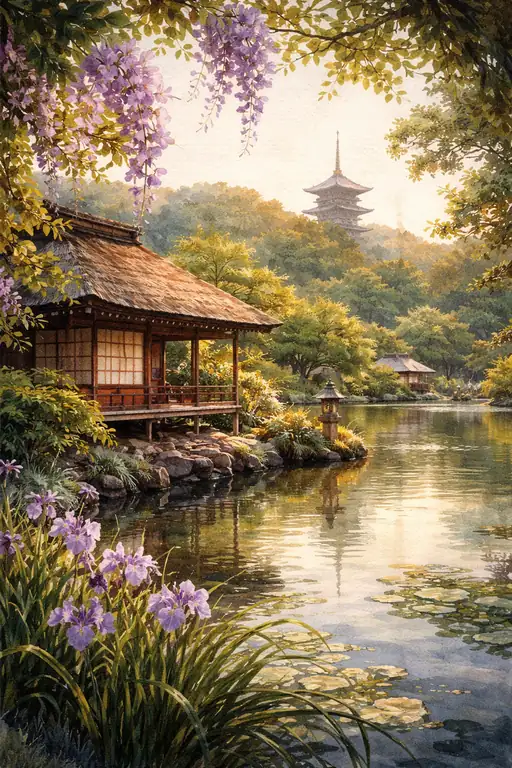 Wisteria Whispers to the Pagoda
 Sacred Light of the Compassionate Hall
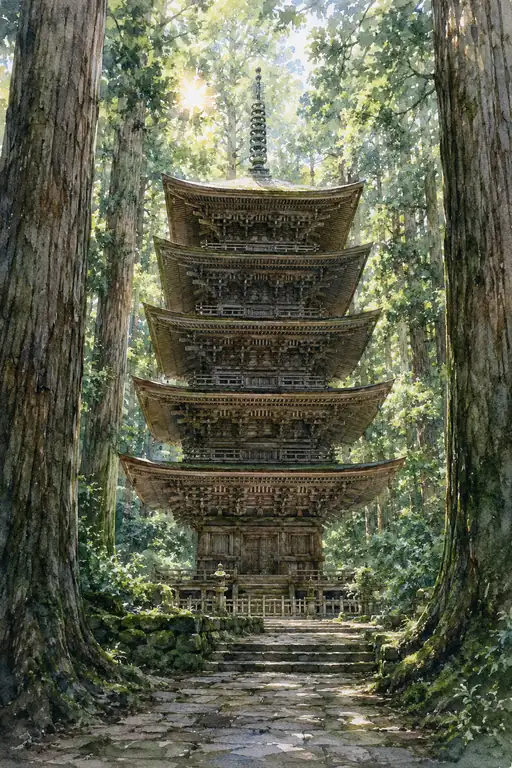 Silent Watcher of the Sacred Forest
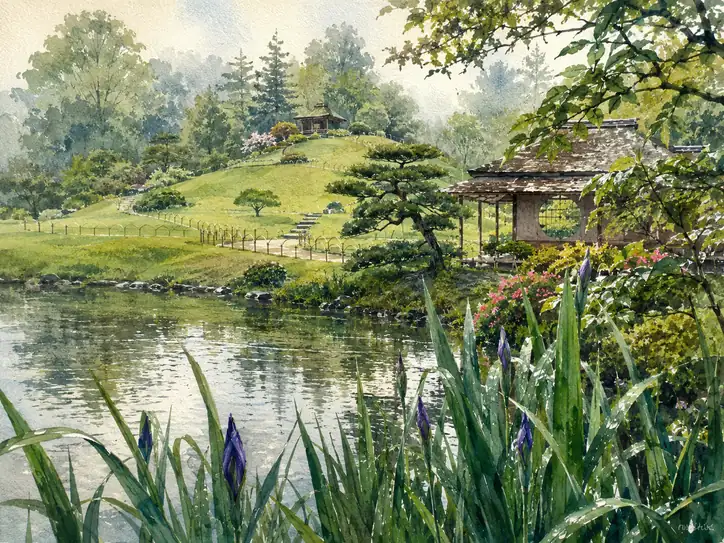 The Garden's Silent Breath