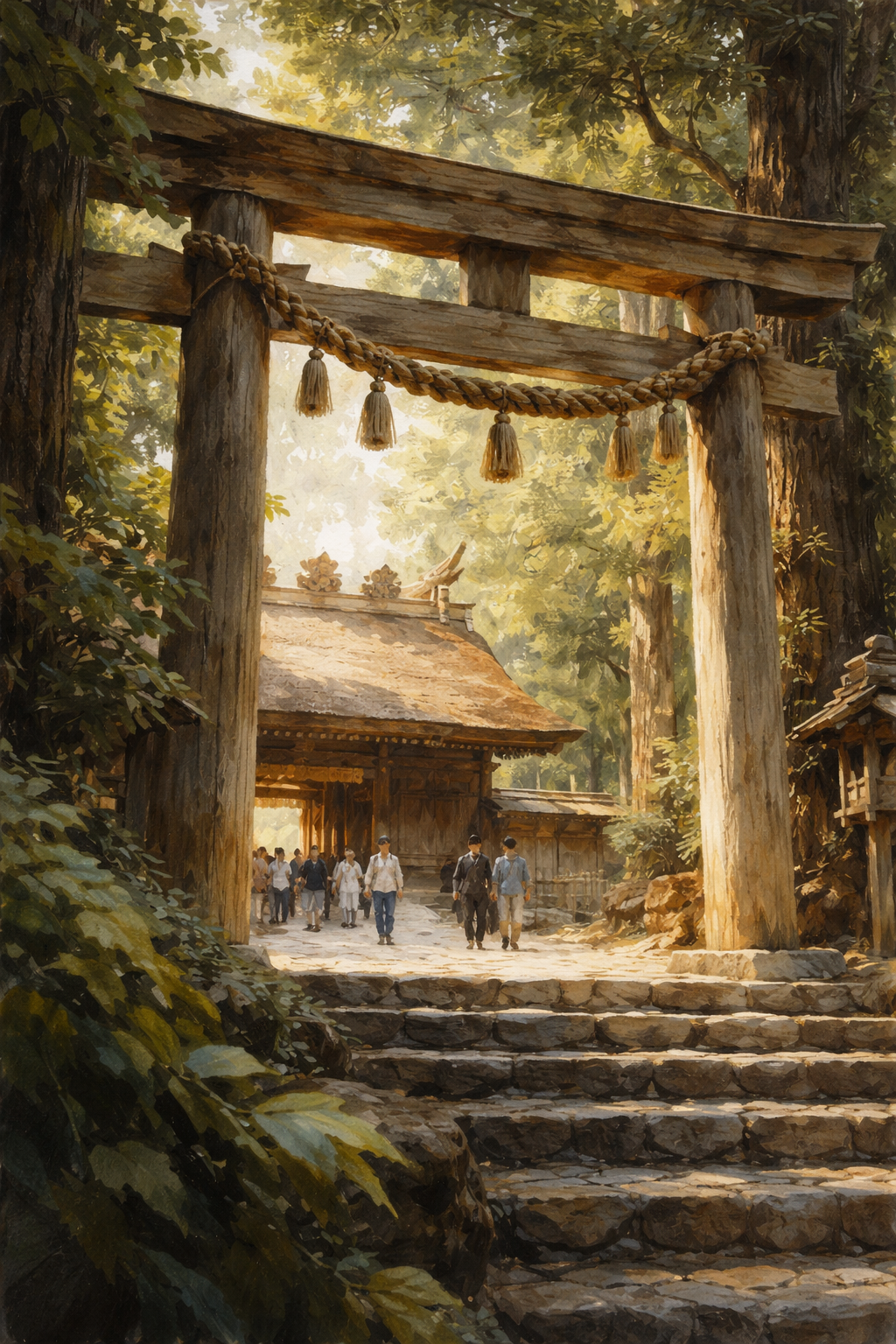
Passage to the Sacred Grove
Critique
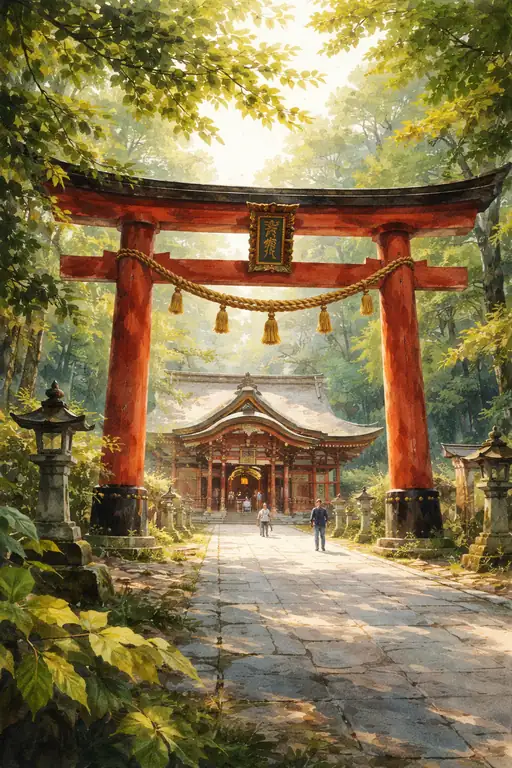
1. Introduction This work depicts a sacred atmosphere within a lush forest, focusing on a massive wooden torii gate that serves as a gateway to another world. The vertical composition invites the viewer to enter a peaceful spiritual space where nature and long-standing tradition coexist harmoniously. It presents a scene that feels both deeply grounded in reality and elevated by a touch of mystical light. 2. Description The foreground features weathered stone steps leading upwards, suggesting a physical and spiritual ascent for the visitor. A thick straw rope, traditionally known as shimenawa, is adorned with decorative tassels and hangs prominently across the wooden arch. Behind the gate, bright sunlight filters through dense foliage, revealing a traditional wooden building and several figures walking along the hallowed path in the distance. 3. Analysis The artist utilizes a warm color palette dominated by rich ochre, deep greens, and vibrant golden yellows to simulate the effect of filtered natural light. The powerful vertical lines of the ancient trees and the sturdy gate posts create a sense of enduring stability and monumental height. The loose, painterly application of pigment adds a tactile quality to the rough wood and cold stone surfaces. 4. Interpretation and Evaluation The piece successfully captures the serene and reverent mood associated with a traditional Japanese shrine visit. The sophisticated interaction between brilliant light and soft shadow highlights the transition from the mundane world into a more sacred realm. The technical execution demonstrates a strong grasp of linear perspective and atmospheric lighting, effectively evoking a sense of timelessness and cultural continuity within the landscape. 5. Conclusion Through its carefully balanced composition and evocative use of natural light, the painting offers a profound look at cultural heritage integrated with the environment. The initial impression of a simple forest landscape deepens into a lingering appreciation for the subtle spiritual energy depicted in the quiet scene. This composition ultimately serves as a contemplative study of the intersection between the human spirit and the natural world.
Same Subcategory
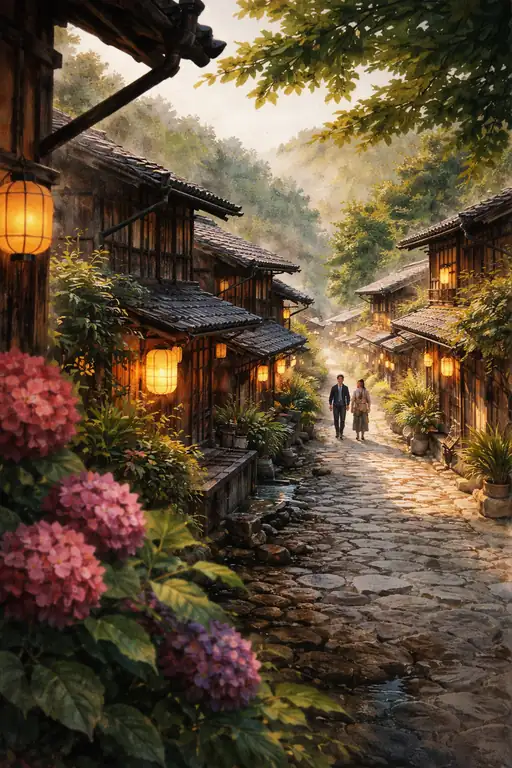 Lanterns' Glow on the Misty Trail
 Lanterns at Twilight
Similar Artworks
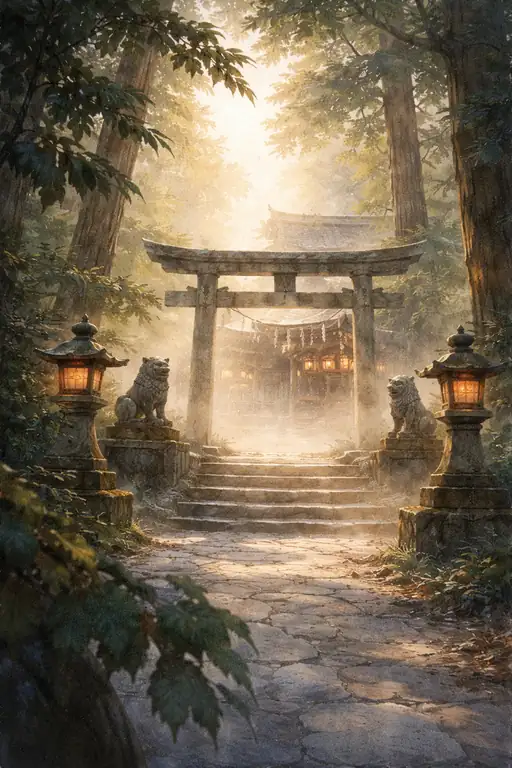 Silent Guardians of the Ethereal Dawn
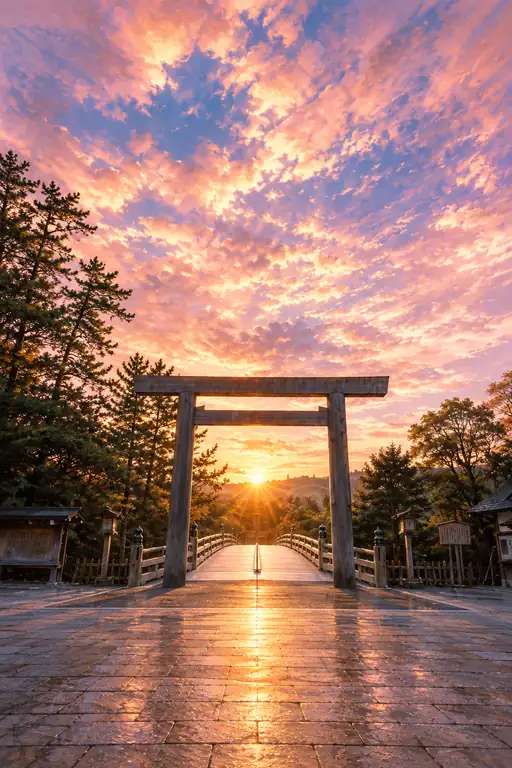 The Light That Welcomes Me
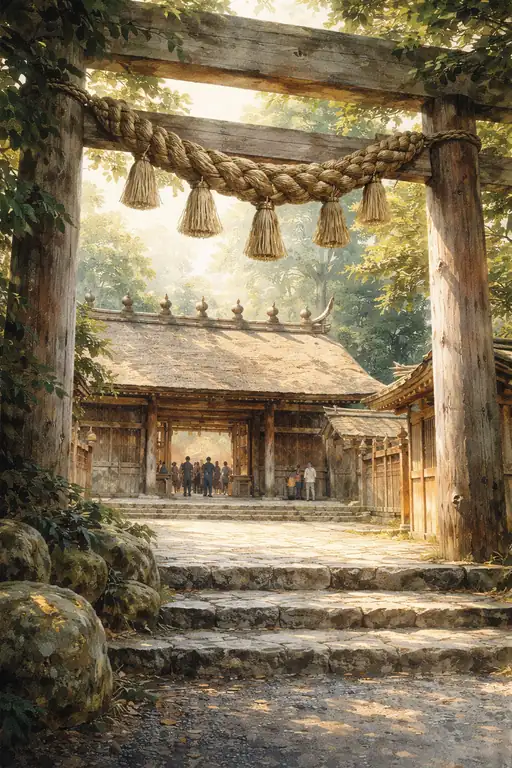 Awakening the Sacred Path
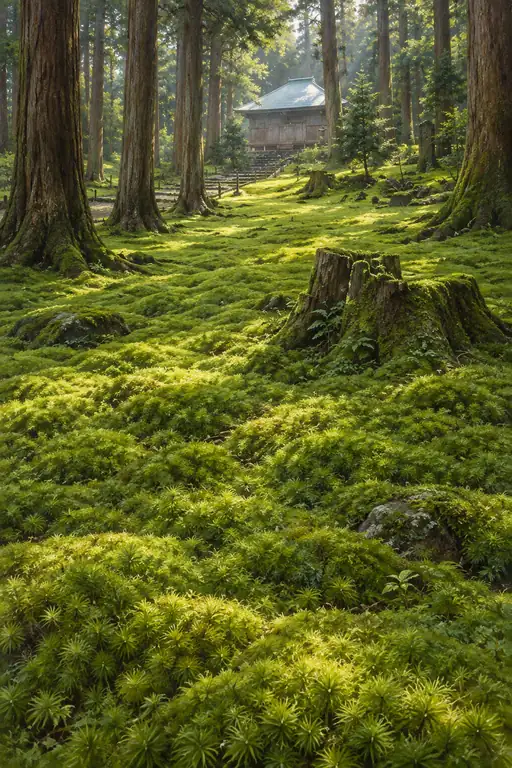 Prayer Among a Thousand Moss Stars
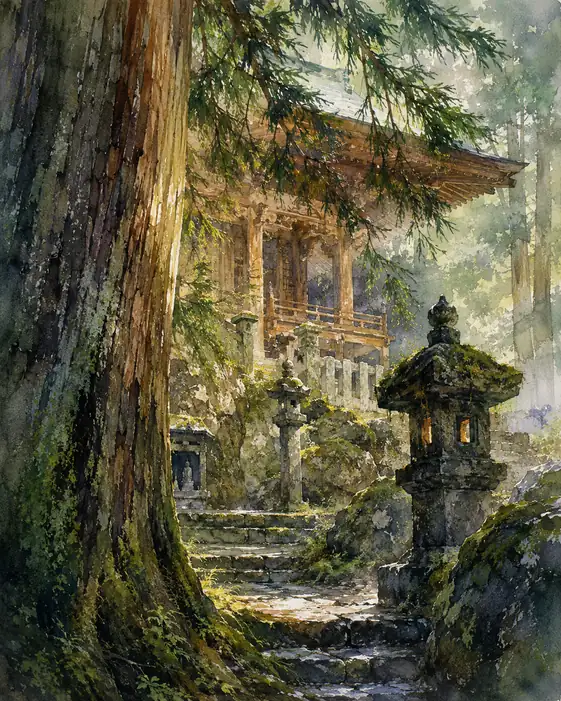 Sanctuary of the Ancient Cedars
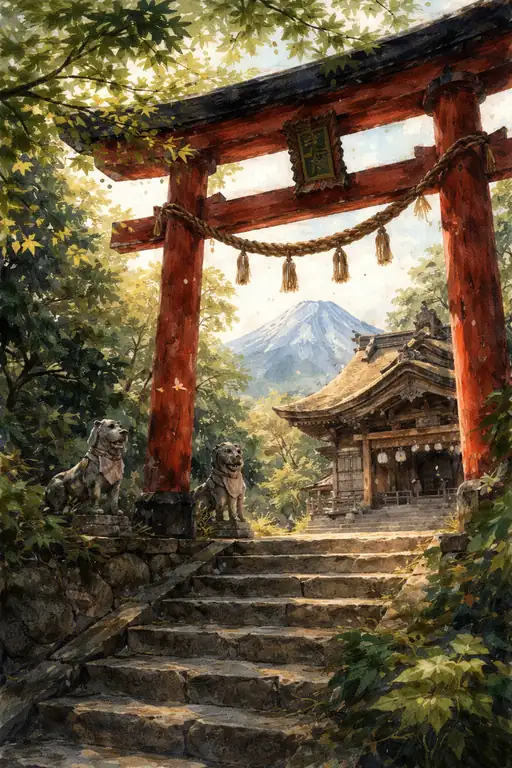 Sacred Portal to the Divine Peak
 Threshold of the Sacred Sun
 Ascent Through Ancient Sunbeams
 Silent Steps through the Sacred Forest
 Sacred Light Through the Canopy