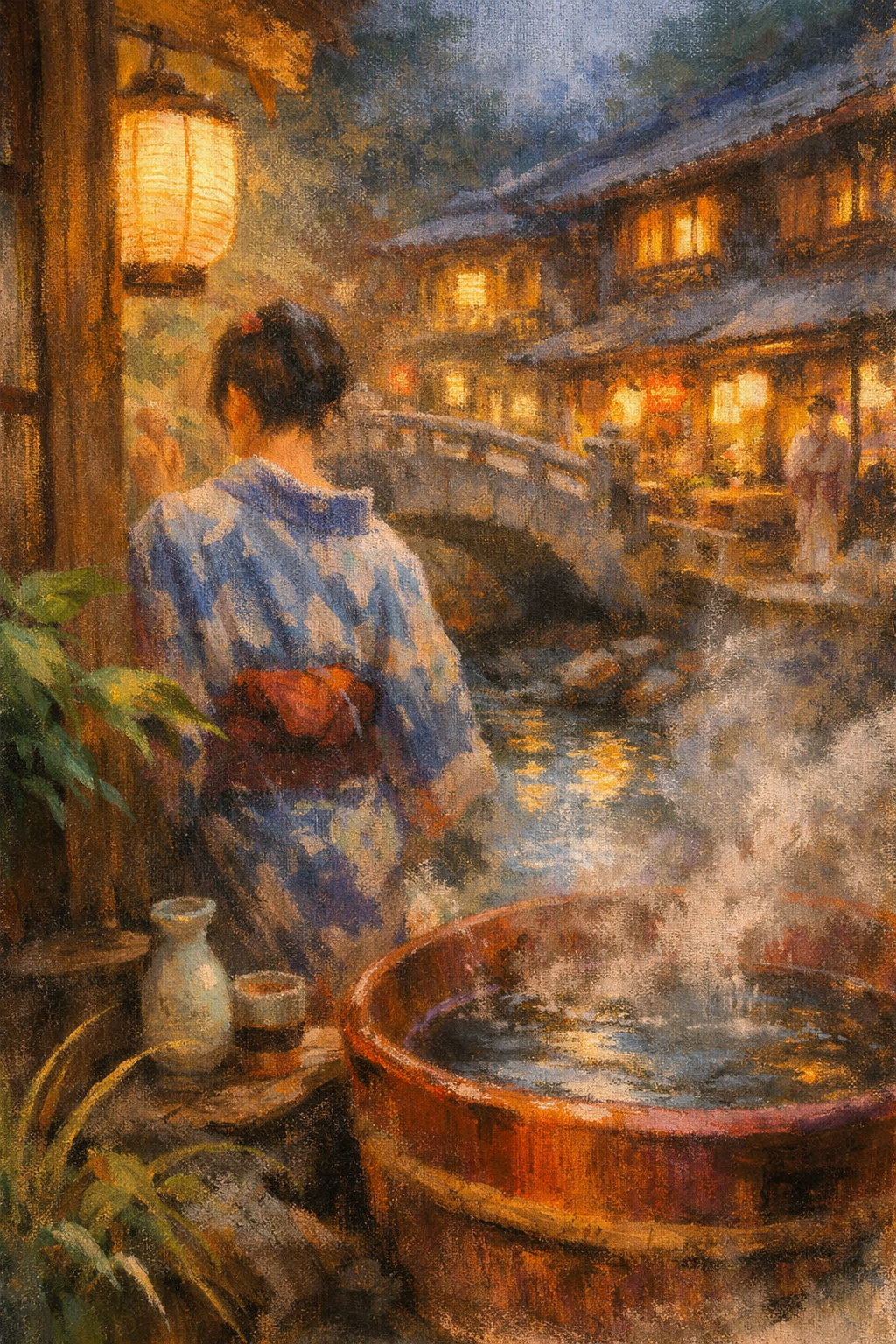
Warmth of the Midnight Springs
Critique
1. Introduction This painting presents a nostalgic evening scene in a traditional Japanese hot spring town. The composition focuses on a woman in a kimono standing beside a steaming wooden tub, set against a backdrop of historic architecture and a stone bridge. Through a warm color palette and impressionistic brushwork, the artist captures a sense of tranquility and cultural heritage. The work invites viewers to experience a moment of quiet reflection amidst a dimly lit, atmospheric setting. 2. Description In the foreground, a large wooden soaking tub filled with water emits white steam that rises into the night air. To the left, a woman seen from behind wears a blue and white patterned kimono with a red obi sash. Beside her sits a ceramic bottle and a small cup on a wooden surface. The middle ground features a narrow river with reflections of light, crossed by an arched stone bridge. In the background, traditional wooden buildings with glowing windows line the street under a darkening sky. 3. Analysis The artist utilizes a vibrant contrast between the cool blue tones of the woman's kimono and the warm oranges emanating from the lanterns and windows. Thick, visible brushstrokes create a rich texture that emphasizes the play of light on various surfaces, particularly the water and the steam. The vertical composition guides the eye from the foreground tub, past the central figure, and toward the architectural details in the distance. This layering technique provides a strong sense of depth and atmospheric perspective within the dense urban scene. 4. Interpretation and Evaluation The depiction of the steaming tub and the glowing lanterns evokes a profound sense of comfort and historical continuity. By obscuring the woman's face, the artist allows the figure to represent a universal appreciation for traditional aesthetics and relaxation. The technical execution of the light reflections is effective, demonstrating a clear understanding of color harmony and mood. This painting successfully portrays the intersection of private rest and public space in a way that feels both intimate and expansive. 5. Conclusion The initial impression of a simple hot spring scene evolves into a complex study of light and texture upon closer inspection. The harmony between the human figure and the surrounding environment highlights the enduring beauty of traditional Japanese landscapes. Overall, the work serves as a evocative testament to the peaceful atmosphere of a historic town at night. Its balanced composition and masterful use of warm lighting create a memorable visual experience.
Same Subcategory
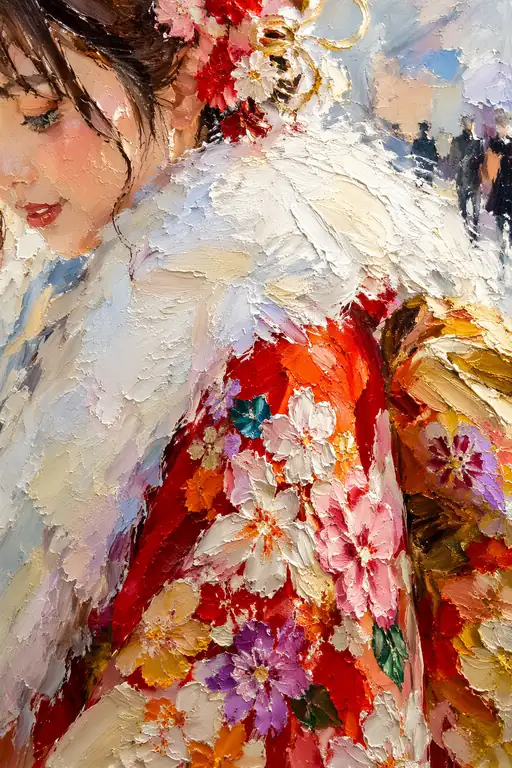 The Traditional Bloom
Similar Artworks
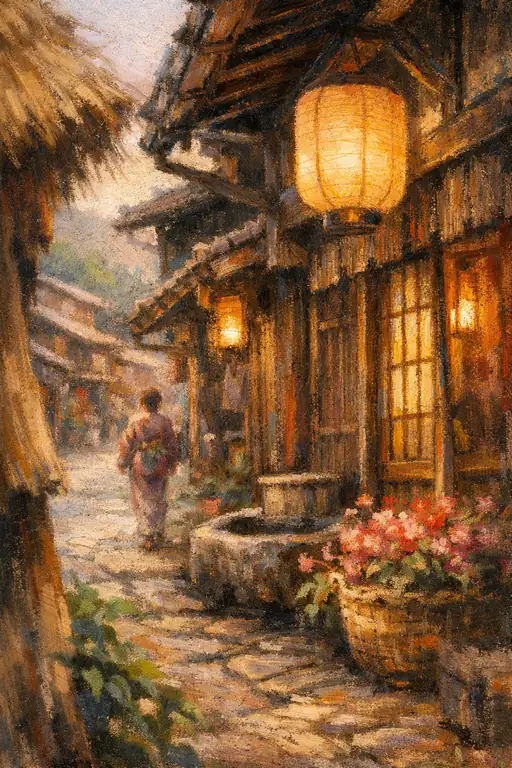 Nostalgia in the Amber Glow
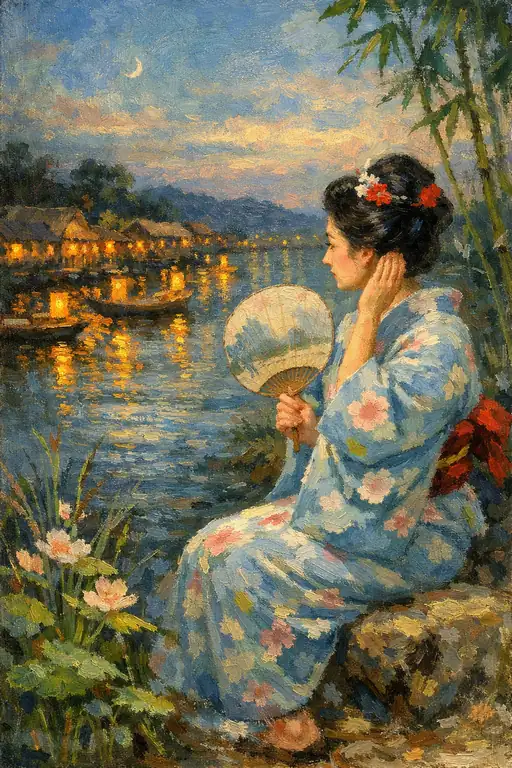 A Nostalgic Gaze in Blue
 Lanterns at Twilight
 Echoes of a Forgotten Grace
 Fleeting Grace in the Spring Breeze
 Fleeting Grace in the Spring Breeze
 Serenity at the Autumn Teahouse
 Warmth in the Quiet River Town
 The Golden Promise Woven Through Time
 The Tender Breath of Peonies