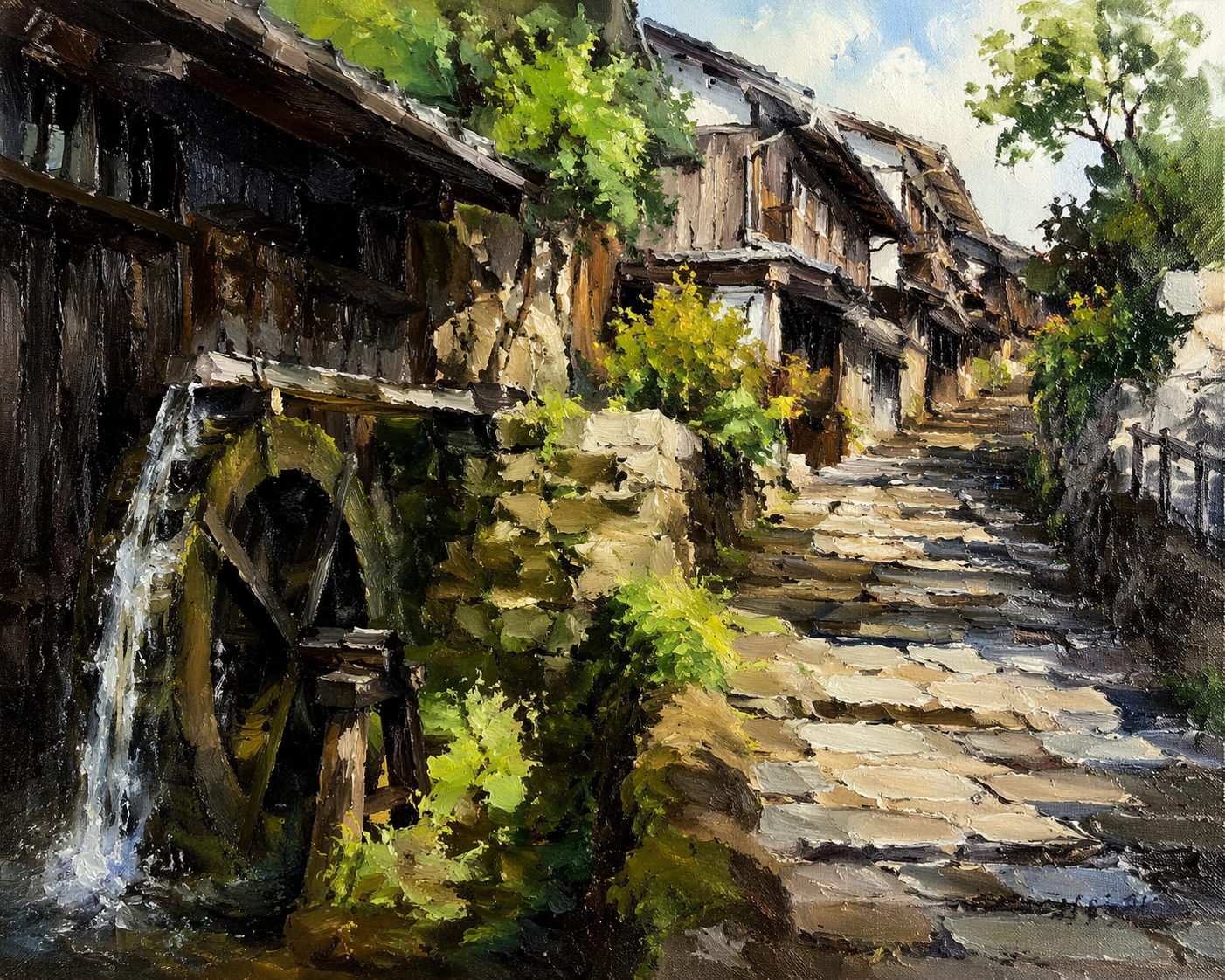
The Waterwheel's Nostalgic Spin
Critique
1. Introduction This landscape painting captures a serene daily scene in a mountain village using a vigorous oil painting technique. A large waterwheel cascading with fresh water is positioned in the foreground, while a path of stone steps leads the viewer's gaze toward the upper right. The traditional wooden houses evoke a nostalgic sense of Japan’s primal scenery. This work holds significant value as a record that preserves the atmosphere and historical charm of regional landscapes. 2. Description The wooden waterwheel on the left maintains a striking presence alongside the glistening flow of water. To the right, irregularly shaped stones form a steep staircase, flanked by vibrant foliage and small, colorful flowers. The clustering houses are rendered with deep brownish tones expressing the weathered texture of aged timber against white plastered walls. The bright blue sky suggests the soft, clear lighting of a peaceful afternoon, enveloping the entire scene in warmth. 3. Analysis The most prominent feature of this work is the heavy impasto technique applied with bold brushes. The physical thickness of the paint emphasizes the tactile textures of stone and wood, imbuing the surface with palpable vitality. The composition utilizes a strong diagonal line extending from the lower left to the upper right, creating depth and dynamic rhythm. Highlights on the stone path and roof edges convey solid three-dimensionality and the passage of time. 4. Interpretation and Evaluation Crucial to the interpretation is the fusion of a nostalgic subject with modern, powerful brushwork. While the scene depicts a quiet landscape, the vigorous touch reveals a sincere gaze that cherishes the present moment. The depiction of the waterwheel highlights the symbiosis between natural energy and human life. The work displays high artistic merit through its technical excellence and lyrical expression, effectively capturing the spirit of the rural environment. 5. Conclusion The initial feeling of nostalgia eventually evolved into an admiration for the physical strength of the brushstrokes and the spiritual depth within the landscape. The painting presents the unchanging beauty residing in the past with an intense presence that resonates today. In conclusion, the work reconstructs a traditional theme through unique textures, serving as a piece that leaves a profound sense of tranquility and a lasting impression on the viewer.
Same Subcategory
Similar Artworks
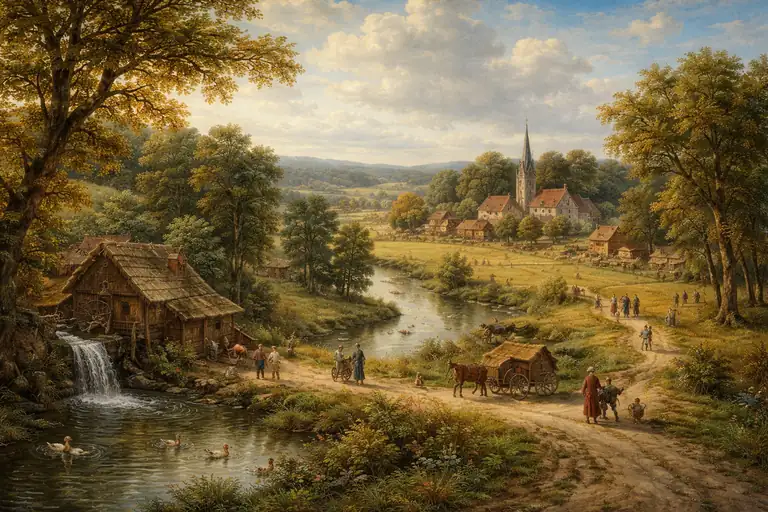 Chronicles of the Idyllic Path
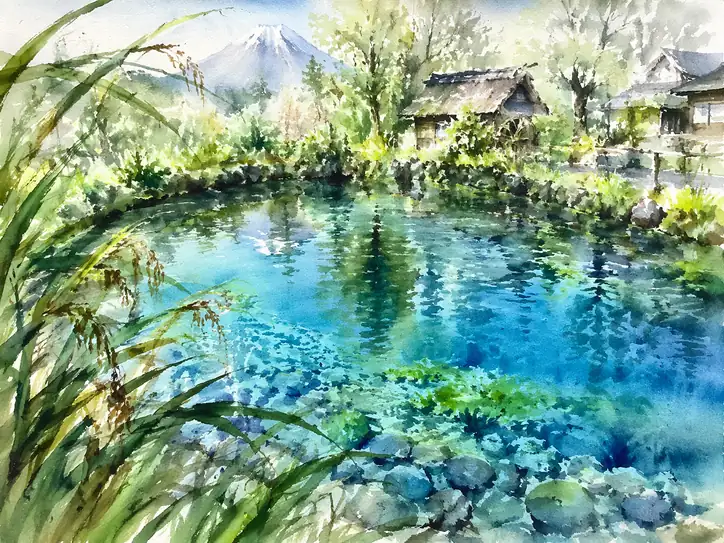 Ethereal Reflections of Fuji in the Autumn Lake
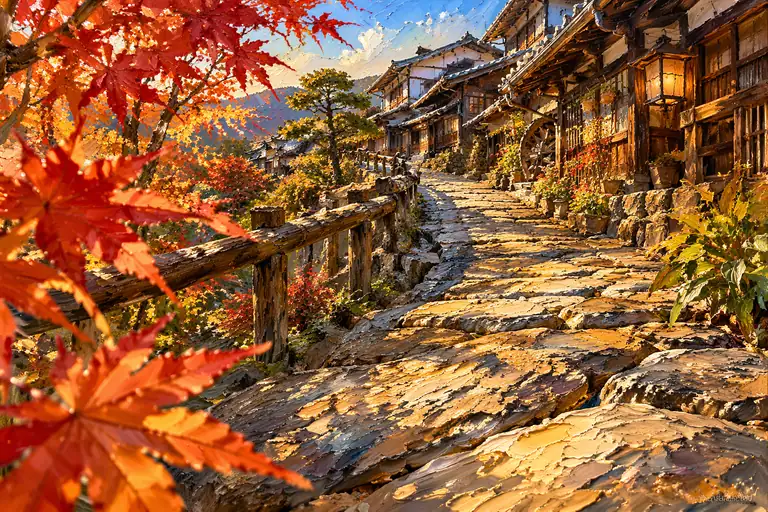 Ascent to the Autumn Skies
 Whispers of the Golden Valley
 Tranquil Shadows Along the Thatched Village Road
 Warmth of the Evening Village
 The Ascent of Sunlit Stone
 Whispers of the Evening Sun on the Stone Path
 Peaceful Passage Through the Historic Water Town
 Nostalgia in the Verdant Valley