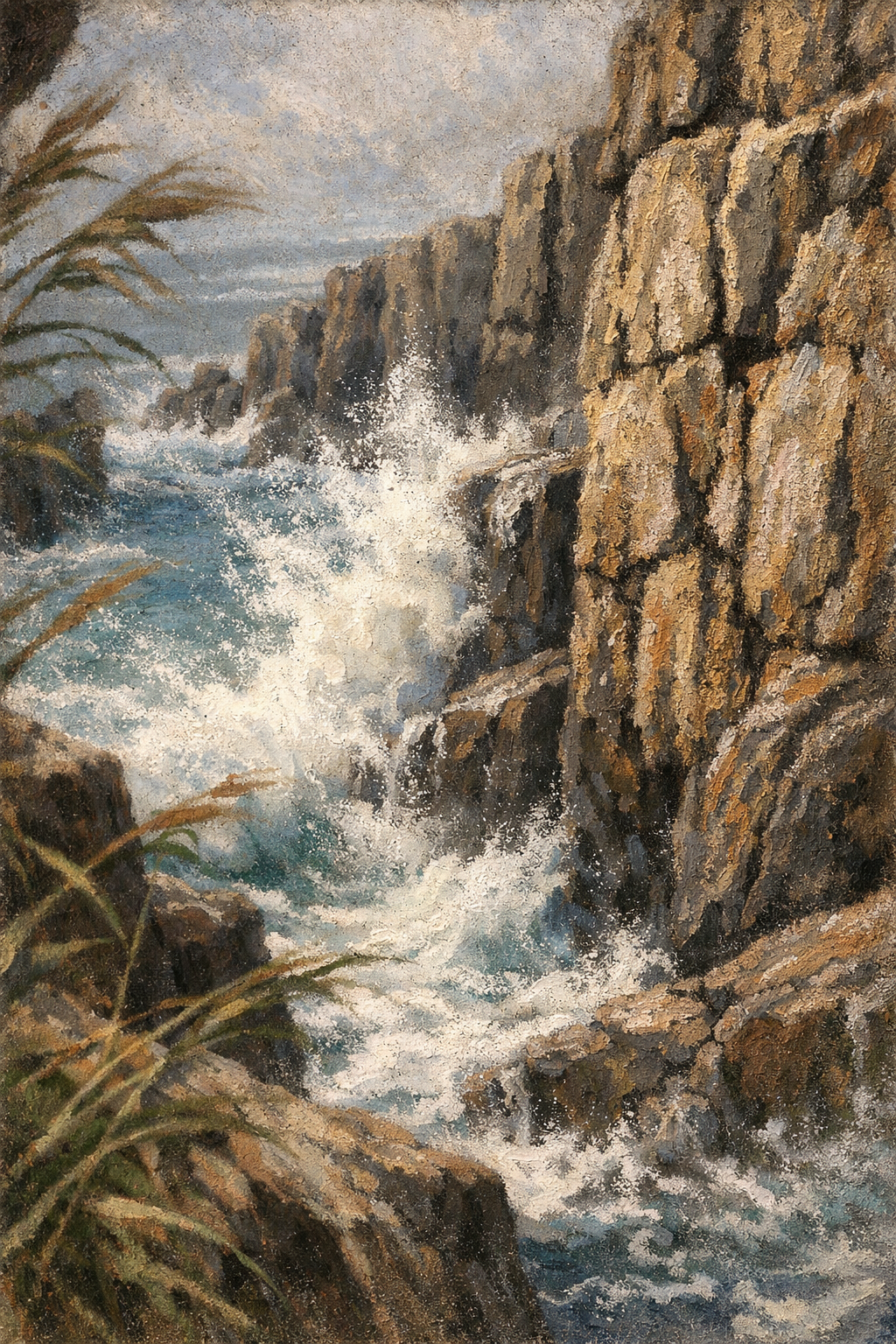
The Cliff's Eternal Encounter
Critique
1. Introduction This vertical landscape oil painting powerfully captures the raw energy and majesty of a rugged coastal environment. The composition focuses on a dramatic moment where turbulent sea waves strike steep, weathered cliffs under a pale, overcast sky. It serves as a compelling study of the interface between enduring solid earth and the relentless movement of water. 2. Description In the foreground, tall reeds with withered brown tips sway on the left side, providing a sense of scale and immediacy. The center of the canvas is dominated by white sea foam and spray, erupting between the jagged forms of the rock faces. To the right, a massive, vertically fractured cliff rises, showing intricate textures in shades of ochre and burnt umber. 3. Analysis The artist employs a balanced palette of warm earthy tones and cool, muted blues to create a harmonious yet dynamic atmosphere. A heavy, impasto-like application of white paint is used for the waves, lending a tactile quality to the churning water. The visual tension between the cliff's vertical lines and the chaotic, organic shapes of the spray creates a rhythmic sense of motion throughout the work. 4. Interpretation and Evaluation This painting successfully conveys the formidable power of nature through its sophisticated handling of texture and light. The contrast between the unyielding stone and the fluid, energetic ocean is rendered with remarkable technical proficiency. By capturing the ephemeral nature of the spray against the ancient permanence of the cliffs, the artist creates a scene that feels both instantaneous and eternal. 5. Conclusion Initially, the eye is drawn to the brilliant white splash of the waves, but further reflection reveals the deep intricacies of the rock surfaces. The work transition from an expression of violent action into a profound meditation on the cycle of coastal change. It remains a robust and evocative example of naturalistic painting that effectively transforms a landscape into a vivid sensory experience.
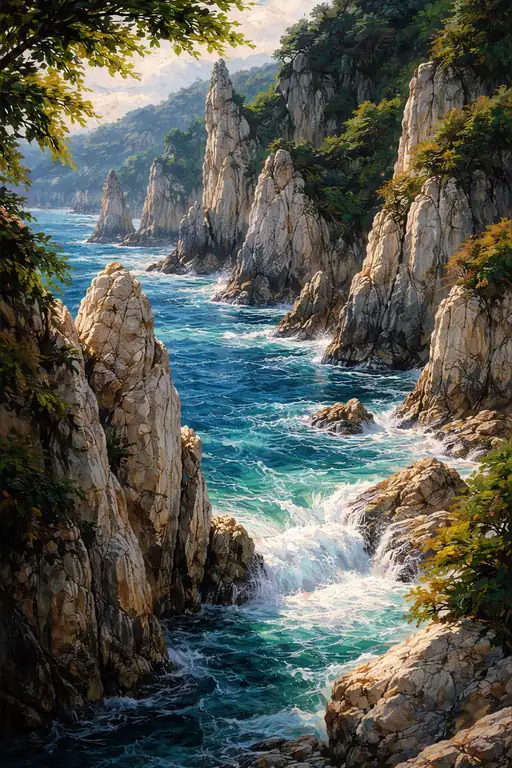 Emerald Roar: The Cliff's Edge
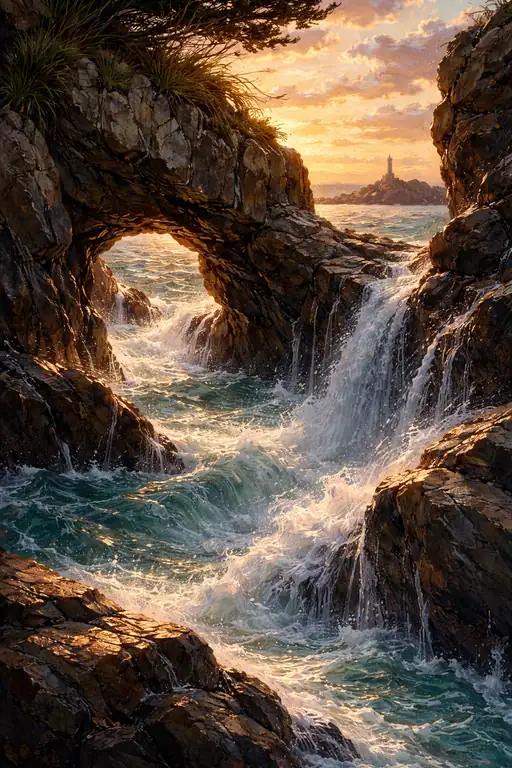 Sublime Light of the Coastal Arch
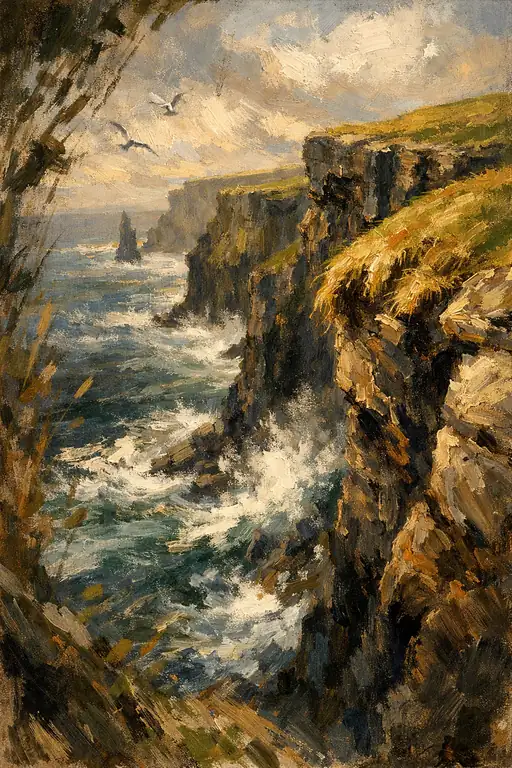 Eternal Roar at the Edge of the World
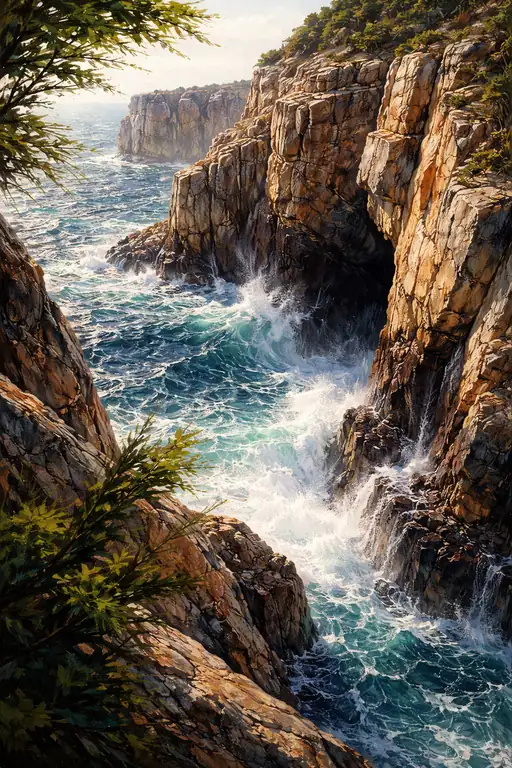 Eternal Tides
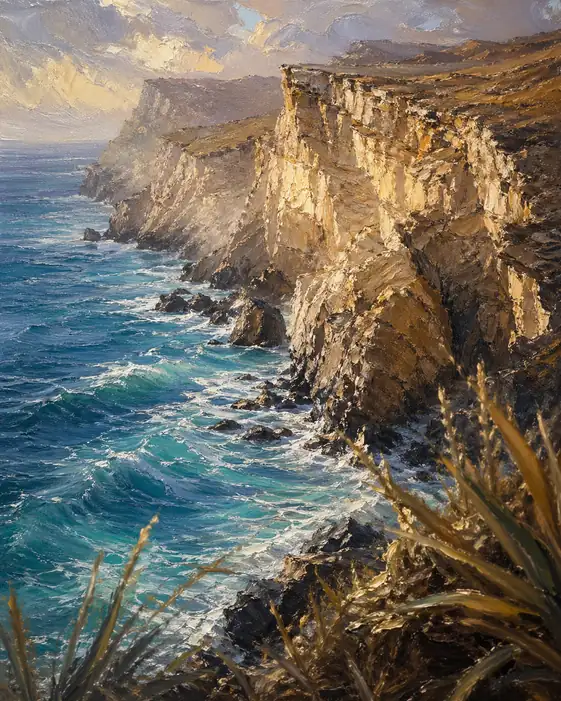 Collision of Earth and Ocean
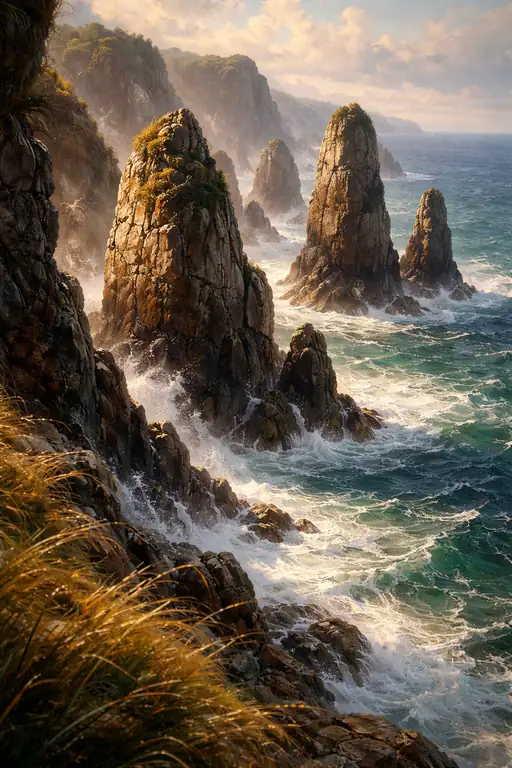 The Eternal Embrace of the Waves
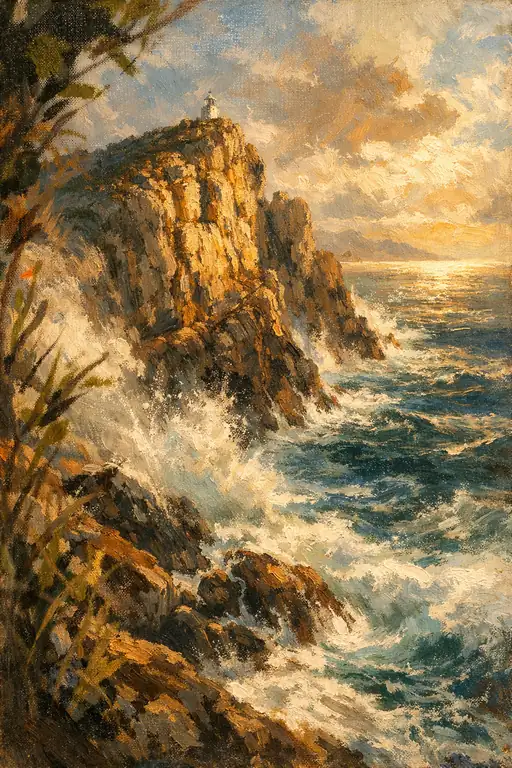 Golden Beacon on the Edge
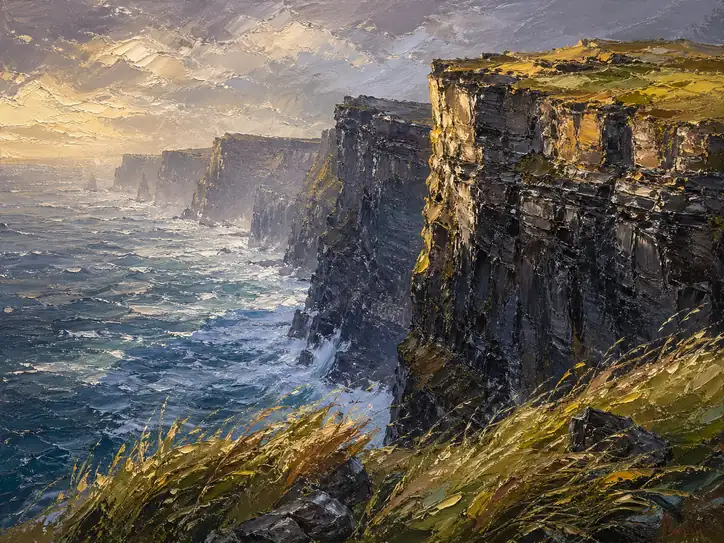 Edge of Eternity
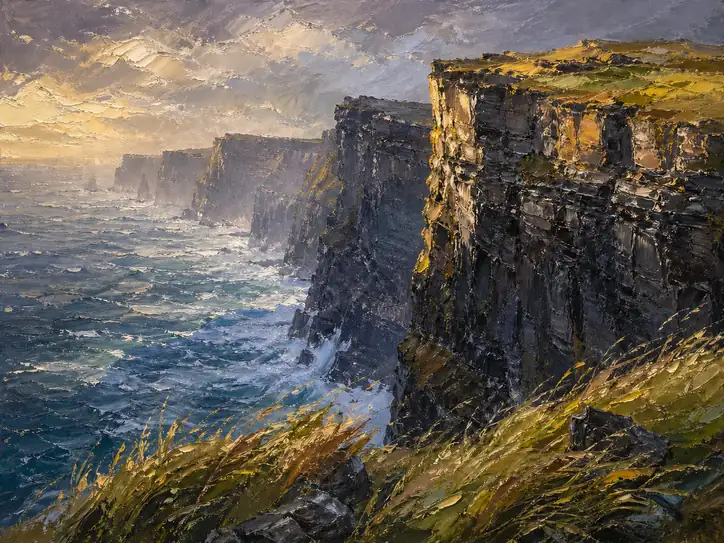 Golden Ascent
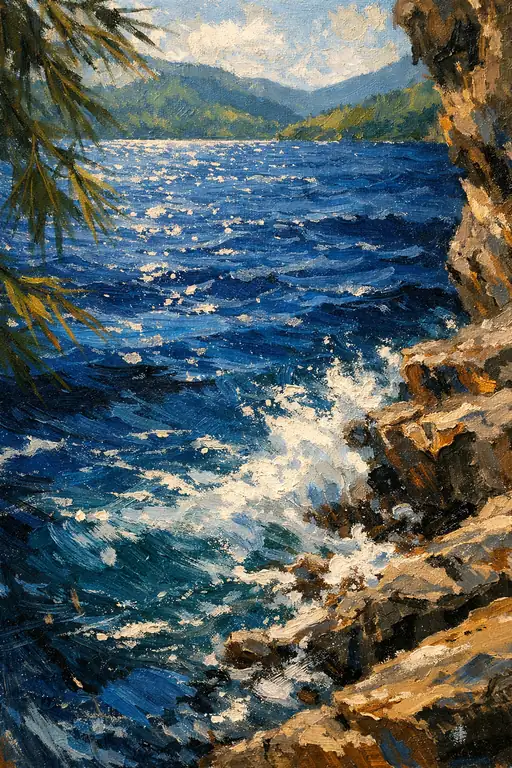 Sparkle on the Cobalt Cliffs
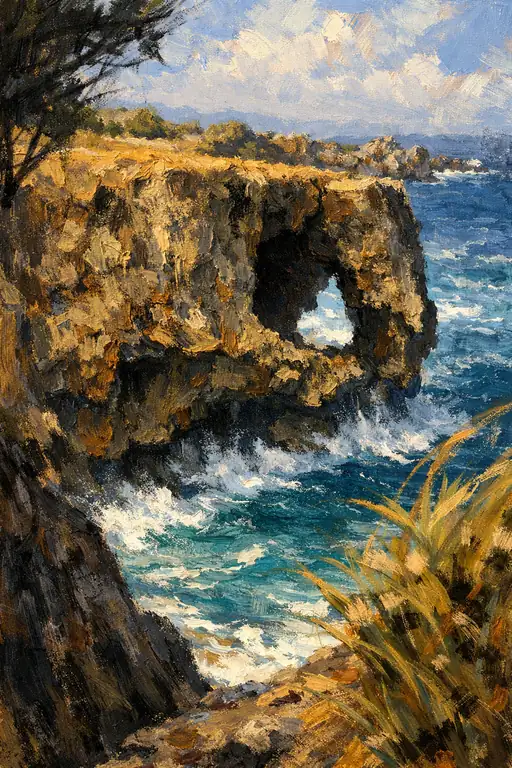 The Ocean's Roar Through the Arch of Time
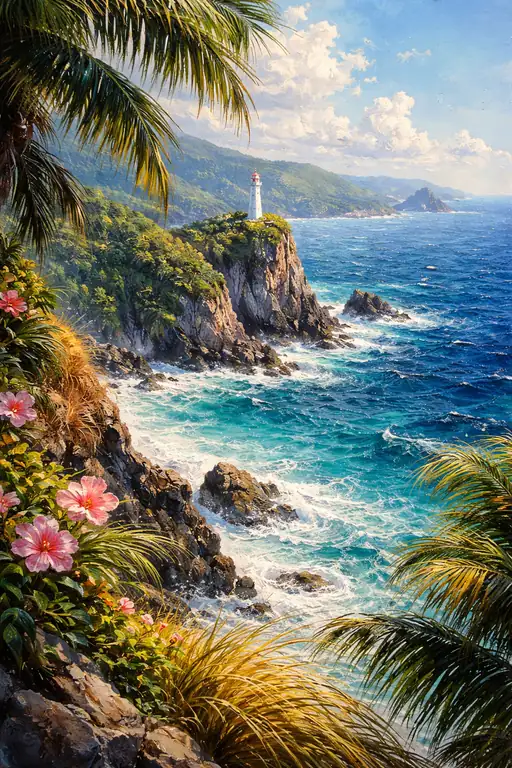 Sentinel of the Sapphire Sea: The Cliffside Lighthouse