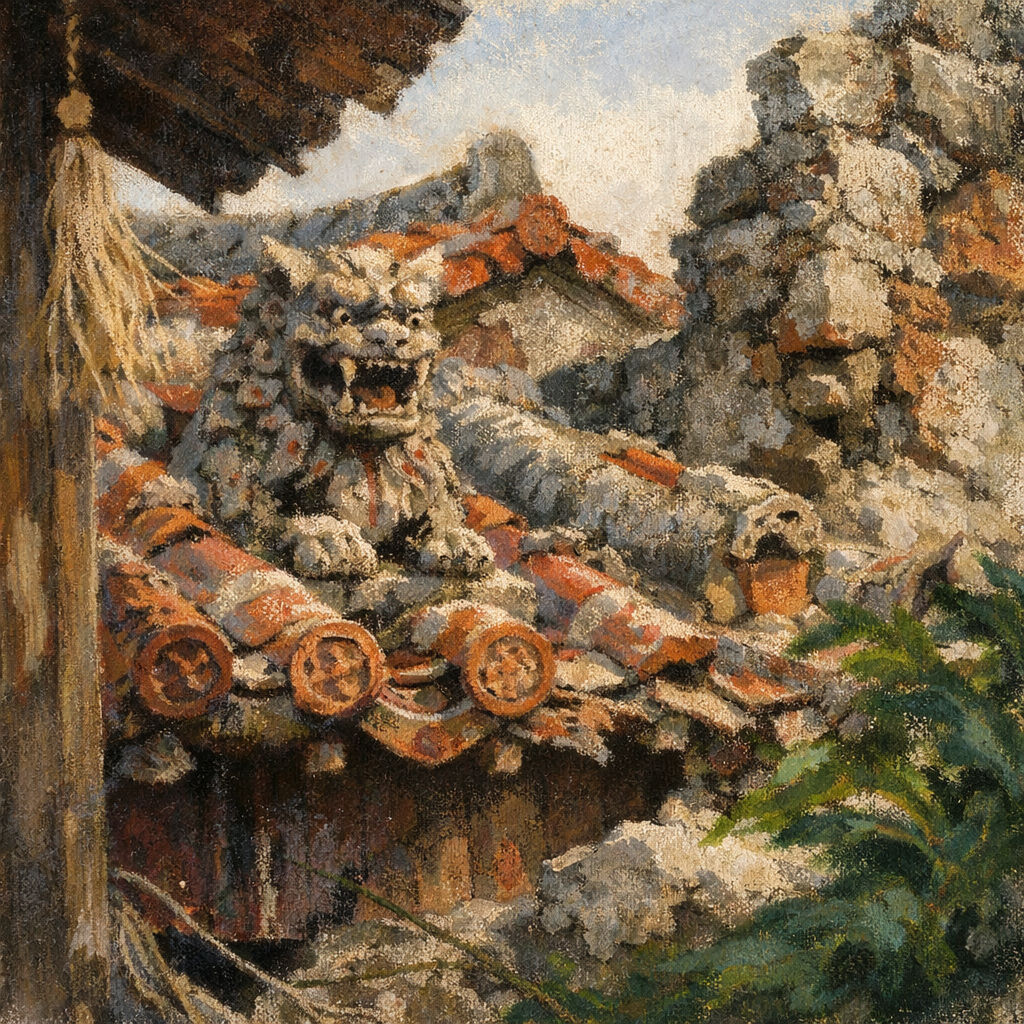
Shisa on the Red Tiles
Critique
1. Introduction This oil painting depicts a weathered stone guardian lion perched atop a traditional tiled roof, capturing a sense of enduring strength and cultural heritage. The artist uses a close-up composition to emphasize the intricate textures of both the sculpture and the surrounding architectural elements. The work stands out for its dramatic use of light and shadow, which brings a three-dimensional quality to the two-dimensional surface. 2. Description The central focus is a stone guardian lion, or Shishi, with an open mouth and a fierce expression, resting on a roof of reddish-orange curved tiles. To the left, a portion of a wooden structure featuring a long, straw-like decorative tassel frames the scene. In the bottom right corner, dark green foliage adds a touch of organic contrast to the hard, mineral subject matter. The background consists of more roof structures and a weathered wall, all rendered with heavy, palpable paint application. 3. Analysis The most striking element of the painting is its rich impasto technique, where thick layers of paint create a literal texture that mimics the roughness of aged stone and clay. A warm, earthy color palette of ochres, burnt siennas, and greys is used to suggest the passage of time and natural weathering. The lighting appears to come from the side, casting deep, dark shadows that accentuate the muscular form of the lion and the rhythmic pattern of the tiles. Each brushstroke is deliberate, contributing to a rugged and tactile visual experience. 4. Interpretation and Evaluation The stone lion serves as a powerful symbol of protection and ancient tradition, standing firm against the elements. The weathered appearance of the subjects can be interpreted as a meditation on the beauty found in age and the resilience of cultural symbols. This work should be evaluated highly for its expressive handling of medium, which transcends mere representation to evoke the physical sensation of the materials depicted. The balance between the static architecture and the implied energy of the guardian creates a compelling narrative of guardianship. 5. Conclusion By prioritizing texture and lighting over smooth finish, the artist successfully imbues a traditional subject with modern expressive power. The initial impression of a static architectural study evolves into a deeper appreciation for the artist's ability to convey weight and permanence. Ultimately, the painting captures the dignified essence of traditional craftsmanship through a masterfully executed, tactile approach to realism.
Same Subcategory
 Mystic Vapors of the Evening Lanterns
Similar Artworks
 Bougainvillea by the Stone Wall
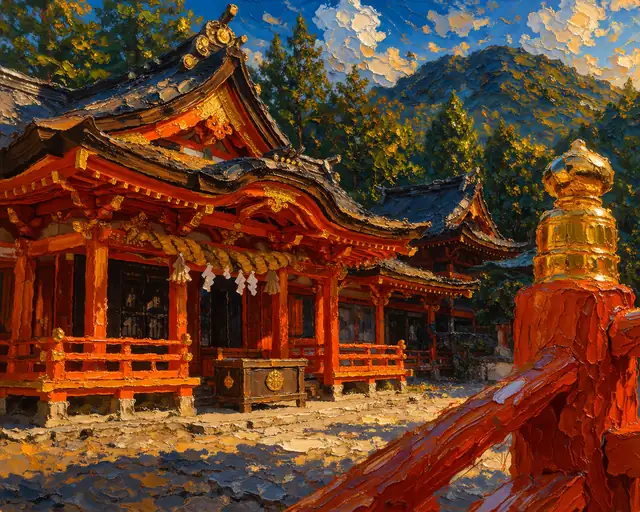 Vermilion Splendor in the Sacred Woods
 Crimson Portal to the Southern Sun
 Gentle Time Woven by Tiled Roofs
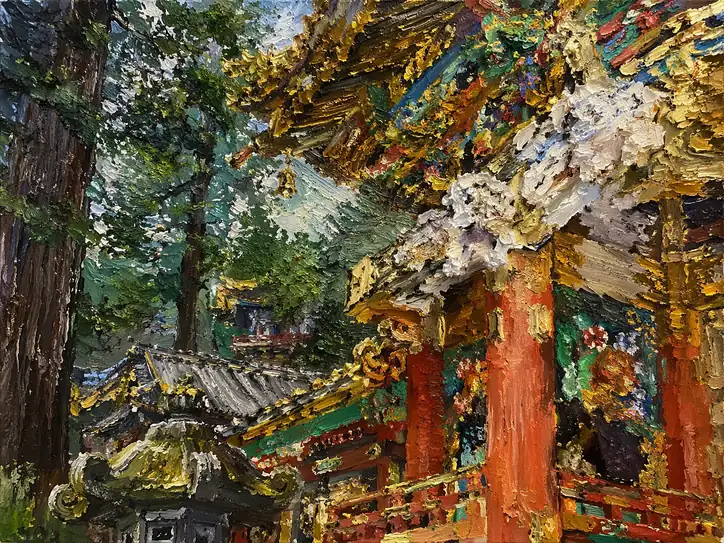 The Gilded Heart of the Forest
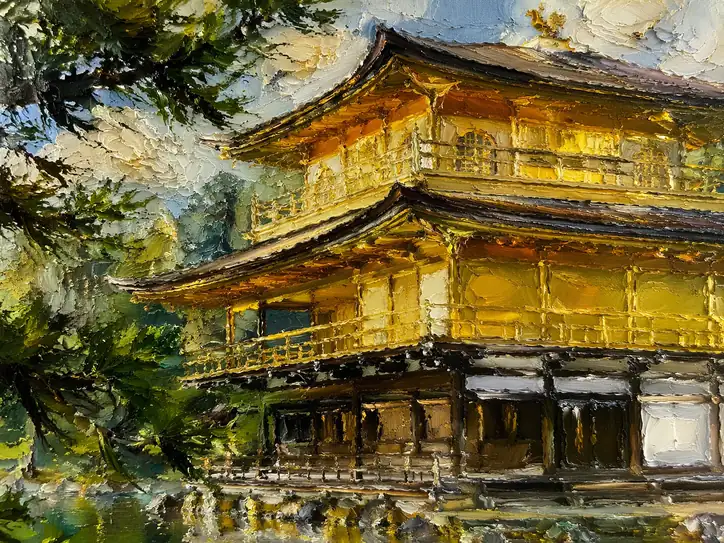 A Touch of Gold
 Radiance of the Autumn Pagoda
 Vermilion Gateway to the Sacred
 Gilded Dragon Sculptures on a Traditional Imperial Roof
 Autumn's Embrace