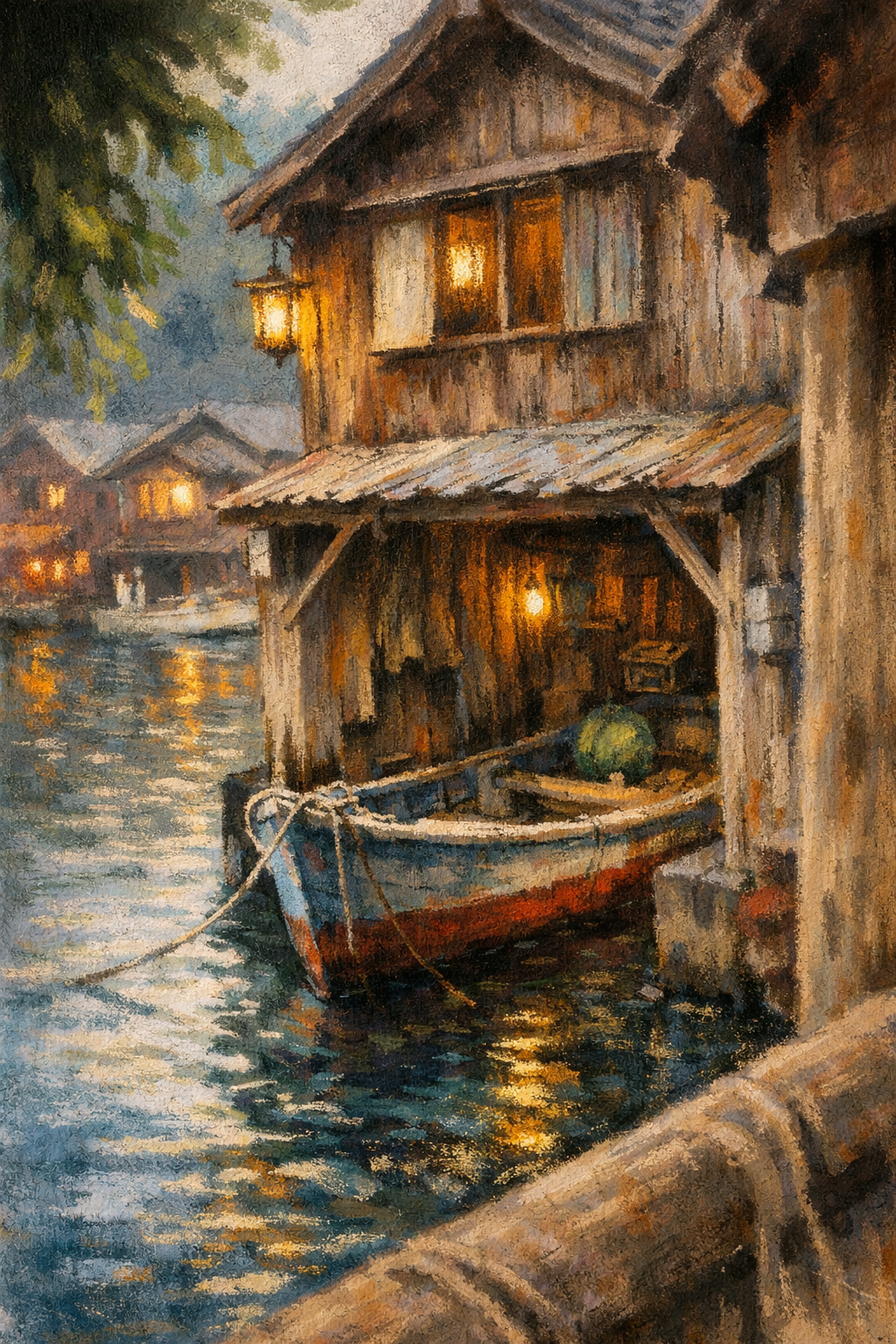
Glowing Evening Tide Around Enoshima Island
Critique
1. Introduction This evocative oil painting portrays a traditional wooden boathouse standing over quiet evening waters, with a small vessel moored in its shadows. While the work’s official title, date, and dimensions remain unspecified, it vividly suggests the unique architecture of Ine-no-Funaya in Japan. The artist masterfully uses light to create an atmosphere of warmth and solitude. 2. Description The vertical composition focuses on a rustic two-story wooden building that extends directly over the sea. Inside the ground-floor boat garage, a worn blue and red boat sits tied to the structure, surrounded by fishing gear. Warm orange light spills from a lantern on the exterior wall and from the windows above, reflecting brilliantly on the dark, rippling water in the foreground. In the background, similar structures are faintly visible across the bay under a deepening twilight sky. 3. Analysis The painting is characterized by its heavy impasto texture, which lends a physical weight to the aged wood and the shifting surface of the water. Chiaroscuro is effectively employed to contrast the inviting, incandescent glow of the interior against the cool, shadowy blues of the exterior environment. The reflection of the lantern light on the water serves as a key visual anchor, guiding the viewer’s eye toward the central boat. Broad, expressive brushstrokes unify the diverse elements and emphasize the mood over precise detail. 4. Interpretation and Evaluation The artwork successfully captures the quiet dignity of traditional maritime life and the comforting presence of home. The technical skill shown in balancing the intense highlights with deep shadows demonstrates a profound understanding of lighting and atmosphere. The choice of a high-contrast color palette, leaning on warm ambers and cool indigos, imbues the scene with a sense of drama and tranquility. This piece is an excellent example of atmospheric realism, where the physical texture of the paint enhances the emotional resonance of the subject. 5. Conclusion Ultimately, the painting transcends a simple architectural study to become a poignant meditation on evening stillness. Initial attention to the bright reflections on the water eventually leads to a thoughtful exploration of the weathered textures and hidden details within the boathouse. The work stands as a powerful testament to the beauty found in the intersection of human habitation and the natural world.
Same Subcategory
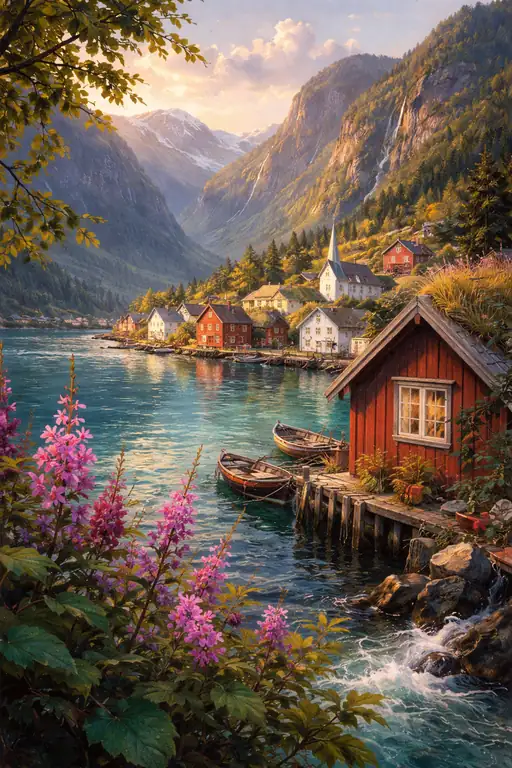 Golden Hour at the Fjord
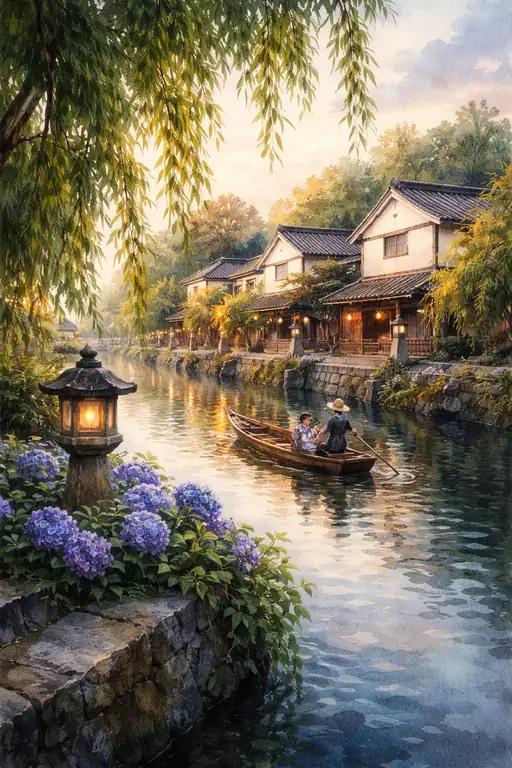 Twilight Drifting Along the Purple Bank
Similar Artworks
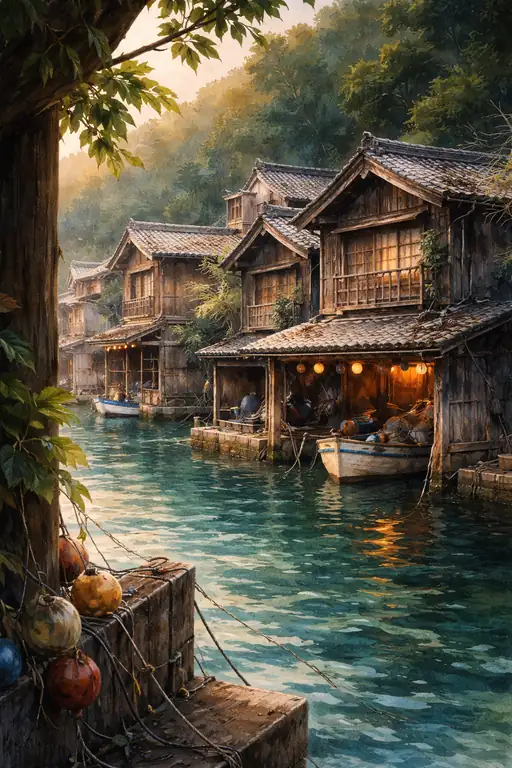 Slumbering Boathouses in Golden Twilight
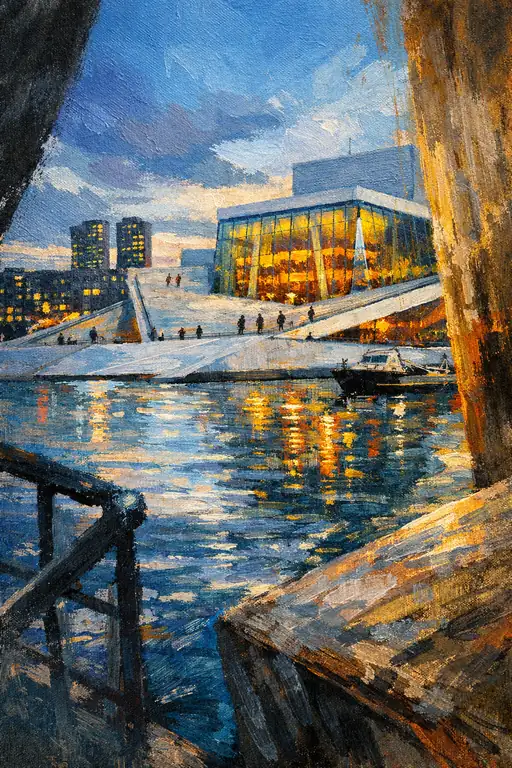 The Night in Oslo
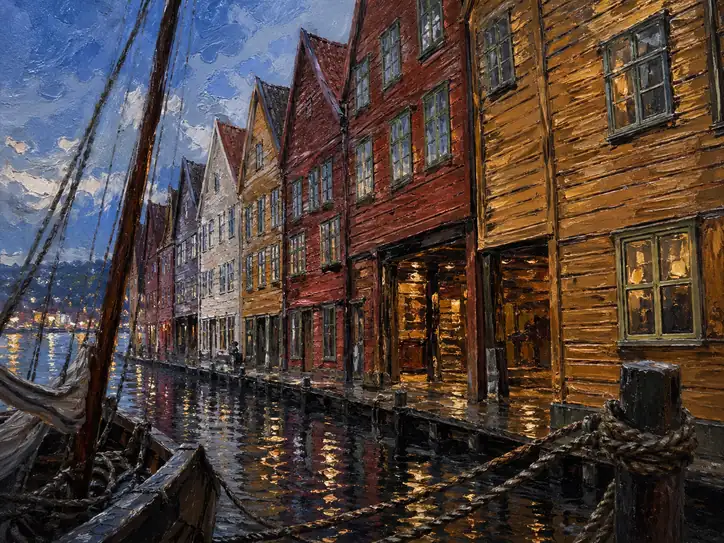 Dancing Lights of the Harbor
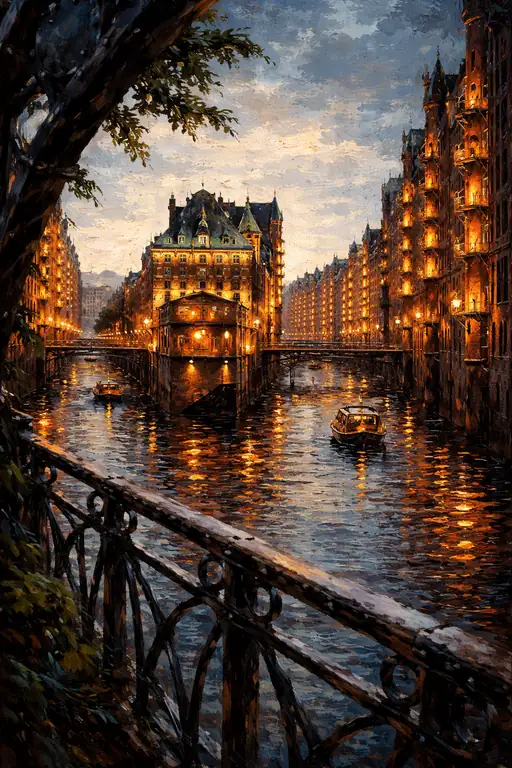 Midnight Reflections on the Speicherstadt
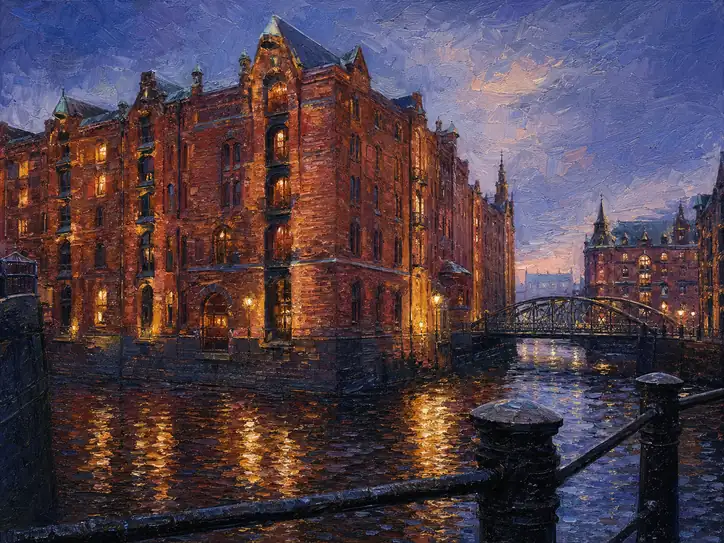 Twilight Over the Brick Symphony
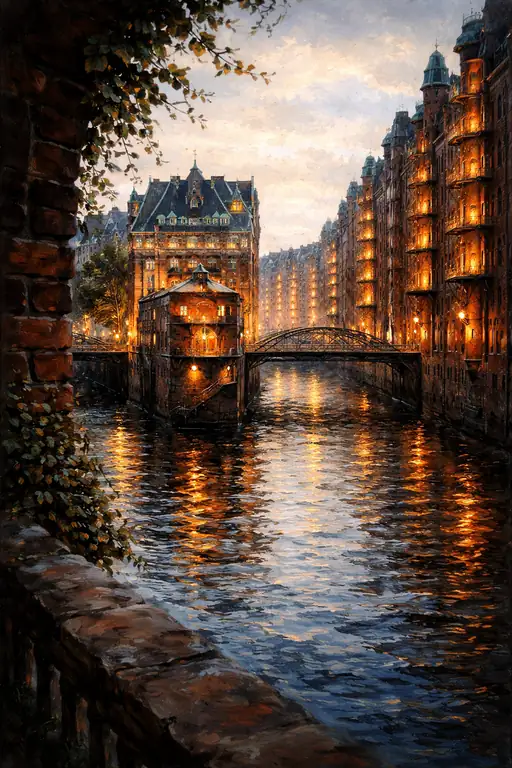 Dusk Reflections in the Brick Canal
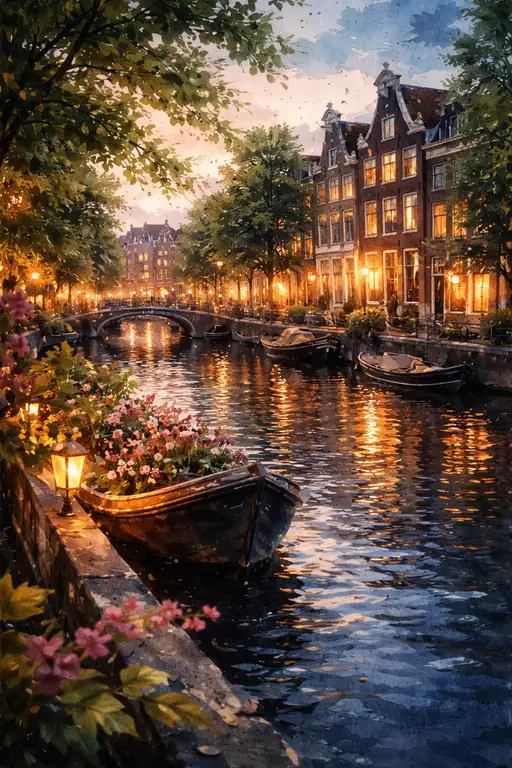 Embrace of the Evening
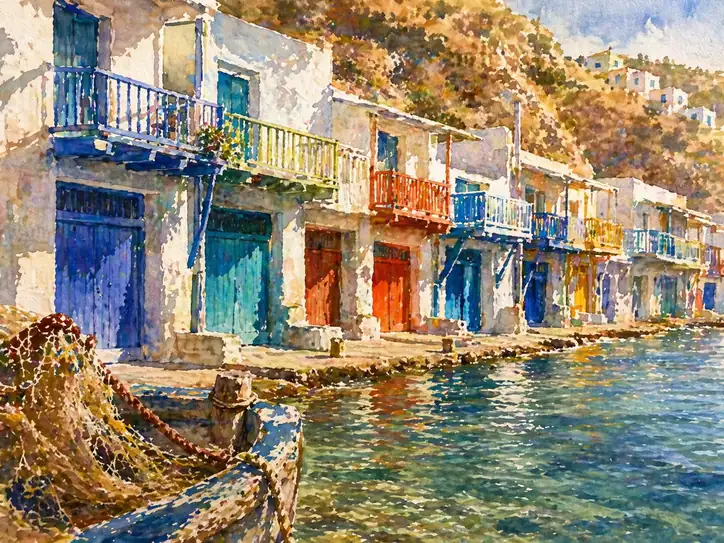 Rhythm of Klima: Sun and Sea
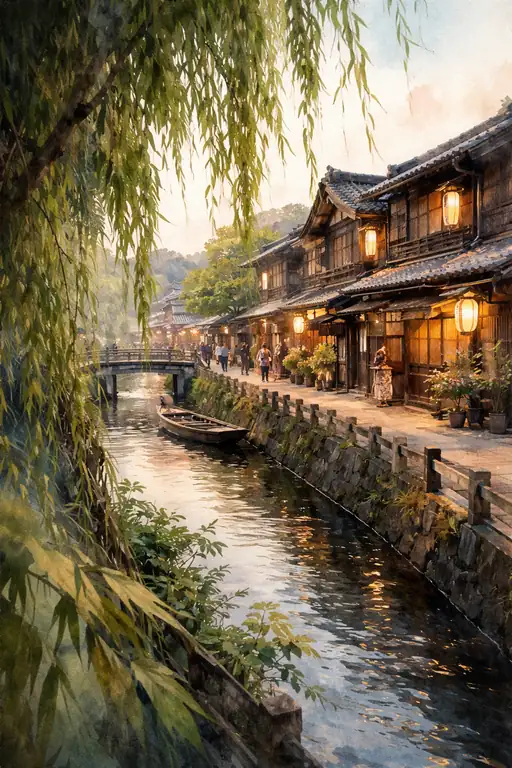 Dusk at the Old Waterway
 Symphony of the Waterway