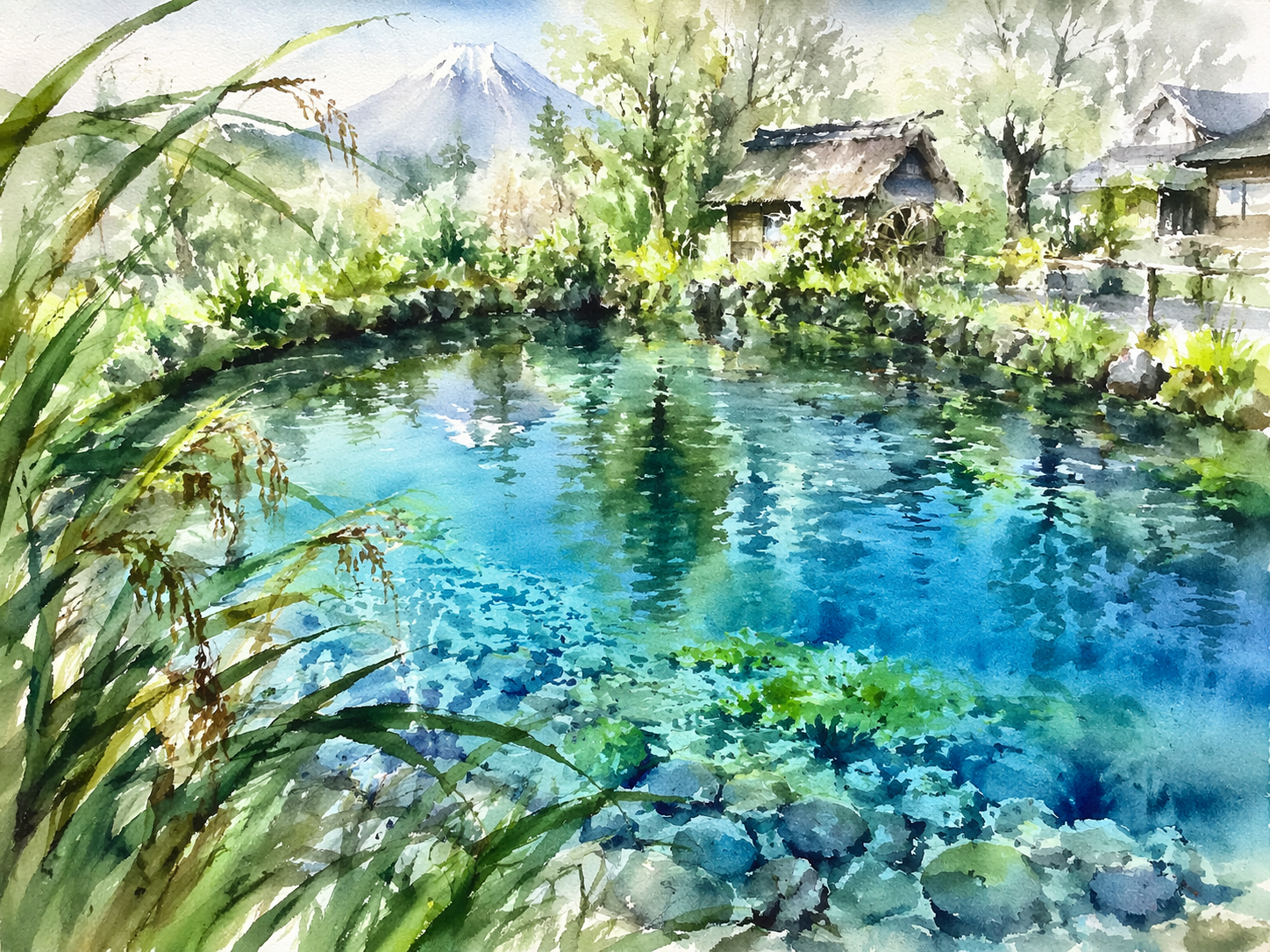
Ethereal Reflections of Fuji in the Autumn Lake
Critique
1. Introduction This watercolor painting presents a quintessential rural Japanese landscape, featuring a crystal-clear pond and a traditional thatched-roof cottage. The composition is anchored by a large mountain in the distant background, mirroring the peaceful atmosphere of the foreground. This work skillfully combines architectural elements with lush natural scenery to create a sense of timelessness and environmental harmony. 2. Description In the immediate foreground, long blades of green grass sway from the left, framing the clear blue water of the pond. The pond's surface reveals smooth stones at the bottom and captures vivid reflections of the surrounding greenery. A rustic house with a visible waterwheel sits nestled among leafy trees in the middle ground, while thin clouds drift around the majestic, snow-capped Mount Fuji in the far distance. 3. Analysis The artist effectively uses a bright and saturated palette of greens and teals to emphasize the vitality of the ecosystem. Mastery of watercolor transparency is particularly evident in the depiction of the water, where layered washes create a convincing sense of depth and clarity. Linear perspective is established through the receding shorelines, while the contrasting textures of the grass and the thatched roof provide additional visual interest. 4. Interpretation and Evaluation This piece serves as an evocative celebration of the harmony between human habitation and the natural world. The technical execution is exceptional, particularly in how the artist manages to keep the colors vibrant without losing the delicate nature of the medium. The inclusion of the waterwheel adds a narrative element of traditional industry, further enriching the cultural context and historical resonance of the landscape. 5. Conclusion While the viewer may initially focus on the iconic silhouette of the mountain, the meticulously rendered pond eventually becomes the true heart of the painting. The overall effect is one of intense clarity and profound quietude, making it a stellar example of modern botanical and landscape artistry. Ultimately, the work succeeds in transporting the observer to a serene, idealized version of the Japanese countryside through its masterful use of color.
Same Subcategory
Similar Artworks
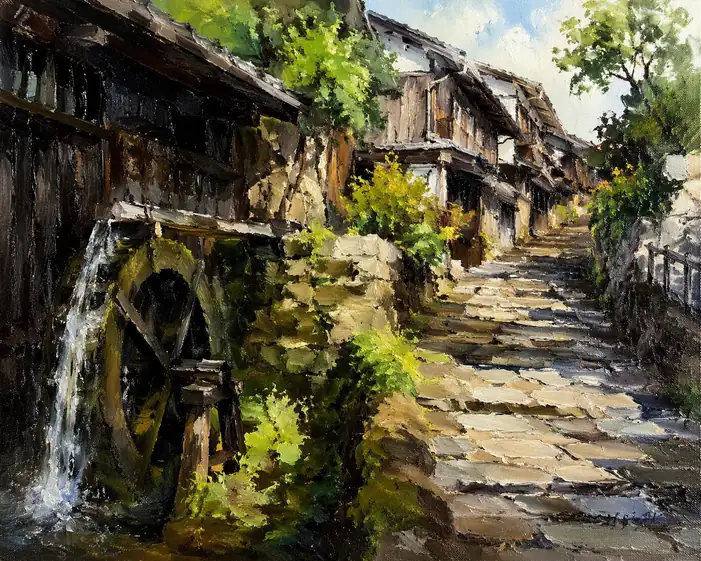 The Waterwheel's Nostalgic Spin
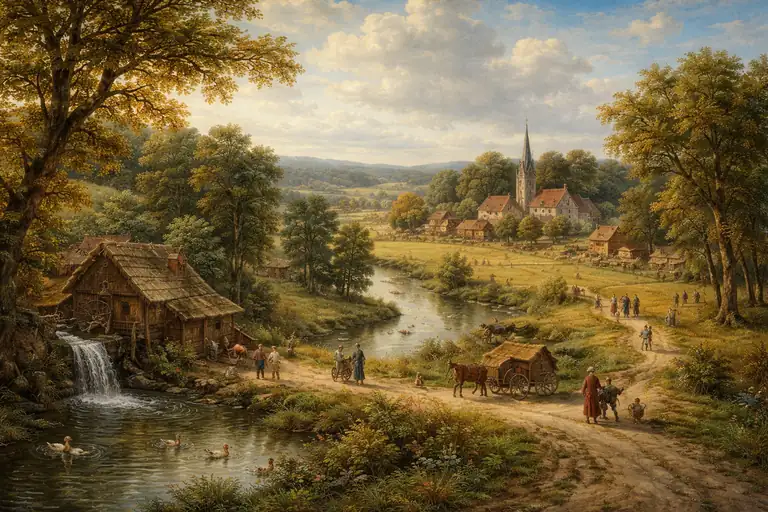 Chronicles of the Idyllic Path
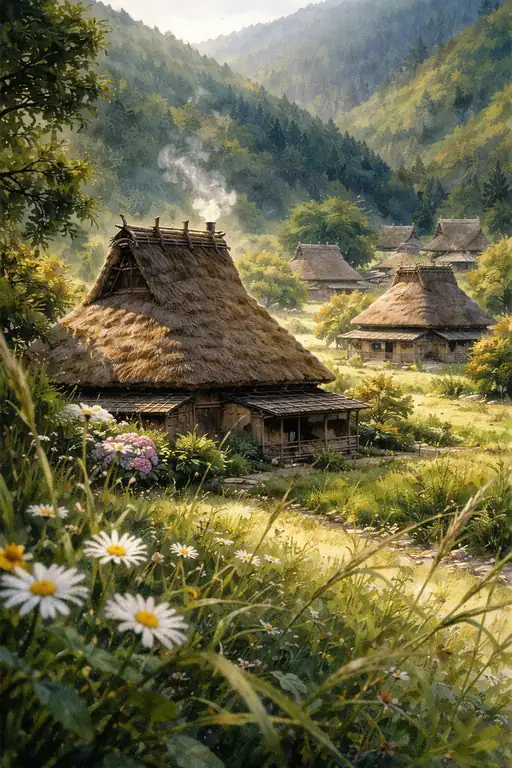 Whispers of the Golden Valley
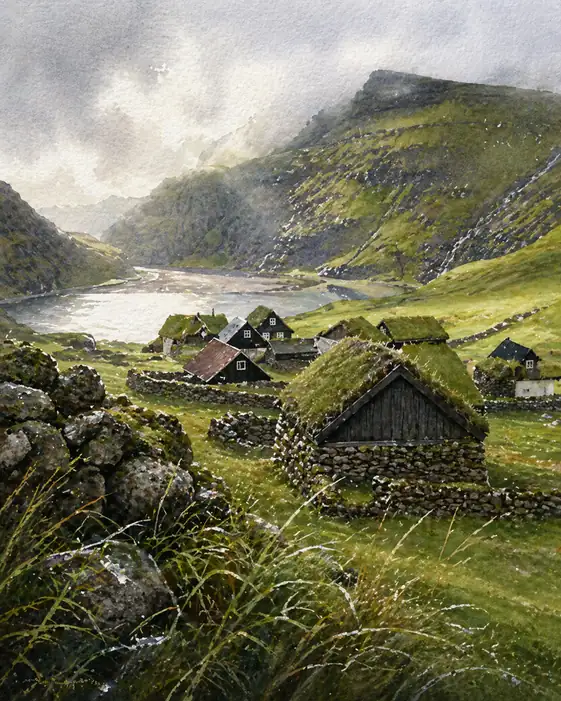 Valley of Quiet Time
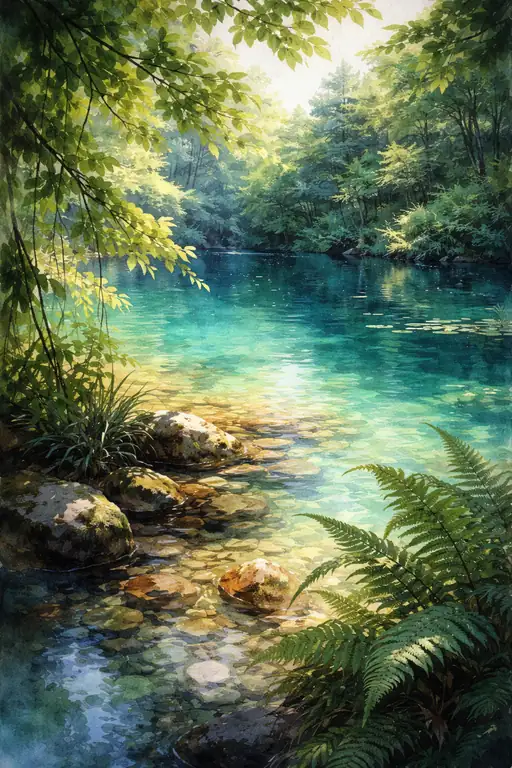 Returning to the Haven Under the Pastel Snow Sky
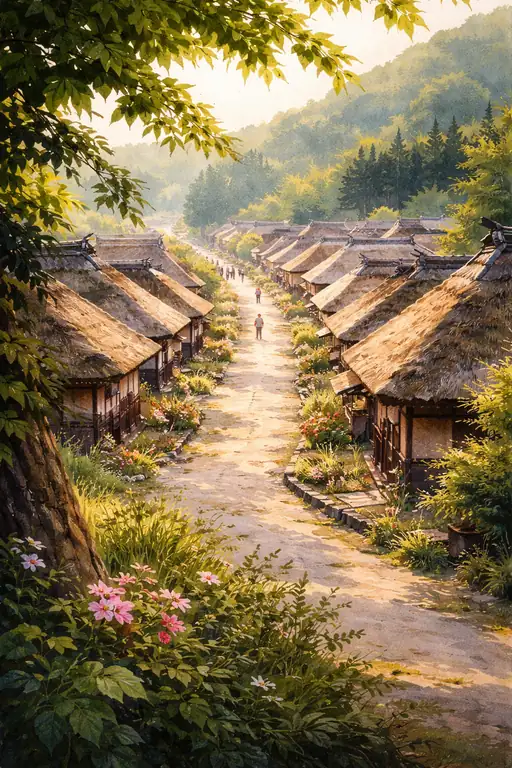 Tranquil Shadows Along the Thatched Village Road
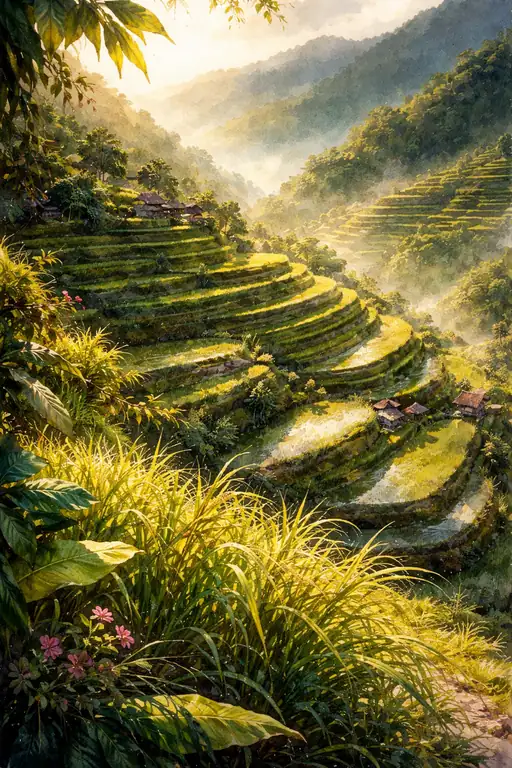 Golden Terraces Touched by the Morning Mist
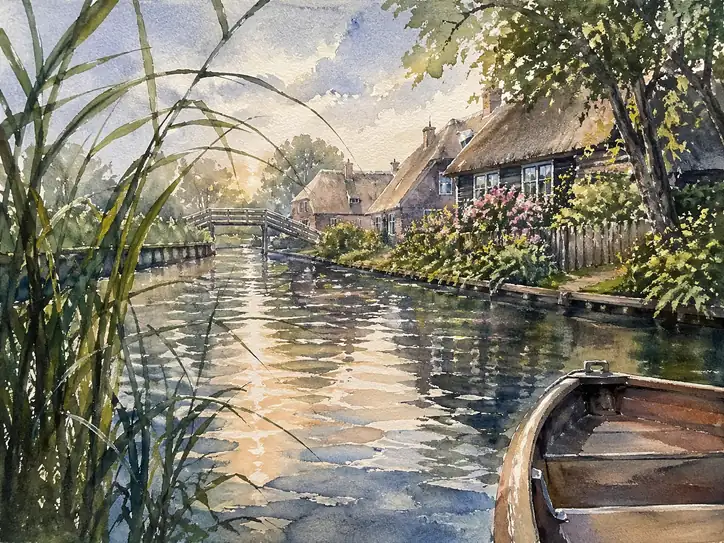 Tranquility in Giethoorn
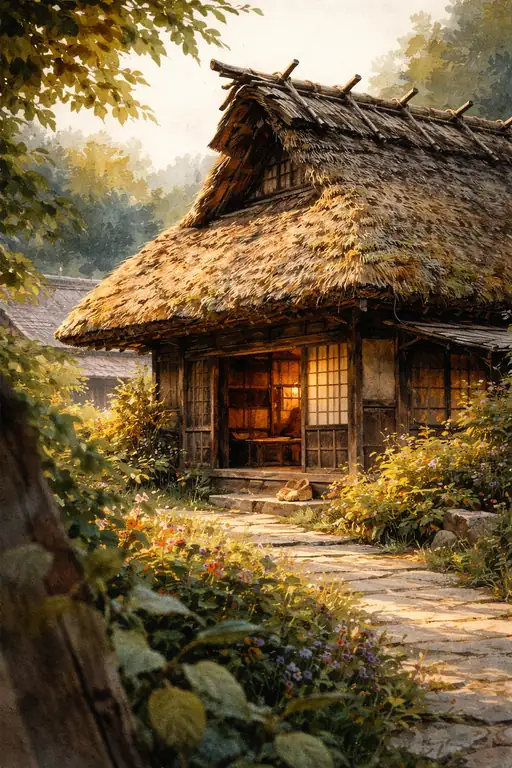 Whispers of the Evening Sun on the Stone Path
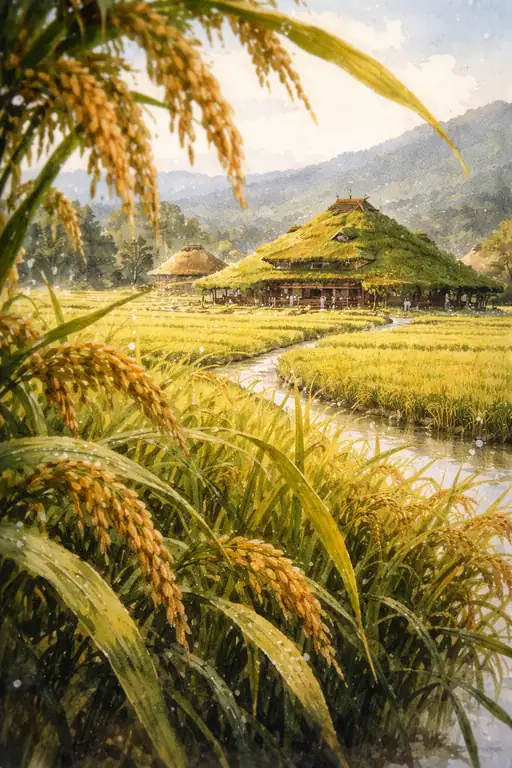 Golden Harvest in the Serene Countryside