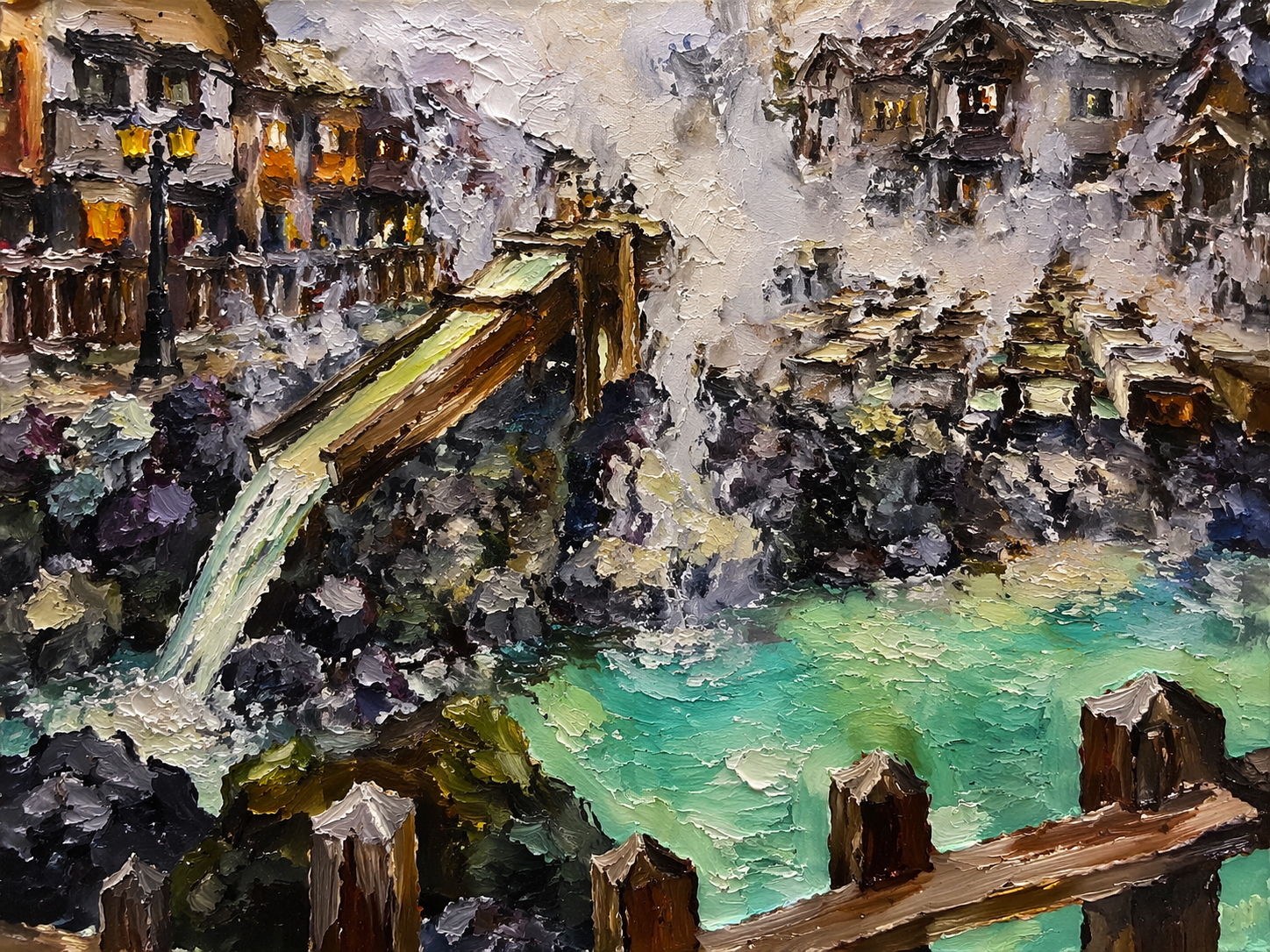
Vibrant Flow of the Autumn Waterfall cascade
Critique
1. Introduction This atmospheric oil painting captures the unique and mystical charm of a traditional Japanese hot spring town during the winter season. The work focuses on the iconic steam-filled landscape where geothermal energy meets the cold mountain air, creating a scene that feels both historically rooted and ethereally dreamlike. It utilizes a rich, tactile surface to represent the shifting layers of mist and the vibrant colors of the mineral-rich waters. The overall composition evokes a sense of comfort, warmth, and the timeless appeal of Japan’s bathing culture. 2. Description The central feature of the painting is a series of wooden chutes that channel steaming water into a large, emerald-green pool in the foreground. Surrounding the water are rugged, dark rocks and traditional multi-story inns with glowing orange windows that suggest a cozy interior life. Thick, white steam rises from the center of the frame, partially obscuring the buildings in the background and blending into a pale, wintry sky. A wooden fence in the bottom right corner provides a sense of the viewer's physical vantage point overlooking the hot spring source. 3. Analysis The artist employs an aggressive impasto technique, particularly in the depiction of the rising steam and the churning water, where the paint is applied in thick, swirling masses. This heavy texture creates a sense of three-dimensional depth, making the mist appear to physically move across the canvas. There is a strong color contrast between the cool, turquoise tones of the water and the warm, golden hues emanating from the building windows, which creates a visual rhythm across the work. The brushwork is energetic and gestural, contributing to the impression of a living, breathing environment filled with heat and moisture. 4. Interpretation and Evaluation The painting serves as a celebration of the synergy between nature’s raw power and human ingenuity in creating a place of sanctuary. The contrast between the harsh, cold exterior and the implied warmth of the hot springs and lit inns highlights the concept of "omotenashi" or traditional hospitality. Technical proficiency is evident in the way the artist manages to convey the translucent quality of the steam despite the heavy application of opaque pigment. The work successfully captures the specific sensory experience of a hot spring—the smell of minerals, the sound of rushing water, and the embrace of humid air. 5. Conclusion While the details of the buildings are somewhat abstracted by the mist, the total atmosphere of the piece conveys a profound sense of place and heritage. It is a masterfully executed industrial-cultural landscape that prioritizes the emotional quality of a winter evening over precise architectural detail. Redolent with the atmosphere of a cold night warmed by the earth’s interior, the painting leaves a lasting impression of tranquility and mystery. This work stands as a powerful evocative piece that reminds the viewer of the enduring cultural significance of the natural thermal landscape.
Same Subcategory
Similar Artworks
 Winter's Warm Embrace: Steam Rising in the Silent Snow
 Warmth in the Quiet River Town
 Whispers of the Spring Light
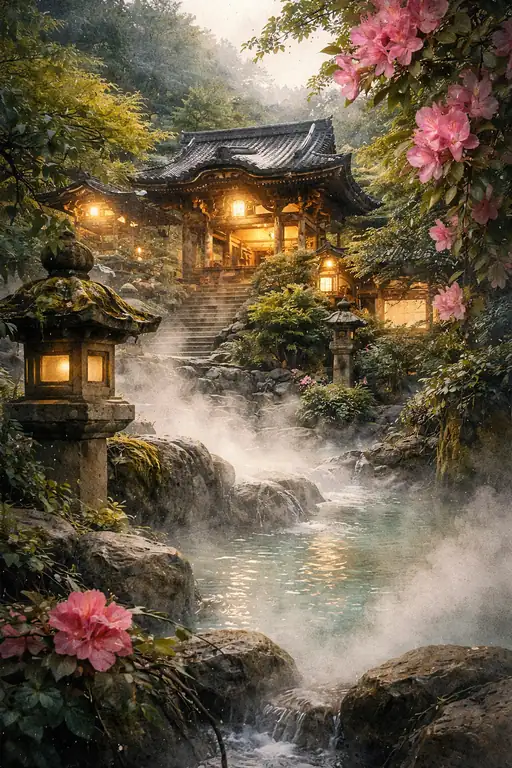 Misty Sanctuary Amidst the Woods
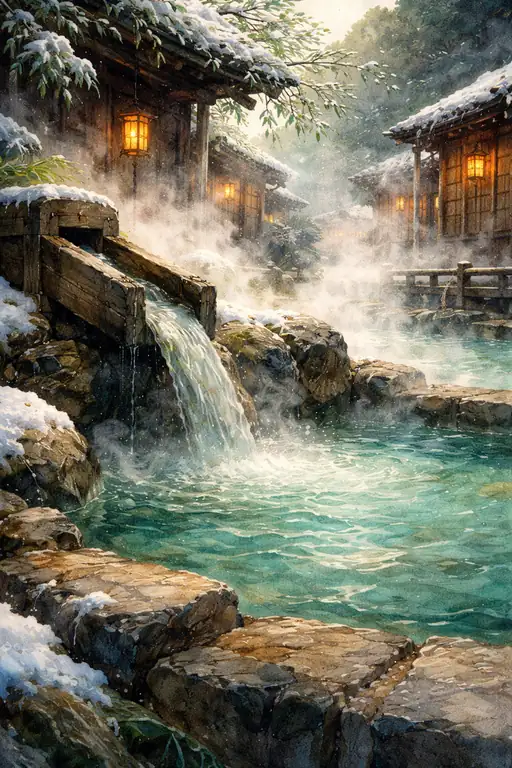 Warmth Within the Frozen Winter
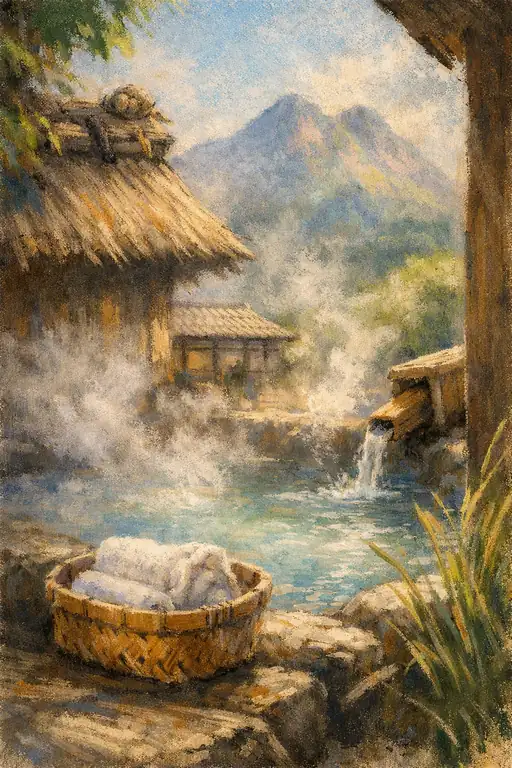 Rustic Warmth Beneath the Mountain Mist
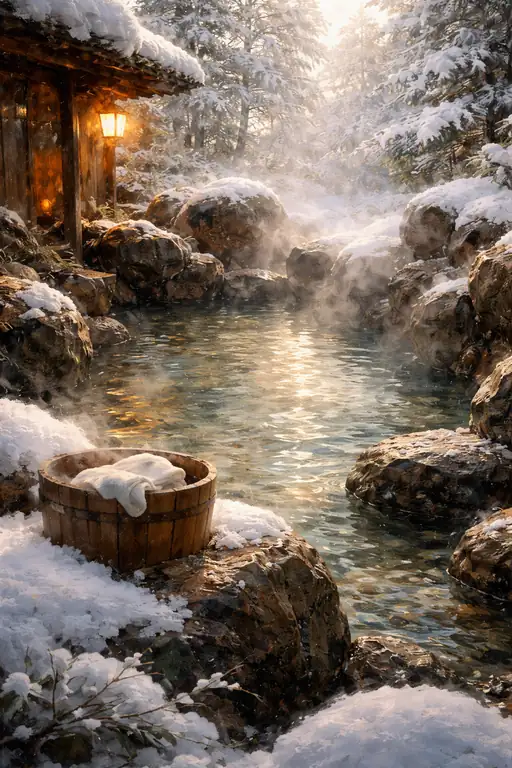 Whispers of Winter's Warmth
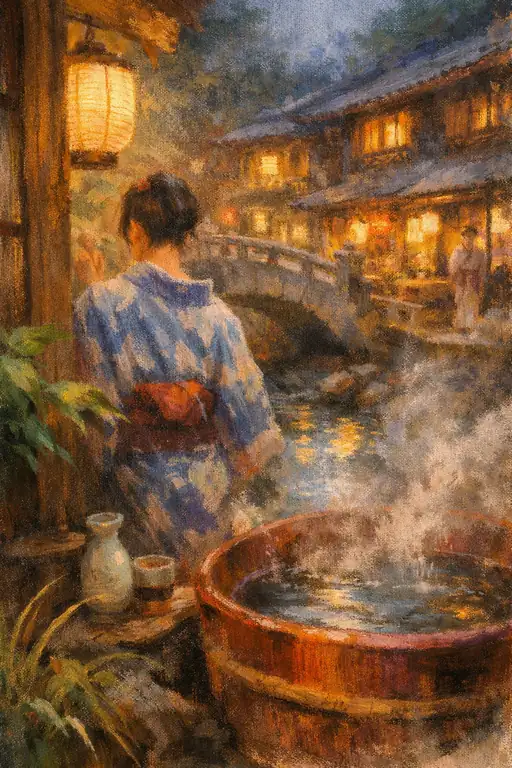 Warmth of the Midnight Springs
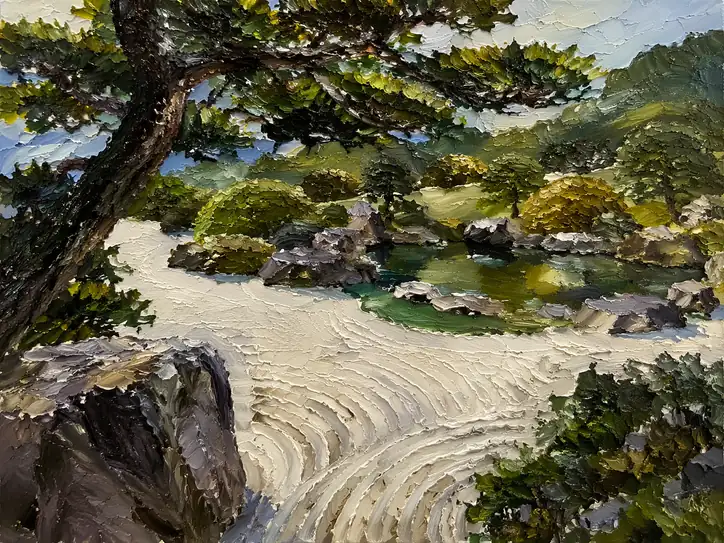 Ripples of the Raked Earth
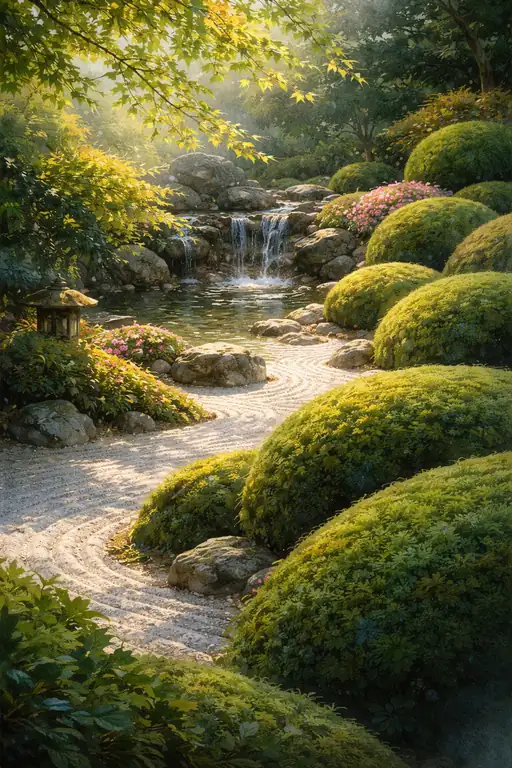 Ripples of the Raked Zen Sea