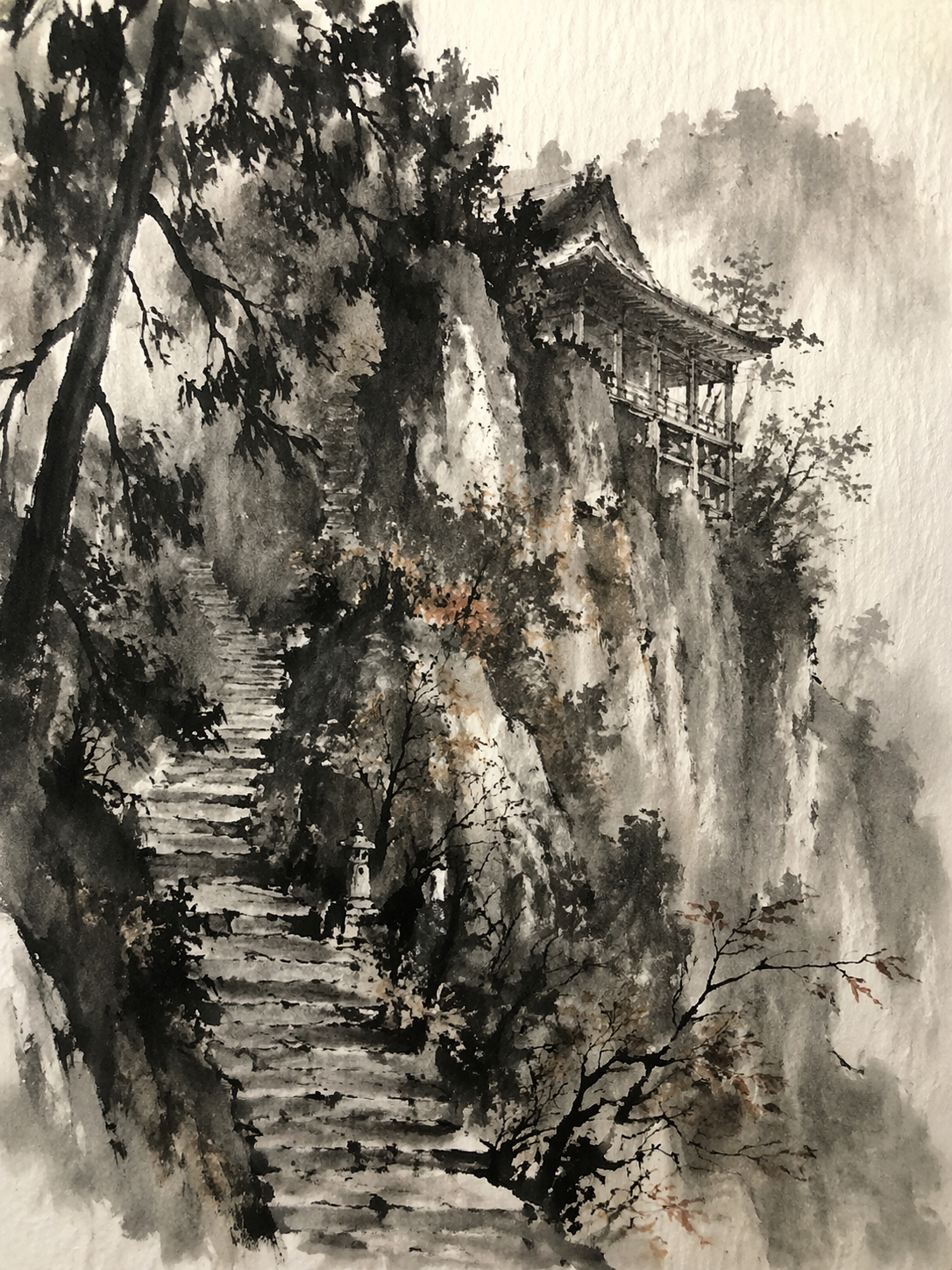
Springtime Symphony of Shadows and Cherry Blossoms
Critique
1. Introduction This work is a traditional ink wash painting that depicts a serene mountain temple perched precariously on a steep cliffside. The composition is dominated by vertical elements, creating a sense of immense height and spiritual isolation from the mundane world below. The use of monochrome ink allows the viewer to focus on the interplay of light and shadow without the distraction of color. It captures a moment of timeless stillness in a remote, high-altitude landscape. 2. Description The foreground features a long, winding series of stone steps that lead the eye upward through a dense growth of pine trees and rugged rocks. On the right side of the frame, a traditional temple structure with intricate wooden scaffolding is built into the side of the cliff, overlooking a misty void. Small details such as a stone lantern beside the path and the delicate branching of trees add a sense of human presence within the vast natural environment. The background fades into a soft, ethereal gray, suggesting distant mountain peaks veiled in thick clouds. 3. Analysis The artist utilizes a wide range of ink gradations, from deep, saturated blacks in the rocky outcrops to delicate washes for the distant mist. The brushwork is varied, employing bold, energetic strokes for the pine needles and more controlled, precise lines for the architectural details of the temple. The vertical composition emphasizes the arduous nature of the ascent, while the negative space of the clouds provides a necessary visual balance to the detailed subjects. Subtle textures on the rock faces are achieved through dry brush techniques, enhancing the tactile quality of the craggy cliffs. 4. Interpretation and Evaluation The painting can be interpreted as a metaphor for a spiritual journey, where the difficult climb represents the path toward enlightenment or inner peace. There is a profound sense of harmony between the man-made temple and its natural surroundings, as the building appears to grow directly from the living rock. The technical execution is exceptional, particularly in the way the artist manages the moisture of the ink to create depth and atmosphere. This work successfully evokes a feeling of awe and contemplative silence, inviting the viewer to imagine the thin, cold air of the mountains. 5. Conclusion Upon initial viewing, the intricate details of the stairs and trees command attention, but the total atmosphere of the piece eventually reveals a deep sense of tranquility. It is a masterfully executed example of landscapes that prioritize the essence of a place over literal representation. The work leaves a lasting impression of the sublime beauty found in remote, high-altitude sanctuaries. This painting stands as a powerful testament to the enduring appeal of traditional ink techniques in expressing complex emotional and spiritual states.
Same Subcategory
Similar Artworks
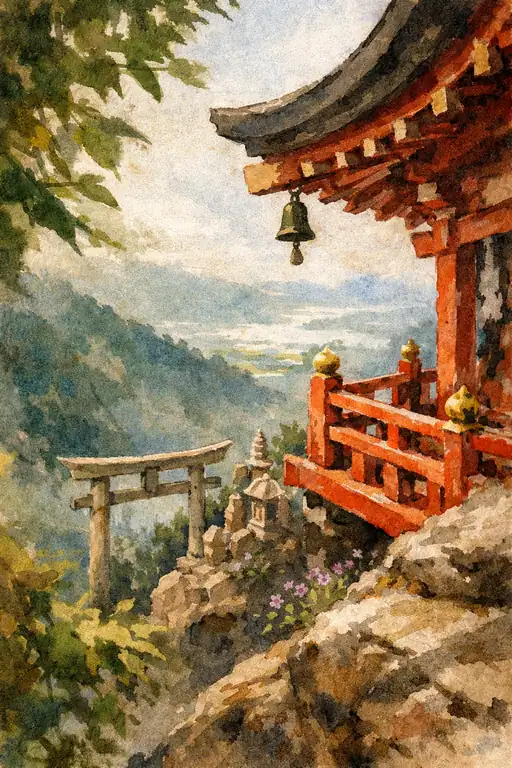 Echoes from the Misty Heights
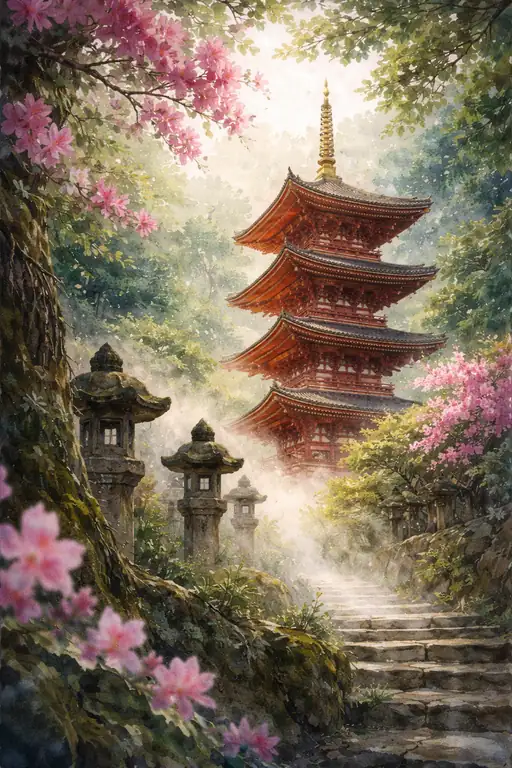 Sacred Pagoda Rising from the Morning Mist
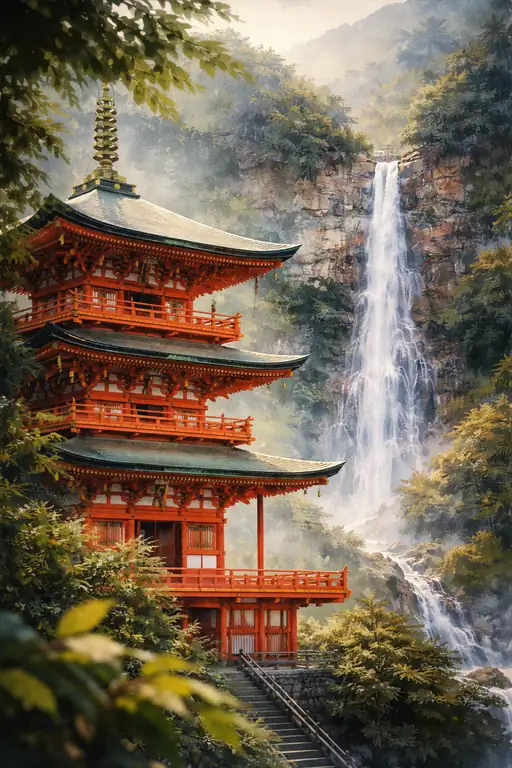 Harmony of the Sacred Falls
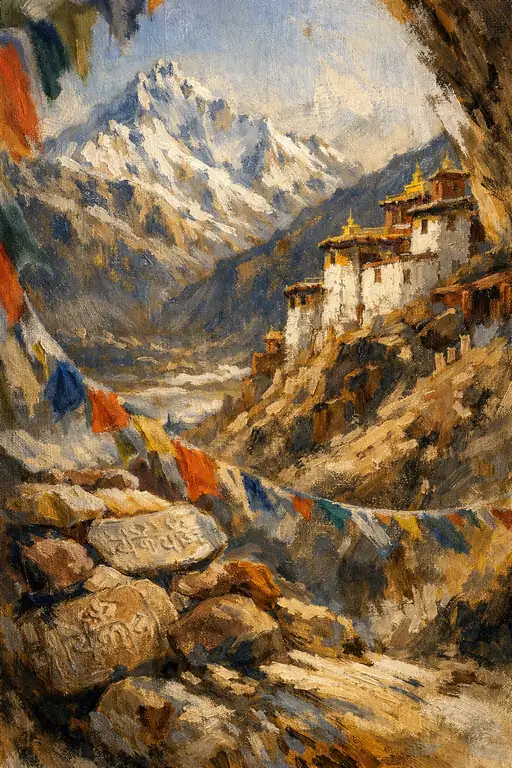 Whispers of the Wind and Snow
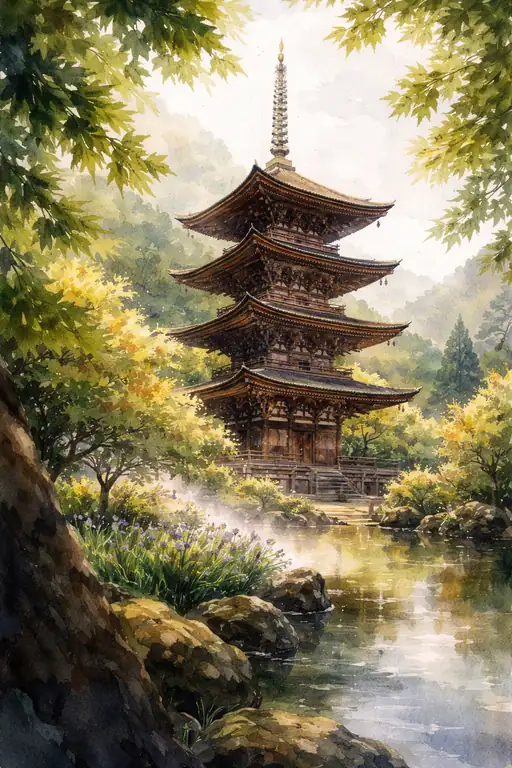 Reflection of the Silent Pagoda
 Sanctuary on the Misty Cliffs
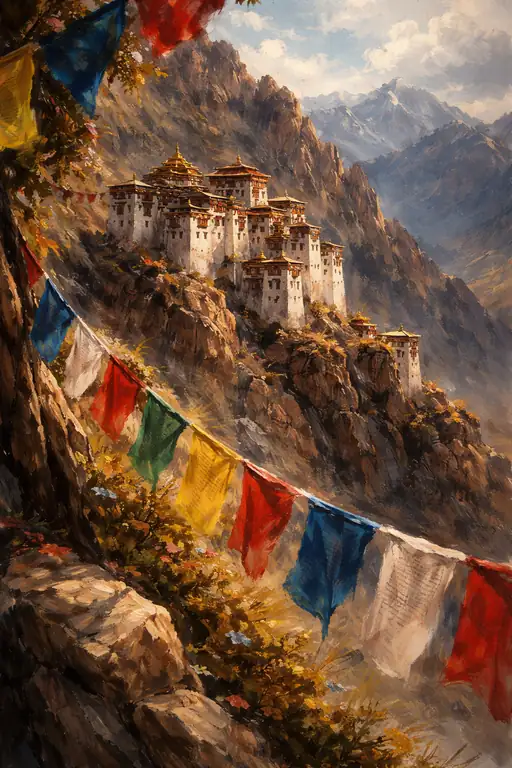 Sacred Serenity at the Edge of the Sky
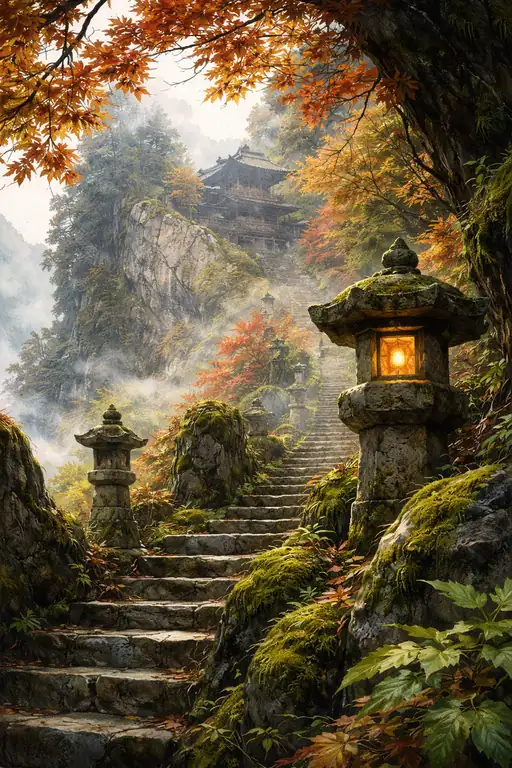 Guiding Light in the Mystic Mist
 Crimson Grandeur in the Spring
 Autumn's Golden Reverie