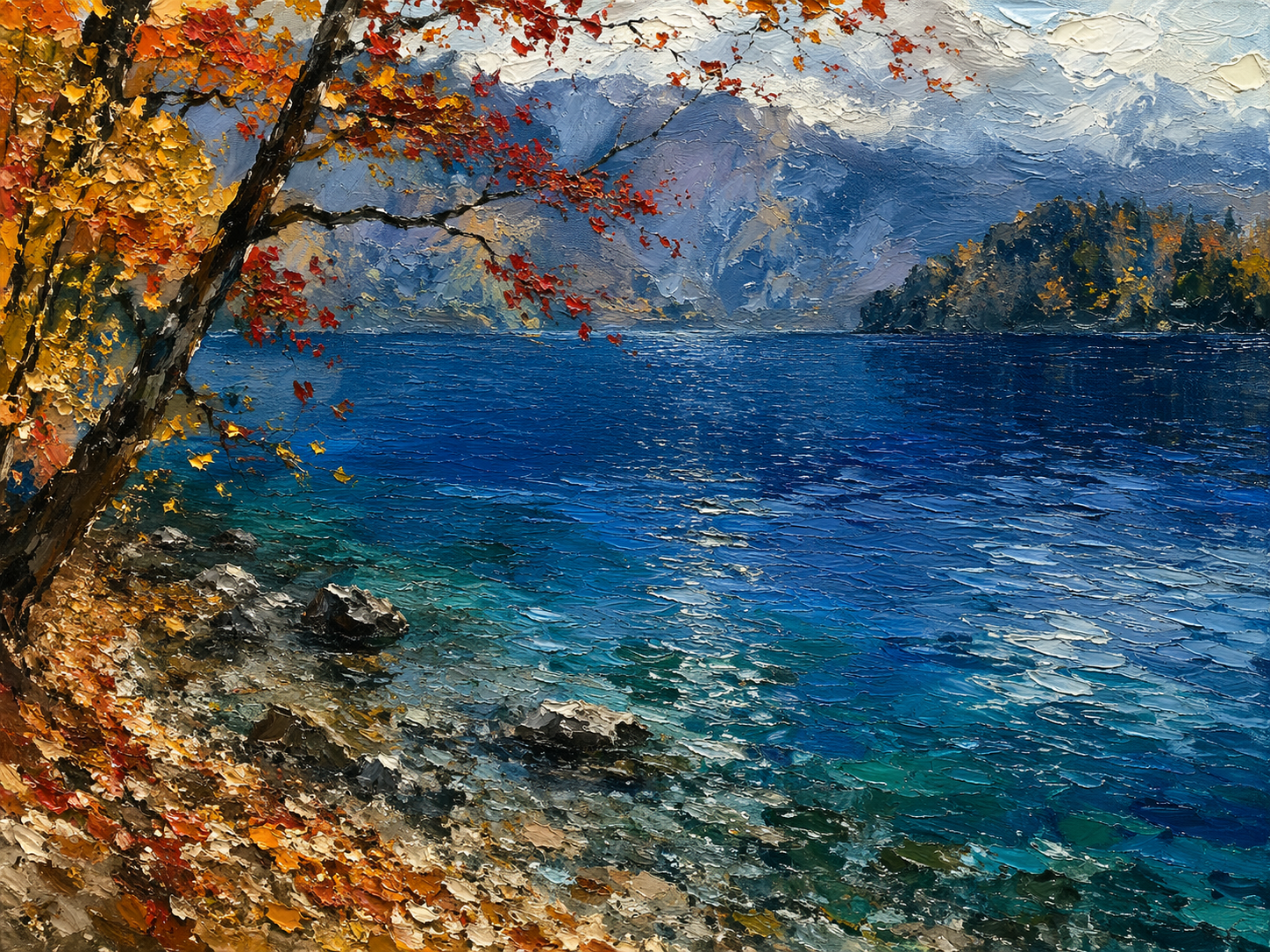
A Slumber in the Shadow of Peaks
Critique
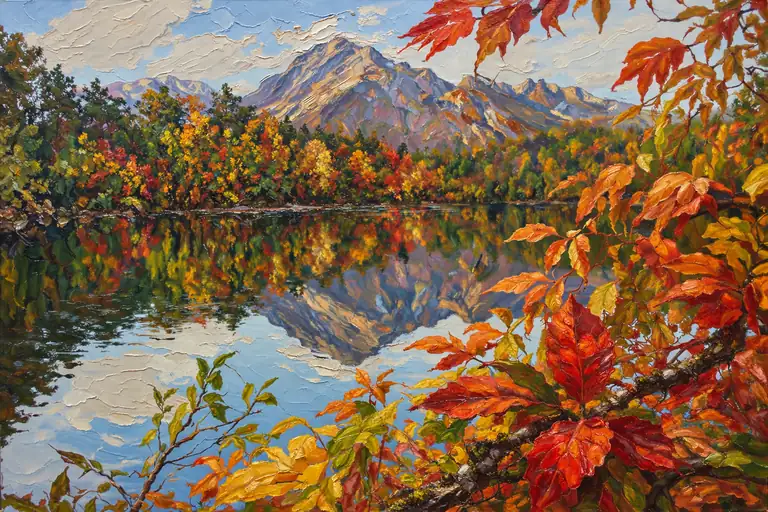
1. Introduction This oil painting captures a serene autumn landscape centered on a deep blue lake surrounded by mountains and vibrant foliage. The artist employs heavy impasto to create a tactile surface that enhances the emotional resonance of the changing seasons. This critique examines the formal elements, specifically the interplay of color and texture, that define this evocative and skillfully executed work. 2. Description In the foreground, a tree with glowing orange and yellow leaves stands alongside a rocky shoreline covered in fallen autumn foliage. The middle ground is dominated by the expansive blue water of the lake, which transitions from a deep navy to a lighter turquoise near the edges. The background reveals majestic, mist-covered mountains under a cloud-filled sky, while a dense evergreen forest occupies a peninsula on the right side of the composition. 3. Analysis The color palette relies on the striking contrast between the warm autumnal tones and the cool blues of the water and sky, creating a balanced yet dynamic visual tension. The application of paint is particularly noteworthy; thick, gestural strokes provide bulk to the trees and soil, while more delicate, horizontal marks evoke the shimmering ripples on the lake's surface. This variation in texture contributes to a sophisticated atmospheric perspective that draws the viewer deep into the mountain scenery. 4. Interpretation and Evaluation The work can be interpreted as a meditation on the fleeting beauty of nature, captured through the permanent and substantial medium of oil paint. Technically, the artist demonstrates a profound understanding of light and atmosphere, using the white of the clouds and the reflections on the water to unify the composition. The successful integration of aggressive brushwork and a structured layout results in a piece that is both energetic and tranquil, showcasing significant artistic maturity. 5. Conclusion Upon initial viewing, one is struck by the brilliance of the colors, but further study reveals the thoughtful orchestration of light and shadow that underpins the image. This painting transcends mere landscape representation by emphasizing the sensory experience of a specific place and time. It stands as a powerful example of how traditional techniques can be used to convey a deep, personal connection to the natural world.
Same Subcategory
Similar Artworks
 Autumn's Embrace on the Rocky Shore
 Mirror of the Silent Dawn
 Silent Majesty of the Frozen Mirror
 Emerald Depths: The Forest's Mirror
 Emerald Embrace: A Lakeside Dream
 Bridge to the Cosmic Peaks
 Memories of Light Upon the Water
 The Golden Wake
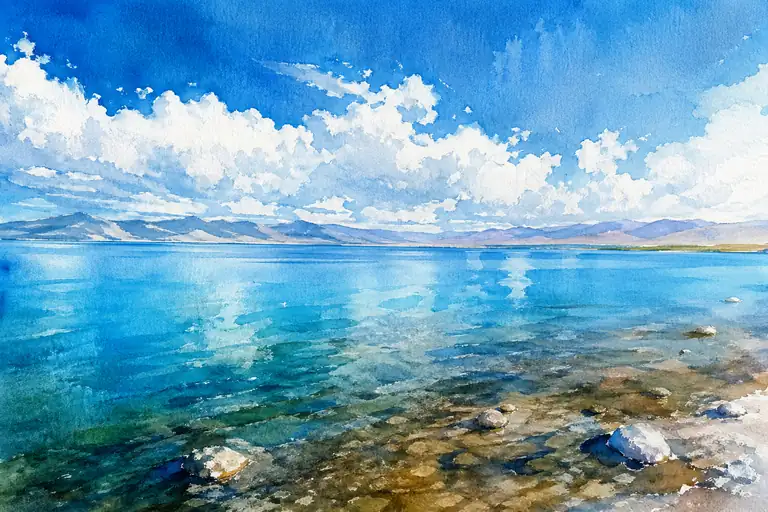 Mirror of the Infinite Blue
 The Golden Guardian of the Tranquil Lake