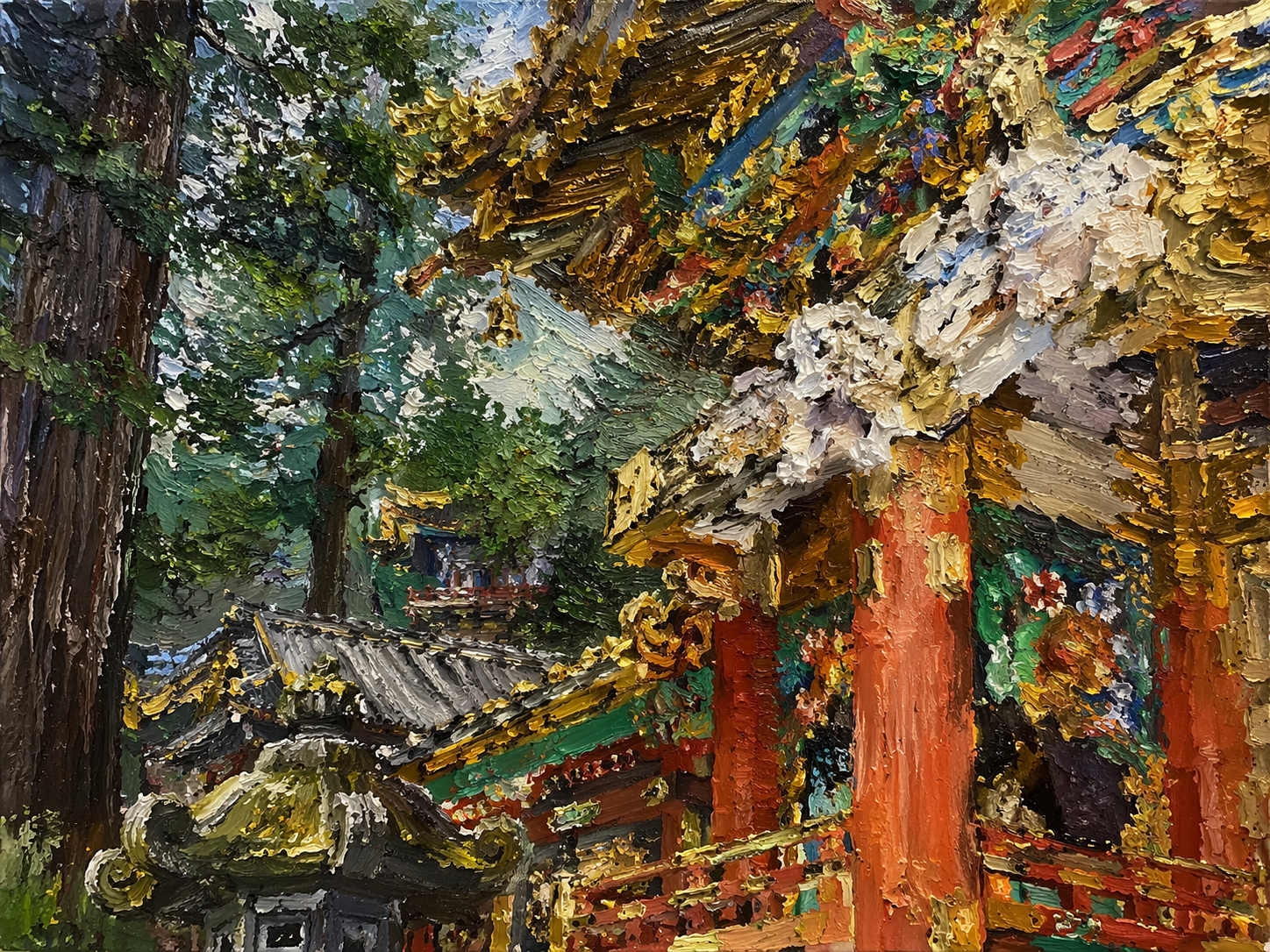
The Gilded Heart of the Forest
Critique
1. Introduction This landscape painting depicts a traditional Japanese architectural structure surrounded by a lush forest. The entire composition is characterized by a powerful impasto technique, emphasizing both material presence and the dynamism of light. Through thick layers of paint, viewers experience the heavy atmosphere of the historical building and the vitality of the trees. This critique examines the visual features and artistic intentions of the work. 2. Description The right side of the canvas features thick vermillion pillars and intricate eaves of a decorated roof. Golden ornaments glisten on the beams, with bright white highlights representing direct sunlight. On the left, a towering tree trunk stands tall, with a deep green forest and another building's roof visible in the middle ground. The color palette consists primary of vibrant vermillion, brilliant gold, deep greens, and pure whites. Every form is defined by texture rather than precise lines. 3. Analysis The most striking formal element is the extremely bold impasto surface. Vigorous horizontal and diagonal strokes, likely applied with a palette knife, depict the solidity of the architecture and the organic complexity of nature. Strong chiaroscuro permeates the composition, where sunlight hitting the building contrasts sharply with the shadowed greenery behind it. This layering of strokes creates a three-dimensional tactility that transcends simple color placement. 4. Interpretation and Evaluation The work prioritizes the energy of visual impressions over realistic accuracy. The artist demonstrates exceptional skill in capturing the textures of gold and wood within the constraints of heavy application. The composition's originality lies in its bold cropping, which evokes a sense of spatial depth. By blending traditional beauty with modern abstract expression, the painting reinterprets the timeless dignity of historical architecture through a contemporary lens of color and texture. 5. Conclusion While the initial impression is dominated by the aggressive texture, careful observation reveals a structured space supported by precise light and shadow placement. The painting elevates the traditional landscape to an experiential object through its overwhelming materiality. It concludes as a powerful resonance between monumental architecture and the breath of life itself.
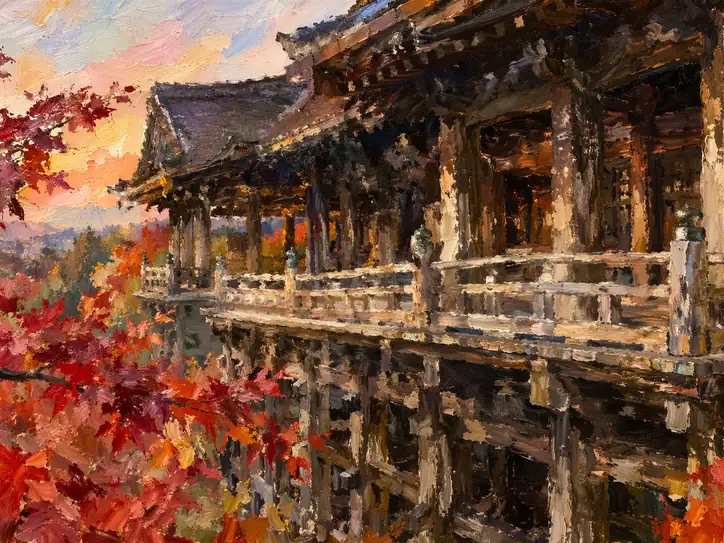 Autumn's Embrace
 Twilight Whispers Along the Snow
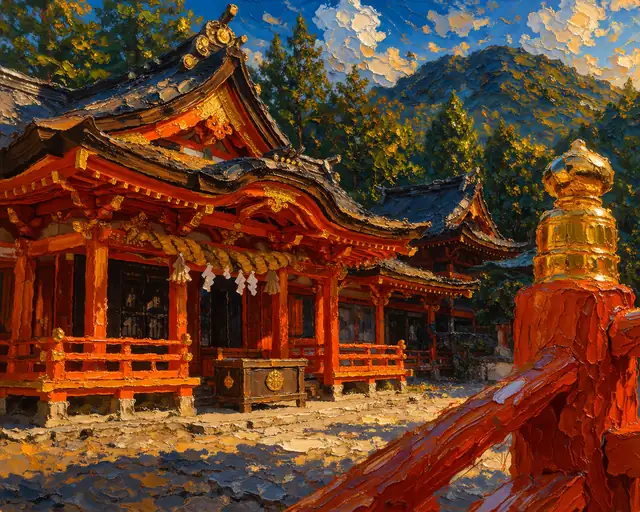 Vermilion Splendor in the Sacred Woods
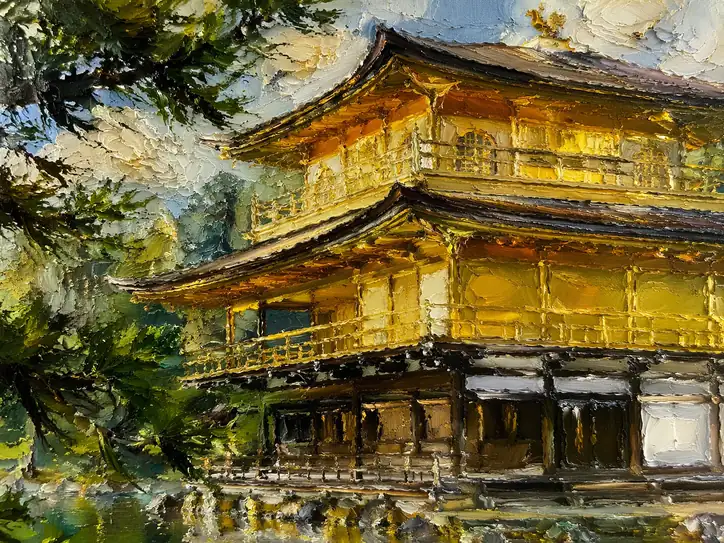 A Touch of Gold
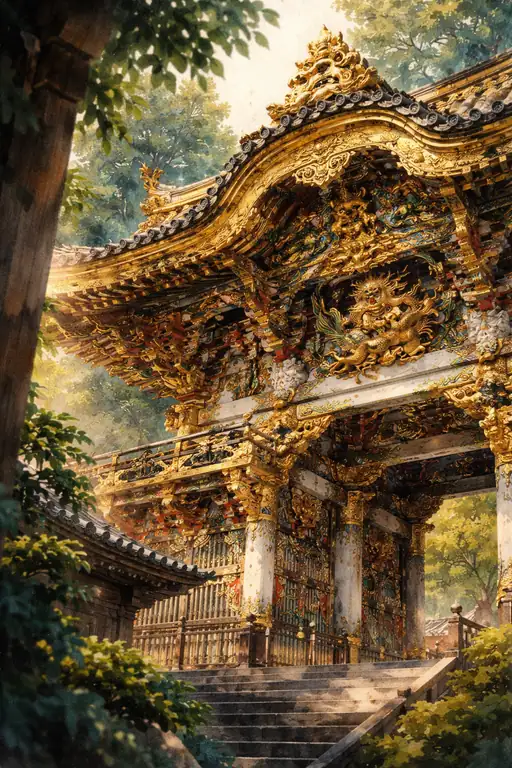 The Golden Gate of the Forest Guardian
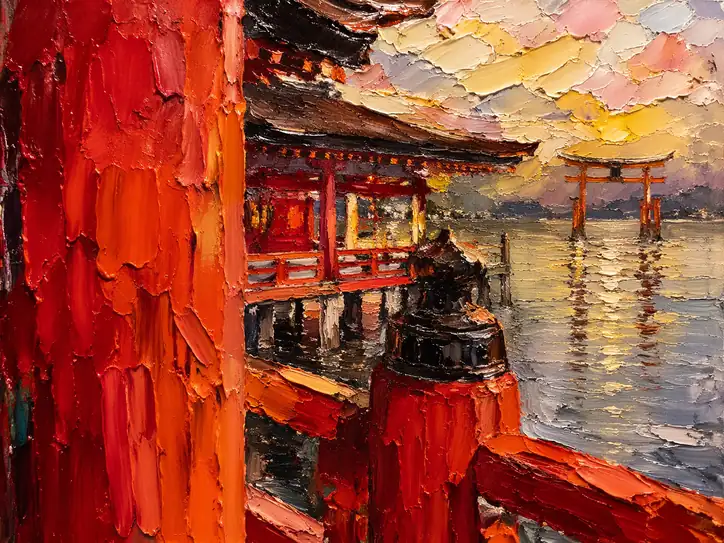 Vermilion in the Dying Light
 Cosmic Dreams
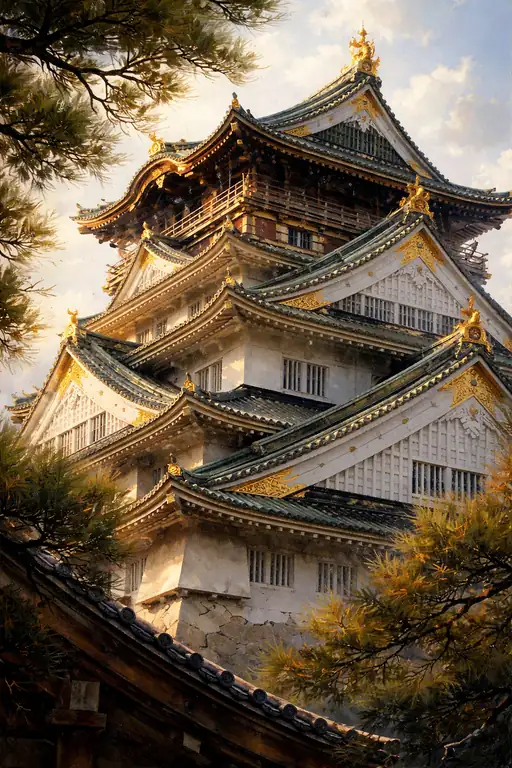
 Radiance of the Autumn Pagoda
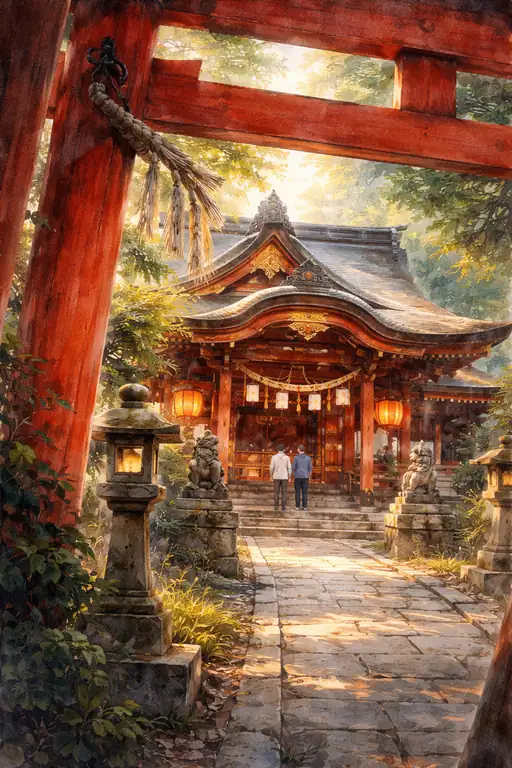 Vermilion Gateway to the Sacred
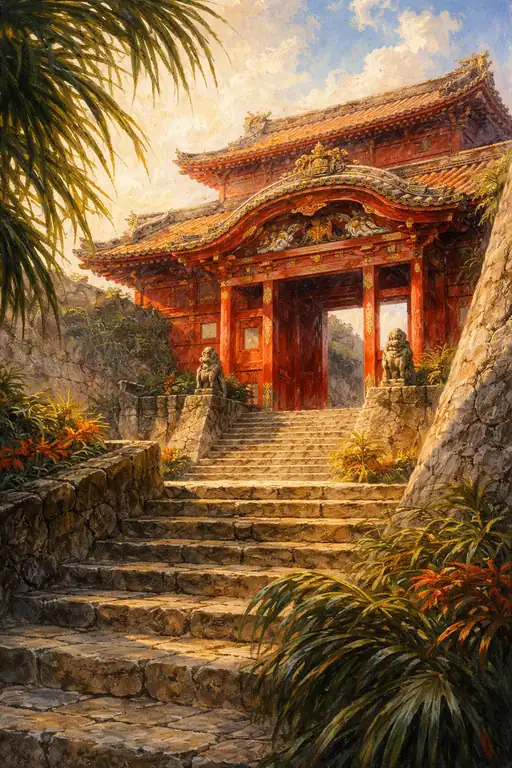 Crimson Portal to the Southern Sun
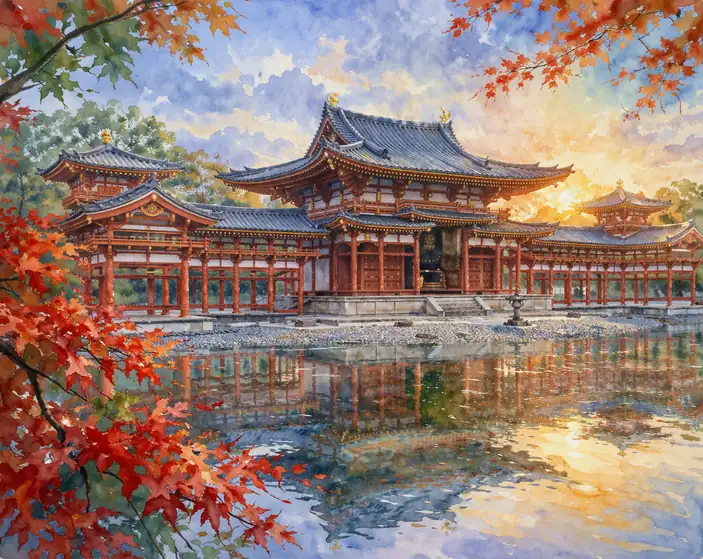 Crimson Reflections of an Ageless Hall