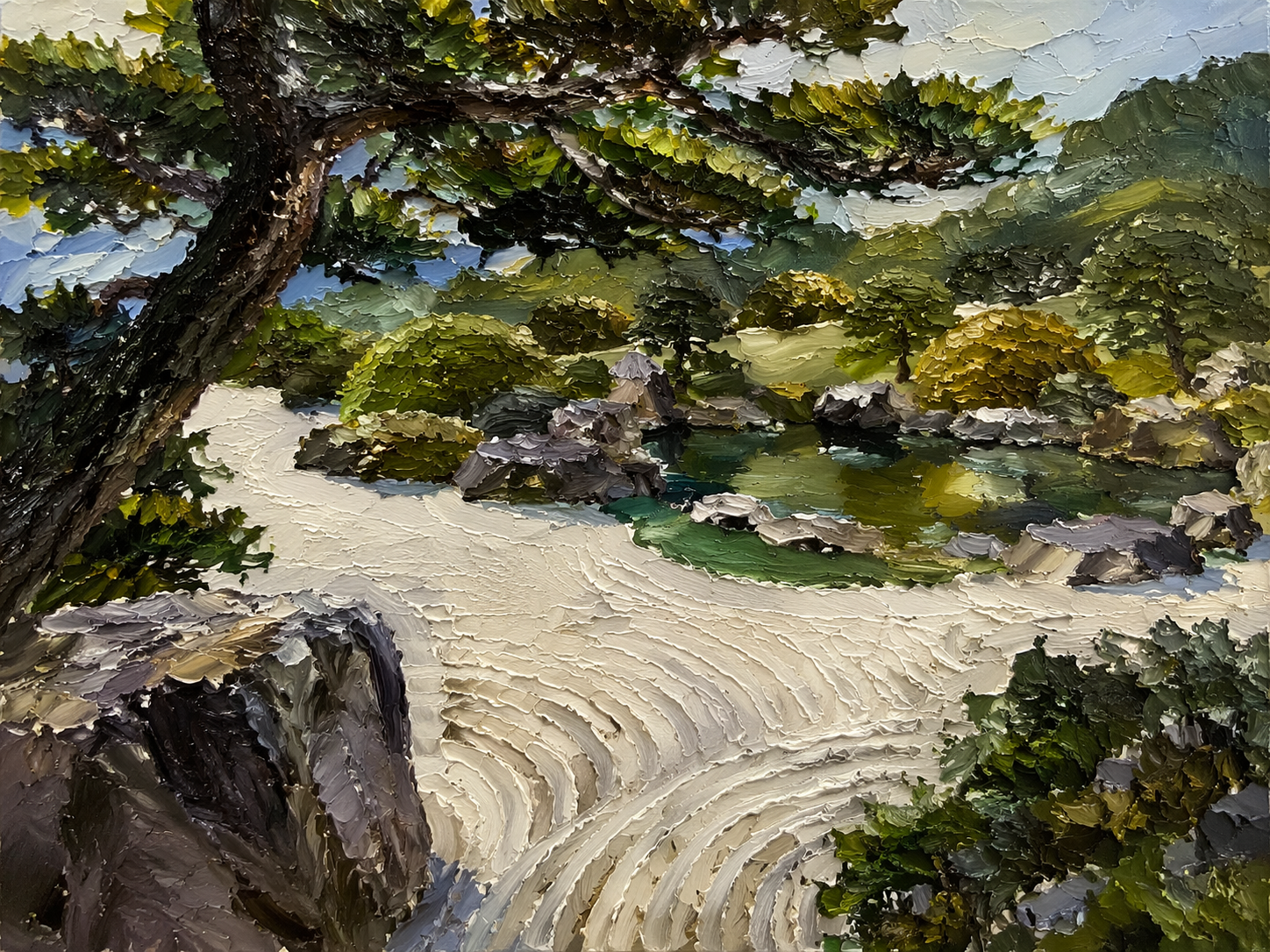
Ripples of the Raked Earth
Critique
1. Introduction This oil painting explores the serene and disciplined world of a Zen dry garden, or Karesansui, where raked gravel and stones symbolize water and mountains. The work utilizes a heavy impasto technique, where thick layers of paint are sculpted to create a tactile representation of the garden’s physical forms. It emphasizes the structural beauty of the landscape, translating the spiritual silence of the Zen space into a vigorous and material-focused visual experience. 2. Description The foreground is dominated by a sea of white gravel, rendered with high-relief ridges that form rhythmic, circular ripples around dark, jagged rocks. Large, lichen-covered boulders are positioned strategically throughout the garden, surrounded by low-growing green moss and manicured bushes. An aged pine tree trunk, heavily textured in deep browns and greys, extends from the upper left, its dark needles forming a canopy over the scene. In the background, rolling green hills under a pale blue sky provide a sense of spatial enclosure. 3. Analysis The artist employs a palette of earthy tones, dominated by whites, greys, and various greens, which reflects the naturalistic and restrained aesthetic of a Zen temple. The composition follows a series of curving lines established by the raked gravel, leading the viewer’s eye on a journey through the stone arrangements. Technically, the work is notable for its extreme use of impasto; the paint itself becomes a physical carving, mimicking the actual physical process of raking gravel or the ruggedness of stone. 4. Interpretation and Evaluation This painting acts as a bridge between the meditative stillness of its subject and the energetic, physical act of painting. The choice of thick, visible brushstrokes suggests a lively interpretation of a typically quiet space, infusing the scene with a sense of hidden vitality. The work is successful in its ability to balance the abstract patterns of the gravel with the representational accuracy of the rocks and trees, showing a high degree of maturity in both composition and technique. 5. Conclusion In conclusion, the work is a powerful and textured tribute to the enduring beauty of Japanese garden design. The initial impression of a static, silent space is effectively challenged by the dynamic application of paint, which reveals the vibrant energy inherent in the natural world. It stands as a refined example of how modern impasto can invigorate traditional themes, offering a unique and deeply tactile perspective on a familiar landscape.
Same Subcategory
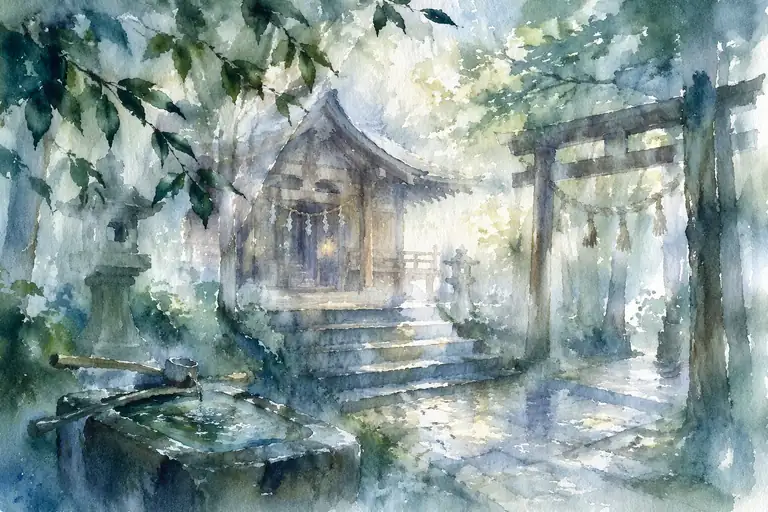 The Luminous Path to the Sacred
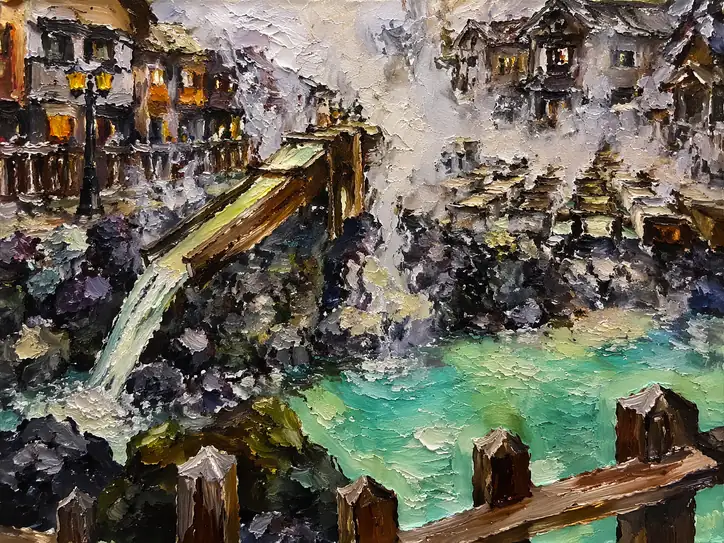 Vibrant Flow of the Autumn Waterfall cascade
Similar Artworks
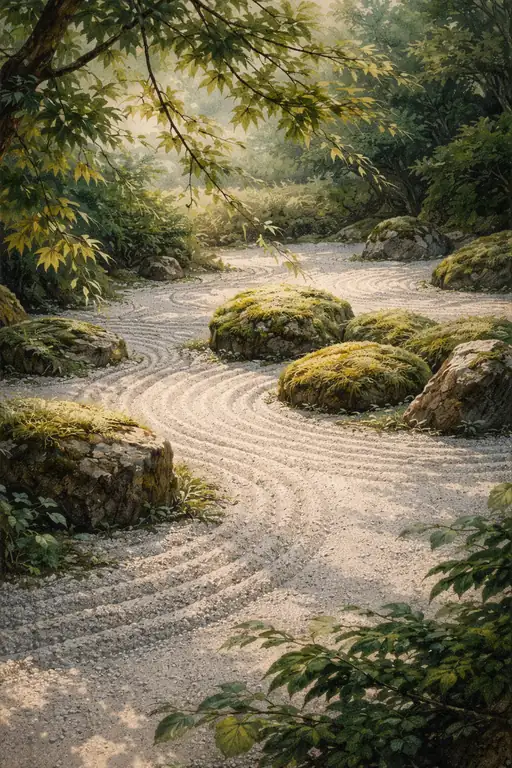 Rhythms of the Raked Sand
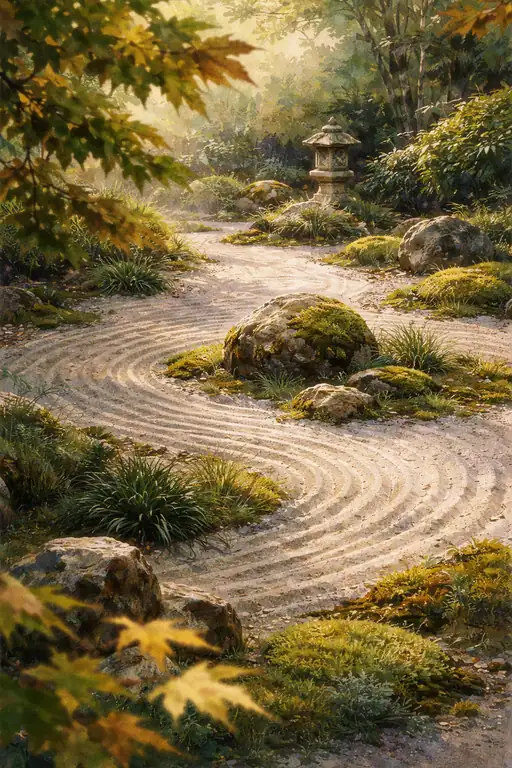 The Golden Harmony
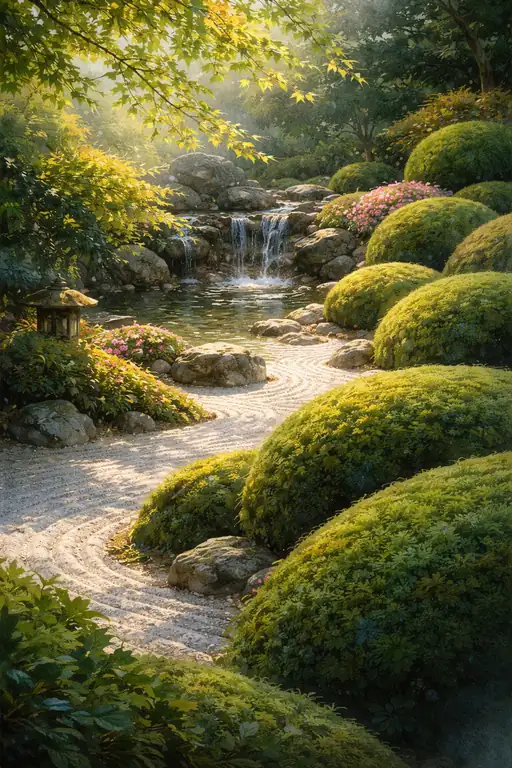 Ripples of the Raked Zen Sea
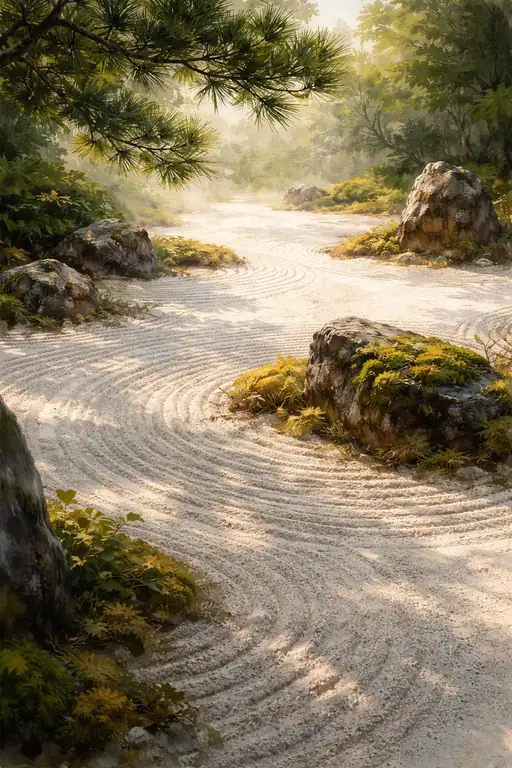 Meditative Silence: The Karesansui Cosmos
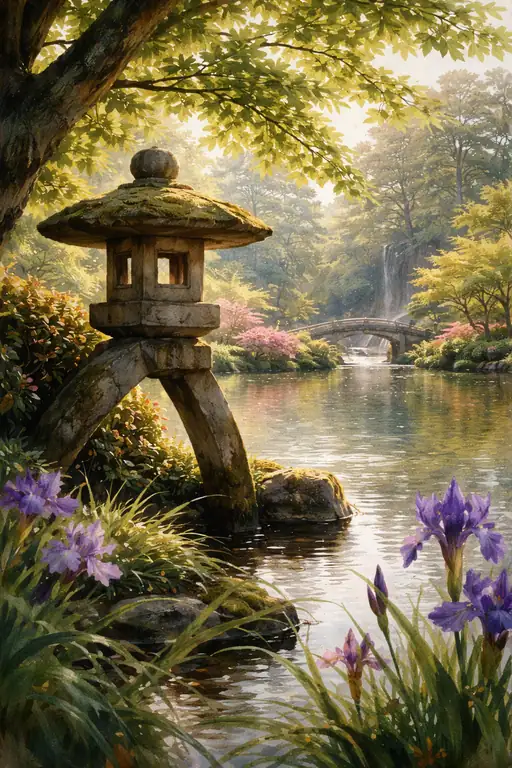 Serenity of the Whispering Waterfall
 Quiet Reflections by the Stone Guardian
 Misty Sanctuary Amidst the Woods
 Symphony of Autumn Colors
 Universe Within the Circle
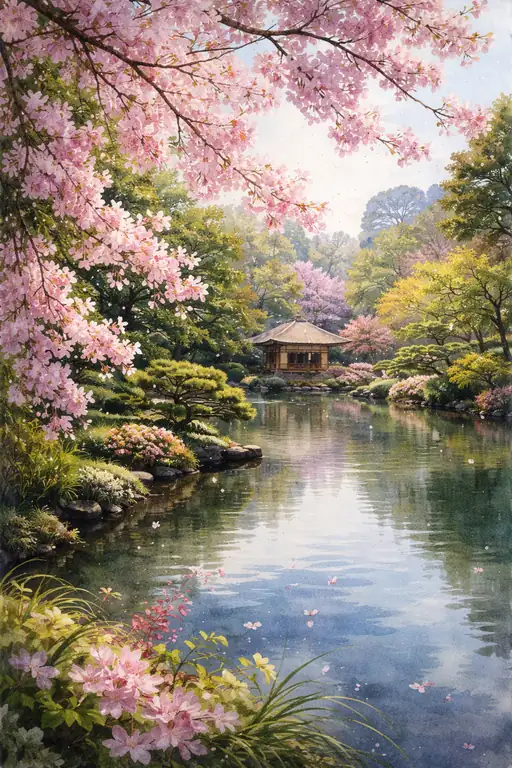 Sakura's Reflection in the Quiet Garden