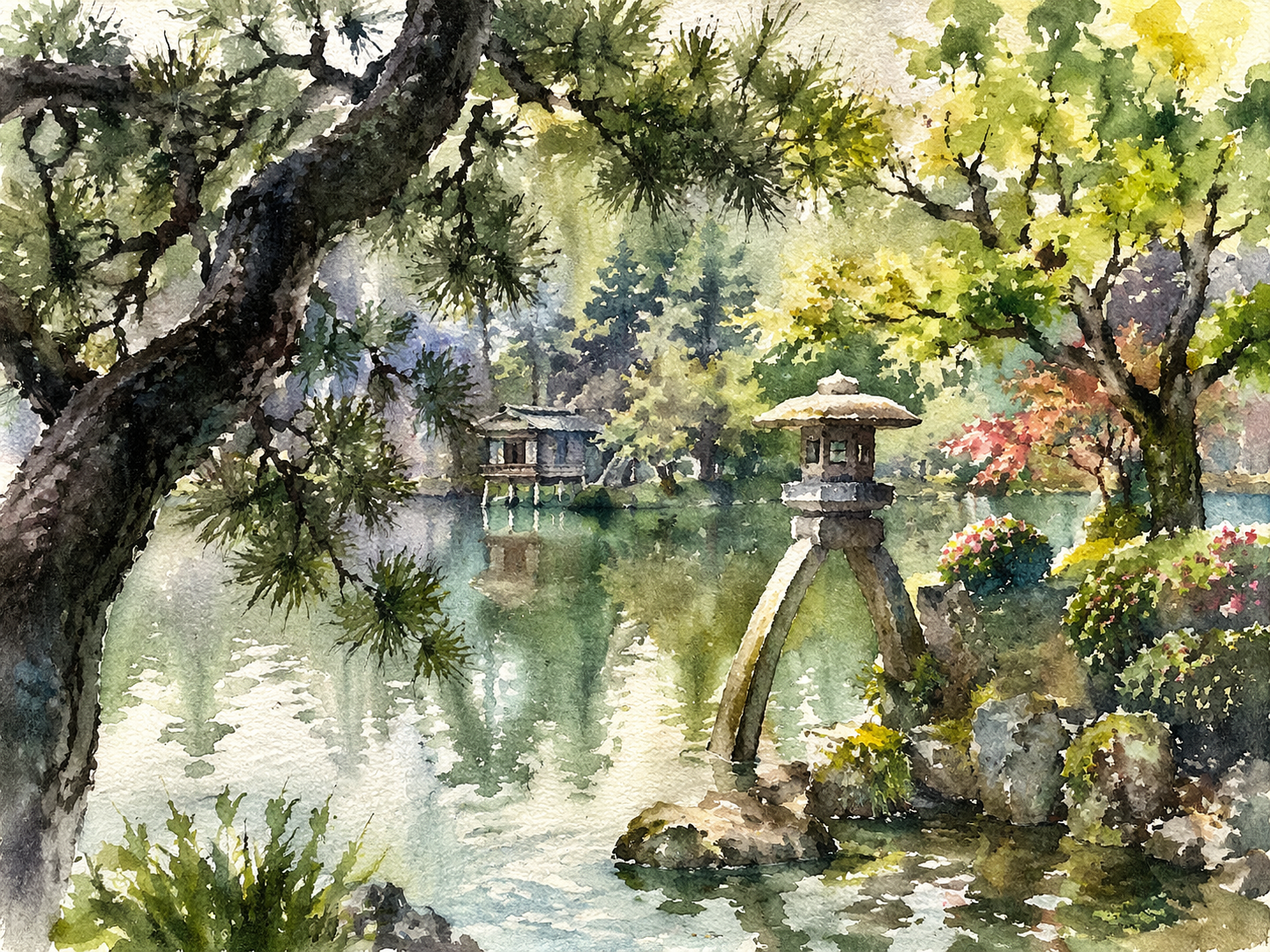
Quiet Reflections by the Stone Guardian
Critique
1. Introduction This watercolor painting presents a tranquil scene from a traditional Japanese garden, featuring a characteristic stone lantern standing at the edge of a serene pond. The work captures the meditative quality of the garden through the delicate and layered application of translucent washes. It emphasizes the harmonious relationship between man-made stone structures and the organic forms of the surrounding flora, creating a timeless atmosphere of peace. 2. Description The central focus is a Kotoji-doro style stone lantern, its legs resting on rocks at the water's edge. To the right, lush bushes with hints of pink and yellow flowers are depicted. A massive, textured pine tree trunk and its needles frame the scene from the left, its branches overhanging the pond. In the background, a small wooden pavilion is reflected in the still, pale-green water, surrounded by a dense forest of varied green and yellow-leaved trees. 3. Analysis The artist utilizes a soft, naturalistic palette dominated by various shades of green, ochre, and grey, which reinforces the garden’s tranquility. The composition is expertly balanced, using the large pine tree on the left to counterbalance the lantern and the dense foliage on the right. Technically, the painting demonstrates a high level of control over the watercolor medium, particularly in the rendering of reflections on the water and the complex textures of the tree bark and pine needles. 4. Interpretation and Evaluation This painting is an evocative study of the aesthetic concepts of Wabi-sabi and the carefully curated beauty of Japanese landscaping. The focus on the lantern, a traditional symbol of enlightenment, suggests a narrative of spiritual reflection within a nature-focused sanctuary. The work is highly successful in its ability to convey depth and atmosphere using the interaction between sharp details and soft, blurred background elements, showcasing exceptional technical proficiency. 5. Conclusion In conclusion, the work is a masterful tribute to the quiet elegance of the Japanese garden. The initial impression of a simple landscape gradually reveals a complex layering of light and shadow that captures the true essence of a contemplative space. It stands as a significant example of how watercolor can be used to translate the subtle nuances of light and texture found in a meticulously maintained environment.
Same Subcategory
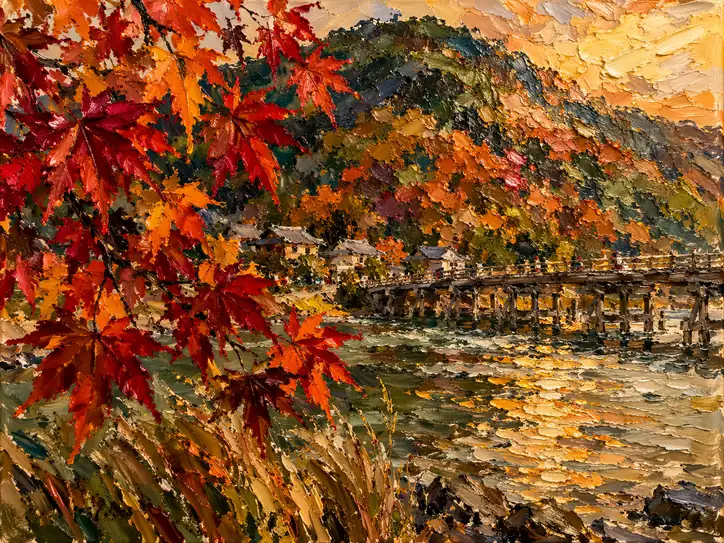 Dusk Over the Crimson Crossing
Similar Artworks
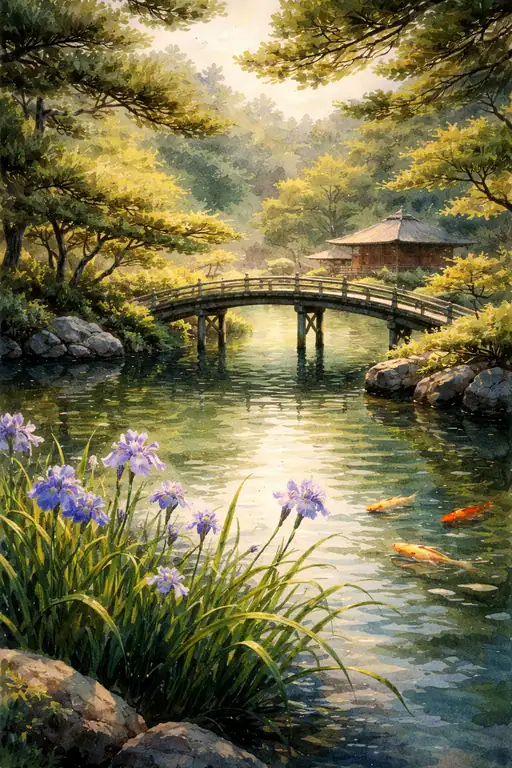 Whispers of the Golden Pond
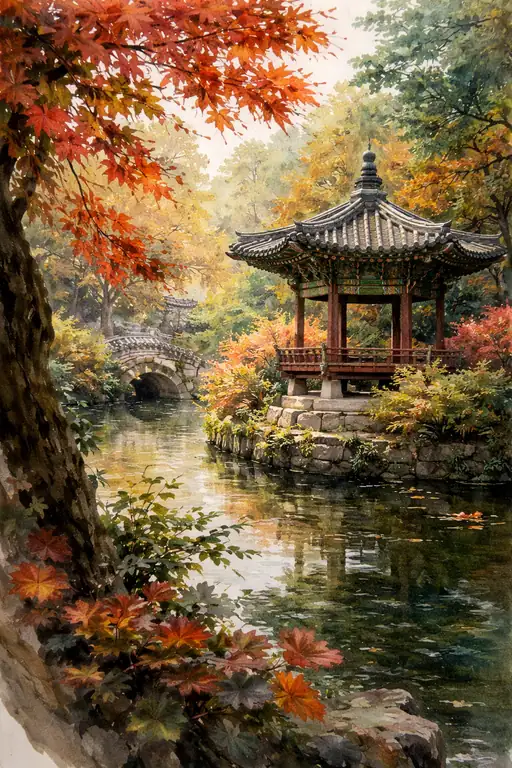 Crimson Leaves Reflected in Autumn's Mirror
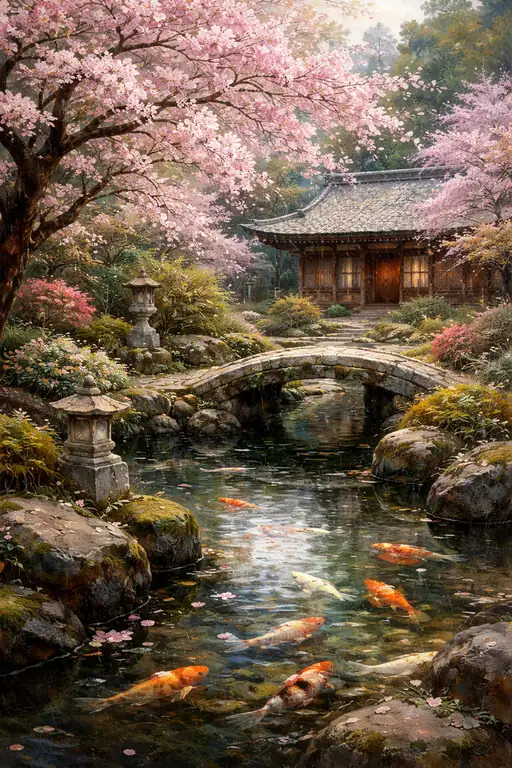 Reflections in the Koi Pond
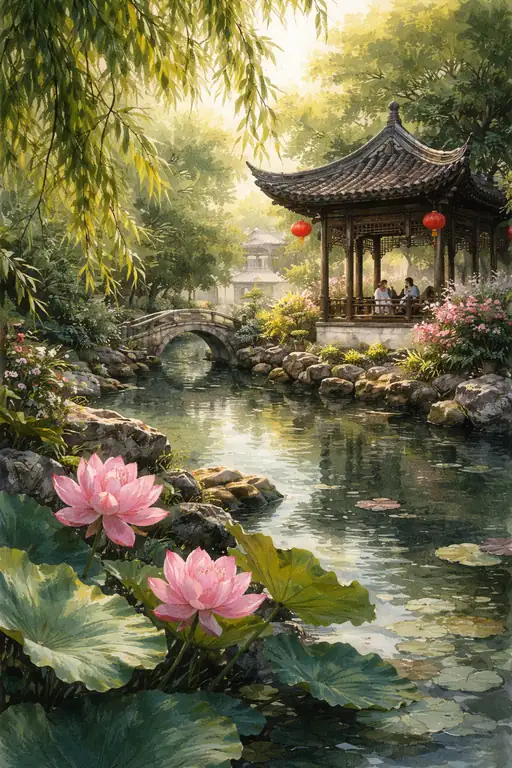 Tranquility in Bloom: The Lotus Pavilion
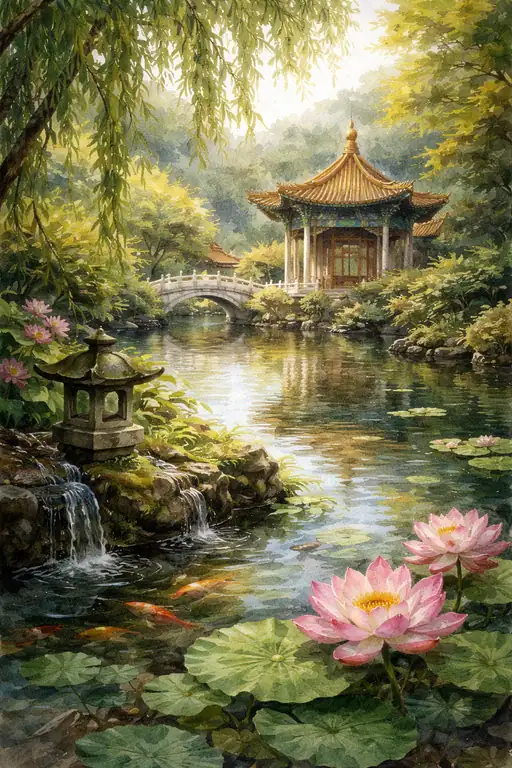 Serenity of the Gilded Pavilion
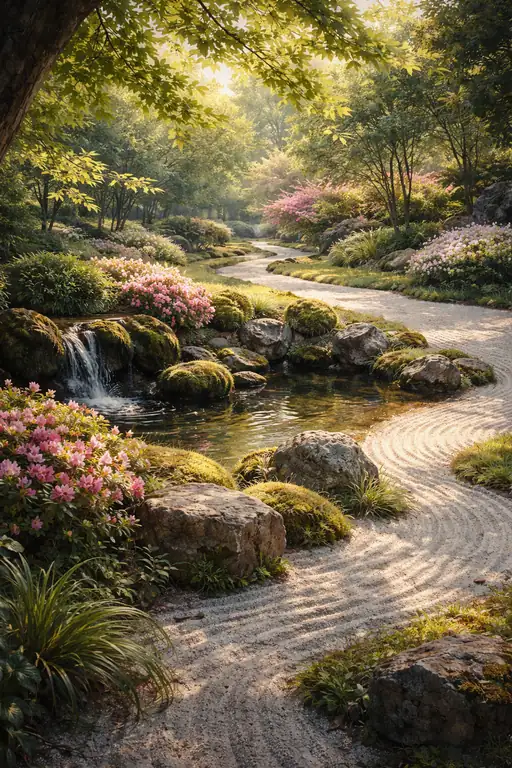 Serene Harmony: The Water's Gentle Path
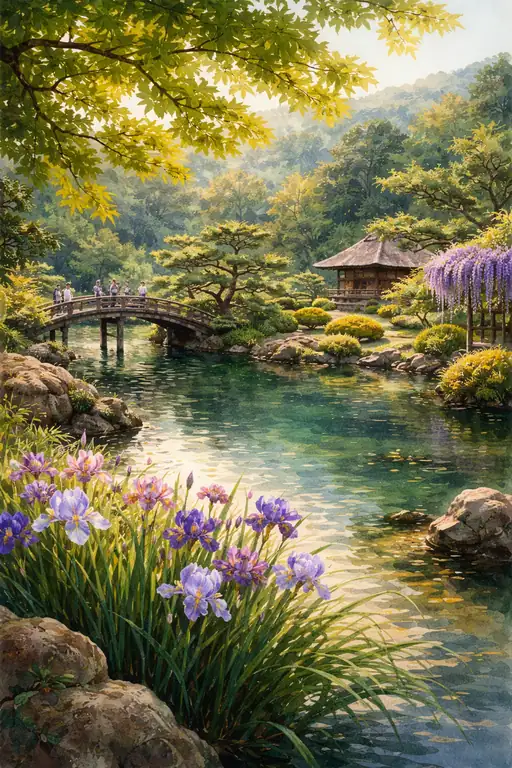 Serenade of the Summer Garden's Reflection
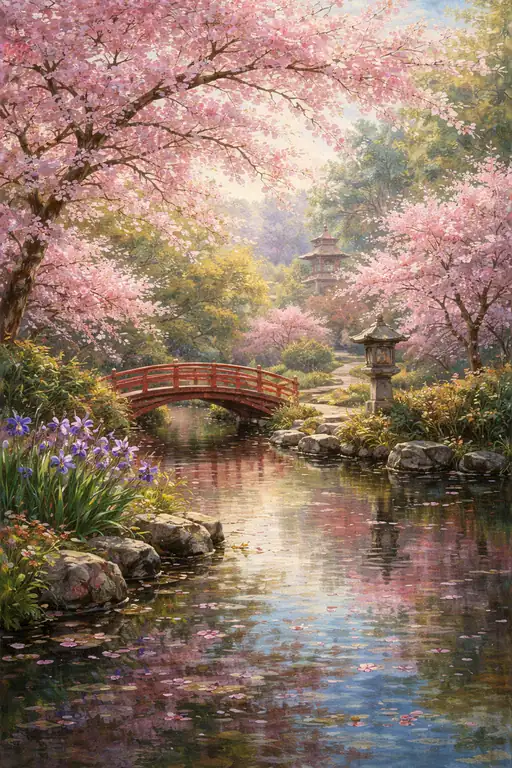 Tranquility in the Zen Garden
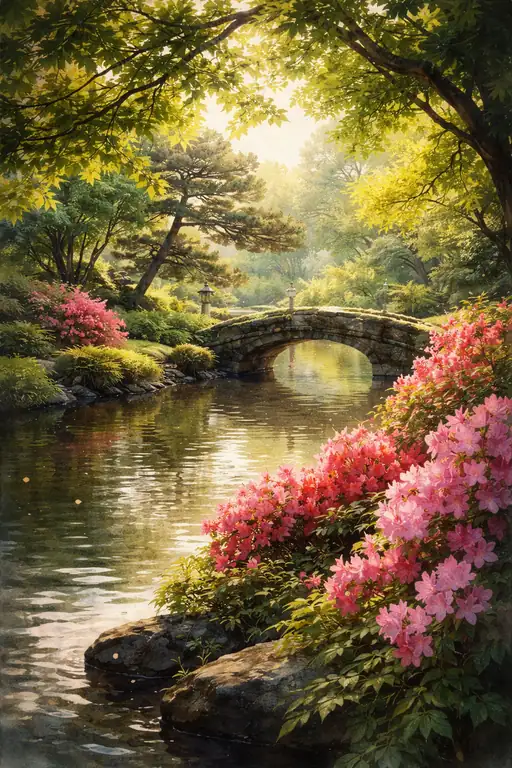 Spring Sunlight Over the Stone Bridge
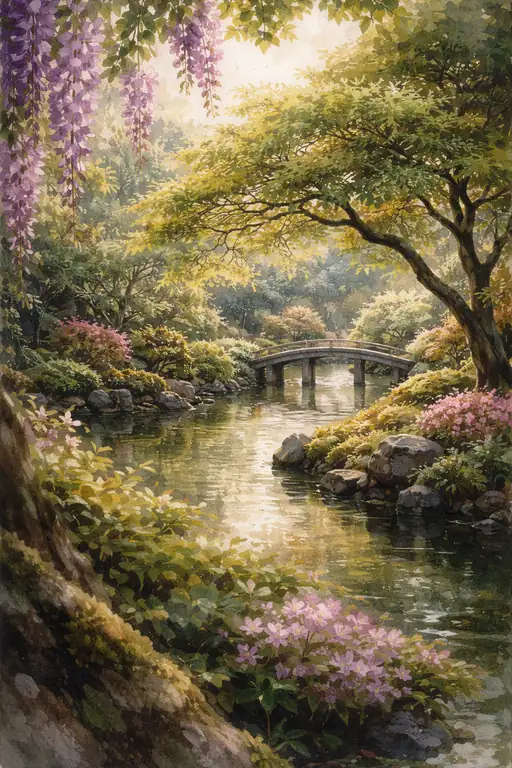 Twilight Beneath the Wisteria Bridge