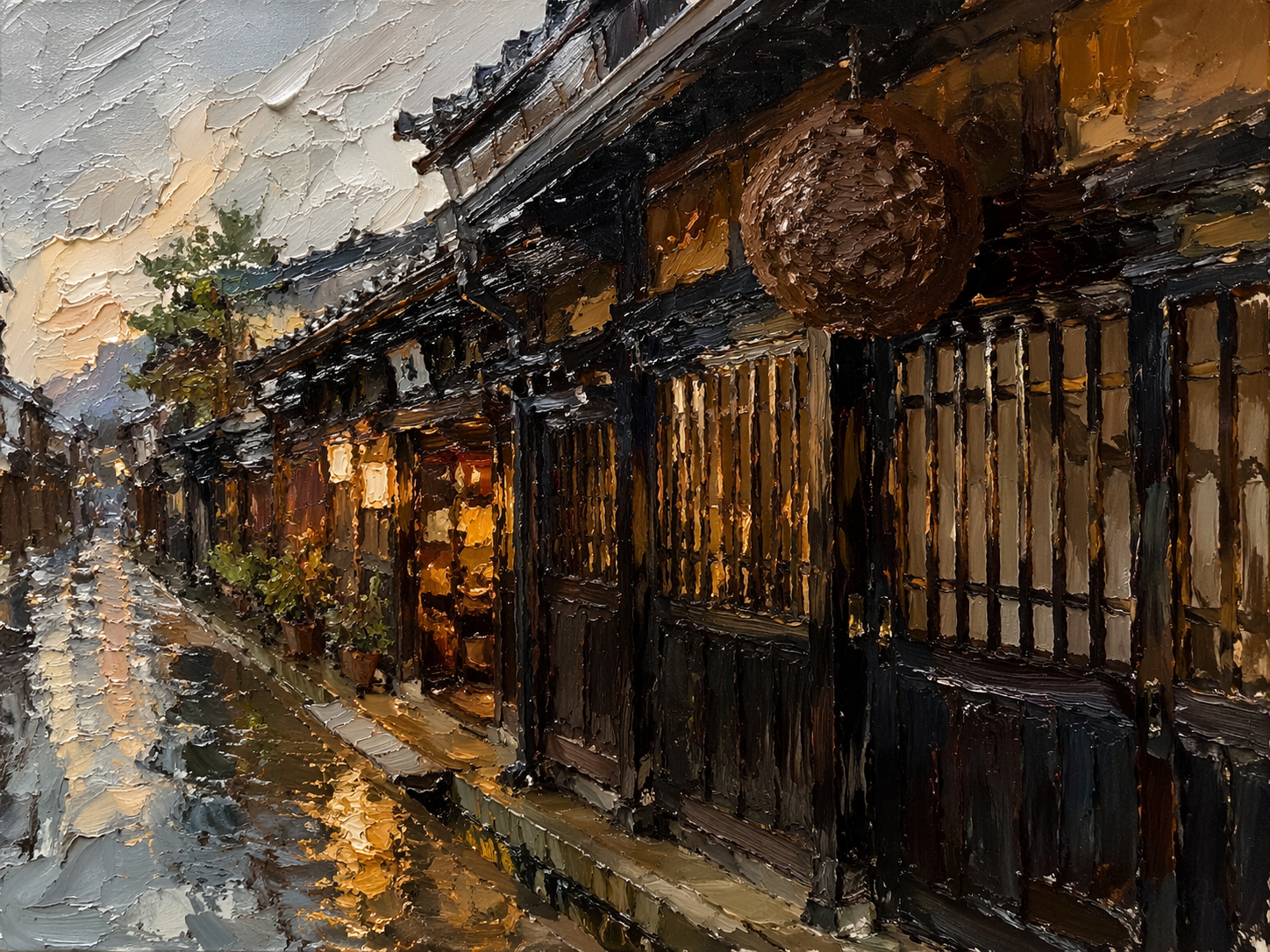
Whispers of the Wet Cobblestones
Critique
1. Introduction This oil painting presents a nostalgic and evocative scene of a traditional Japanese streetscape, characterized by a sophisticated use of impasto techniques. The composition captures a transition between day and night, where artificial warmth meets the cool, damp atmosphere of a late afternoon or early evening. The artist employs a heavy application of pigment to create a tactile surface that enhances the physical presence of the architectural subjects and the surrounding environment. 2. Description The artwork features a row of traditional wooden buildings with intricate lattice windows and dark-toned facades that dominate the right side of the frame. Warm, golden light spills from the interiors and lanterns, contrasting sharply with the deep shadows of the eaves. A prominent, textured sphere representing a traditional cedar ball hangs prominently from one of the structures. Below, the wet cobblestone street reflects the glowing lights and the overcast sky, displaying a shimmering array of ochre and silver tones. 3. Analysis Technically, the piece is defined by bold palette knife strokes that provide a rugged yet deliberate texture throughout the canvas. This impasto method creates a sense of depth and vibration, as the thick layers of paint catch and reflect light in various directions. The composition relies on the strong verticality of the building columns and the receding perspective of the narrow street to draw the viewer’s eye toward the distant background. A balanced palette of earthy browns, blacks, and vibrant yellows is punctuated by the cool greys of the sky and the road. 4. Interpretation and Evaluation The use of heavy texture serves as a powerful tool for interpreting the sensory experience of a rainy night, making the reflected light feel almost liquid in its density. There is a profound sense of quietude and heritage embedded within the portrayal of these timeless structures, suggesting a deep appreciation for the atmosphere of historic Japanese neighborhoods. The evaluation reveals a high level of technical mastery in managing such thick medium without losing the clarity of the architectural forms or the subtlety of the lighting effects. 5. Conclusion Ultimately, the painting succeeds in transforming a familiar urban scene into a rich, sensory journey that transcends mere visual representation. The combination of intense materiality and soft, glowing light creates an emotional resonance that speaks to both the loneliness and the comfort of the night. It stands as a remarkable example of how expressive technique can be utilized to evoke the silent, shimmering beauty of a world washed by the rain.
Same Subcategory
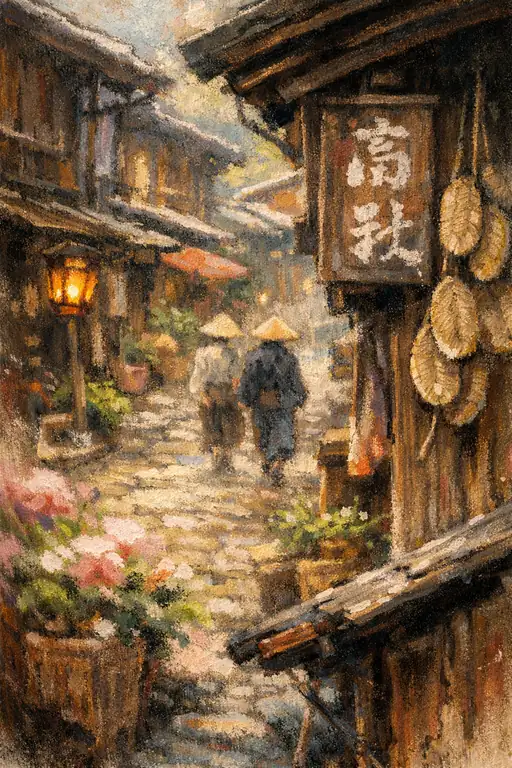 Echoes of the Cobblestone Era
Similar Artworks
 The Arch of Fading Light
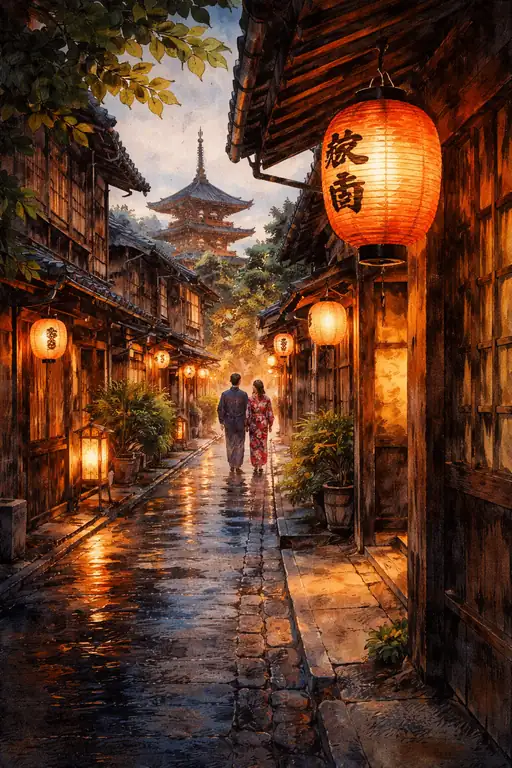 Lantern-Lit Reverie in Ancient Kyoto
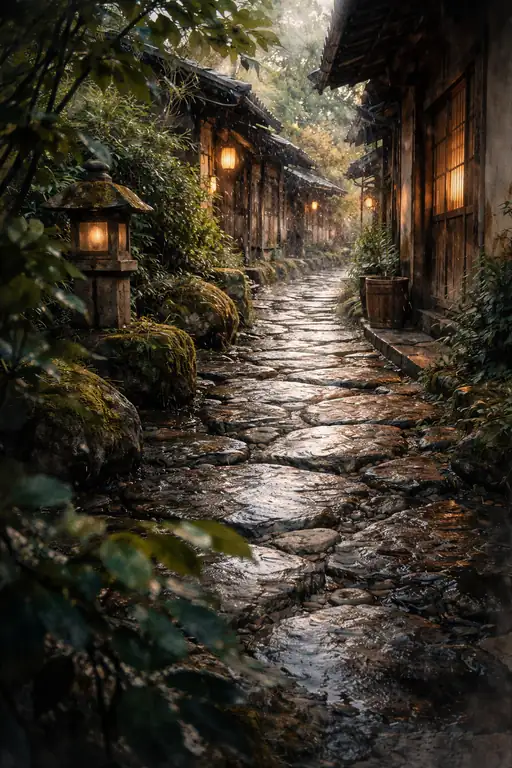 The Rain Washes Away the Present
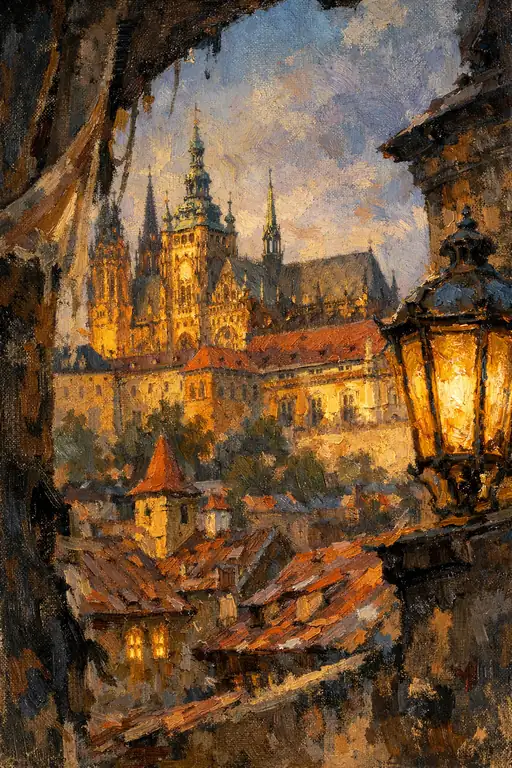 The Thick Impasto of Twilight
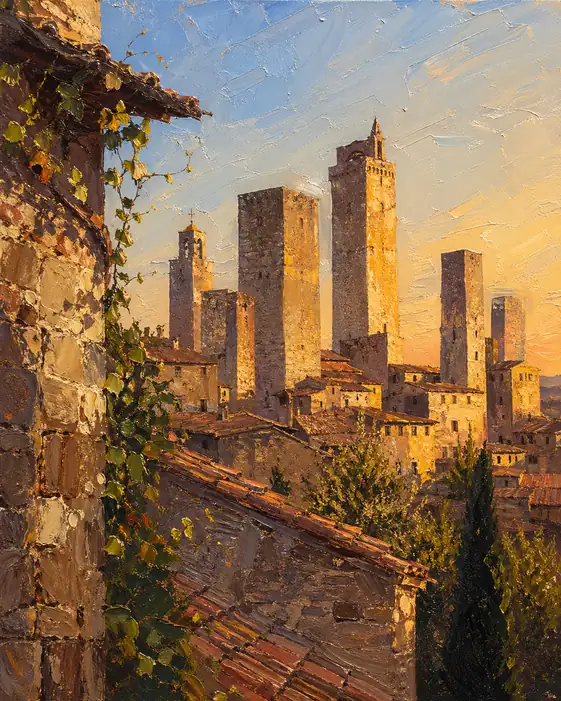 Golden Spires of the Eternal Town
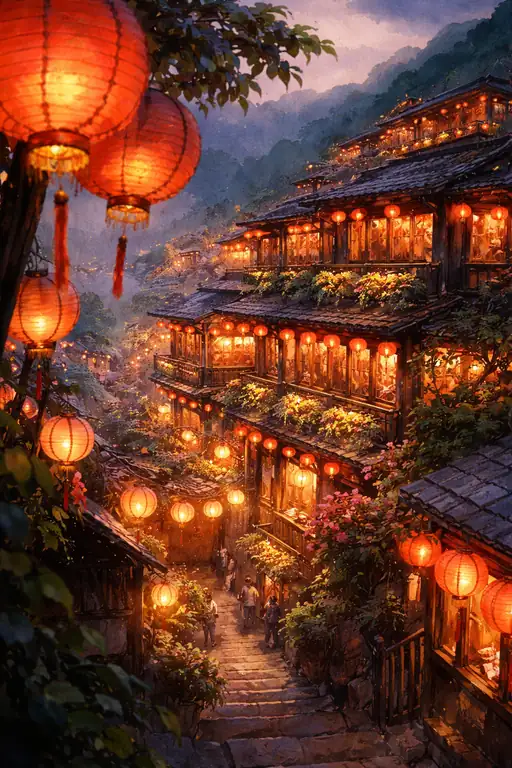 Lantern Glow on the Mountain Path
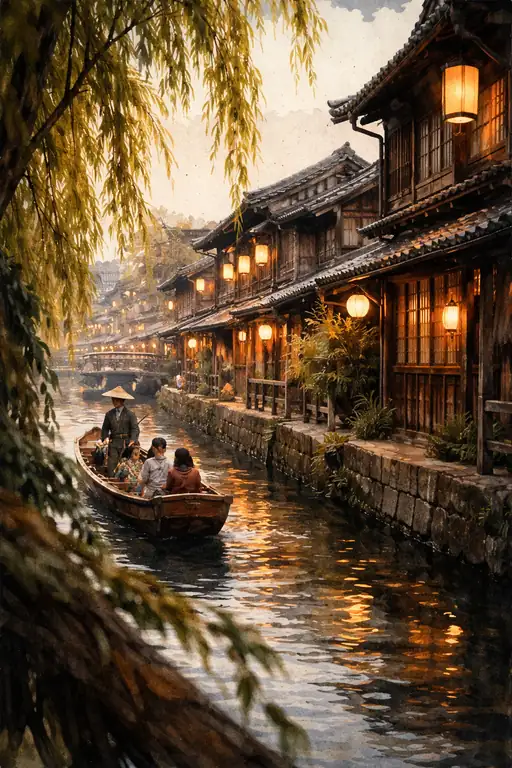 Echoes of Amber on a Timeless Tide
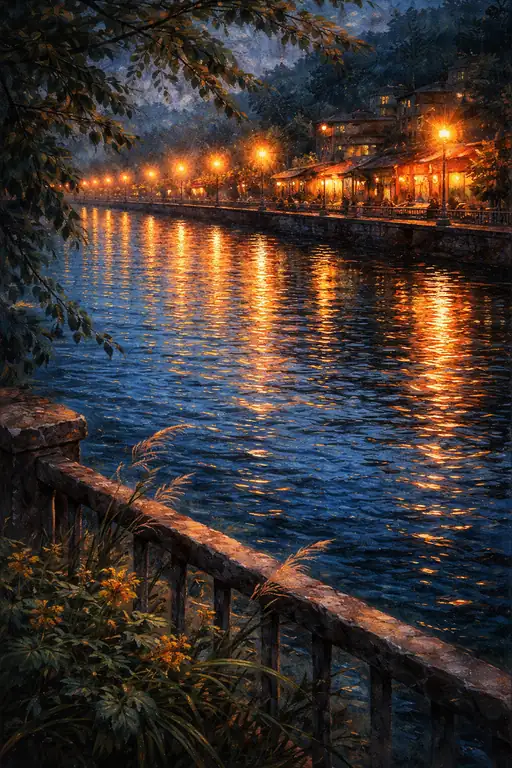 Whispering Waters of the Midnight Town
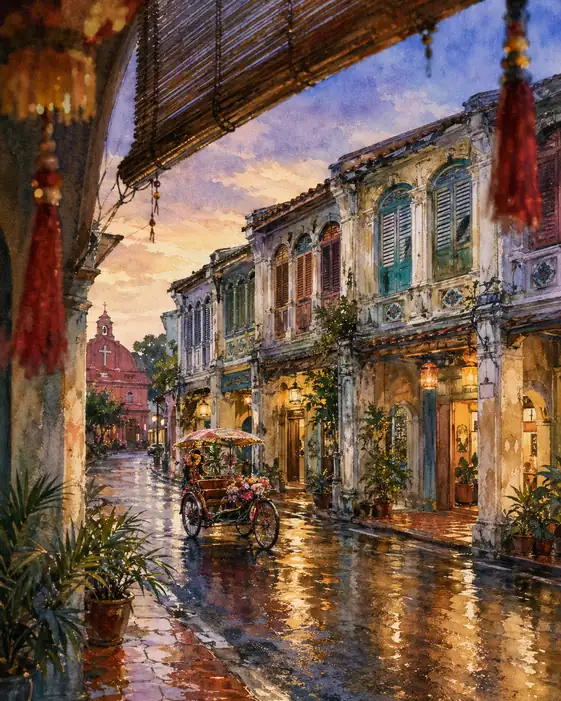 A Nostalgic Journey Through the Arch
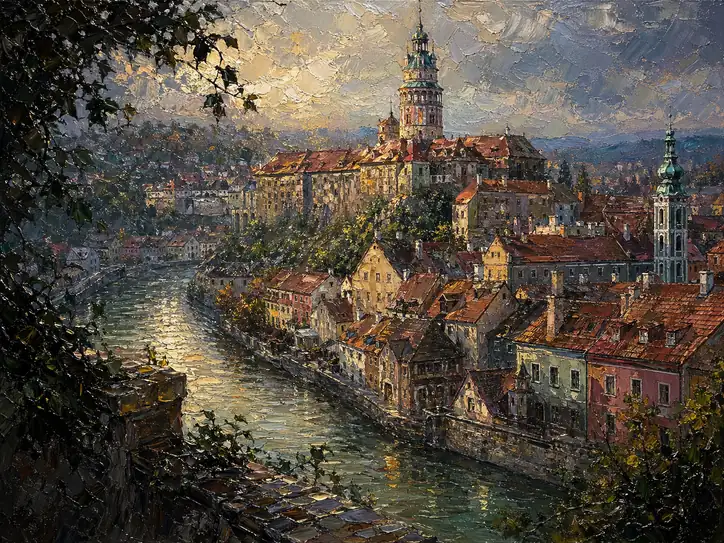 Bohemian Gold: The Pulse of Krumlov