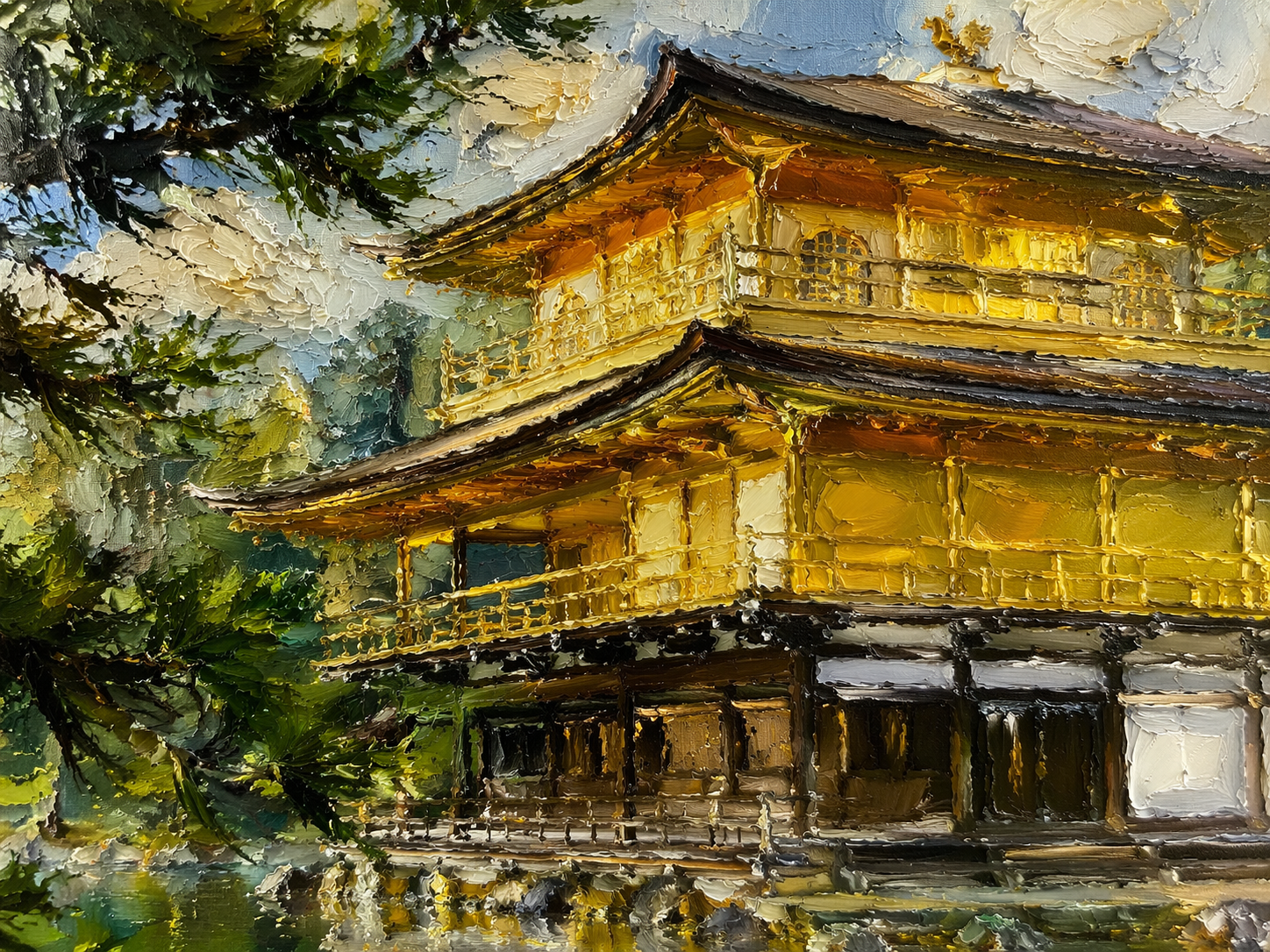
A Touch of Gold
Critique
1. Introduction This painting offers a dazzling and highly textured representation of Kyoto’s famous Kinkaku-ji, the Golden Pavilion. Through a vigorous application of oil paint, the artist translates the brilliance of the gilded structure into a physical experience of color and light. The work highlights the harmonious yet striking contrast between man-made splendor and the surrounding natural world. Its monumental presence is established by both the subject matter and the assertive handling of the medium. 2. Description The Golden Pavilion sits at the heart of the composition, its multiple tiers rendered in shades of brilliant yellow and deep ochre. To the left, dark, evergreen branches frame the building, their needles suggested by sharp, rhythmic dabs of paint. At the base of the pavilion, a stone embankment meet the reflective surface of a pond, which contains fragmented hints of the building’s golden hue. The sky in the background is a mix of pale, atmospheric colors that allow the main subject to shine. 3. Analysis The defining element of this work is the heavy impasto used to depict the gold leaf of the pavilion. Thick, slab-like strokes of paint create a literal relief on the canvas, catching the light in a way that mimics the reflective properties of real gold. The artist contrasts these warm, metallic tones with the cool greens and dark browns of the garden. Rhythmic brushwork in the water and vegetation creates a sense of movement that balances the static majesty of the architecture. 4. Interpretation and Evaluation The choice to use such heavy texture elevates the painting from a mere landscape to a tactile exploration of architecture and nature. By emphasizing the materiality of the gold, the artist reinforces the pavilion’s status as a symbol of divine and worldly opulence. The composition is expertly balanced, using the diagonal lines of the roofs to lead the eye through the various levels of the site. This approach successfully captures the radiant spirit of the landmark through a bold, modern aesthetic. 5. Conclusion With its vibrant execution and sophisticated use of texture, this piece provides a memorable and visceral encounter with a classic Japanese icon. The interplay between the solid, sculptural gold and the fluid, organic surroundings creates a dynamic visual tension. Ultimately, the painting succeeds in conveying the enduring beauty and historical significance of the Golden Pavilion. The initial impression of overwhelming brilliance is tempered by an appreciation for the structural harmony of the work.
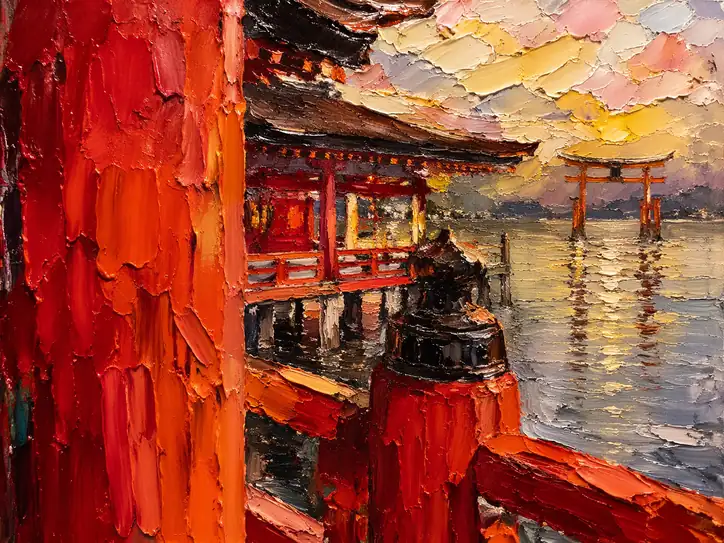 Vermilion in the Dying Light
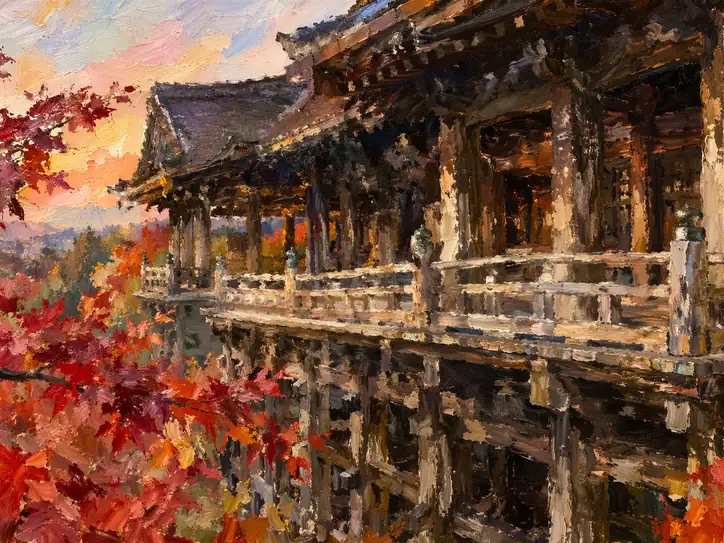 Autumn's Embrace
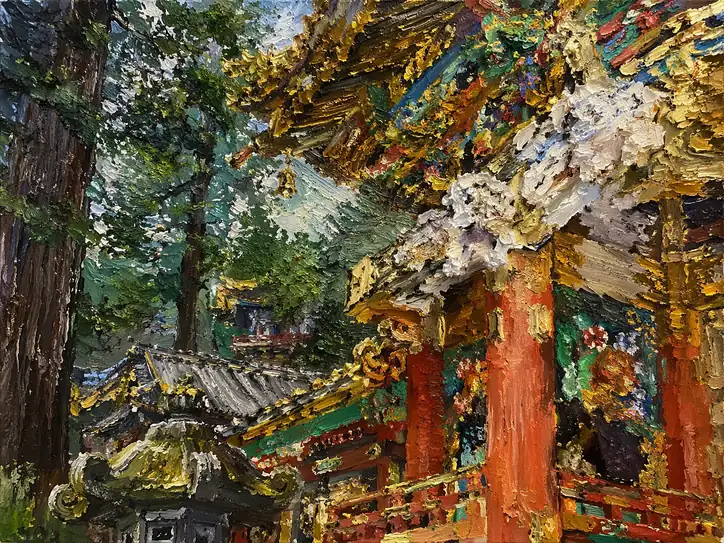 The Gilded Heart of the Forest
 Radiance of the Autumn Pagoda
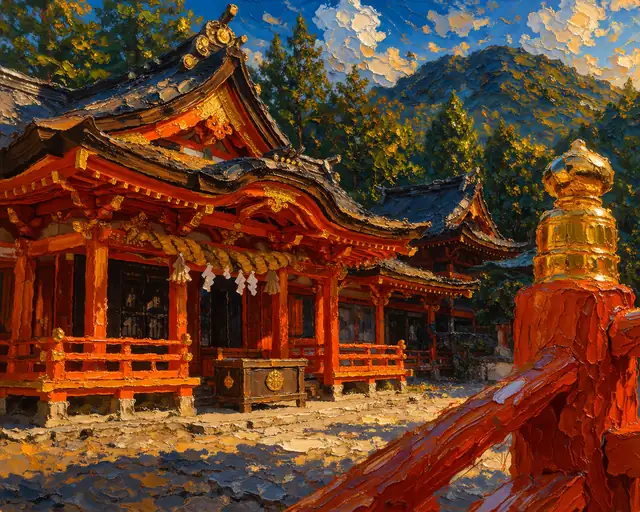 Vermilion Splendor in the Sacred Woods
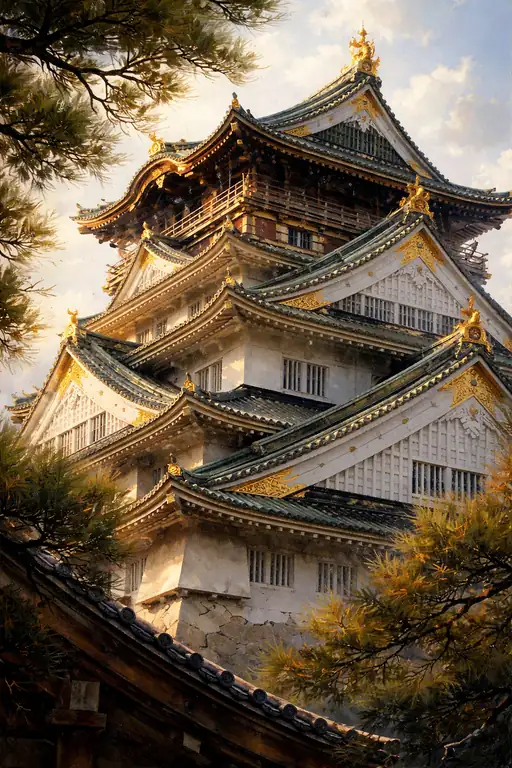 Cosmic Dreams
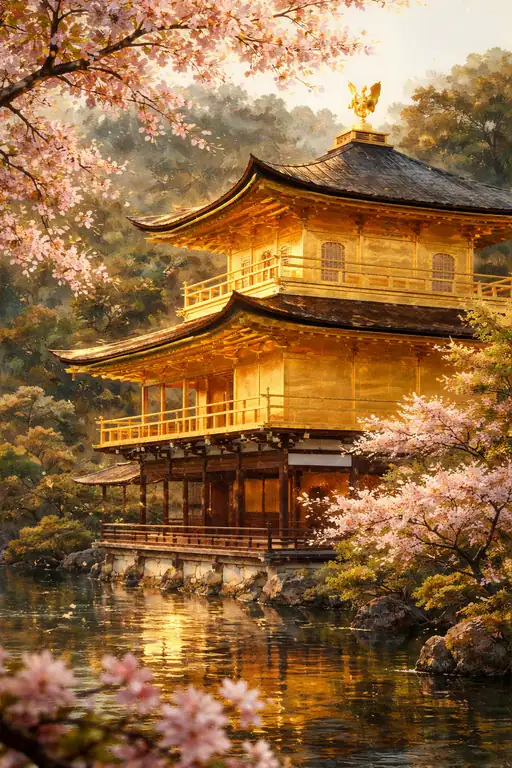 Spring's Whisper on the Golden Water
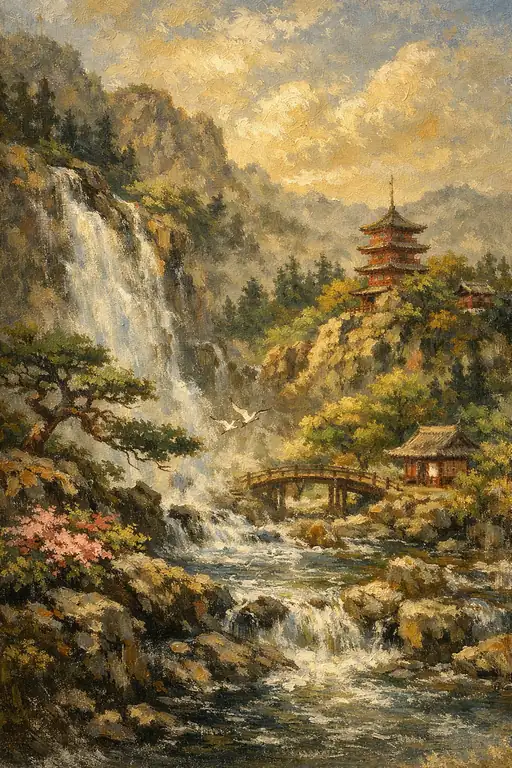 Golden Light Upon the Sacred Pagoda
 Bougainvillea by the Stone Wall
 Gentle Time Woven by Tiled Roofs