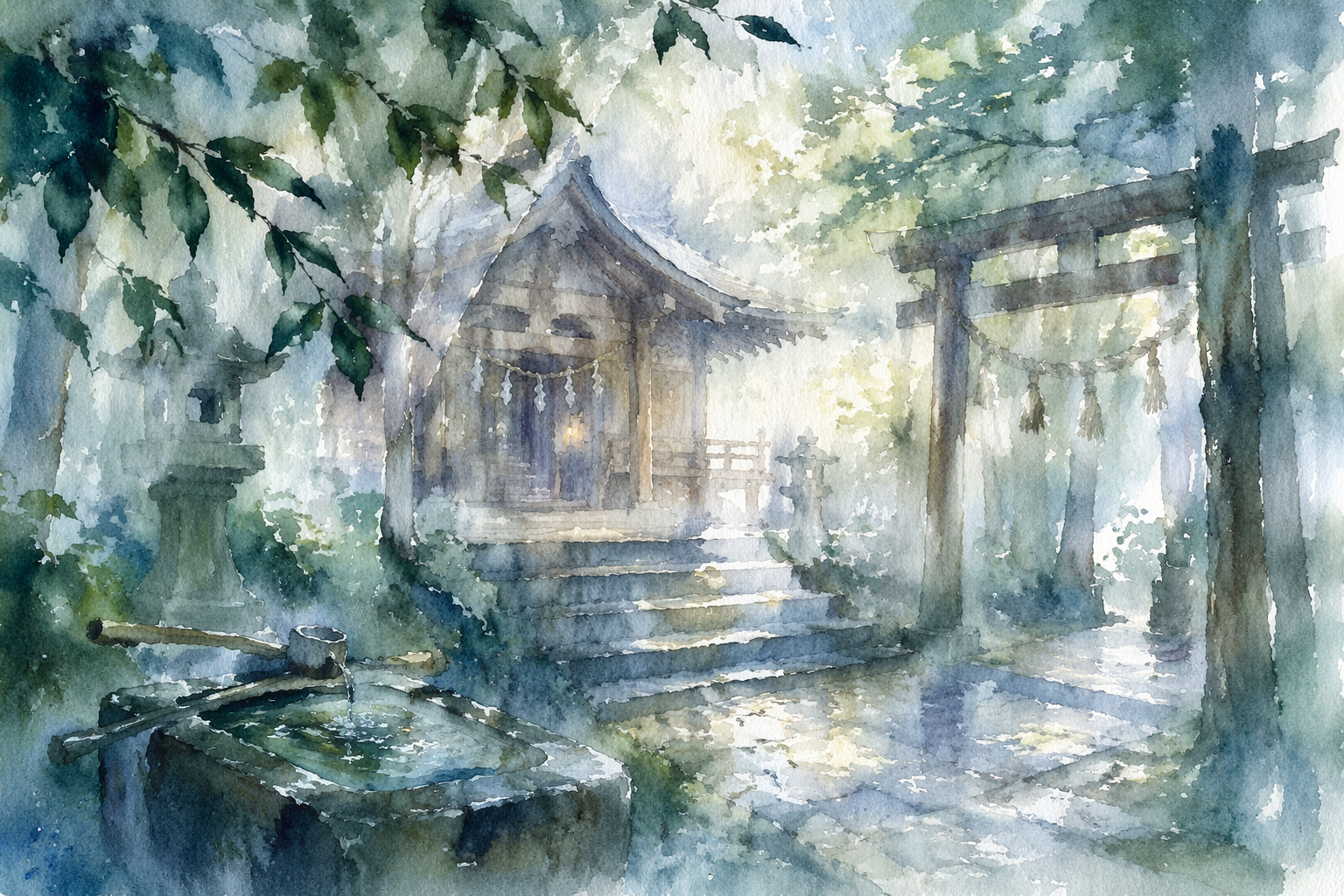
The Luminous Path to the Sacred
Critique
1. Introduction This watercolor painting depicts a traditional Japanese shrine nestled deep within a verdant forest. The scene captures a moment of profound silence and spiritual resonance, where the architectural elements of Shinto tradition coexist harmoniously with the wild beauty of nature. The artist employs a high-key palette and delicate brushwork to evoke an ethereal atmosphere, suggesting a sacred space separated from the mundane world by a veil of light. 2. Description In the foreground, a stone purification basin with a bamboo ladle rests among dark, mossy rocks, with clear water reflecting the surrounding foliage. To the right, a weathered stone torii gate stands partially obscured by thin tree trunks, leading the eye toward the central structure. The shrine building features a gabled roof and intricate wooden detailing, slightly elevated on stone steps. Overhead, translucent green leaves frame the composition, while bright, diffused sunlight filters through the canopy, creating large areas of white radiance behind the building. 3. Analysis The work demonstrates a sophisticated command of the watercolor medium, utilizing both wet-on-wet and dry-brush techniques to create varied textures. The composition is balanced yet dynamic, with the diagonal line of the steps and the verticality of the trees providing a sturdy framework for the soft, bleeding colors. A masterful use of negative space represents the intense sunlight, which serves to dissolve the edges of the architecture and vegetation. The color harmony is dominated by cool greens and blues, punctuated by the warm, subtle yellows of the filtered light. 4. Interpretation and Evaluation This piece effectively interprets the concept of "shinrin-yoku" or forest bathing, combined with the solemnity of a religious site. The dissolution of forms through light suggests a transcendence of the physical, where stone and wood become as ephemeral as the morning mist. Technically, the artist's ability to maintain clarity while embracing the fluidity of watercolor is exceptional. The composition succeeds in directing the viewer's gaze from the earthly purification basin to the celestial light behind the honden, symbolizing a spiritual journey. 5. Conclusion Upon initial viewing, the painting appears as a simple landscape, but closer observation reveals a complex layering of light and symbolic motifs. It serves as a testament to the enduring power of traditional Japanese aesthetics and the expressive potential of the watercolor medium. The overall effect is one of quiet contemplation, successfully capturing the "genius loci" of a forest shrine.
Same Subcategory
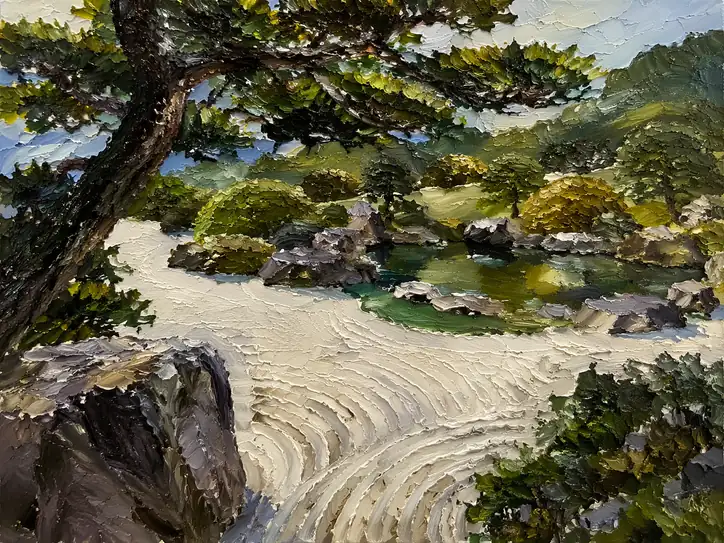 Ripples of the Raked Earth
Similar Artworks
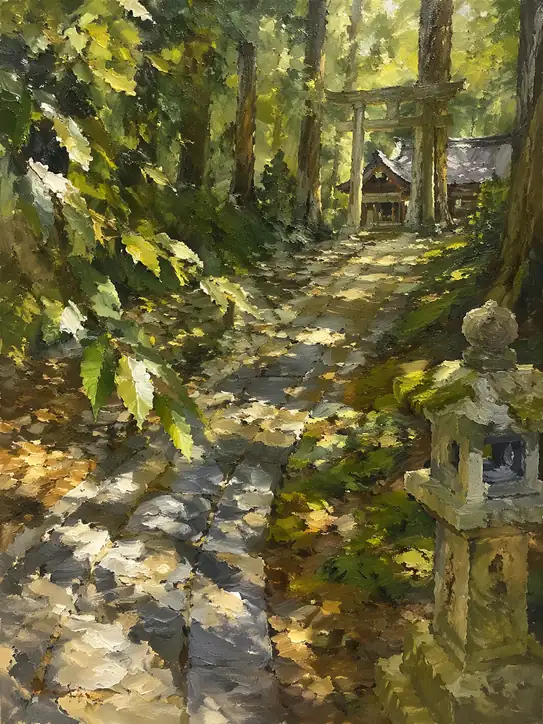 Sacred Light Through the Canopy
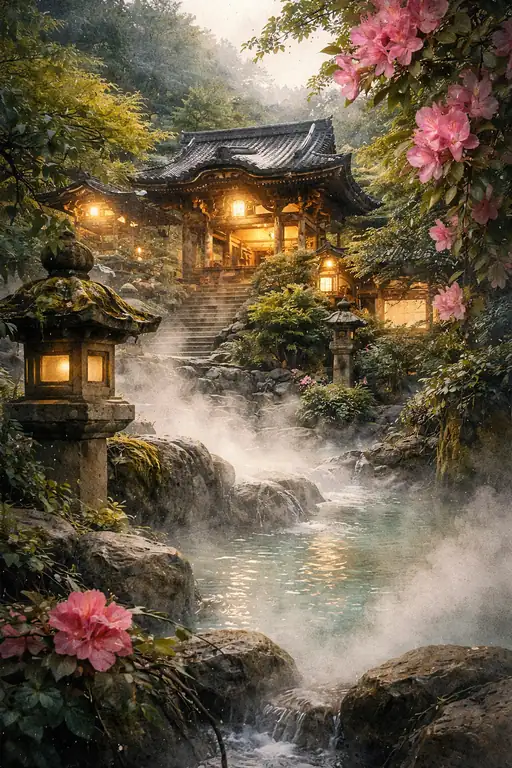 Misty Sanctuary Amidst the Woods
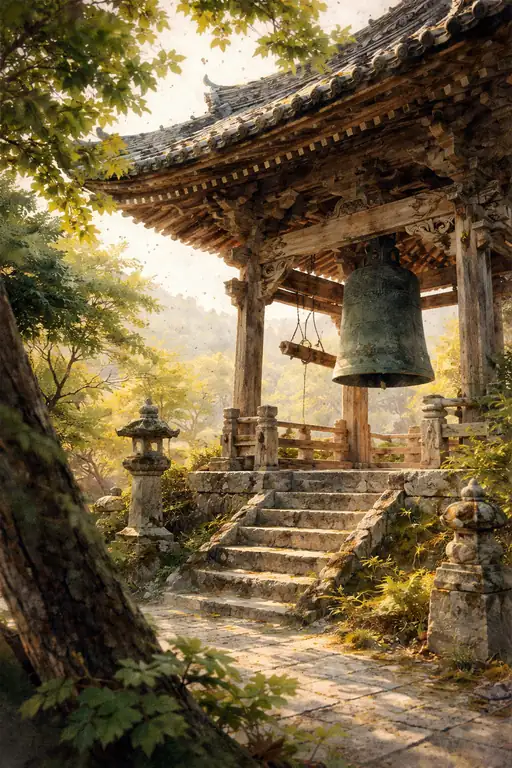 The Silent Wait of the Majestic Temple Bell
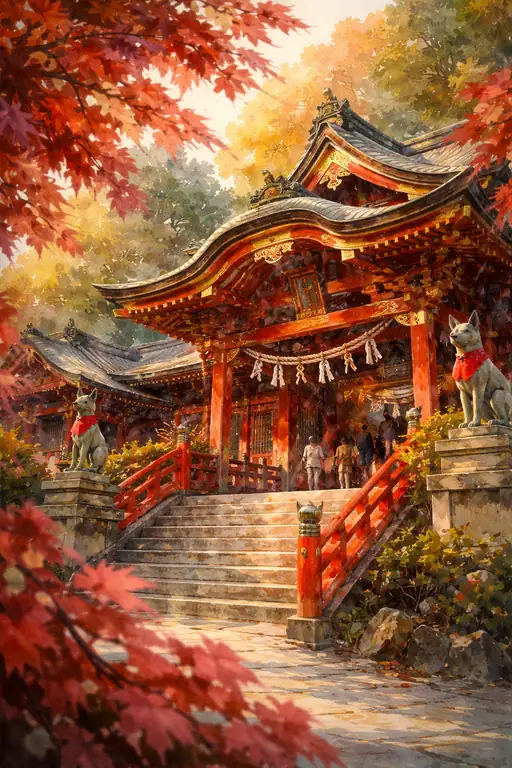 The Golden Ascent Through Autumn's Embrace
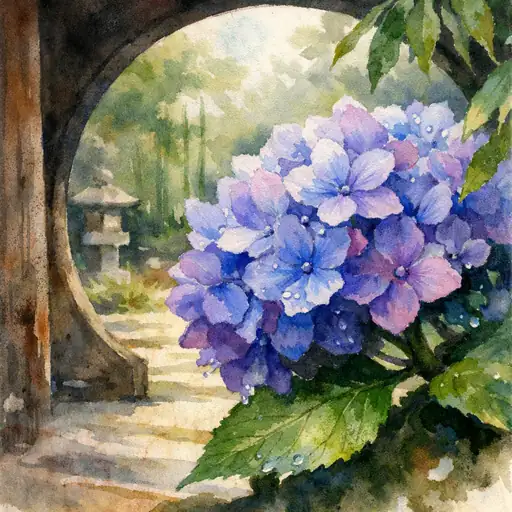 Rainy Season's Tranquil Gateway
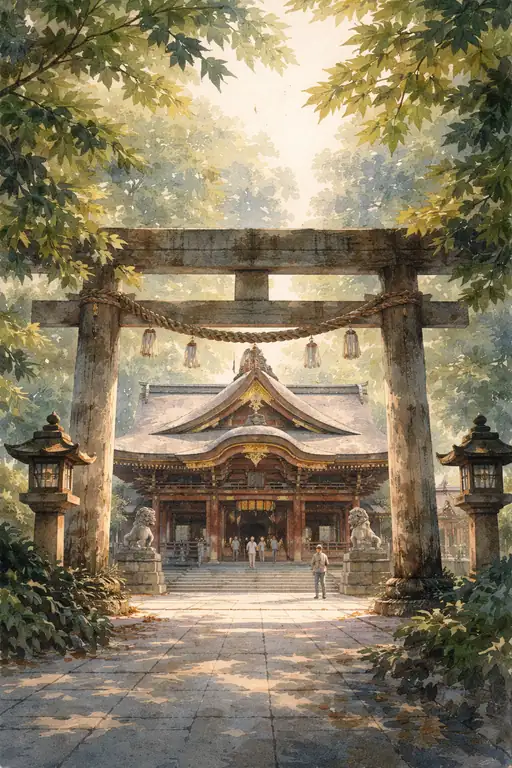 Tropical Reverence: Vermilion Gateway by the Shore
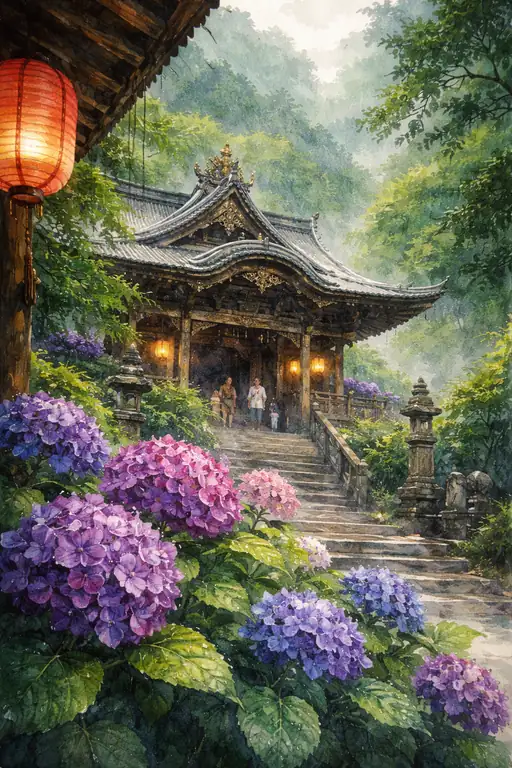 Hydrangea Steps to Tranquility
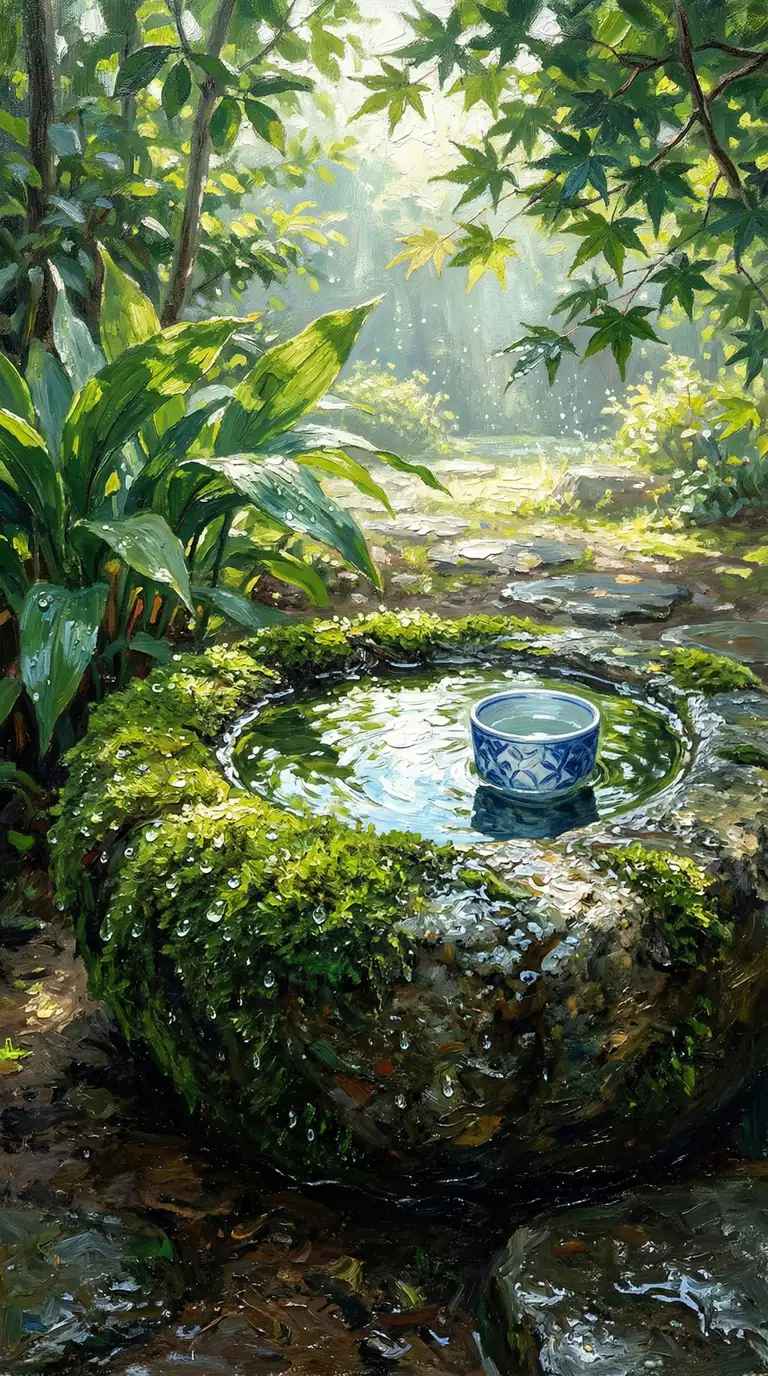 Reflection in the Timeless Basin
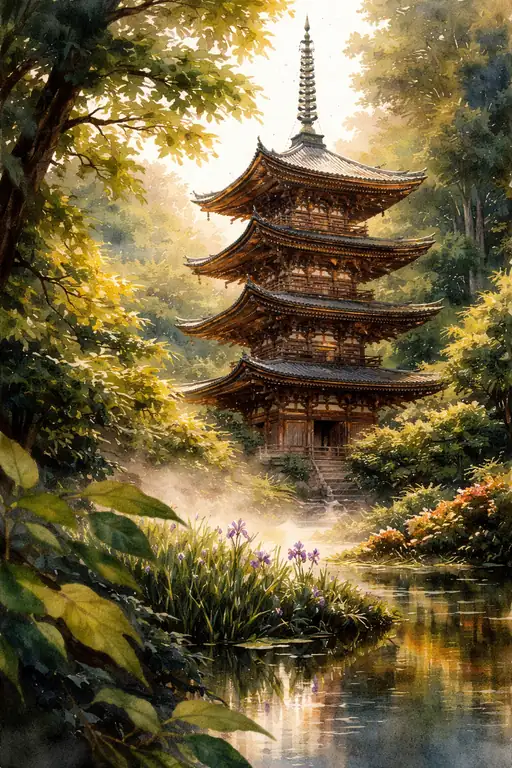 Sacred Resonance in the Morning Mist
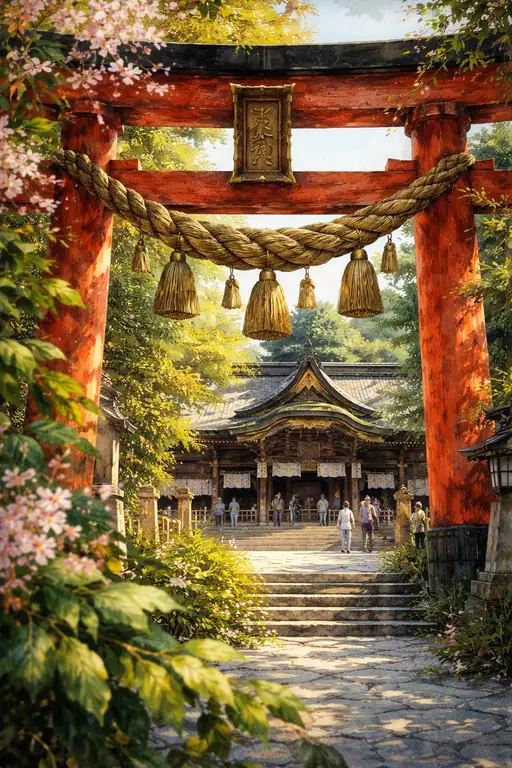 Sanctuary in the Forest