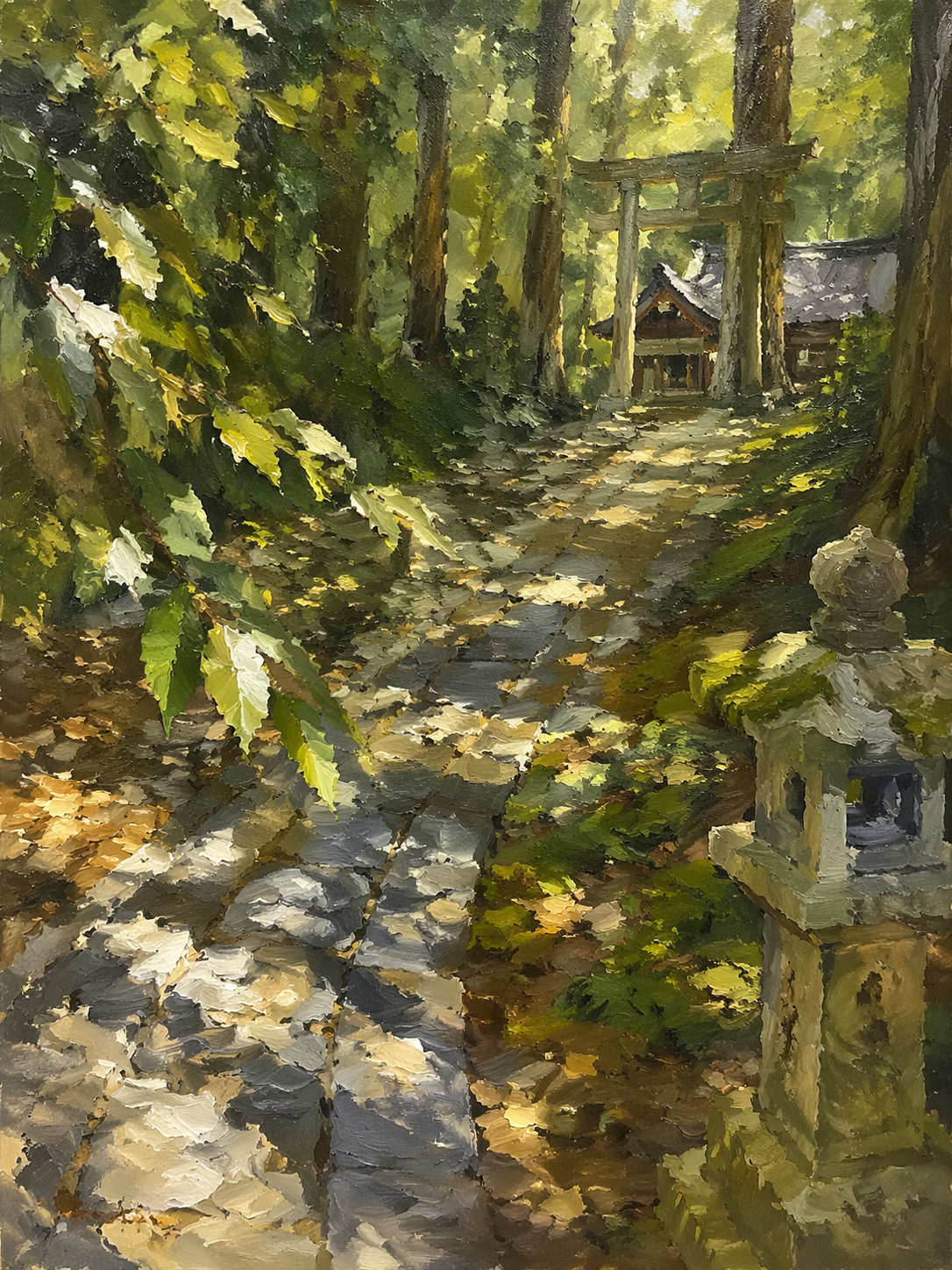
Sacred Light Through the Canopy
Critique
1. Introduction This impasto oil painting depicts a serene forest path leading toward a traditional Japanese shrine. The artwork utilizes a bold, textural approach to capture the ethereal quality of sunlight filtering through a dense canopy. It serves as a vivid exploration of the interplay between man-made spiritual structures and the overwhelming power of nature. 2. Description A weathered stone path leads the viewer's eye from the bottom left toward a distant torii gate and a small wooden shrine building. In the immediate foreground on the right, a moss-covered stone lantern stands as a silent sentinel among the trees. The entire scene is bathed in dappled light, with bright yellow patches of "komorebi" contrasting against the deep greens and browns of the forest floor. 3. Analysis The artist employs a heavy impasto technique, using thick, expressive brushstrokes to create a tangible sense of volume and texture. This method is particularly effective in rendering the rough surfaces of the stone and the organic complexity of the foliage. The use of vibrant lime greens and earthy ochres creates a dynamic color palette that emphasizes the vitality of the sunlit woods. 4. Interpretation and Evaluation The work successfully creates an atmosphere of sacred stillness and quiet reverence, inviting the viewer into a space of spiritual retreat. The technical execution of the light and shadow shows a sophisticated understanding of value contrast, which breathes life into the static composition. The strength lies in the balance between the architectural rigidity of the shrine elements and the fluid, chaotic energy of the natural environment. 5. Conclusion What initially appears as a simple forest study evolves into a profound meditation on the sanctity of place and time. The rich textures and vibrant lighting ensure that the painting remains engaging upon multiple viewings. It is an accomplished piece that masterfully combines traditional motifs with a modern, expressive painterly style. It leaves a lasting impression of peace and natural wonder.
Same Subcategory
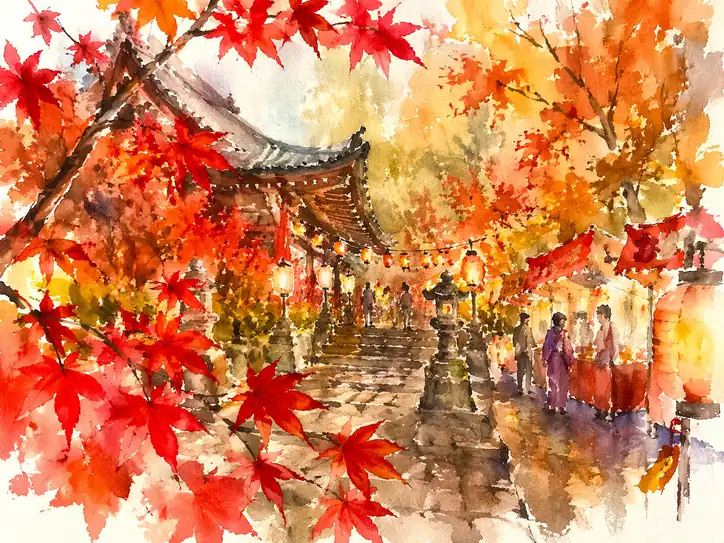 Autumn's Serenity
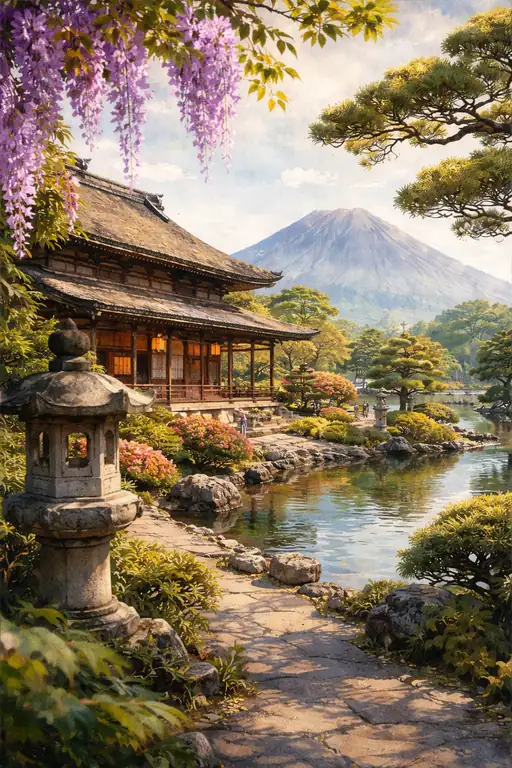 Fuji from the Wisteria Garden
Similar Artworks
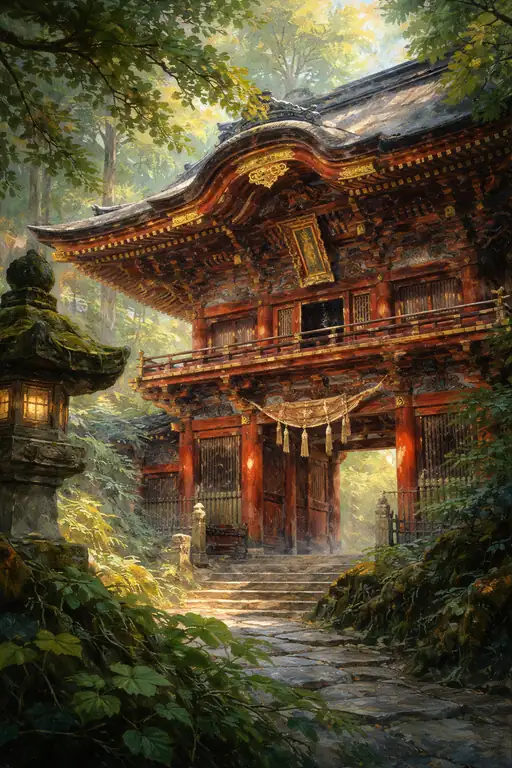 Sunlight on the Sacred Gateway
 Path of Maple Embers
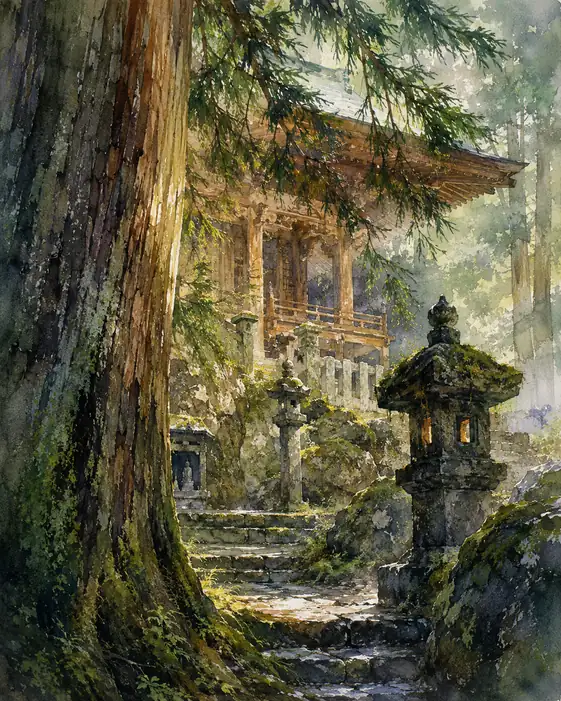 Sanctuary of the Ancient Cedars
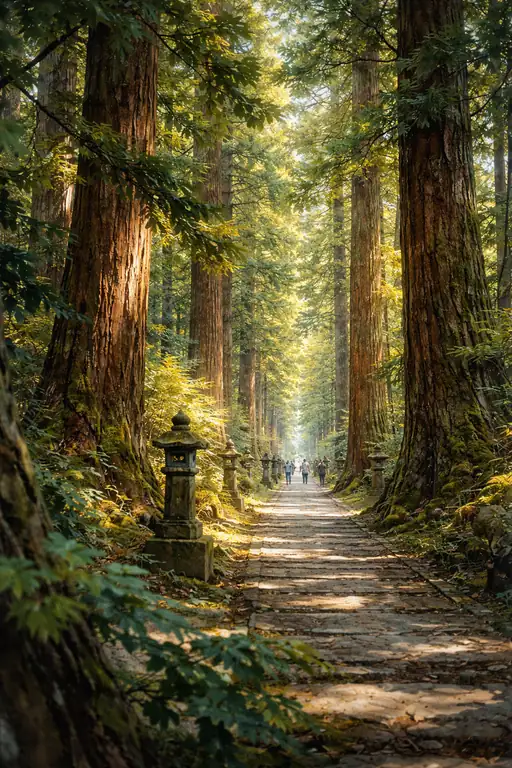 Serene Path: Ancient Stone Lanterns Illuminating a Mossy Japanese Forest
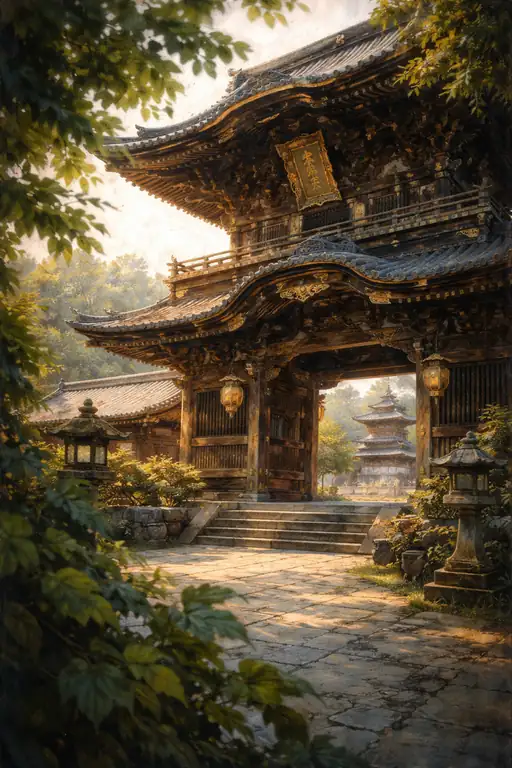 Golden Threshold: The Sacred Gate in Sunlight
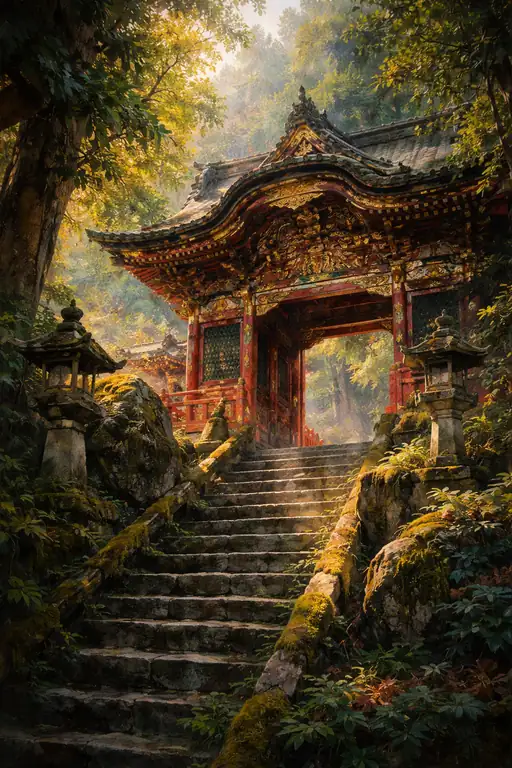 Passage to the Forgotten Sanctuary
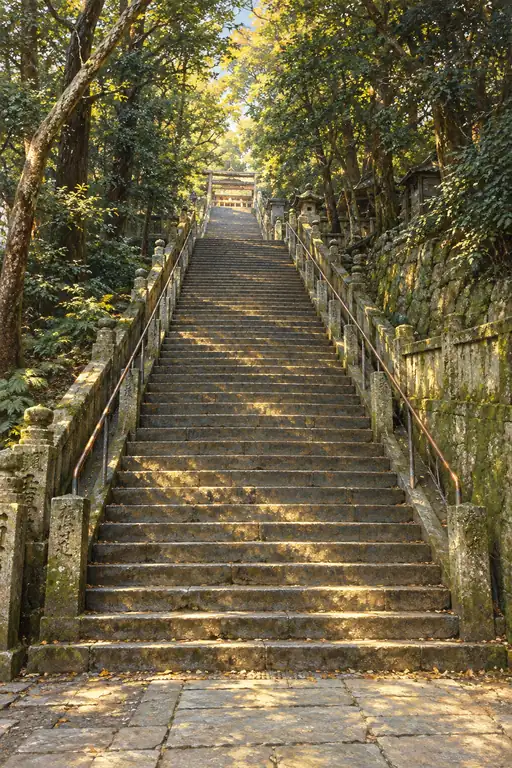 Ascent Through Ancient Sunbeams
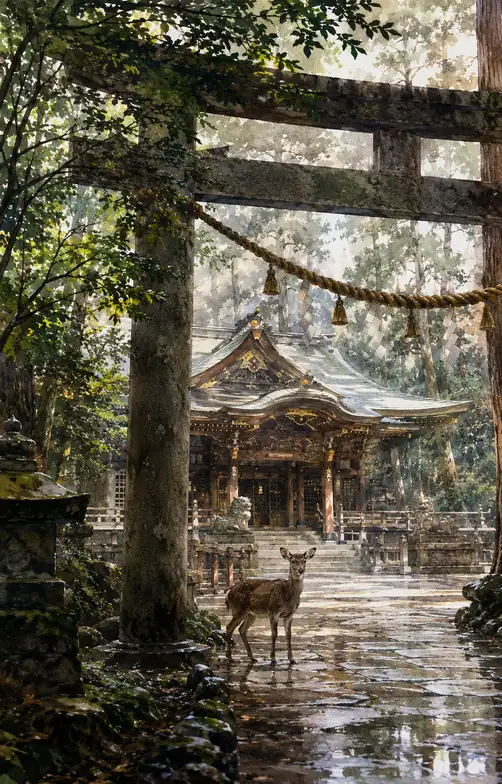 Where the Forest Meets My Gaze
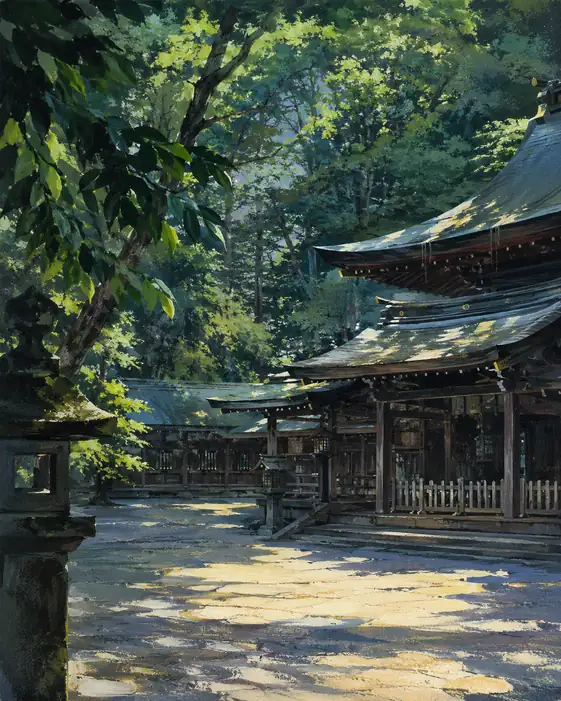 Whispers of the Sunlit Sanctuary
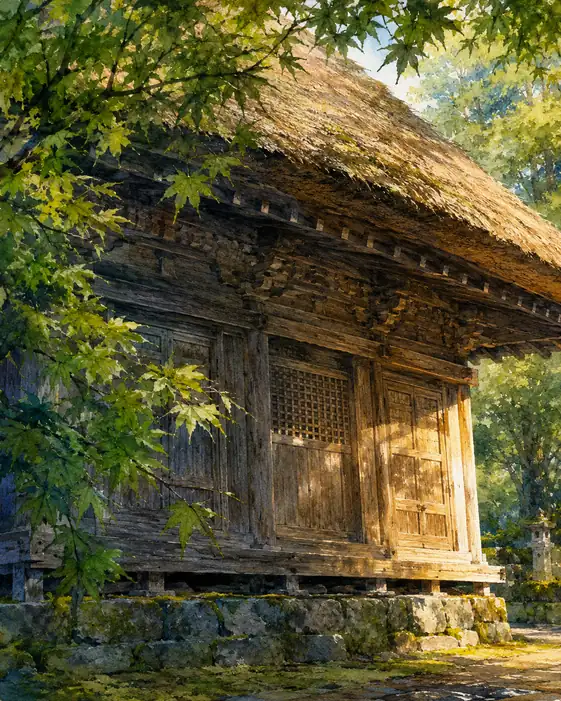 Memory of the Sun-Drenched Leaves