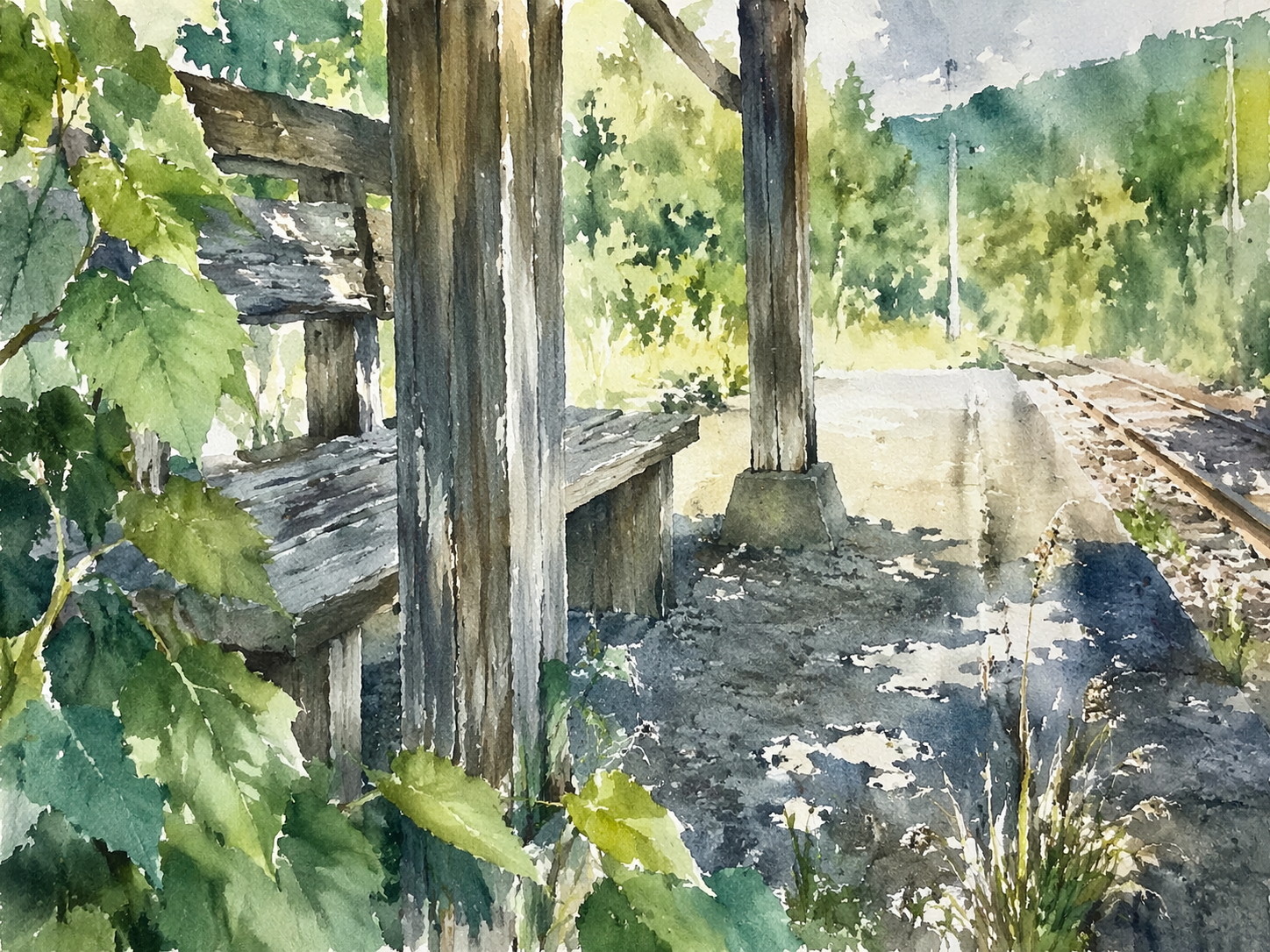
Summer's Slow Passage
Critique
1. Introduction This watercolor painting depicts a serene and sun-drenched rural train station platform during the height of summer. The composition is framed by lush, vibrant green foliage in the immediate foreground, leading the viewer’s eye toward weathered wooden structures that sit beneath a clear, bright sky. The artist utilizes the inherent transparency and fluid nature of the watercolor medium to capture the ephemeral quality of intense afternoon light and the accompanying stillness of a remote location. 2. Description The foreground is dominated by large, detailed leaves of a climbing vine, rendered in various shades of emerald and lime green with delicate veins. Behind this greenery stands a sturdy yet aged wooden bench and supporting pillars made of thick, vertical timbers. The wood shows signs of weathering with textures of gray and brown. To the right, a gravel-strewn platform transitions into railway tracks that disappear into a hazy, light-filled background of distant trees. The wash of colors on the ground suggests long shadows cast by the overhead structure. 3. Analysis Technical mastery is evident in the way the artist handles light, leaving areas of the paper untouched to represent the most brilliant highlights. This "negative space" technique creates a convincing sense of overexposure common in high-summer photography. The verticality of the wooden pillars provides a strong structural framework, contrasting with the soft, organic shapes of the surrounding nature. The use of wet-on-wet techniques in the background creates a soft bokeh effect, focusing all attention on the tactile details of the foreground bench and leaves. 4. Interpretation and Evaluation The work evokes a powerful sense of nostalgia and the slow passage of time often associated with rural landscapes. There is a palpable feeling of heat and quiet, as if the station is waiting for a train that may not arrive for hours. The artist’s ability to balance detailed botanical rendering with a broad, atmospheric background shows a high level of compositional skill. The overall aesthetic is one of peaceful coexistence between man-made structures and the relentless growth of the natural world. 5. Conclusion A first glance at the vibrant greenery leads into a deeper appreciation for the subtle textures of the old wood and the shimmering distance. The painting successfully captures not just a physical place, but a specific atmosphere of mid-summer tranquility. Ultimately, the piece stands as a masterful exploration of light and shadow through the watercolor medium. It leaves the viewer with a lingering sense of the quiet beauty found in forgotten corners of the countryside.
Same Subcategory
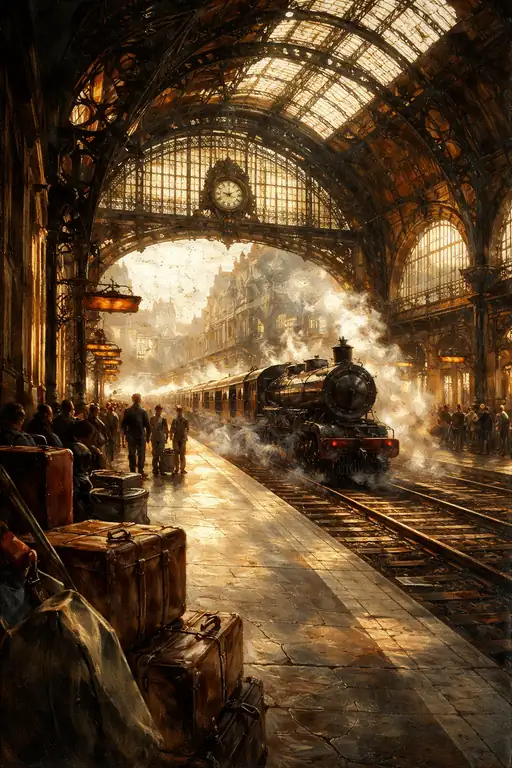 The Golden Age of Steam and Light
Similar Artworks
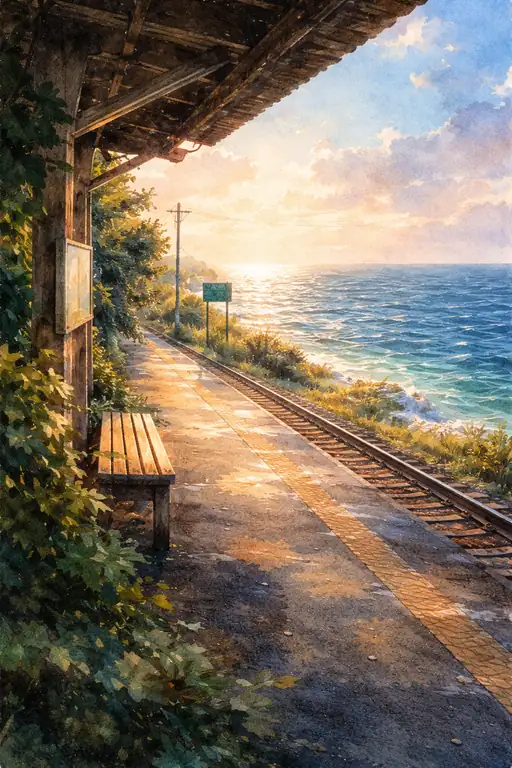 Golden Horizon at the Journey's End
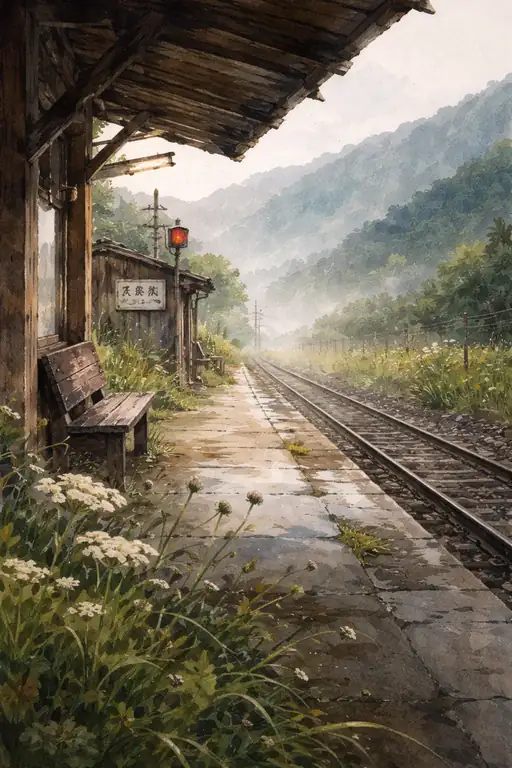 Echoes of Nostalgia Through the Mist
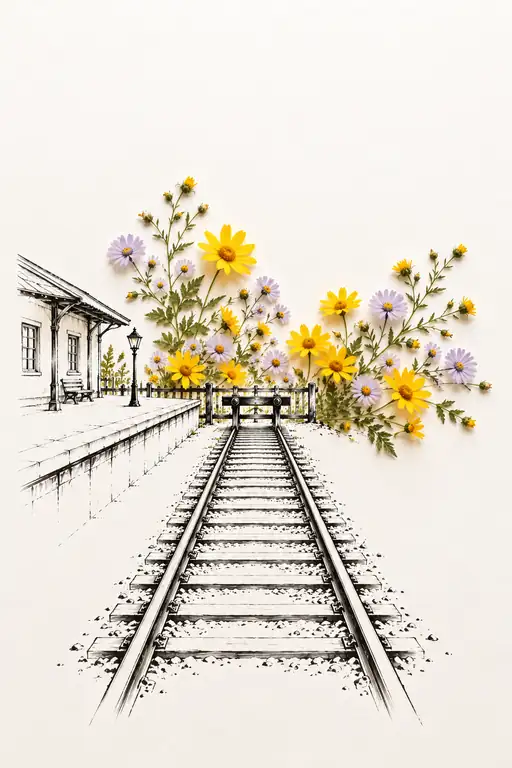 Where the Journey Learns to Stay
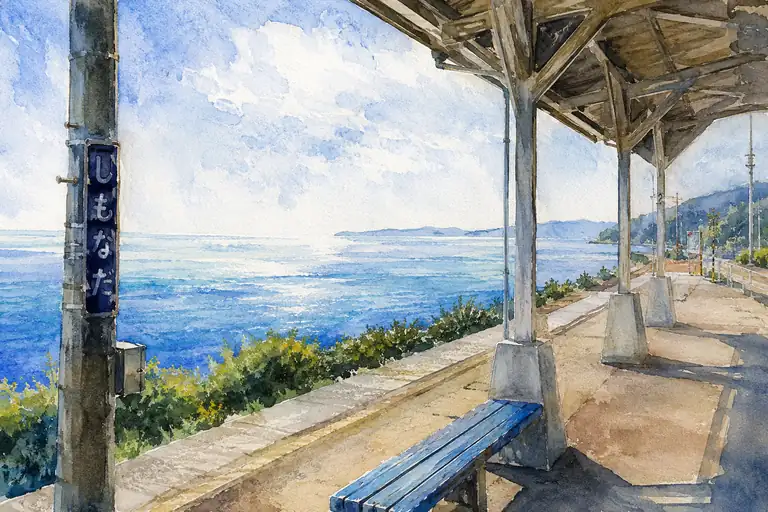 Station of Silence where the Sea Begins
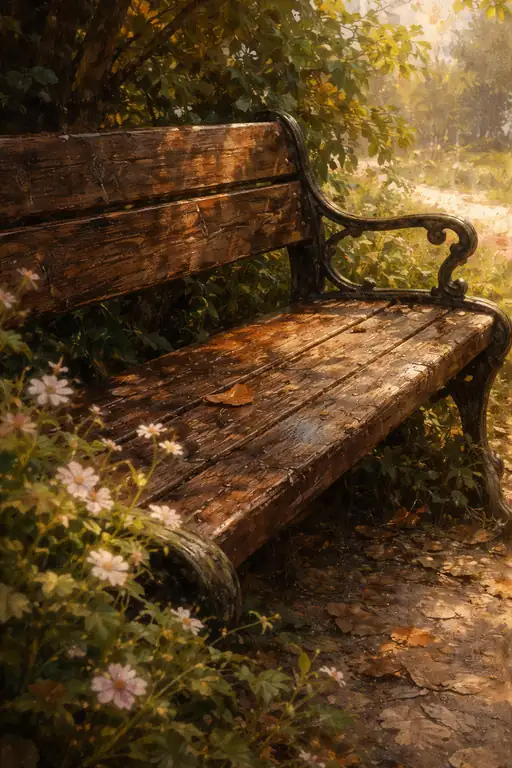 A Quiet Moment After the Rain
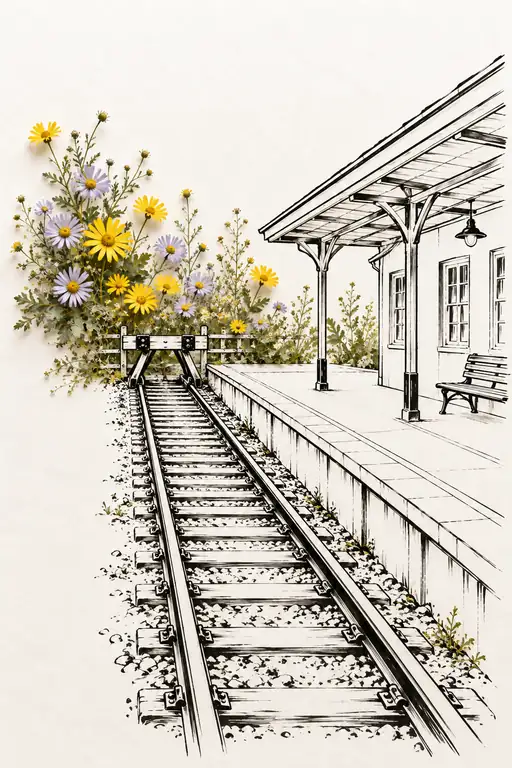 Where the Journey Learns to Bloom
 Waiting for the Train of Nostalgia
 Where the Light Lingers
 Where the Summer Breeze Rests
 Sunlit Stream Through Leaves