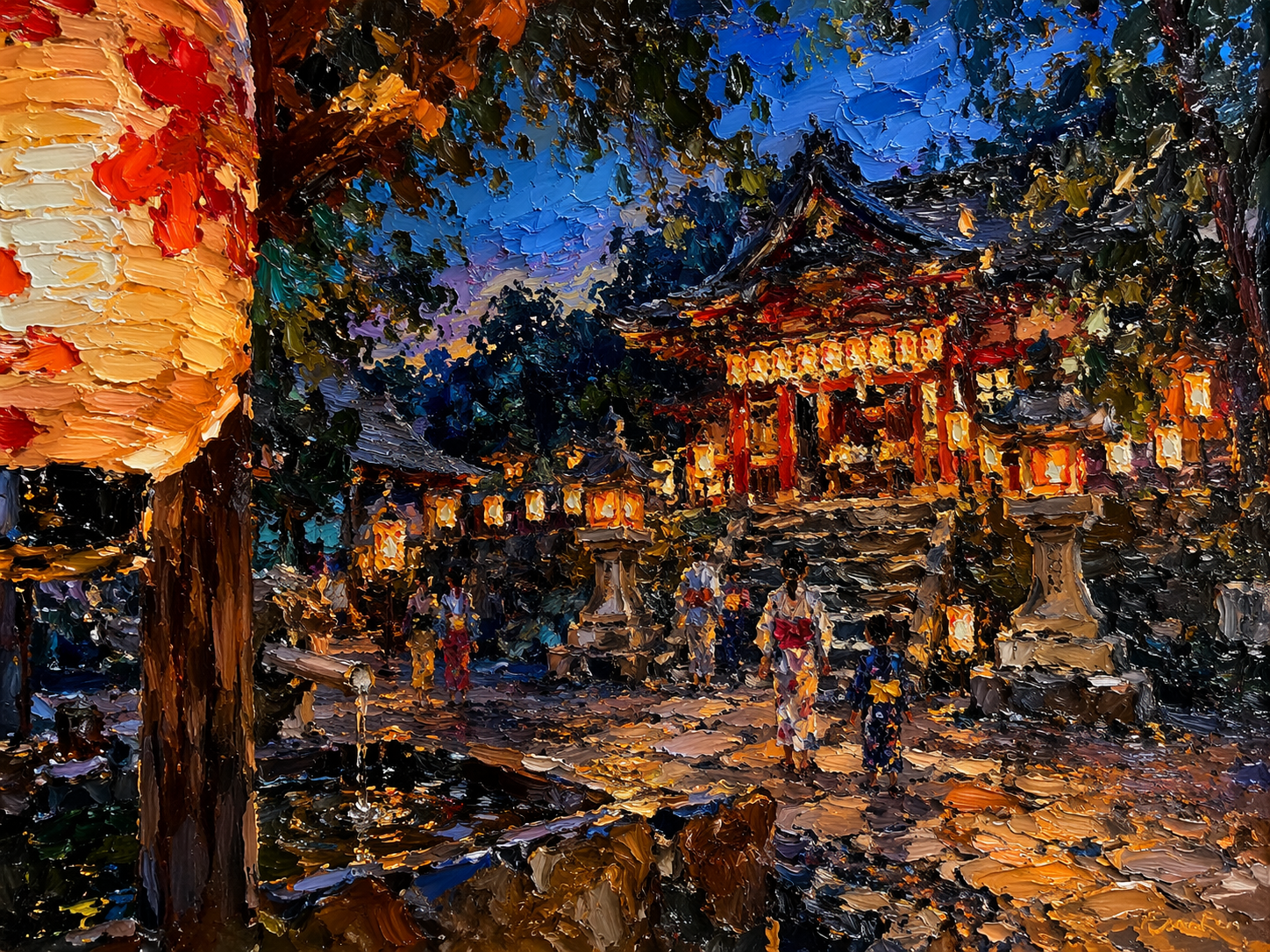
Summer Night Glow
Critique
1. Introduction This vibrant oil painting depicts a traditional Japanese festival occurring at a shrine during the evening hours. Utilizing a heavy impasto technique, the artist captures the dynamic energy and communal warmth of the event. The rich textures and saturated colors work together to evoke the sensory richness of a summer night filled with celebration. 2. Description The composition is anchored by a large, glowing paper lantern in the immediate left foreground, adorned with red leaf motifs. Beyond this, a stone path leads toward a brightly illuminated shrine building, where figures dressed in traditional yukata move amidst several stone lanterns. Numerous smaller chochin lanterns hang in rows, casting a golden light across the scene. In the lower left, a water purification font is visible, reflecting the surrounding brilliance against the deep blue of the night sky. 3. Analysis The artist employs a bold palette knife technique, creating a thick, sculptural surface that adds physical depth to the work. This expressive application of paint breaks down forms into fragmented patches of light and shadow, reminiscent of Post-Impressionist styles. The color palette is dominated by intense warm tones of orange, crimson, and gold, which provide a powerful contrast to the cool ultramarine and violet shades of the sky and foliage. 4. Interpretation and Evaluation The vigorous brushwork and saturated colors successfully translate the festive sounds and heat of the night into a visual medium. The choice of the impasto method enhances the tactile quality of the light, making the glow of the lanterns feel almost tangible. While the figures lack specific facial features, their postures and traditional attire communicate a shared cultural identity and a sense of timeless ritual. The balance between architectural detail and raw texture is masterfully handled. 5. Conclusion This painting offers a celebratory vision of Japanese heritage, transforming a familiar scene into an extraordinary explosion of light and color. Through its textured surface, the work emphasizes the vitality of tradition in a modern context. The initial impression of chaotic color quickly resolves into a coherent and deeply emotive portrayal of a communal experience, leaving the viewer with a lasting sense of warmth.
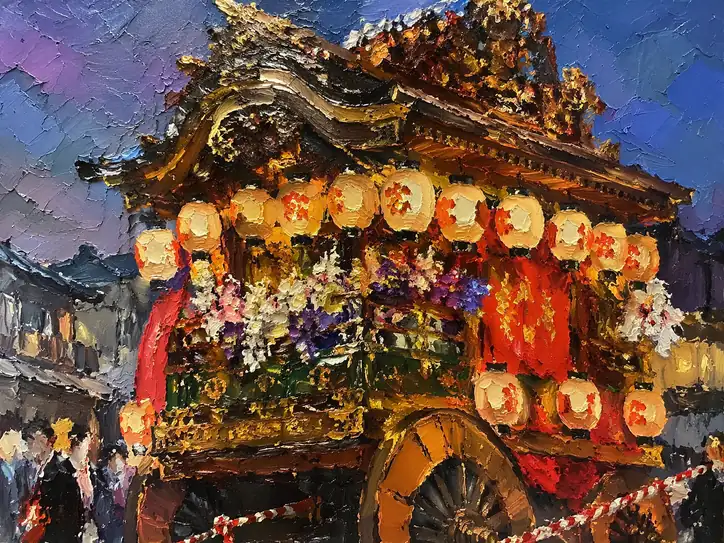 Festival in the Dark
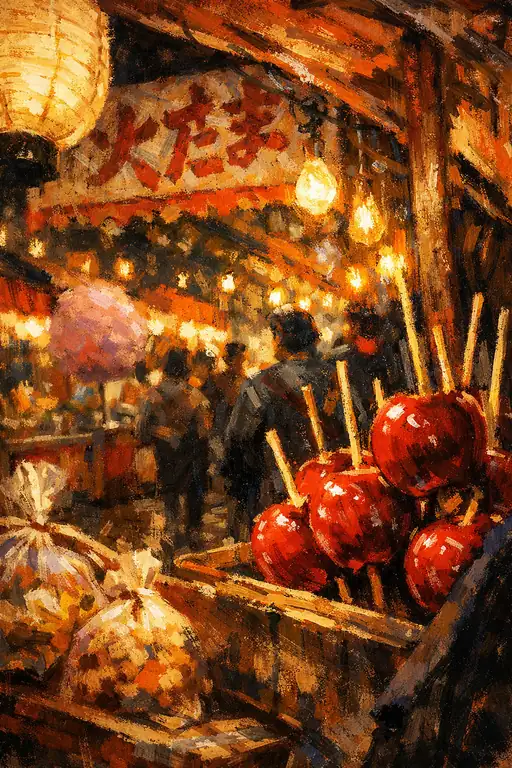 The Sweet Glow of the Night
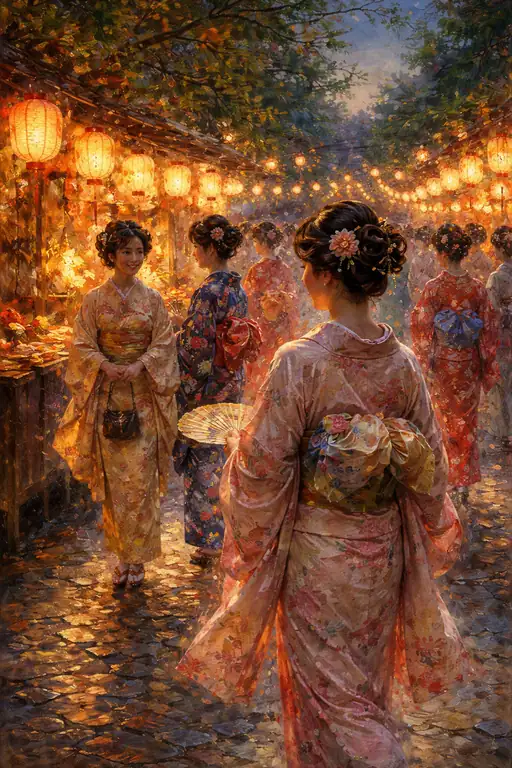 Evening Festivities, Pounding Hearts
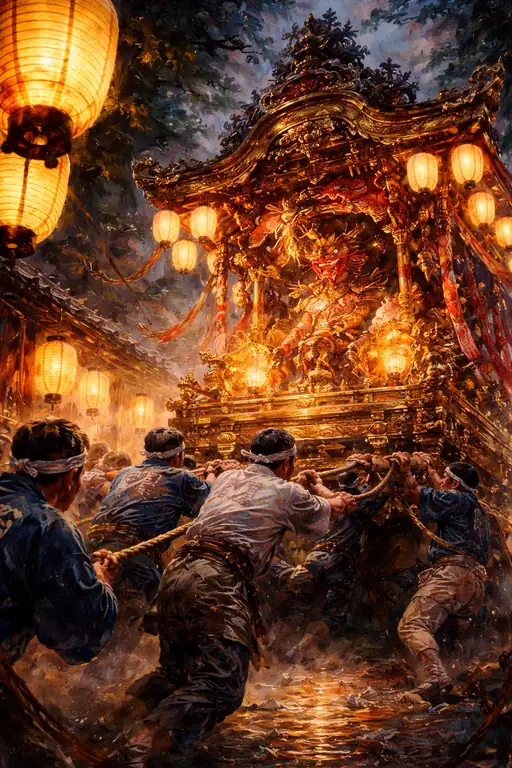 Golden Pulse of the Night Festival
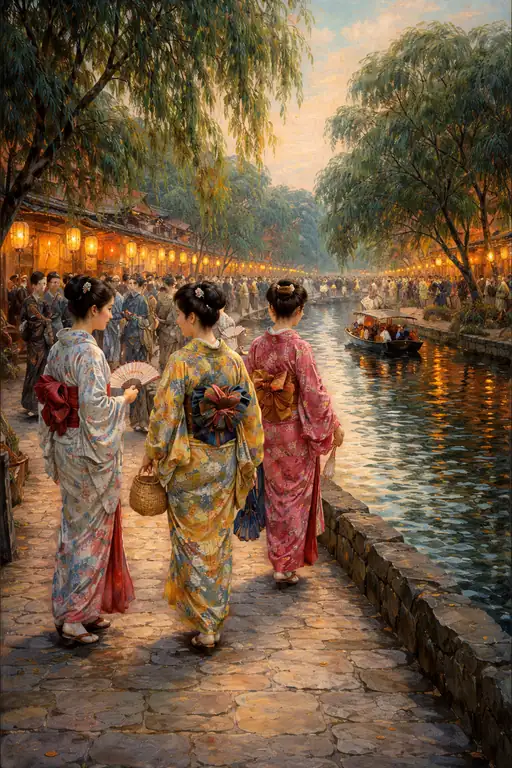 Dusk Upon the Mirror Waters
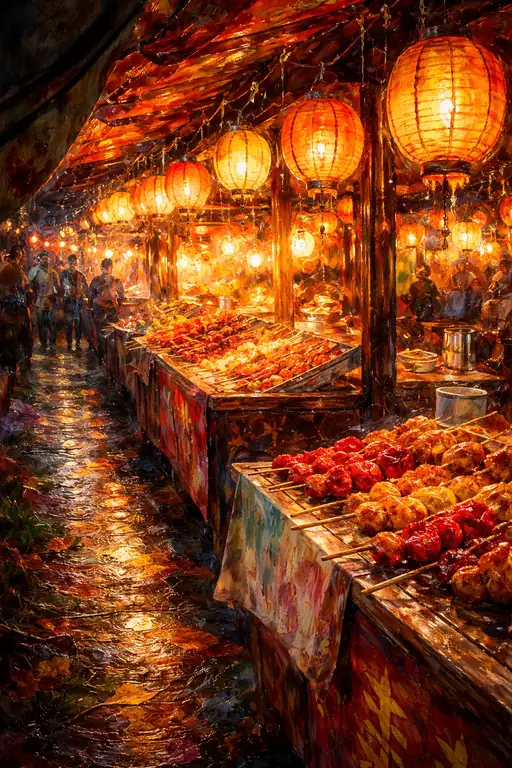 Lantern-Lit Feast
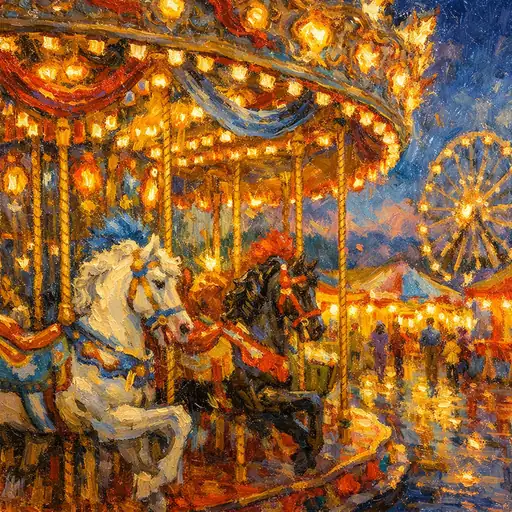 Whirling Dreams of the Starlit Carnival
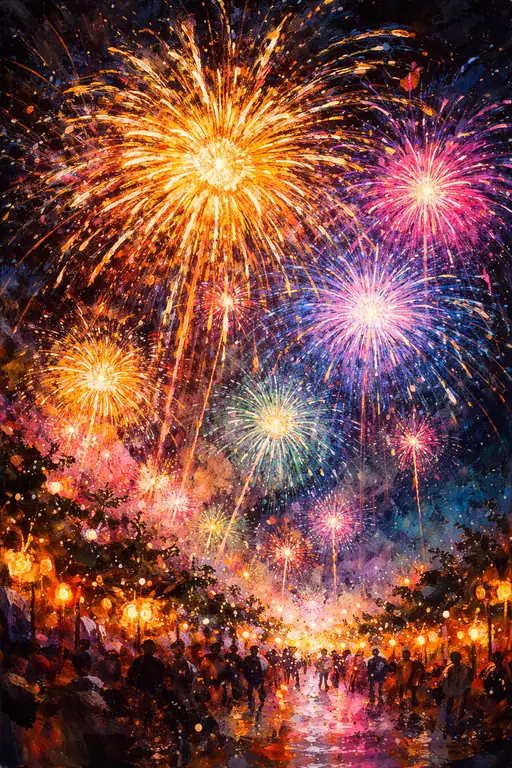 Night Sky Grand Display
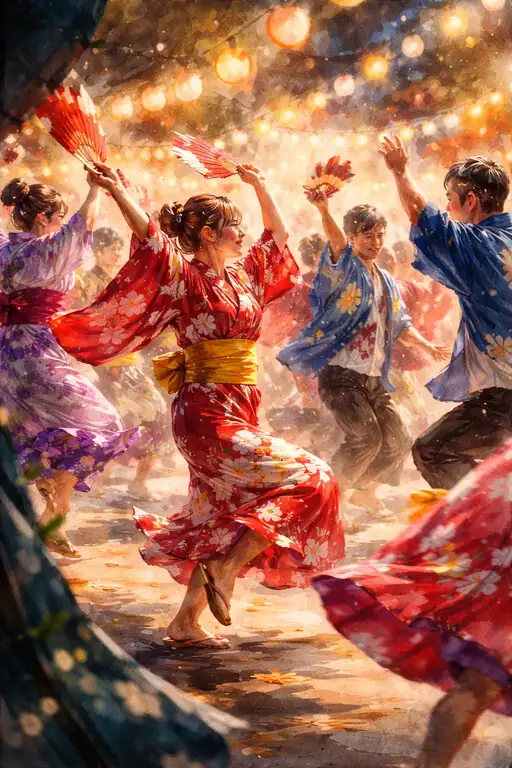 Rhythmic Blossoms at Night
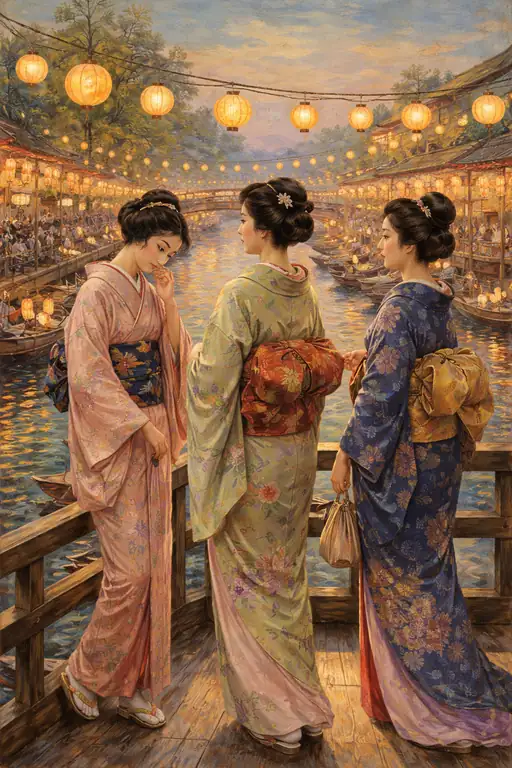 Lured by the Lantern's Glow