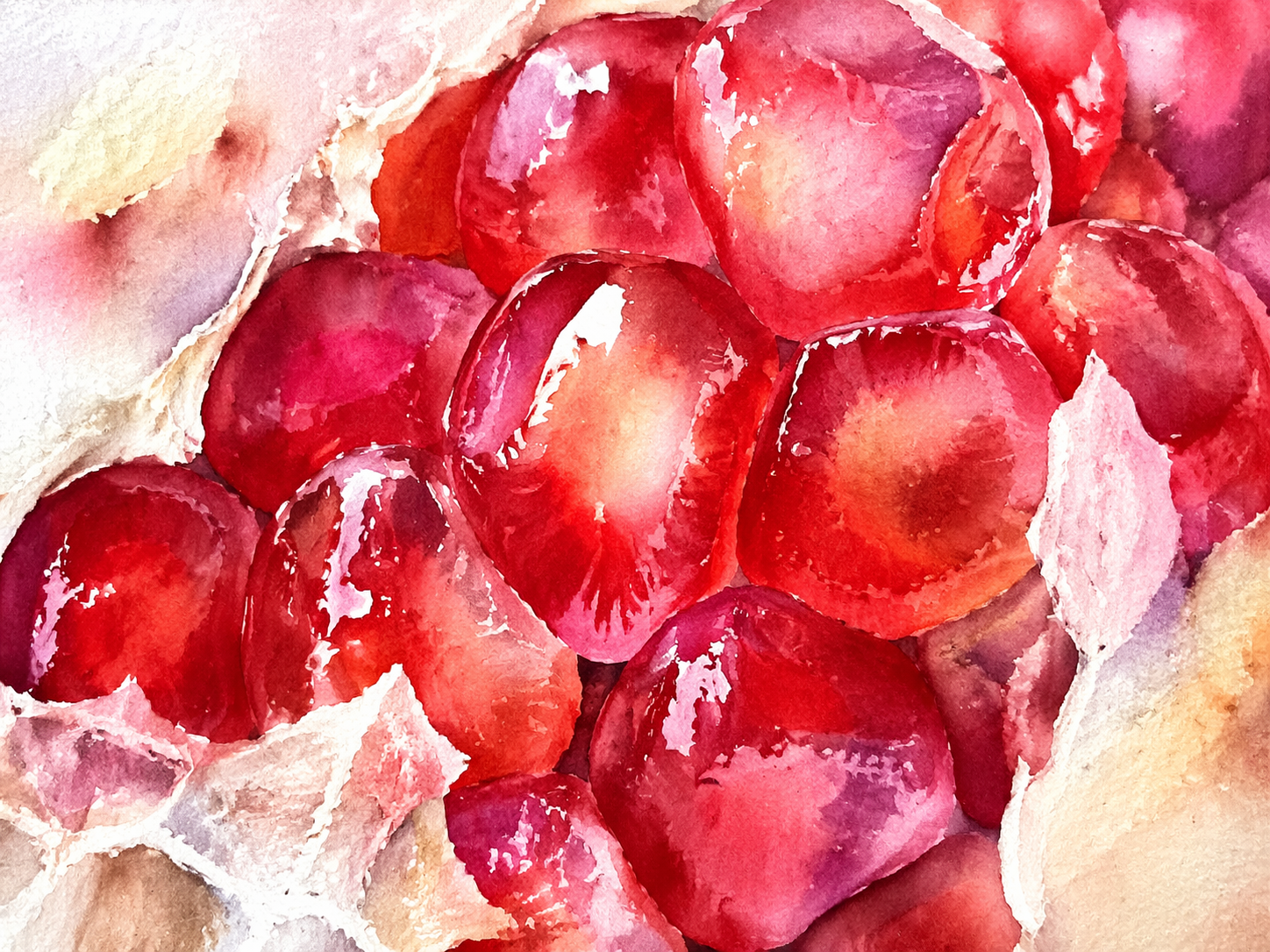
Ruby Jewels of the Orchard
Critique
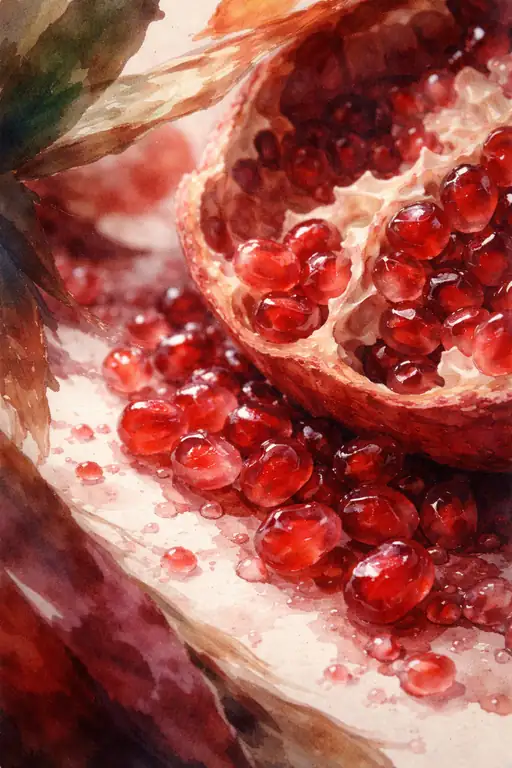
1. Introduction This watercolor painting offers an exquisite and intimate view of a cluster of pomegranate seeds, emphasizing their unique, jewel-like translucency. By utilizing the fluid and transparent properties of watercolor, the artist effectively captures the juicy, crystalline nature of the fruit's interior. The composition is tightly focused, removing any extraneous context to concentrate solely on the interplay of color and light within the seeds. This work stands as a testament to the artist's ability to represent complex botanical surfaces with both technical precision and a deep sensitivity to natural form. 2. Description The primary subjects are the individual pomegranate arils, rendered in a rich palette of ruby, garnet, and pale rose. Each seed features sharp, crystalline highlights in white, suggesting a glossy and moist surface that reflects light from multiple angles. Surrounding the seeds are thin, tattered sections of the fruit's internal membrane, depicted in soft washes of ivory, pale yellow, and muted lavender. The arrangement of the seeds is organic and irregular, creating a sense of natural density and depth. The edges of the paper appear to be left largely unpainted, framing the central cluster with a delicate, atmospheric border. 3. Analysis The artist masterfully employs watercolor techniques to achieve a sense of depth and internal light. The use of soft blending within each seed allows for a smooth transition between darker tones and luminous centers, mimicking the way light passes through the fruit's juice. In contrast, the sharp edges of the highlights and the delicate textures of the surrounding membrane are likely achieved with more controlled, dryer brushstrokes. The overall color harmony is grounded in warm reds and purples, which are balanced by the cool, neutral tones of the pith. This tonal balance creates a vibrant yet cohesive visual experience that maintains a high level of descriptive clarity. 4. Interpretation and Evaluation The depiction of pomegranate seeds can be interpreted as an exploration of hidden beauty and the preciousness of biological life. By enlarging these small, often overlooked components of the fruit, the painting invites the viewer to appreciate their structural complexity and vibrant energy. The technical execution is highly successful, particularly in the way the artist manages the difficult task of representing transparency and wetness using only pigment and water. The work possesses a quiet, contemplative quality that elevates a simple biological subject into a sophisticated piece of art. It is a modern interpretation of botanical illustration that prioritizes sensory impact and artistic expression. 5. Conclusion In conclusion, the work is a beautifully executed study that successfully marries technical skill with a refined aesthetic sensibility. The artist’s control over the watercolor medium is evident in the nuanced shifts of color and the precise placement of light. While the initial attraction is the stunning, ruby-red color, further observation reveals a complex arrangement of textures and forms. Initial impressions of simplicity are eventually replaced by an appreciation for the depth and luminosity achieved. The final result is a captivating and elegant portrayal of nature's internal treasures, leaving a lasting impression of vitality and grace.
Same Subcategory
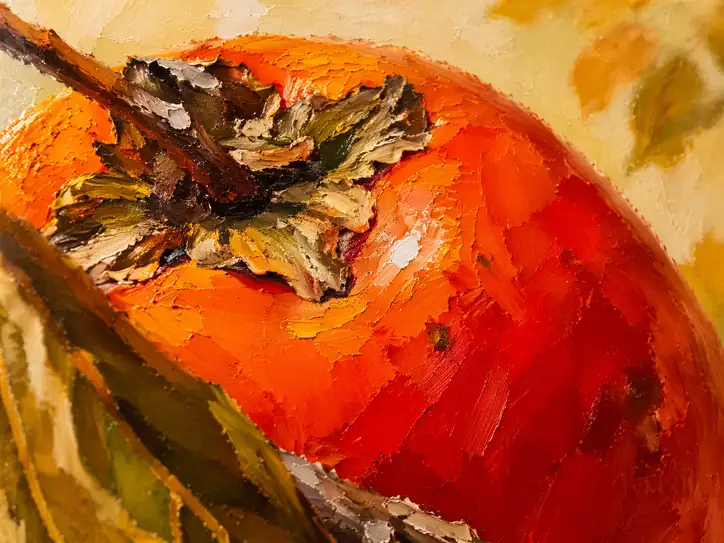 Crimson Globe of Autumn
Similar Artworks
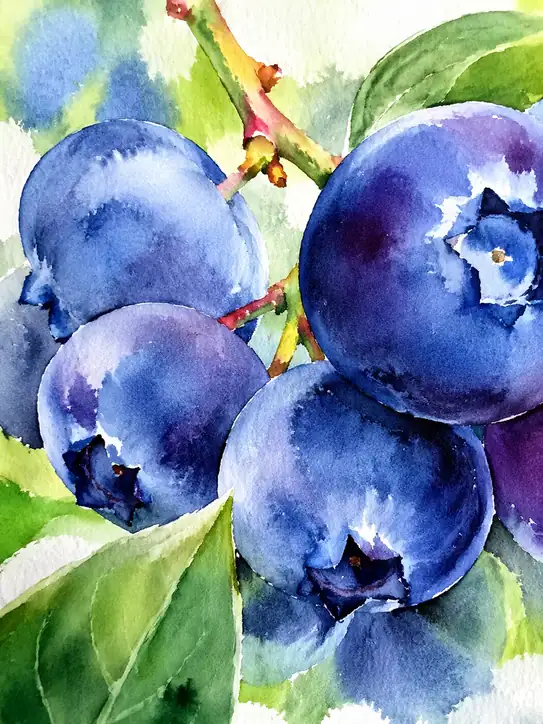 Indigo Globes of the Morning Dew
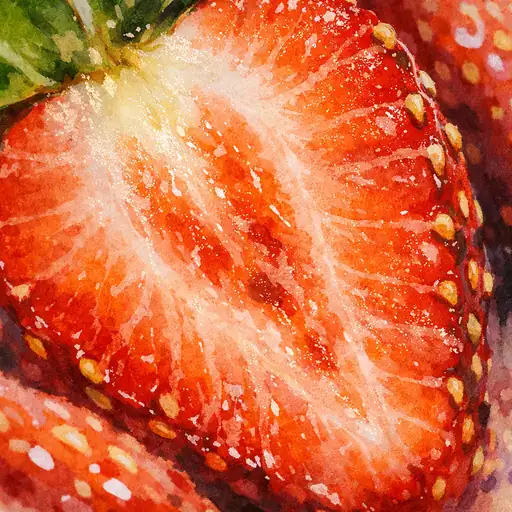 Crimson Core Revealed
 The Bursting Secret of Life
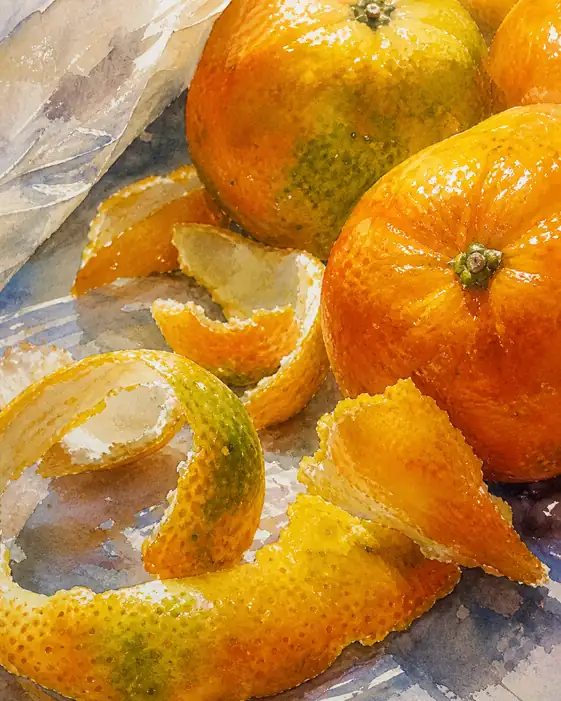 Life’s Spiraling Radiance
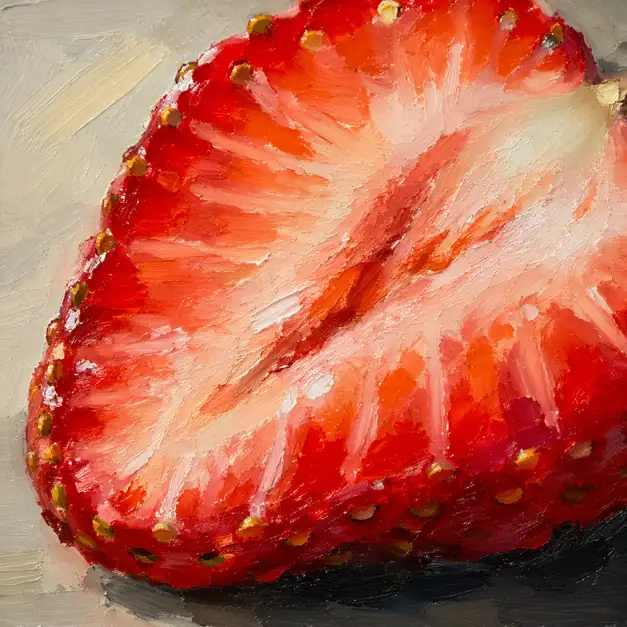 Radial Energy of the Strawberry Core
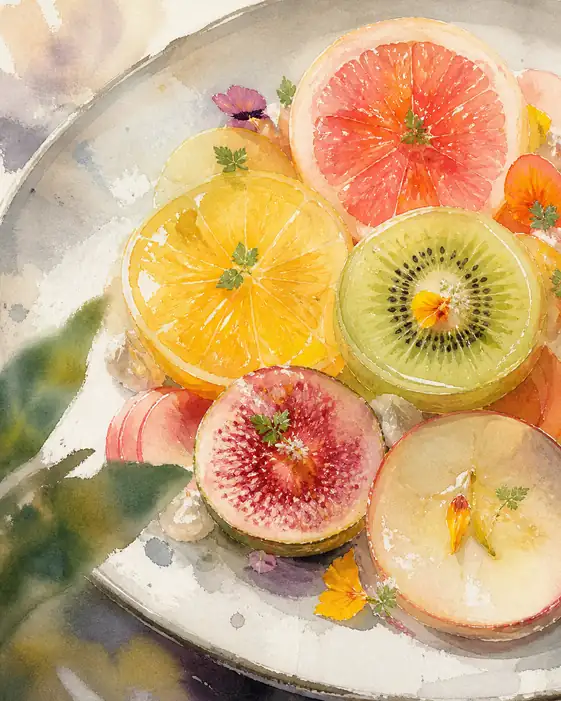 The Soul of Summer’s Fruit
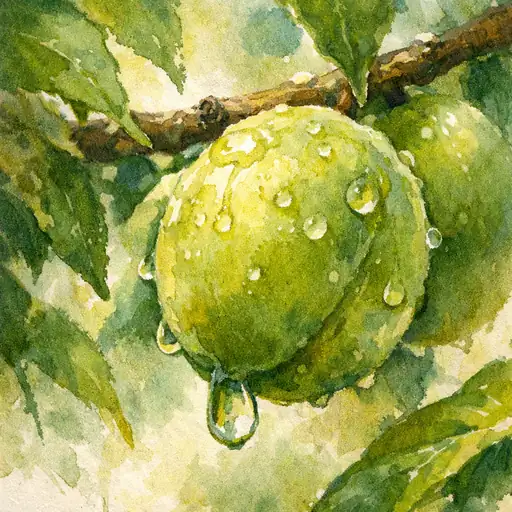 Dew-Kissed Plums in Morning Light
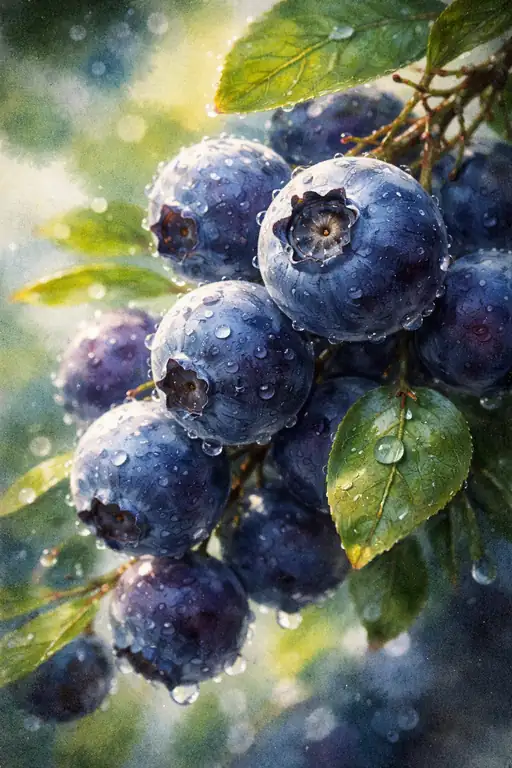 Sapphire Drops of the Orchard
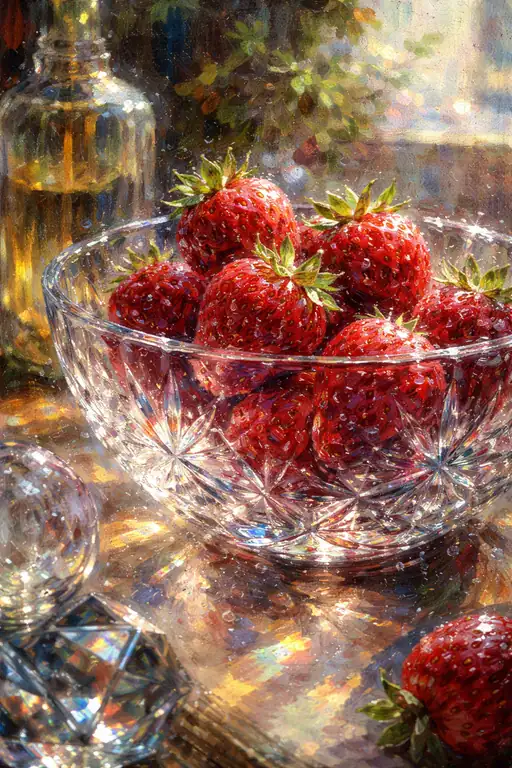 Crimson Gems of Summer's Zenith
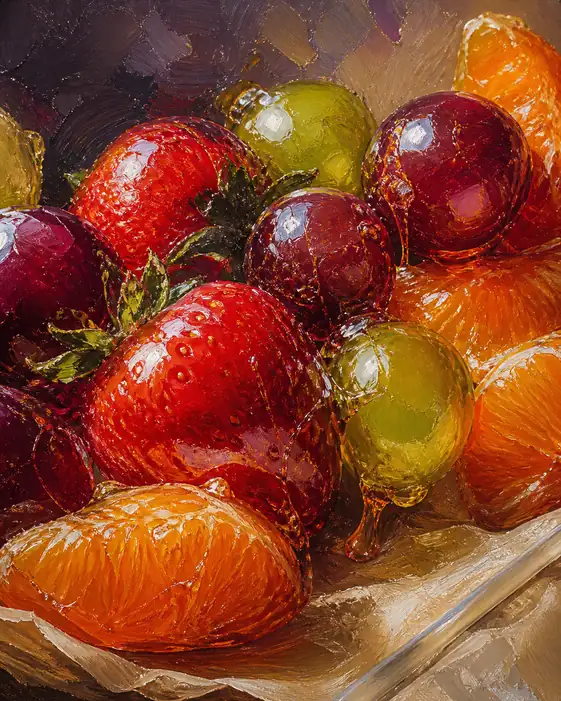 Crystal Harvest: The Soul’s Sweetness