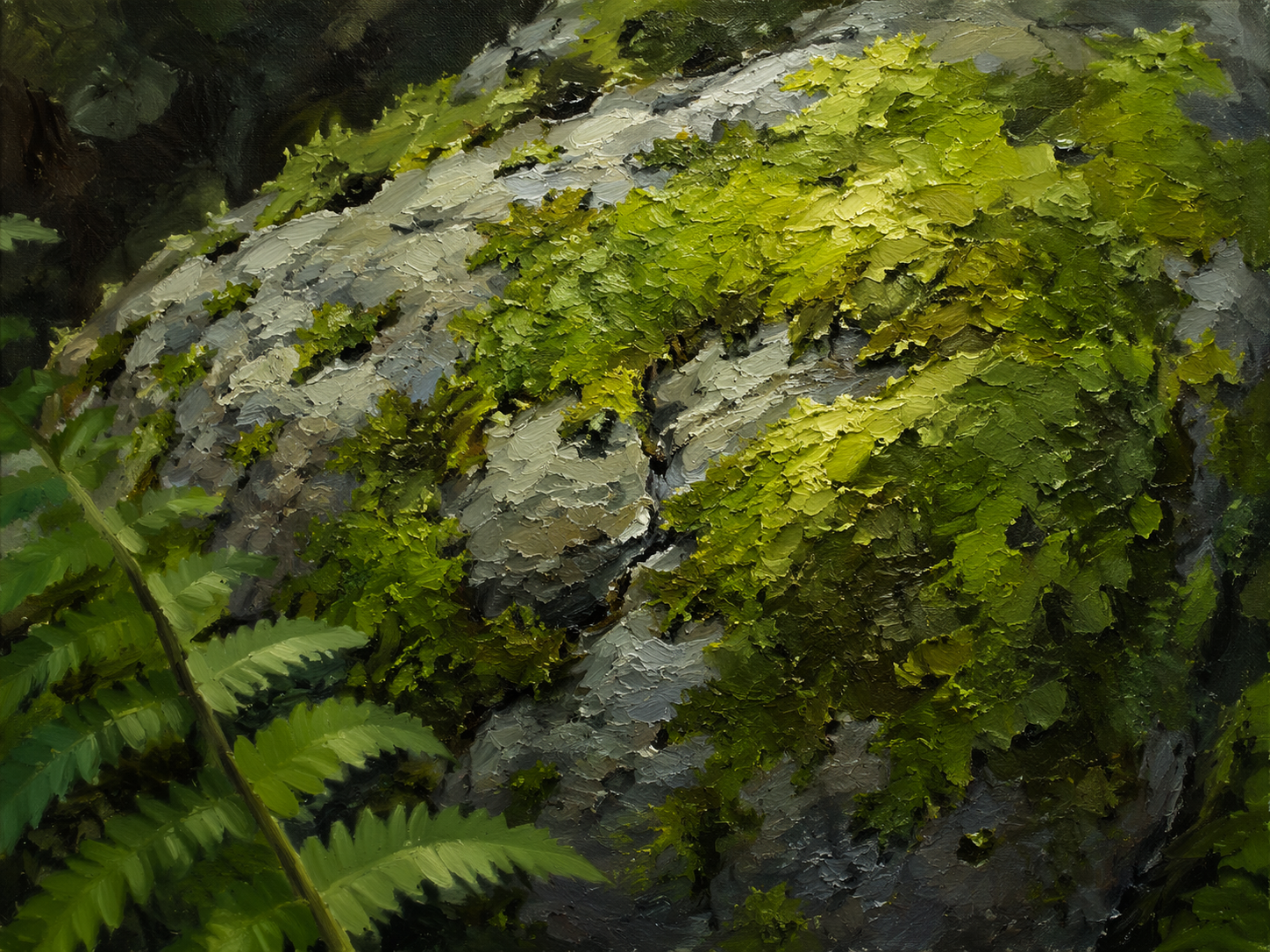
Mossy Silence
Critique
1. Introduction This oil painting presents a meticulous study of a moss-covered rock situated within a dense forest environment. The composition focuses on the tactile qualities of natural surfaces, capturing the interplay between stony textures and organic growth. It demonstrates a commitment to observational realism while employing expressive brushwork to convey physical presence and atmosphere. 2. Description The central subject is a large, weathered boulder that traverses the frame diagonally from the upper left to the lower right. Its surface is a complex map of grey and tan tones, layered with thick clusters of vibrant green moss in varying shades of yellowish-olive and deep emerald. In the lower-left foreground, a detailed fern frond extends upward, while the background recedes into deep, shadowed forest greenery. 3. Analysis The artist utilizes a heavy impasto technique, where thick paint application creates a literal three-dimensional texture that mimics the ruggedness of the rock and the softness of the moss. Lighting originates from the upper right, casting bright highlights on the raised mossy patches and creating deep shadows within the crevices of the stone. This strong contrast emphasizes the volume and weight of the central boulder against the darker foliage. 4. Interpretation and Evaluation The work succeeds in elevating a humble segment of the forest floor into a powerful visual statement through exceptional technical skill. The juxtaposition of the sharp, delicate edges of the fern against the blunt mass of the stone reflects a deep understanding of natural variation. The use of color is particularly effective, with the luminous greens providing a vital pulse of life amidst the cold, ancient permanence of the rock. 5. Conclusion What initially appears as a simple botanical study reveals itself to be a sophisticated exploration of light, shadow, and material substance. The painting captures the quiet, enduring beauty of the natural world with remarkable clarity and emotional weight. It serves as a testament to the evocative power of detailed observation and the expressive possibilities of traditional oil painting techniques.
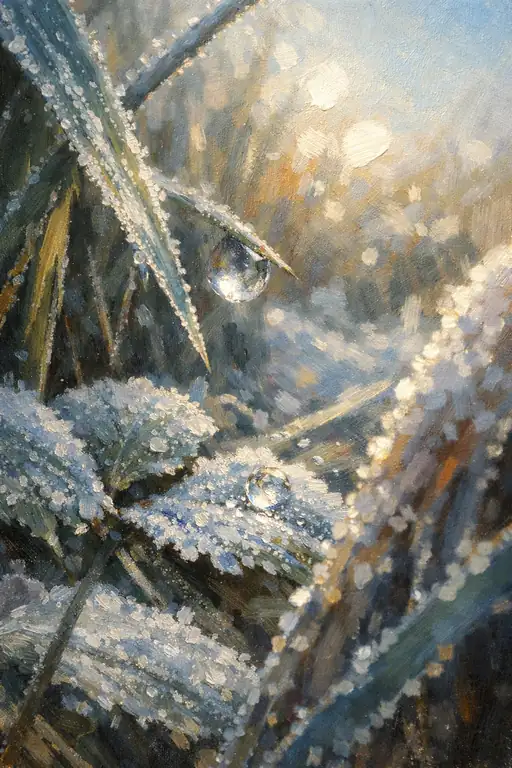 A Frozen Breath of Morning
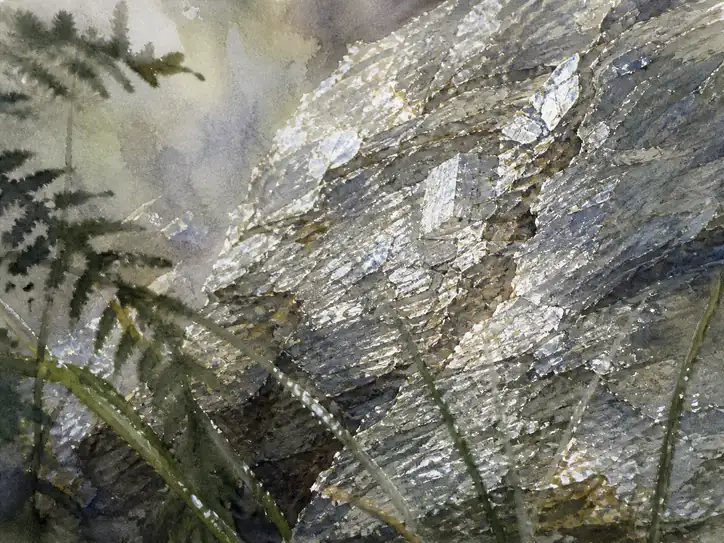 Echoes of the Ancient Stone
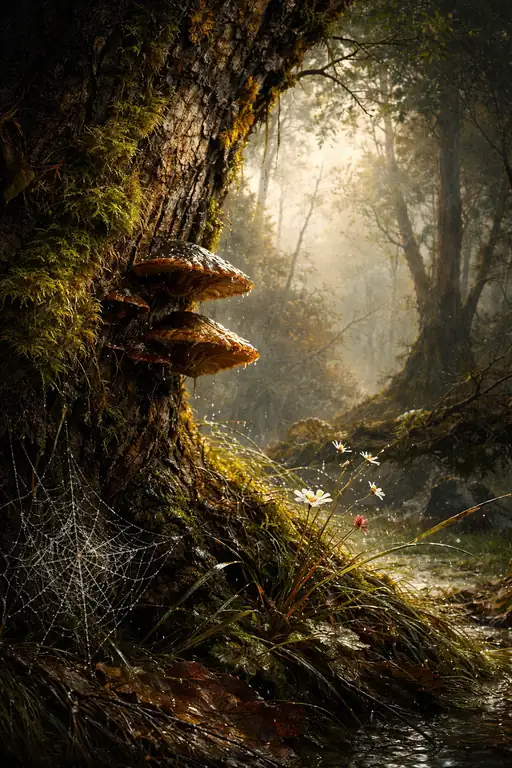 Whispers of the Ancient Mossy Woods
 Emerald Canopy's Embrace
 Heart of the Emerald Mist
 Echoes in the Heartwood
 The Quiet Essence
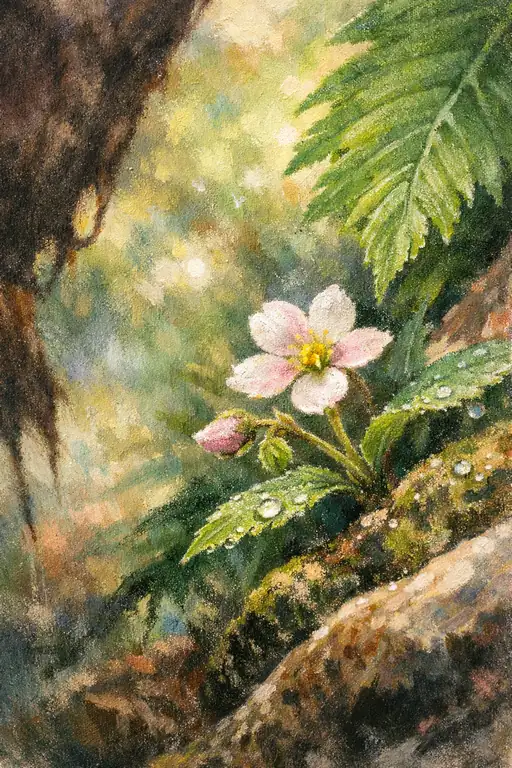 Dew-Kissed Resilience in the Moss
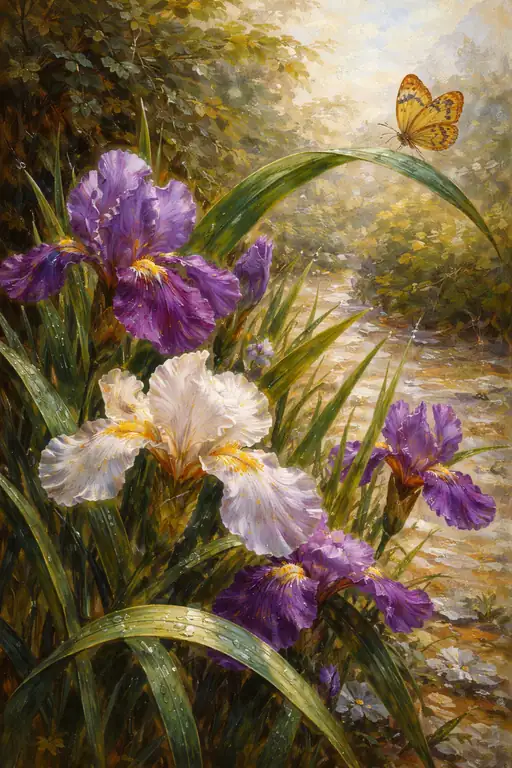 Dancing Butterflies Among the Irises
 The Emerald Blade's Silent Vow