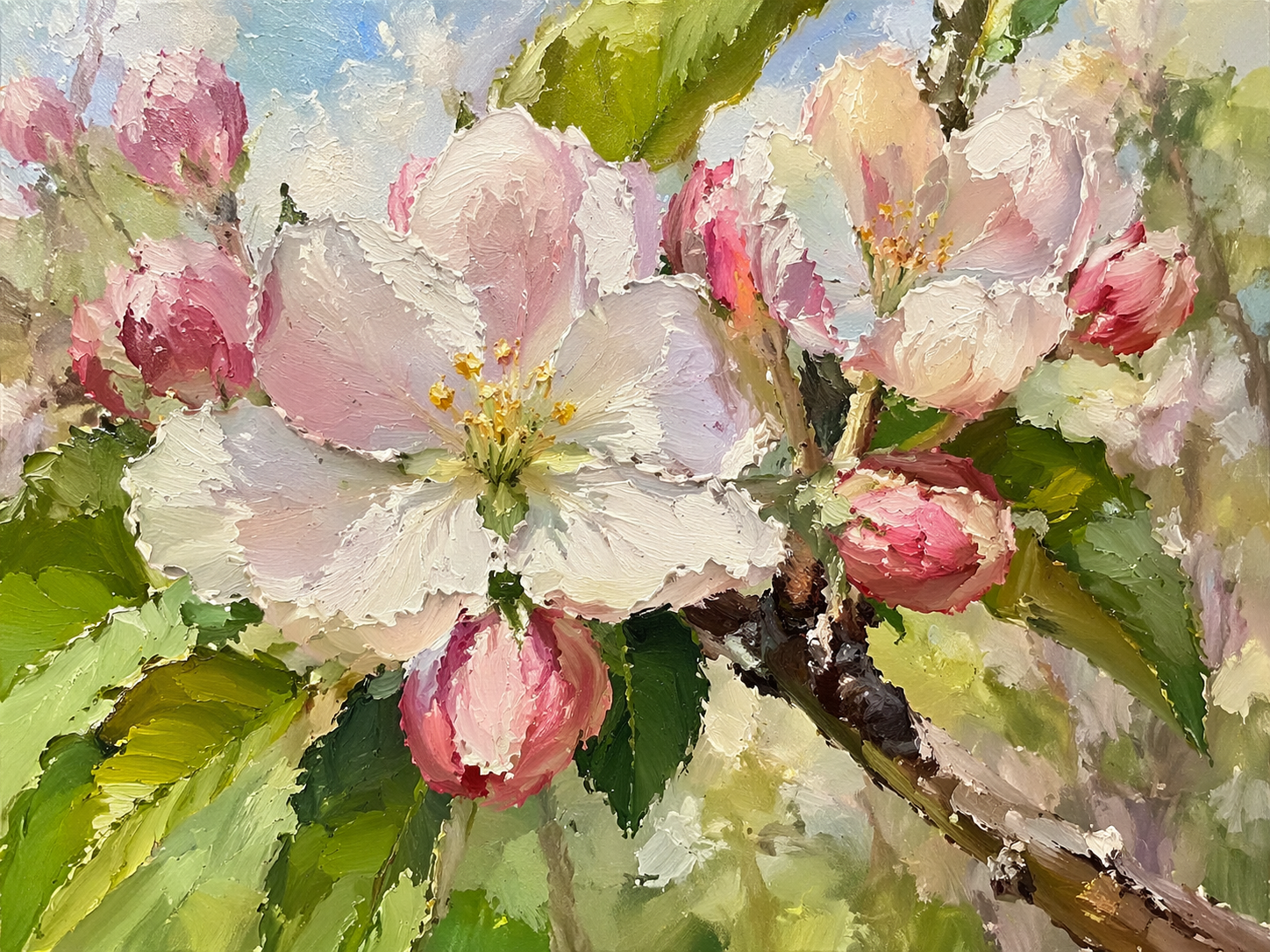
Awakening of Spring
Critique
1. Introduction This oil painting presents a dynamic and tactile portrayal of apple blossoms in full bloom. The work is characterized by its bold use of impasto, where thick layers of paint are applied to create a physically textured surface that mimics the organic complexity of the subject. It celebrates the arrival of spring through a focus on light, volume, and the visceral quality of the painting medium itself. 2. Description The central focus is a large, white blossom with delicate pink undertones and a bright yellow center, surrounded by several smaller flowers and tight, rosy-red buds. Vibrantly green leaves with jagged edges provide a sharp contrast to the soft petals. A dark brown branch extends diagonally from the lower right, while the background consists of fractured, dappled patches of light blue and pale yellow, suggesting a sunlit canopy. 3. Analysis The artist’s technique is predominantly exploratory in its use of texture, with thick strokes creating sharp ridges and deep valleys on the canvas. This heavy application and the use of a palette knife give the blossoms a sculptural presence, catching the light in a way that flat paint cannot. The lighting appears to come from the upper left, casting subtle shadows that define the overlapping petals and the roundness of the flower buds. 4. Interpretation and Evaluation The painting effectively captures the exuberant energy of nature through its vigorous execution and luminous color palette. By prioritizing texture over smooth rendering, the artist emphasizes the physical reality and vitality of the flowers rather than a mere decorative appearance. The successful integration of high-contrast colors and heavy material presence demonstrates a strong grasp of expressive realism and technical confidence. 5. Conclusion What begins as a familiar botanical image evolves into a compelling study of light and material substance upon closer inspection. The work succeeds in conveying the joy of spring with a powerful, contemporary flair that remains rooted in classical observation. It stands as a masterful example of how traditional subjects can be revitalized through bold, textural innovation and a clear artistic vision.
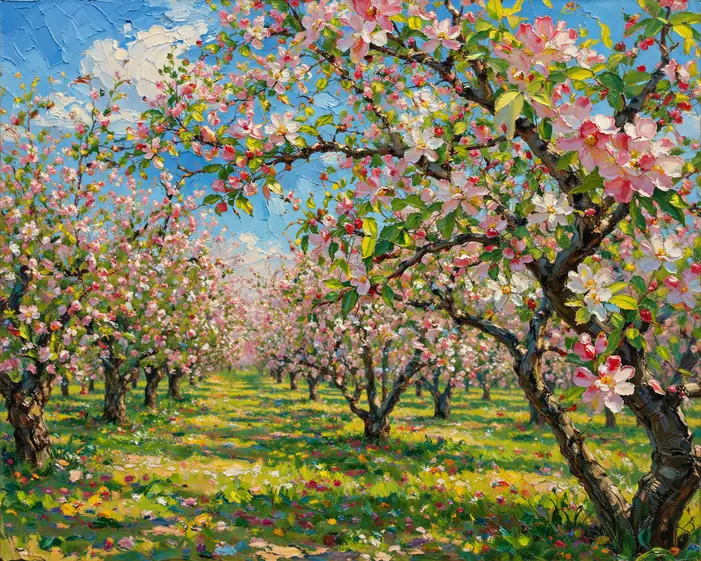 Spring's Passionate Awakening
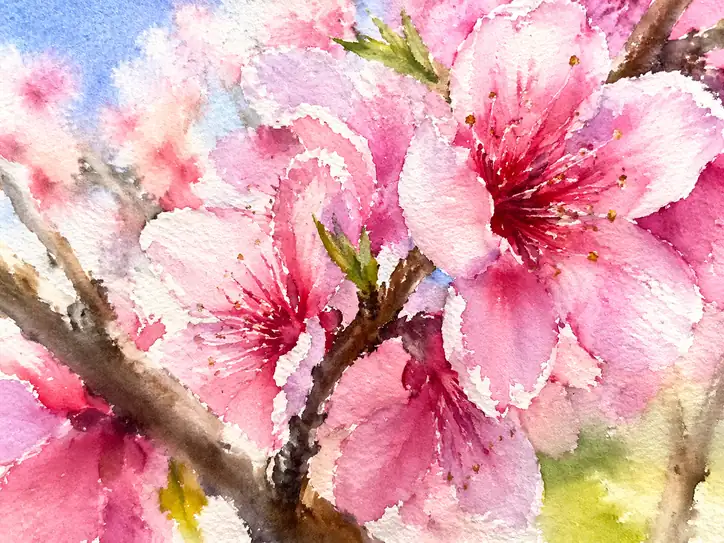 Spring Awakening
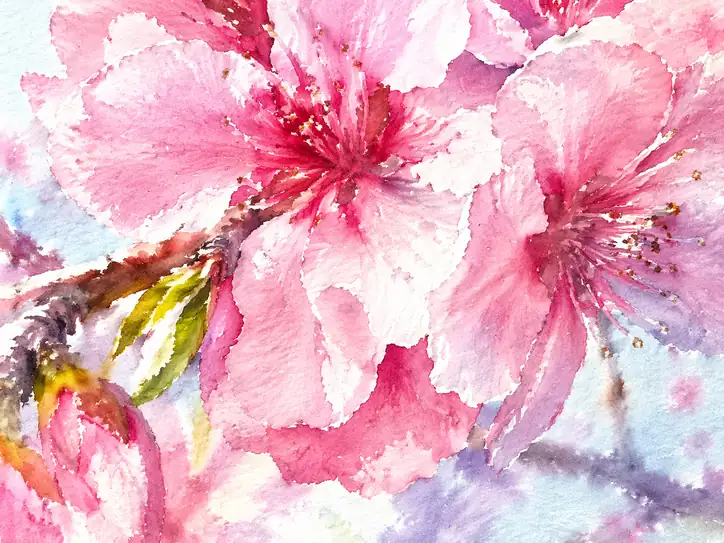 Spring's Vitality
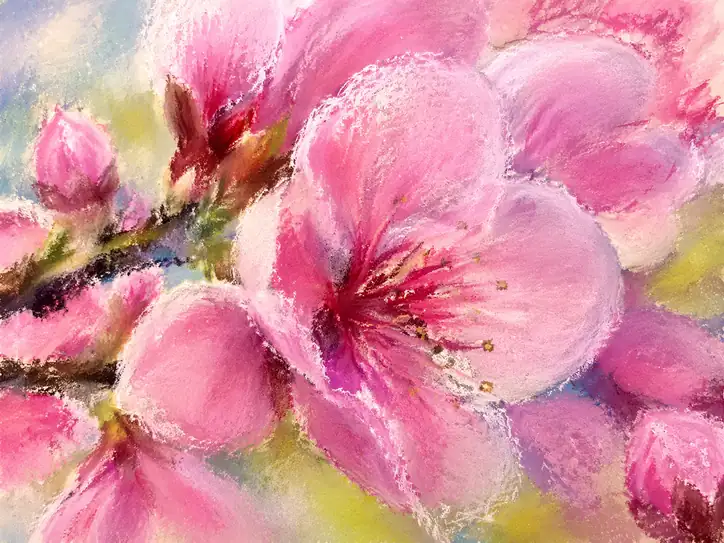 Soft Splendor
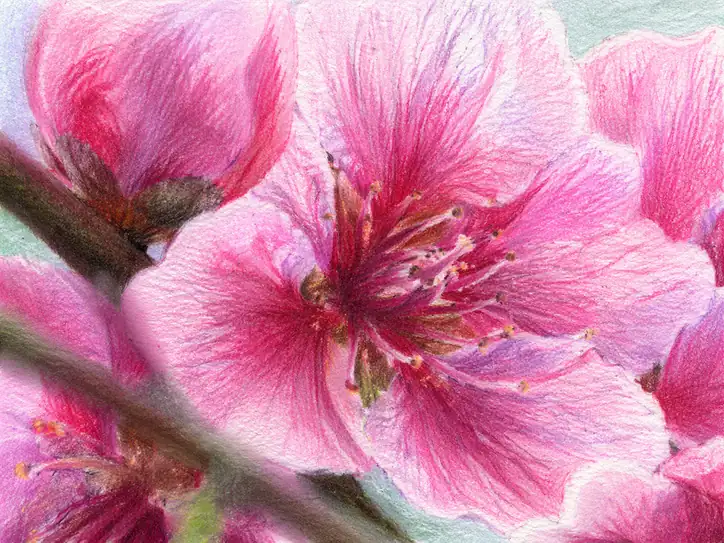 Meticulous Blossom
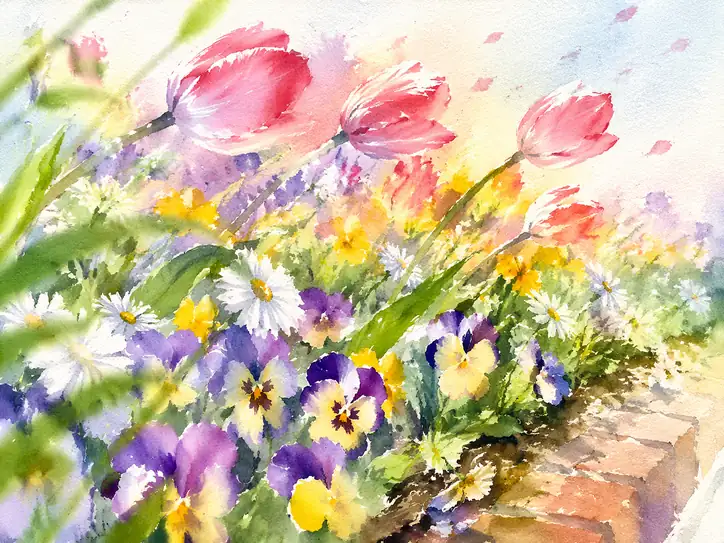 A Radiant Awakening: Spring's Bright Whisper
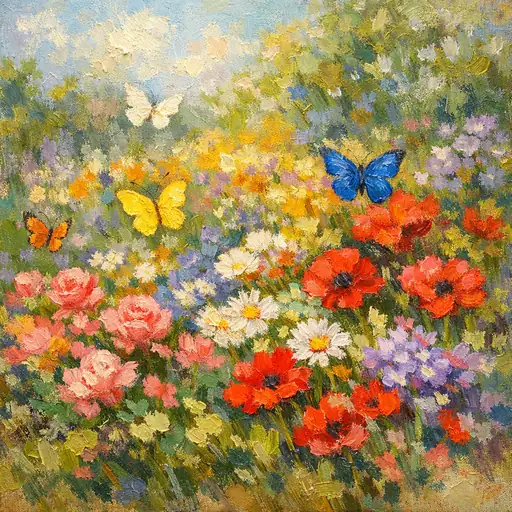 Impasto Melody of Life
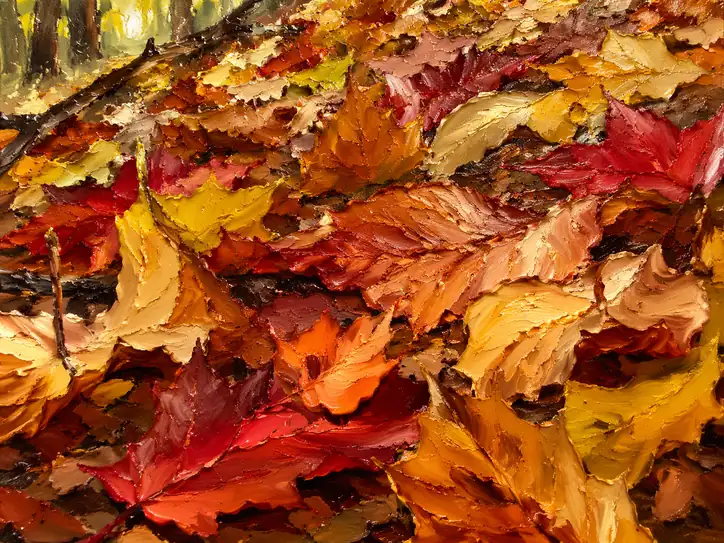 Forest Floor Impressions
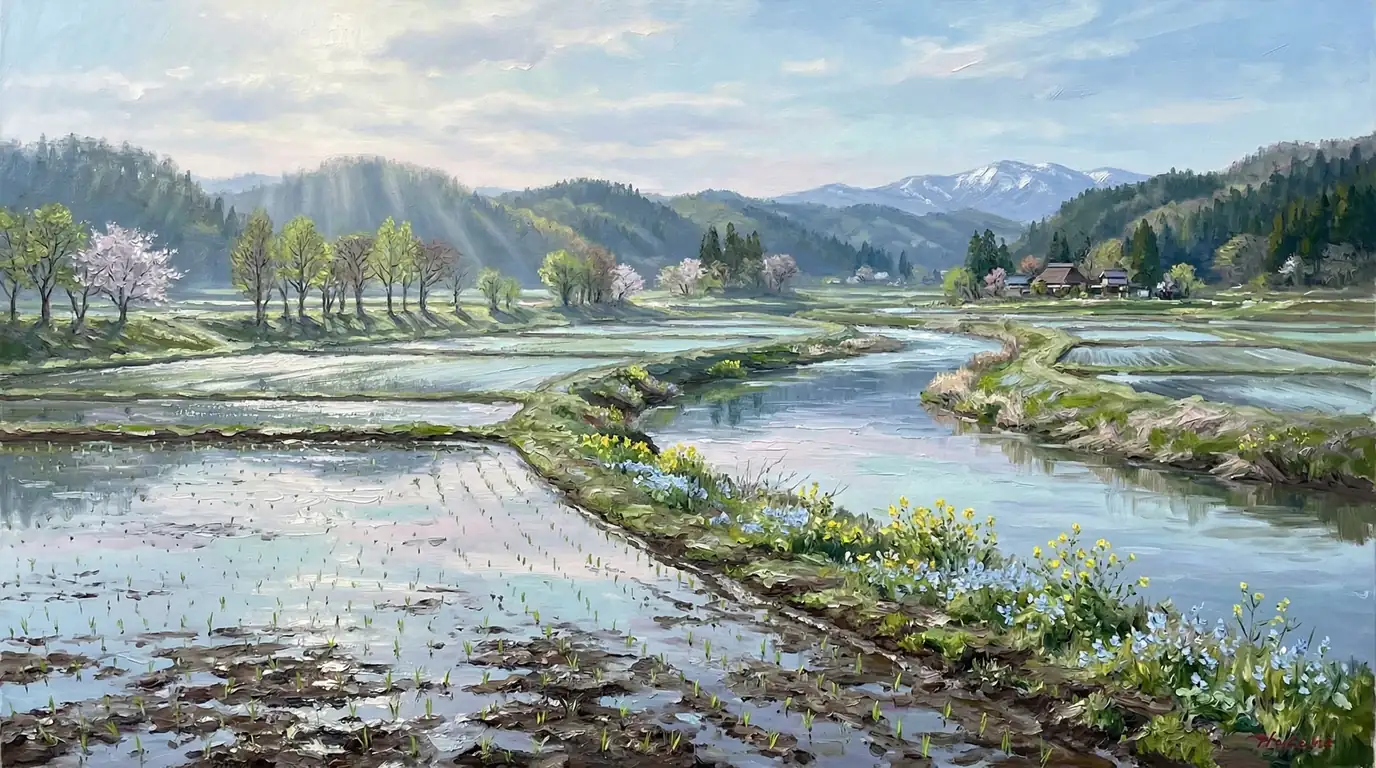 Spring Whispers in the Valley
 The Day the Forest Remembered How to Dream