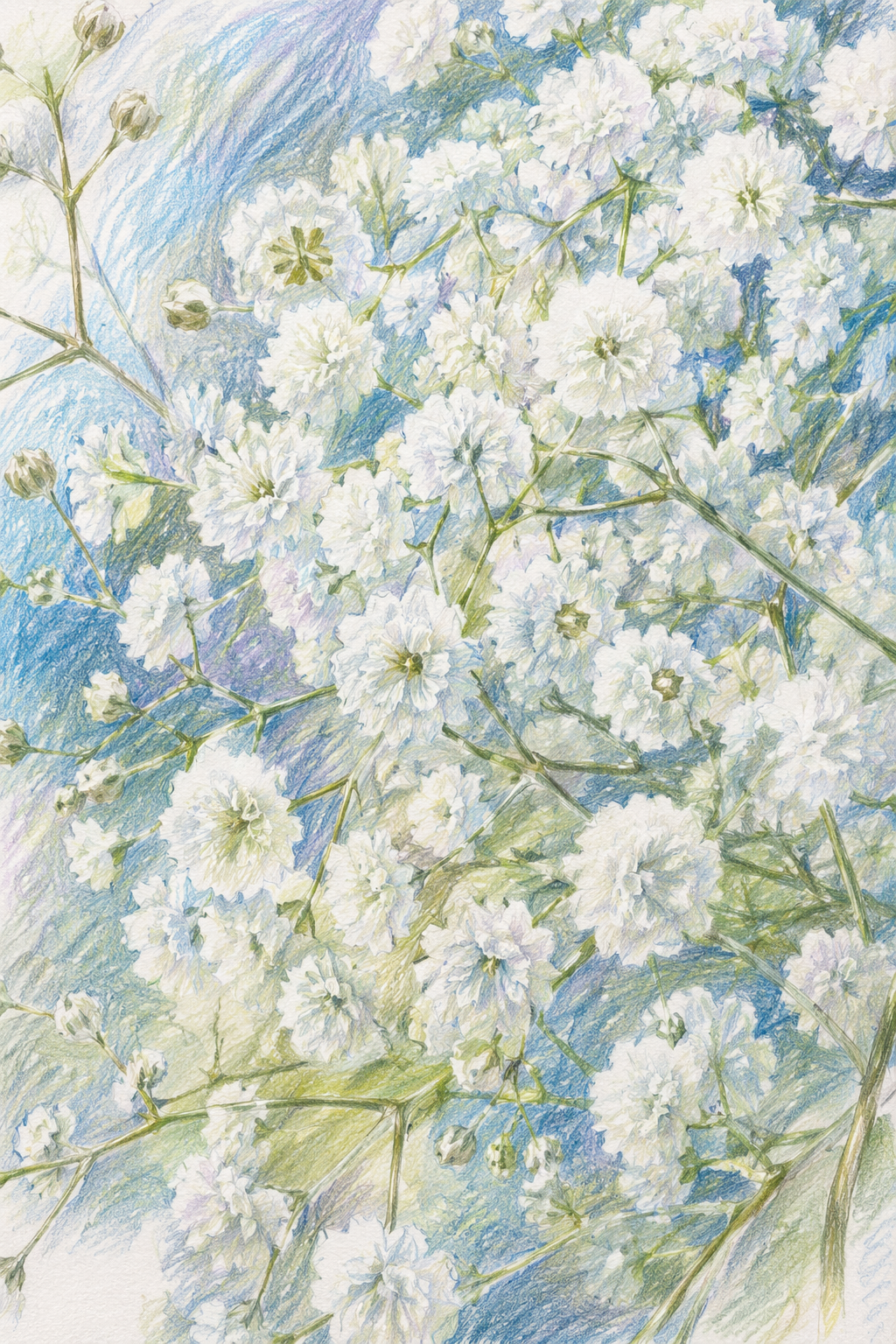
Detailed Colored-Pencil Gypsophila
Critique
1. Introduction This vertical composition is a detailed colored pencil drawing featuring an abundance of small white flowers, likely baby's breath. The work emphasizes the intricate textures of botanical life through a disciplined and rhythmic application of line. While specific details regarding its origin or historical context remain unknown, its immediate visual clarity and fresh color palette make it a standout piece. This analysis serves to deconstruct the formal elements and expressive techniques that define this floral study. 2. Description The artwork is dominated by clusters of white blossoms with finely rendered petals, filling nearly the entire frame. The background consists of energetic diagonal hatches in shades of sky blue, forest green, and hints of lavender, creating a sense of movement as if the plants are swaying in a breeze. The stems and unopened buds are depicted with a mix of earthy greens and ochre, providing a structural counterpoint to the soft, rounded forms of the flowers. Lighting is diffused, preventing harsh shadows and maintaining a consistent level of brightness across the canvas. 3. Analysis Formally, the piece relies on the accumulation of small, deliberate marks to build up both color and volume. The contrast between the pristine white of the petals and the scribbled texture of the background highlights the central subject with theatrical clarity. The composition is arranged along several invisible diagonal axes, which guide the viewer’s eye throughout the complex field of flora. By varying the sharpness of the lines, the artist successfully suggests a shallow depth of field, making certain floral clusters appear closer to the viewer than others. 4. Interpretation and Evaluation The work can be interpreted as a meditation on the delicate yet resilient nature of flora. The artist displays impressive technical skill, particularly in the handling of colored pencils to achieve a wide range of values and textures without losing the luminosity of the paper. This approach results in a composition that feels both organized and organic, celebrating the chaotic beauty of a natural garden. The innovative use of hatching for the background adds a contemporary edge to a traditional subject, marking the piece as a sophisticated example of modern draftsmanship. 5. Conclusion In conclusion, the drawing achieves a masterful balance between rigorous detail and expansive atmosphere. What initially appears as a simple botanical illustration evolves into a profound exploration of mark-making and color harmony upon closer inspection. The final impression is one of luminous tranquility and a heightened awareness of the natural world’s complexity. This artwork effectively captures the essence of a spring garden, offering a refreshing and enduringly beautiful visual experience for any observer.
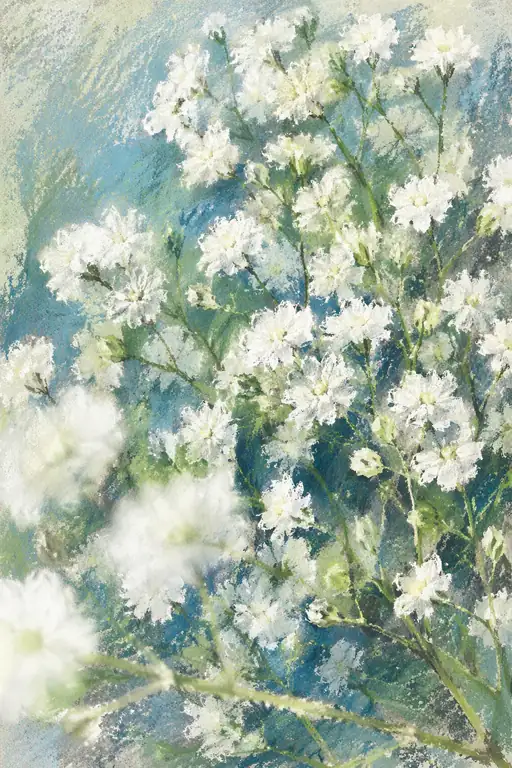 Textured Gypsophila Garden
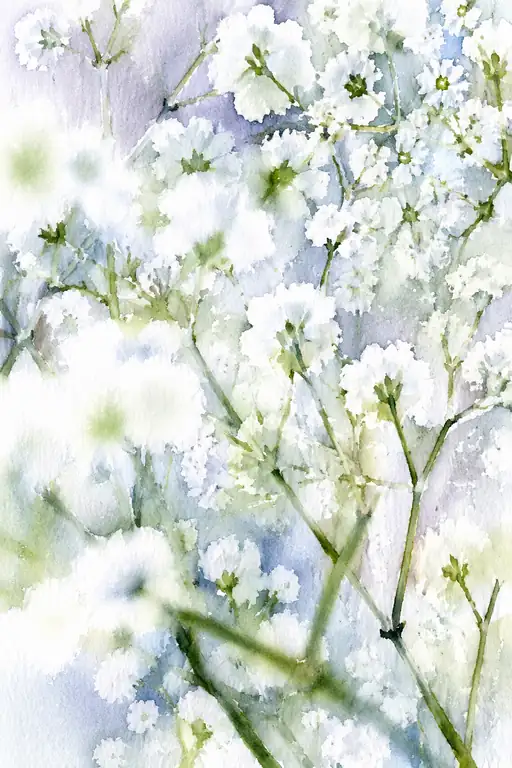 Soft Gypsophila on Paper
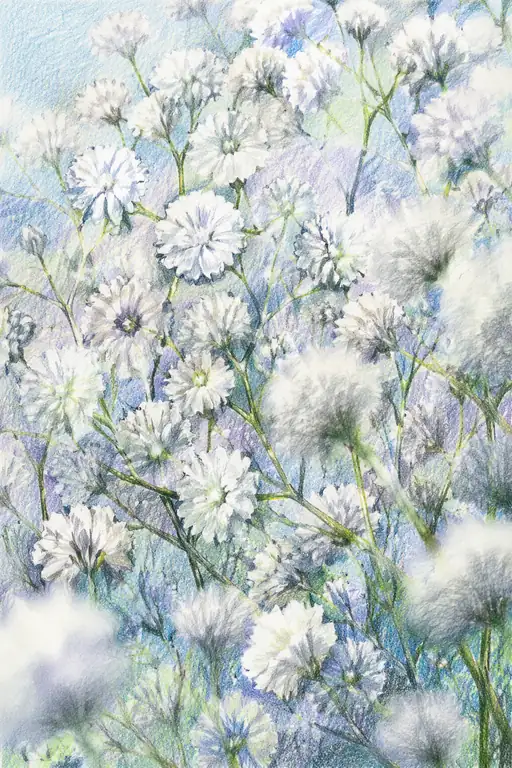 Organic Gypsophila Sketch
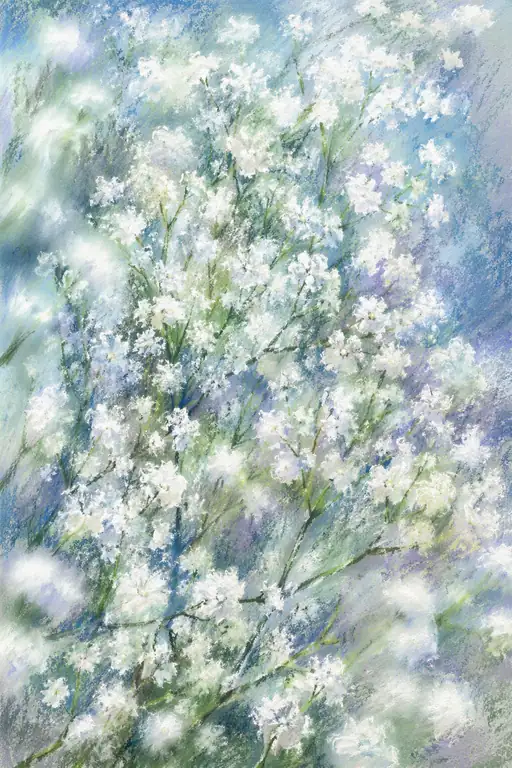 Pastel Gypsophila Cluster
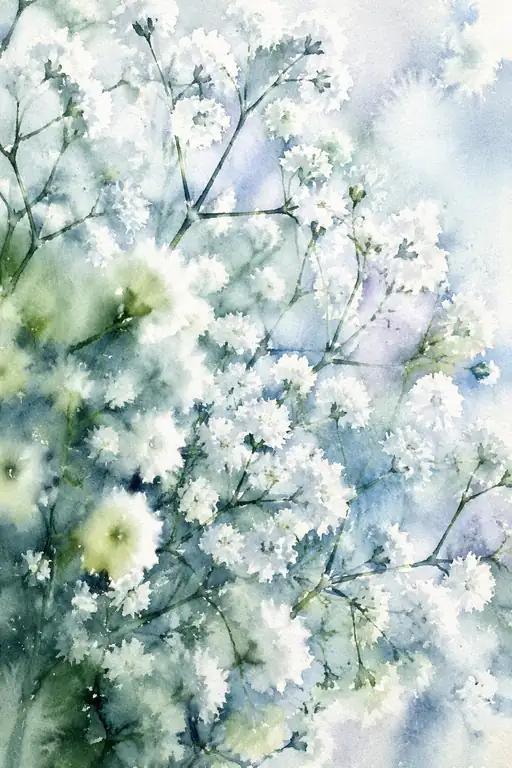 Ethereal Gypsophila Branch
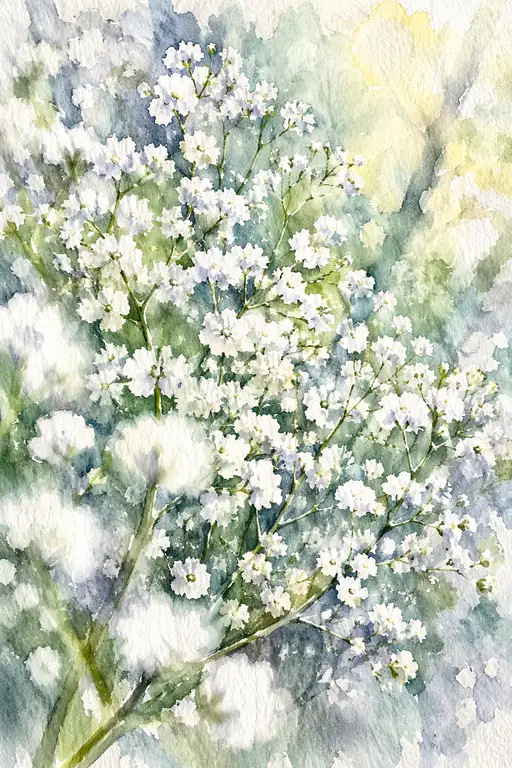 Bright Watercolor Gypsophila Bloom
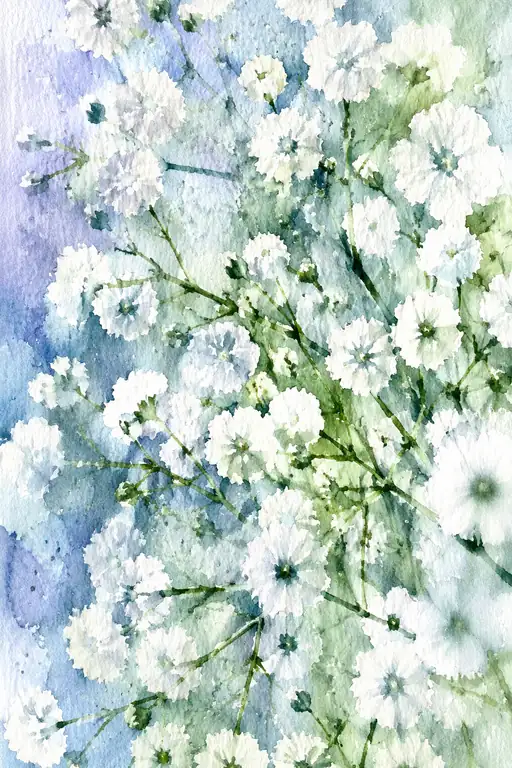 Dreamy Gypsophila Against Purple
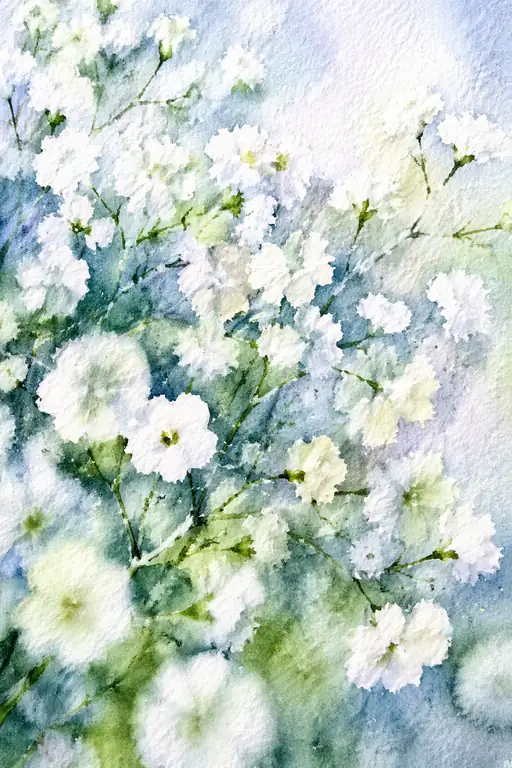 Airy Watercolor Gypsophila
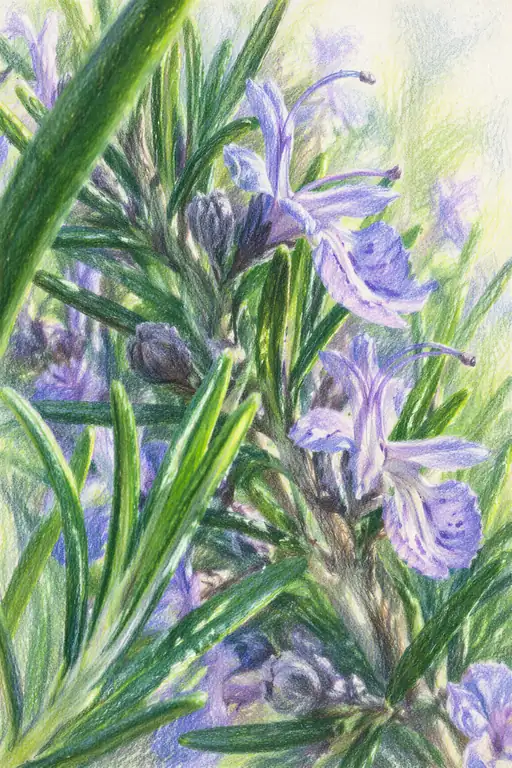 Detailed Purple Rosemary
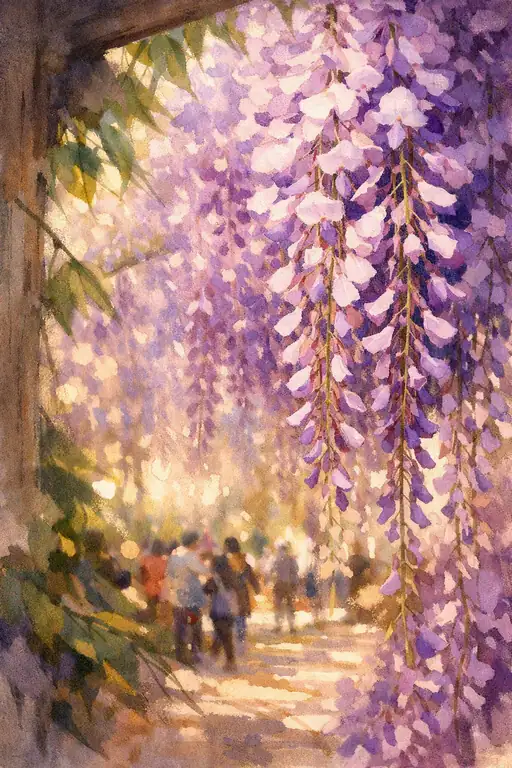 Cascades of Spring Light