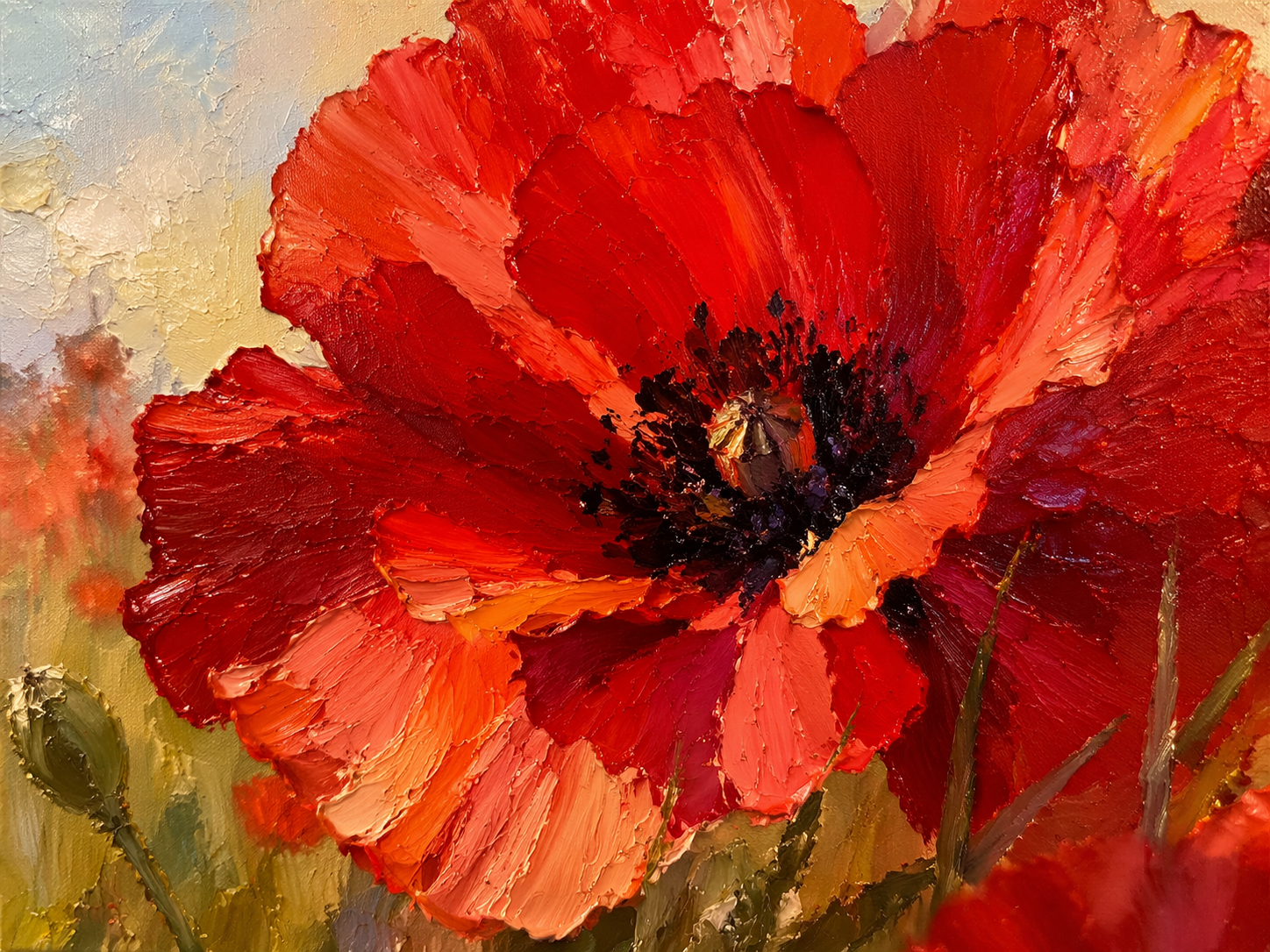
Scarlet Awakening
Critique
1. Introduction This oil painting presents an immersive close-up study of a red poppy, rendered with significant impasto texture and a vibrant color palette. The composition isolates the flower head, turning its delicate petals into large-scale sculptural forms through the heavy application of paint. The work celebrates the structural beauty and intense pigmentation of the poppy, emphasizing the tactile qualities of the medium. 2. Description The image is dominated by the broad petals of a poppy in various shades of scarlet, orange, and deep crimson. At the center, a dense cluster of dark purples and blacks represents the reproductive organs, with hints of yellow indicating light reflections. Thick, raised brushstrokes define the edges of each petal, creating a multi-layered surface. The background is a soft, blurred mix of earthy greens and pale blues, suggesting a field in daylight. 3. Analysis A centrifugal composition is employed, where petals radiate outwards from the dark core. The artist utilizes the impasto technique to give physical presence and directionality to the floral form. Light is managed through shifts in saturation and the physical shadows cast by the thick paint layers. Contrast is maximized between the dark center and the luminous petals, while the desaturated background ensures that the focus remains entirely on the primary subject. 4. Interpretation and Evaluation The piece successfully captures the fragile yet bold essence of the poppy by juxtaposing its fleeting nature with the permanence of thick oil paint. The choice of an extreme close-up is effective, as it forces the viewer to engage with the abstract qualities of the texture. Technical skill is evident in the ability to maintain a sense of lightness despite the heavy material handling. The work is a modern interpretation of a classic botanical theme. 5. Conclusion The painting offers a powerful visual experience that bridges the gap between representation and abstraction. Initially perceived as a simple flower, it reveals itself as a complex landscape of color and texture upon closer inspection. It stands as an exceptional example of contemporary floral painting, characterized by confident brushwork and sophisticated use of the impasto method.
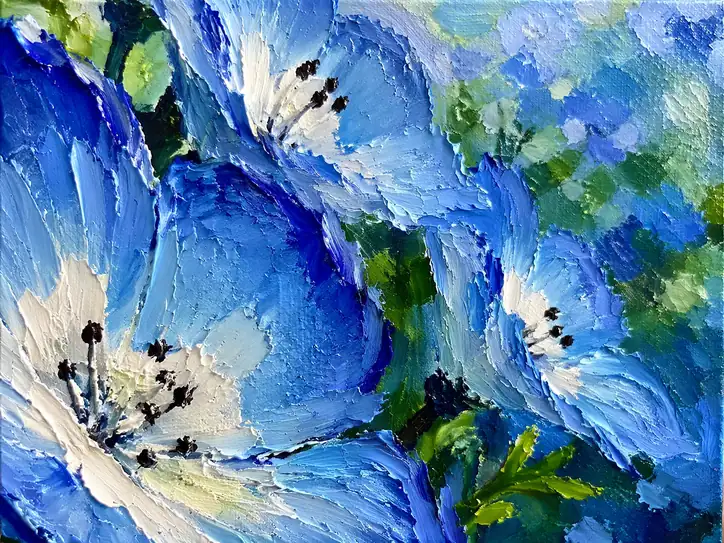 Cerulean Rhythms of Nature
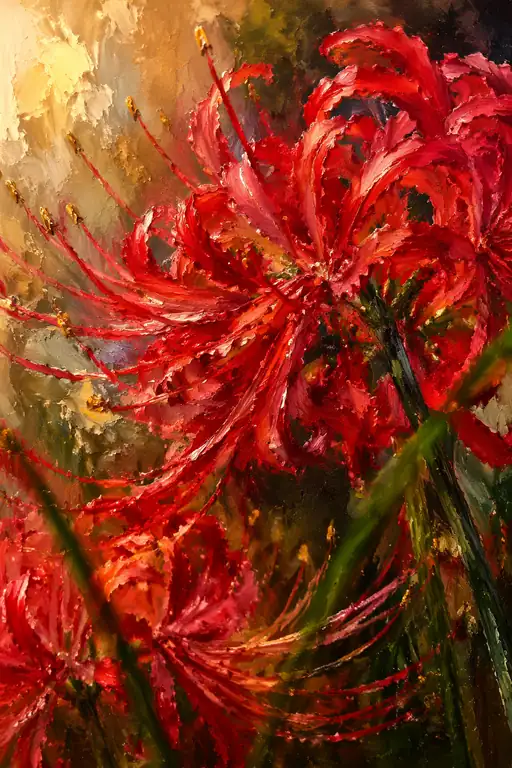 Crimson Splendor in Relief
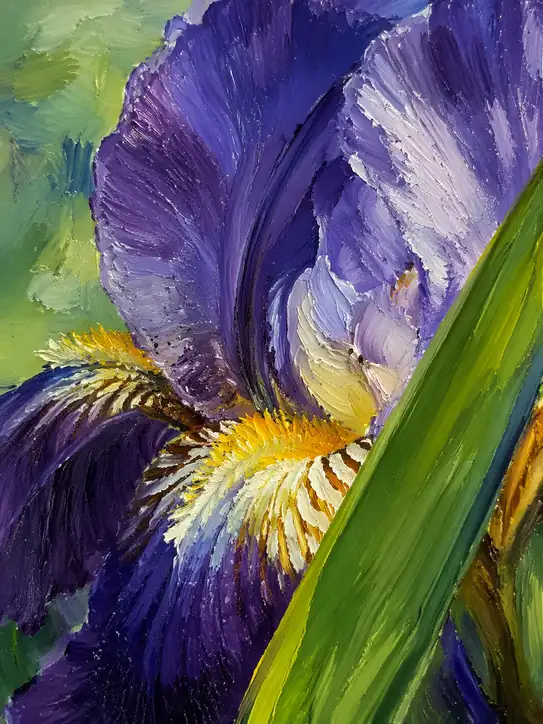 Violet Majesty Unveiled
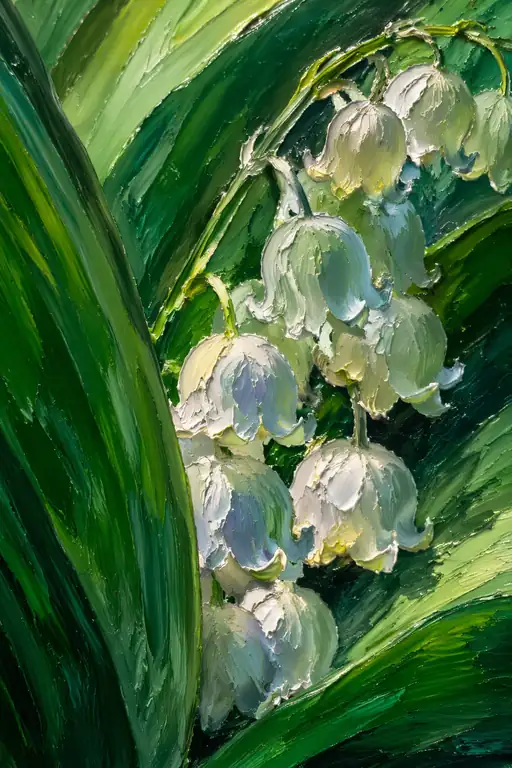 Luminous Cascade of Spring
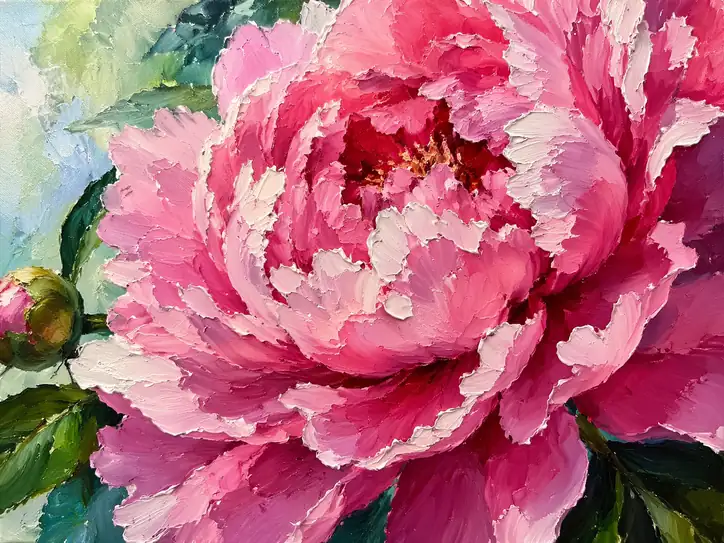 Vibrant Crest of Spring
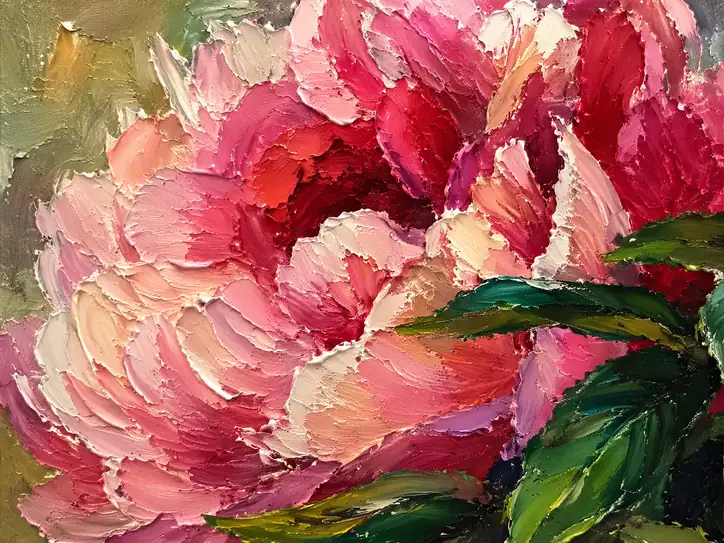 Sculpted Passion in Rose
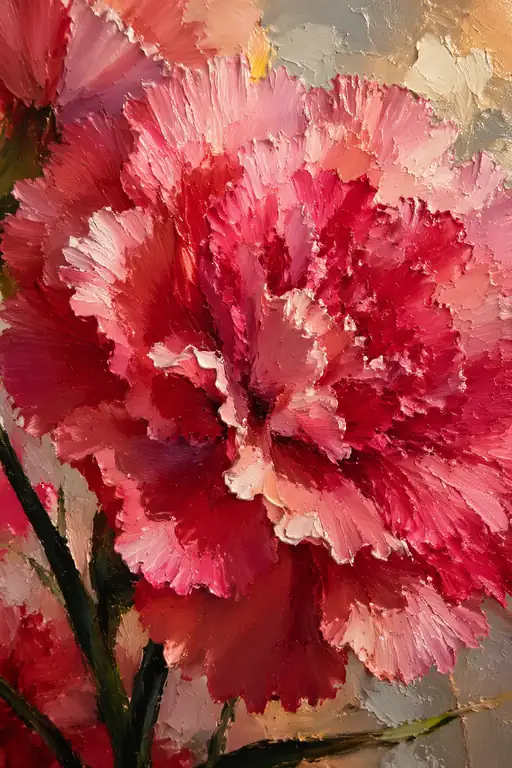 Radiant Eruption of Petals
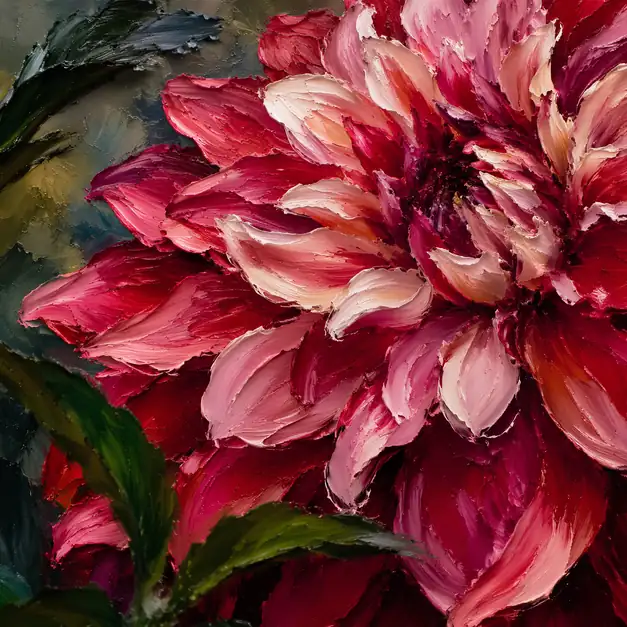 Carmine Vitality in Bloom
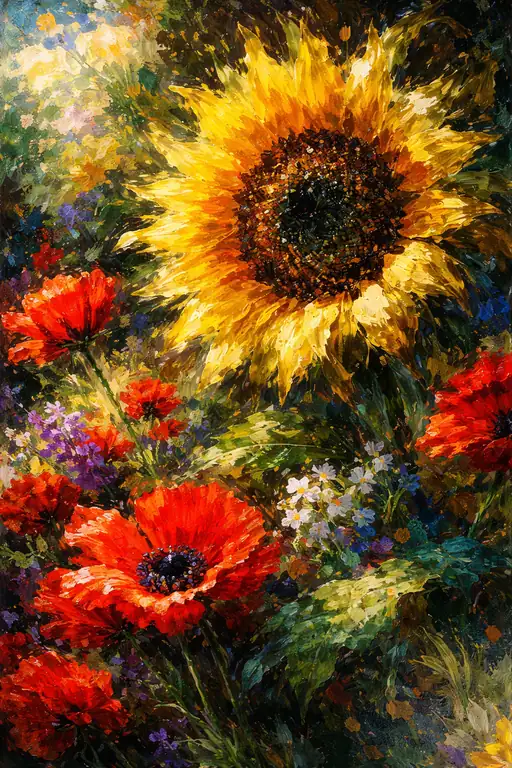 Summer's Vibrant Awakening
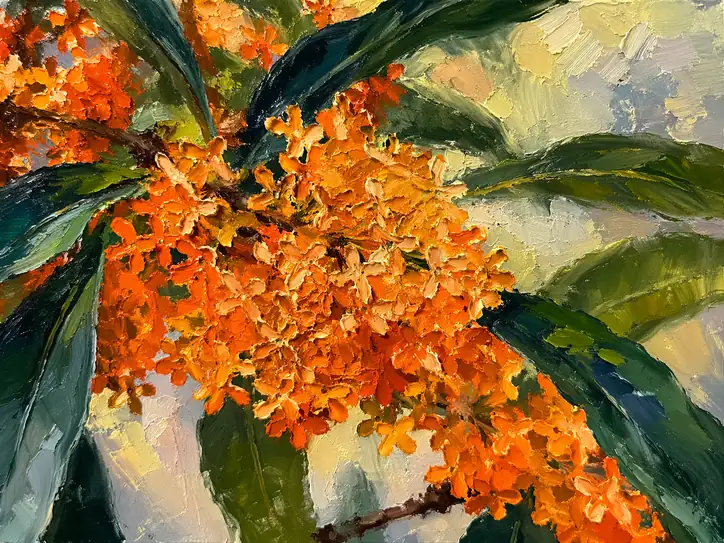 Vivid Impasto Osmanthus