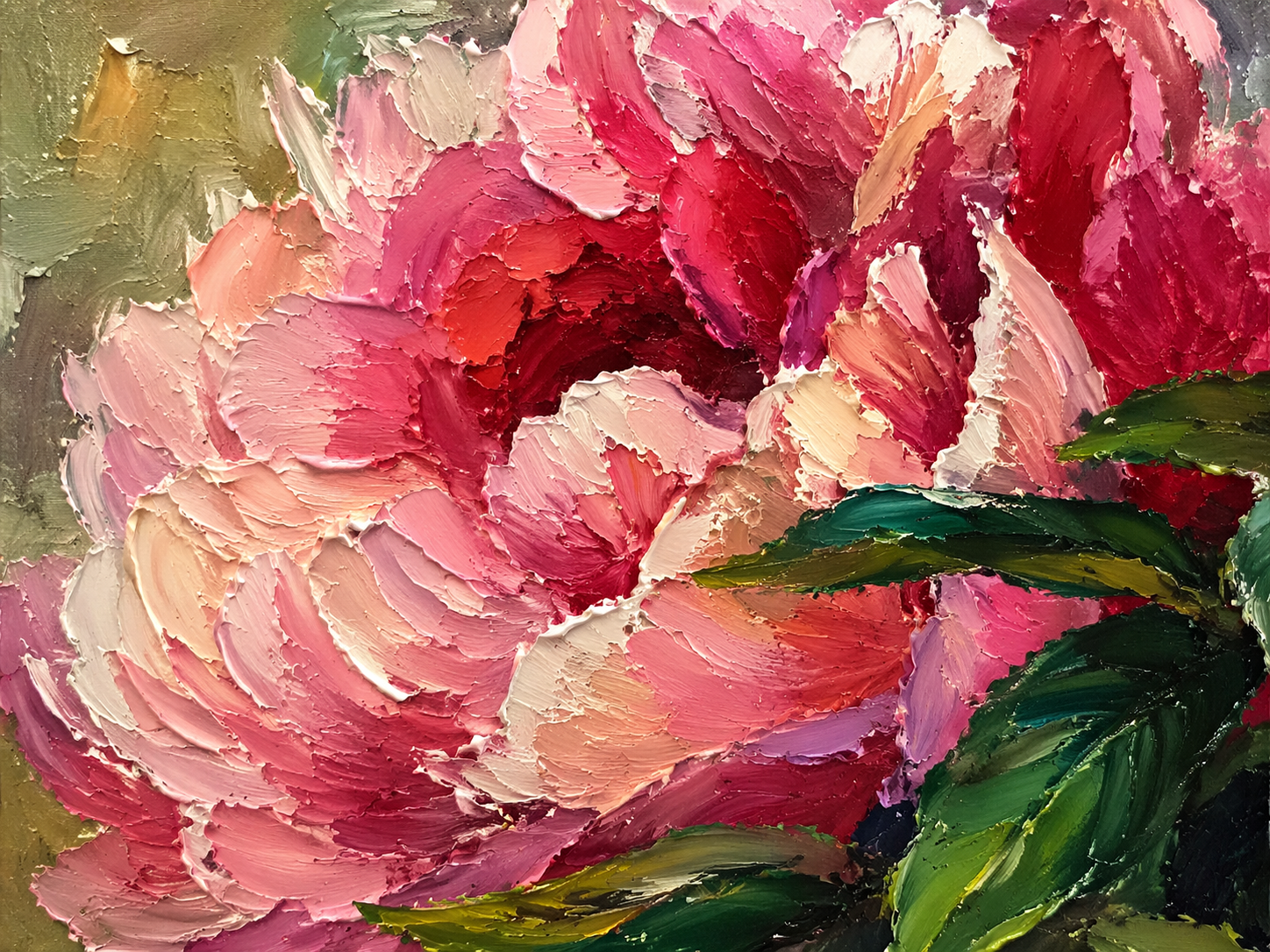
Sculpted Passion in Rose
Critique
1. Introduction This painting presents an extremely textured study of a flower in full bloom, capturing the overlapping petals with remarkable intensity. By utilizing a heavy impasto technique, the artist grants the floral subject a sculptural presence that moves beyond traditional two-dimensional representation. The work serves as a passionate exploration of botanical forms, emphasizing the physical substance of the medium as much as the beauty of the natural world itself. 2. Description The composition is dominated by countless petals transitioning through a spectrum of vivid pinks and deep reds. These layers are defined by thick applications of oil paint, with highlights of white and pale rose catching the light along the edges. In the lower right, dark green leaves are rendered with sharp, decisive strokes, providing a textural and tonal contrast to the soft floral abundance. The background consists of muted olive and grey tones that allow the central subject to remain the undisputed focal point. 3. Analysis The defining formal characteristic of this piece is the bold application of paint with a palette knife, creating a rugged topography of color. This mechanical texture generates natural shadows and a rhythmic movement across the canvas. Coloristically, the use of warm magentas accented by hints of yellow and orange suggests internal luminosity within the flower. The strategic placement of deep cool-toned foliage near the edges creates a coloristic balance that emphasizes the warmth of the central petals. 4. Interpretation and Evaluation While working within the traditional genre of still-life, the artist adopts an expressionistic approach that prioritizes the "being" of the paint itself. The decision to abandon delicate realism in favor of a raw, material existence for the petals is highly successful. This unwavering commitment to texture, combined with a sophisticated understanding of color theory, demonstrates significant artistic maturity. The result is a work that communicates the primal energy of life with great emotional resonance. 5. Conclusion This piece successfully immortalizes a moment of peak vitality through its masterful handling of thick oil paint. What initially appears as a complex layering of pigments reveals itself upon closer inspection to be a meticulously structured representation of life’s abundance. The initial impression of decorative floral beauty eventually deepens into a more profound appreciation of the physical and spiritual weight conveyed by the medium, leaving a lasting impact on the viewer.
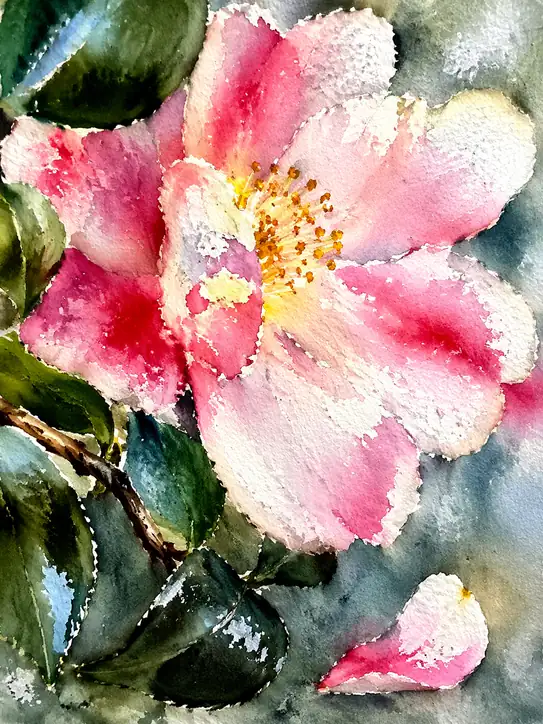 Transience on a Pink Canvas
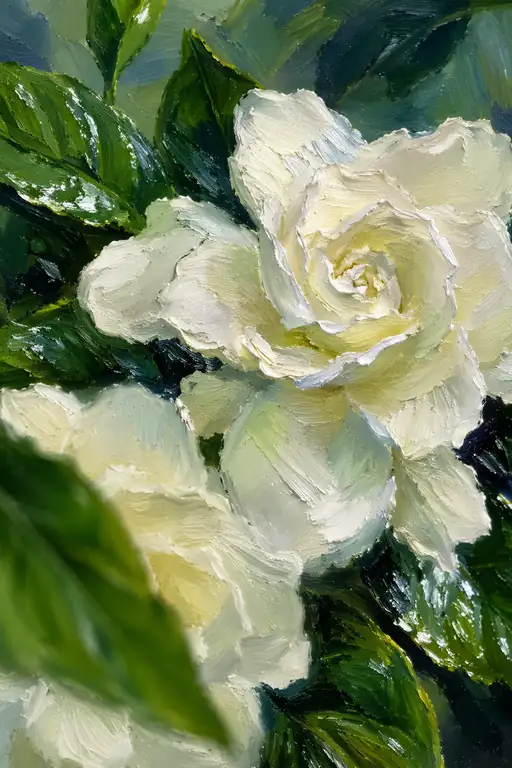 Thick-Painted White Gardenia
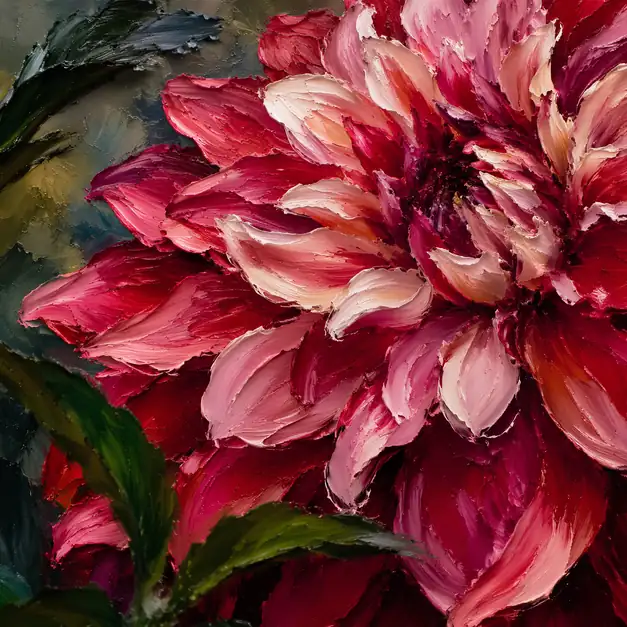 Carmine Vitality in Bloom
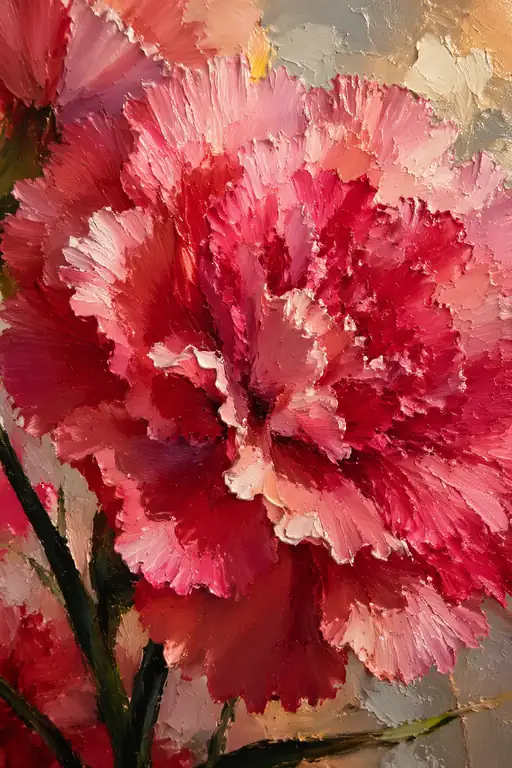 Radiant Eruption of Petals
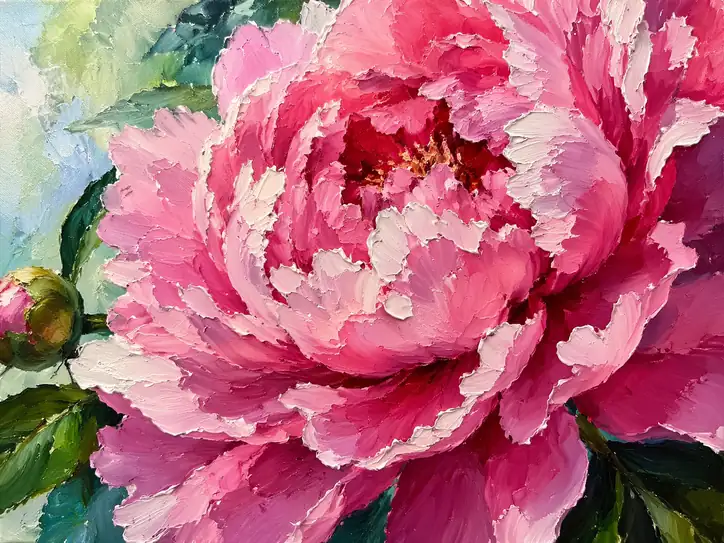 Vibrant Crest of Spring
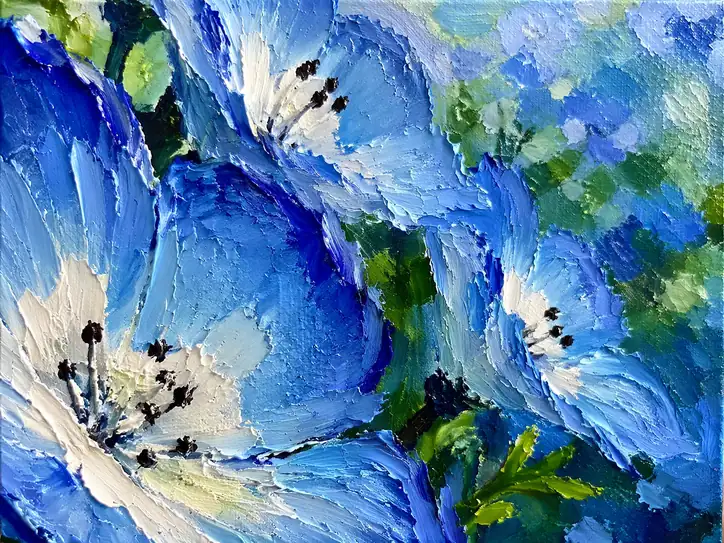 Cerulean Rhythms of Nature
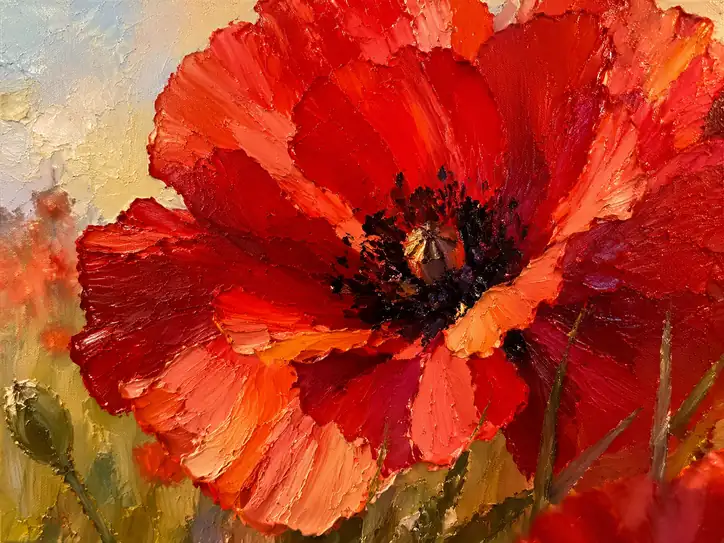 Scarlet Awakening
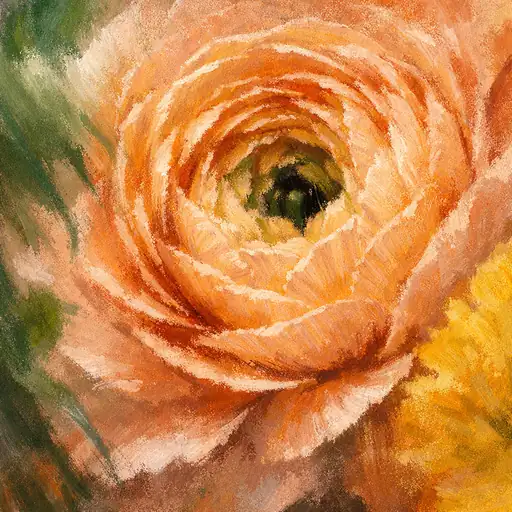 Dance of the Morning Light
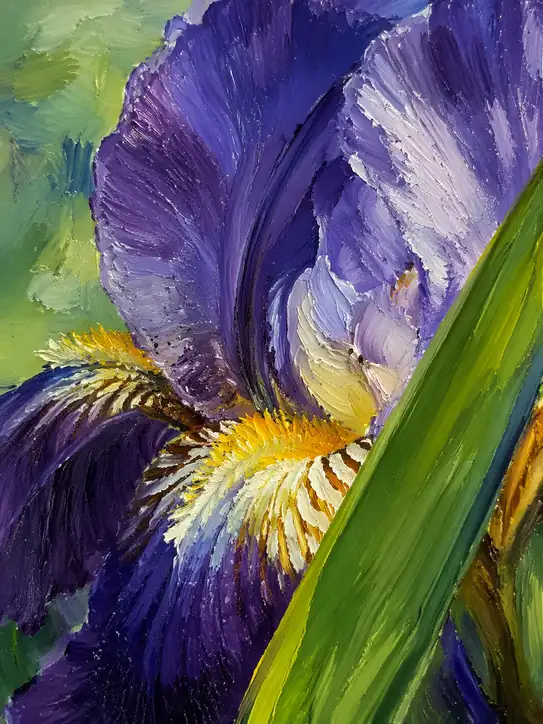 Violet Majesty Unveiled
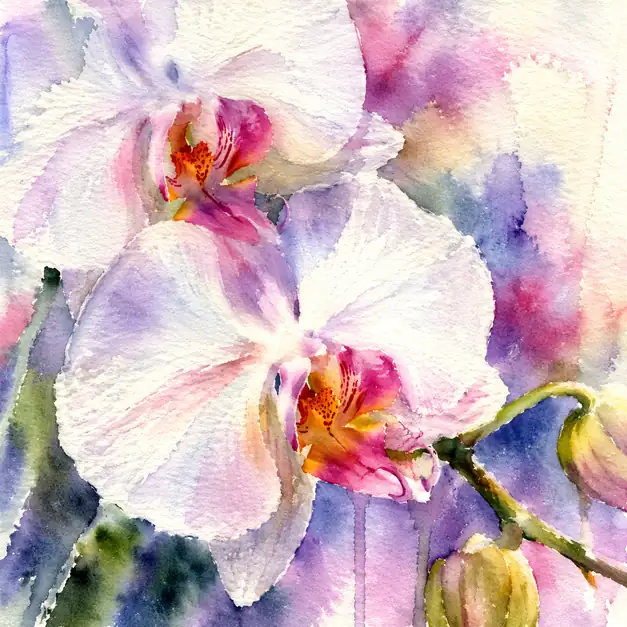 Ethereal Echoes in Magenta