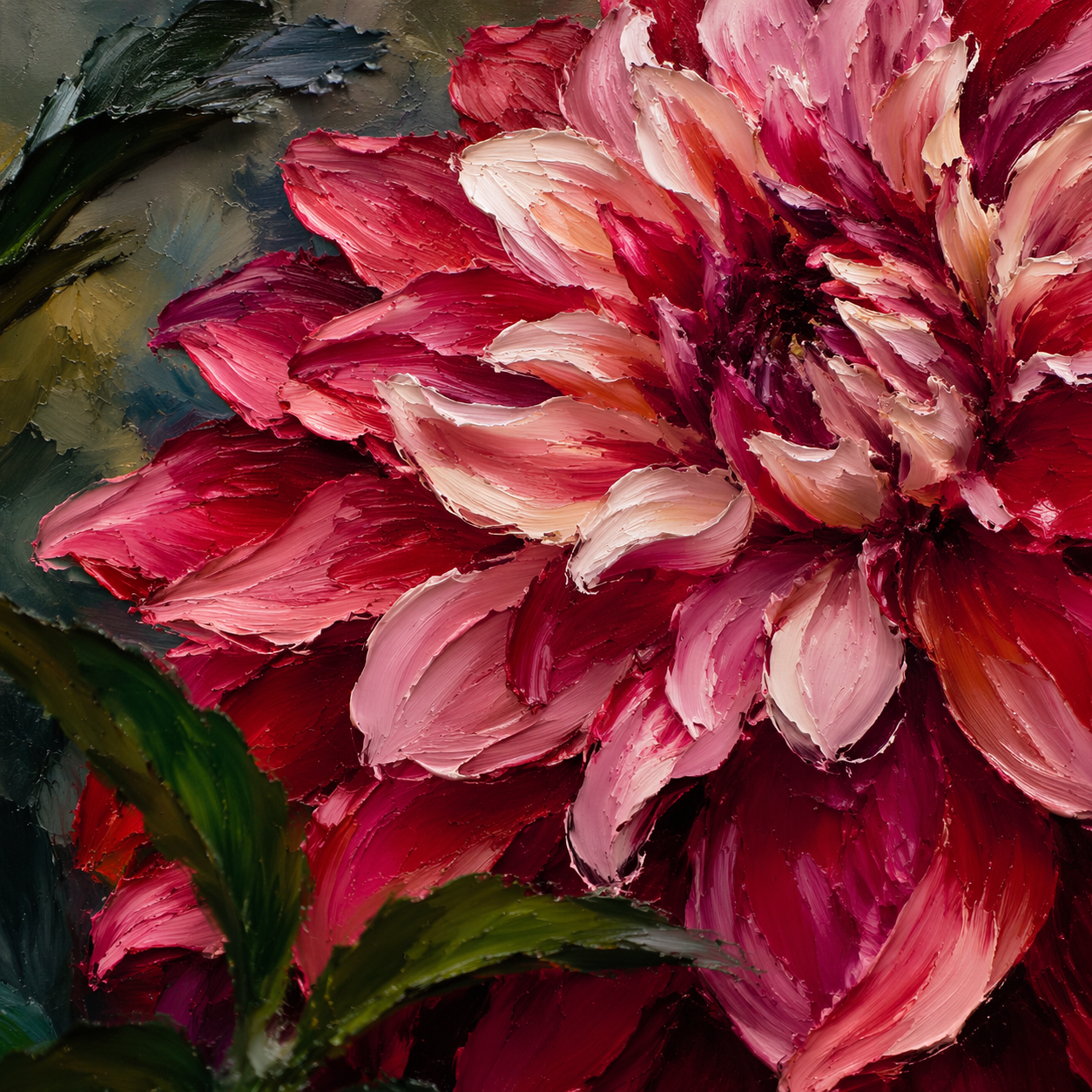
Carmine Vitality in Bloom
Critique
1. Introduction This oil painting presents a dramatic, close-up study of a blooming dahlia, rendered with a powerful impasto technique. The flower dominates the square composition, extending toward the right edge while dark foliage anchors the lower left corner. The artist utilizes thick layers of paint to create a three-dimensional surface that captures both the physical presence and the vibrant essence of the botanical subject. 2. Description The central floral form is composed of numerous overlapping petals that radiate from the core in shades of deep carmine, magenta, and blush pink. Some petals are highlighted with thick strokes of creamy white, suggesting a play of light on their curved surfaces. Dark green leaves with jagged edges provide a necessary chromatic contrast, emerging from the shadows to support the brilliance of the blossom. 3. Analysis The primary formal element of this work is its intense texture, achieved through heavy application of paint. Each petal is defined by a single, confident stroke that leaves a raised ridge of pigment, creating a tactile topography. The contrast between the bright, saturated reds of the flower and the muted, dark background enhances the sense of depth and focuses all attention on the central subject. 4. Interpretation and Evaluation The work is a successful exploration of the intersection between representational accuracy and expressive abstraction. The choice of the impasto method translates the organic complexity of the dahlia into a celebration of the painting material itself. The vibrant color palette conveys a sense of peak vitality, while the controlled composition ensures that the dense textures do not overwhelm the viewer's perception of the form. 5. Conclusion Moving beyond the initial impact of the vivid colors, one discovers a meticulous arrangement of structural strokes that define the flower's volume. The piece effectively balances the delicate nature of a blossom with the rugged, permanent quality of heavy oil paint. This synthesis of subject and technique results in a compelling visual experience that transcends simple botanical illustration.
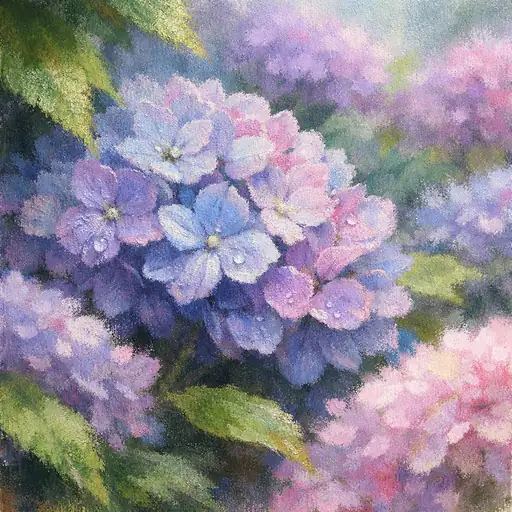 Dewdrops on Serenity
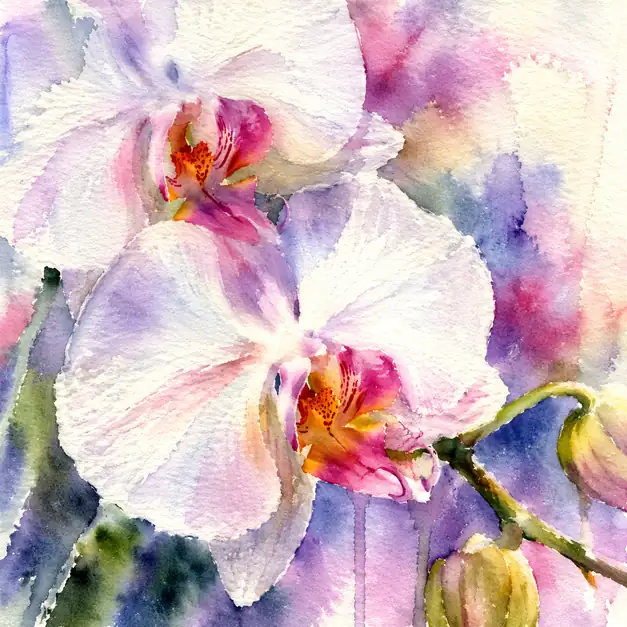 Ethereal Echoes in Magenta
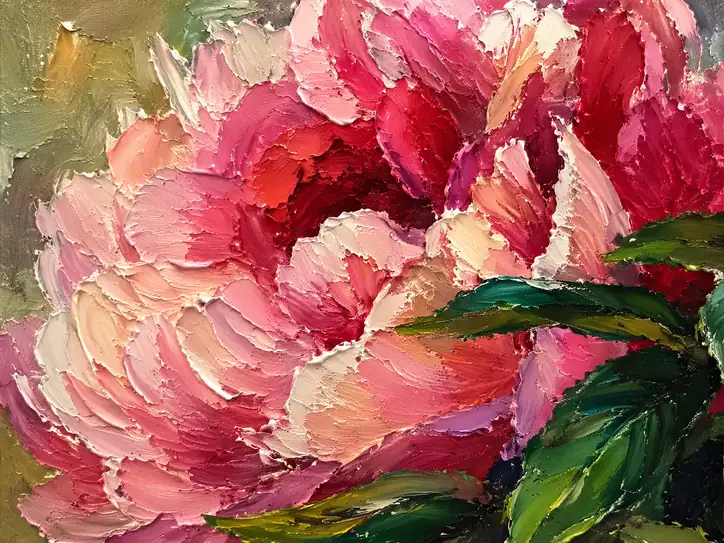 Sculpted Passion in Rose
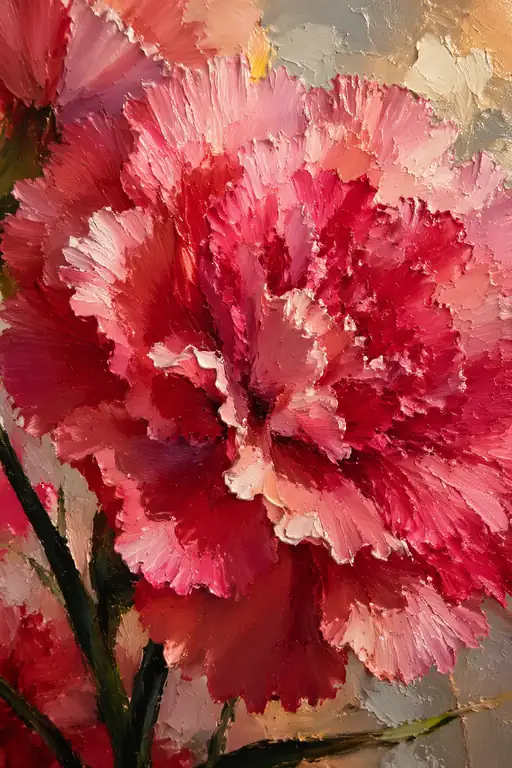 Radiant Eruption of Petals
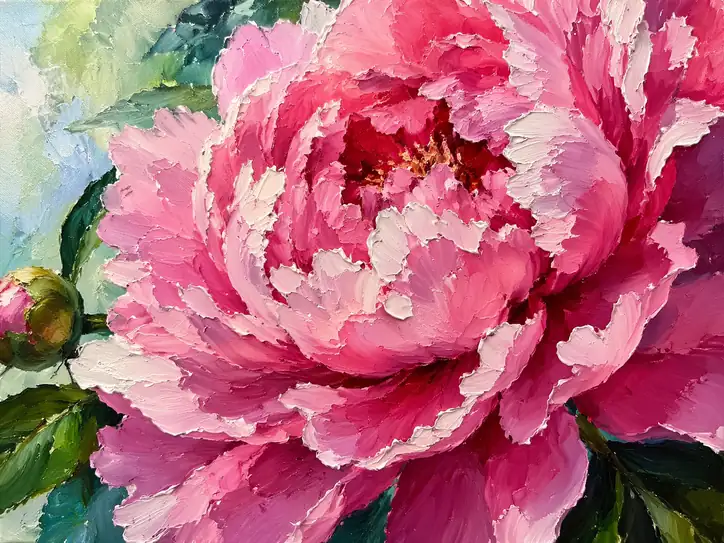 Vibrant Crest of Spring
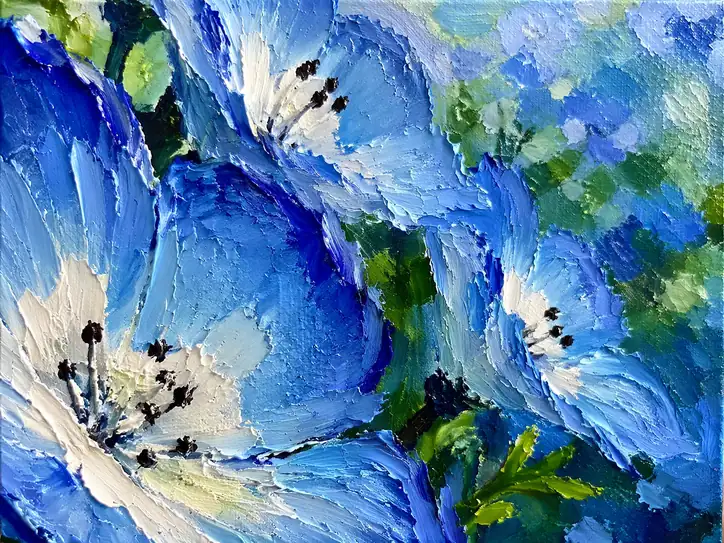 Cerulean Rhythms of Nature
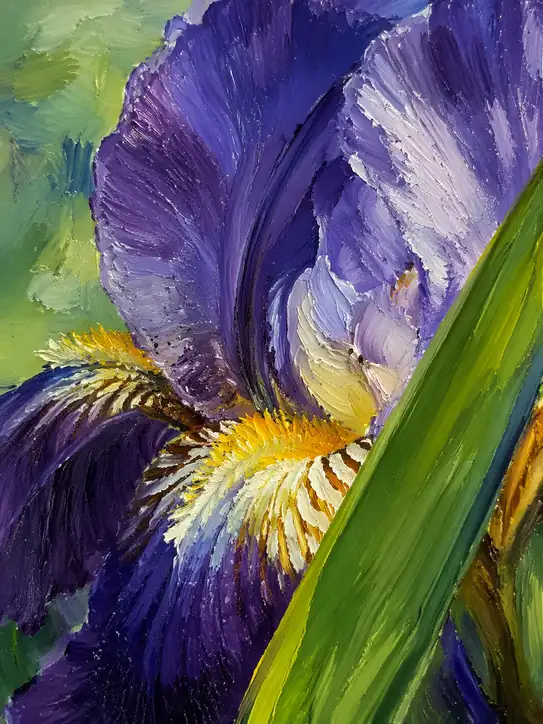 Violet Majesty Unveiled
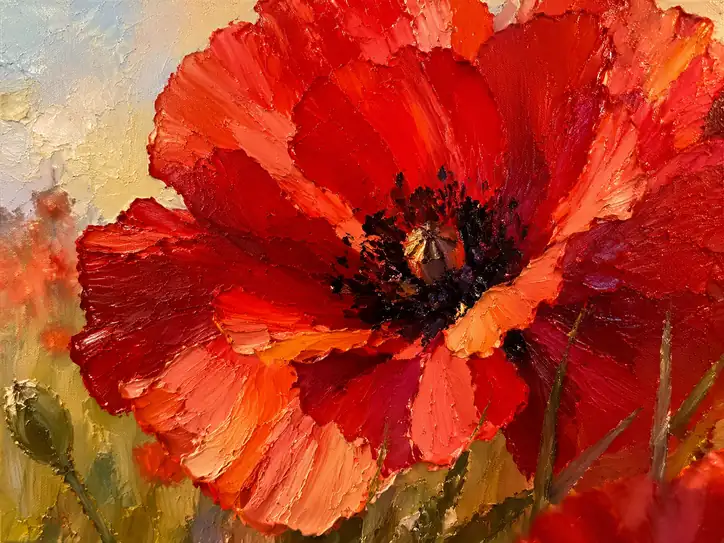 Scarlet Awakening
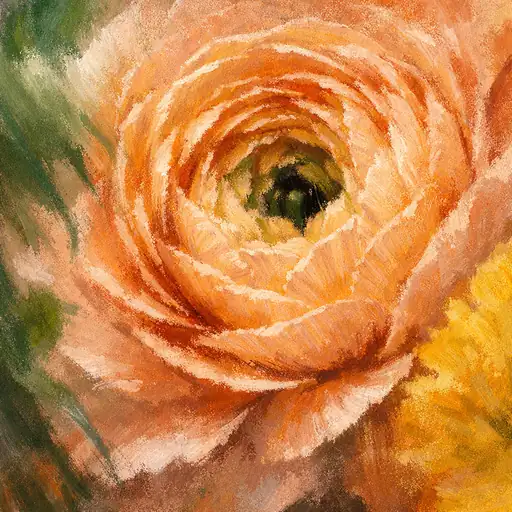 Dance of the Morning Light
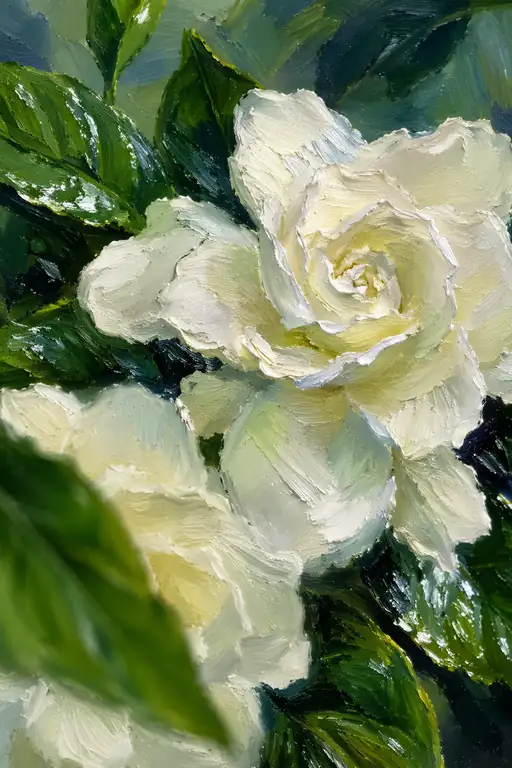 Thick-Painted White Gardenia
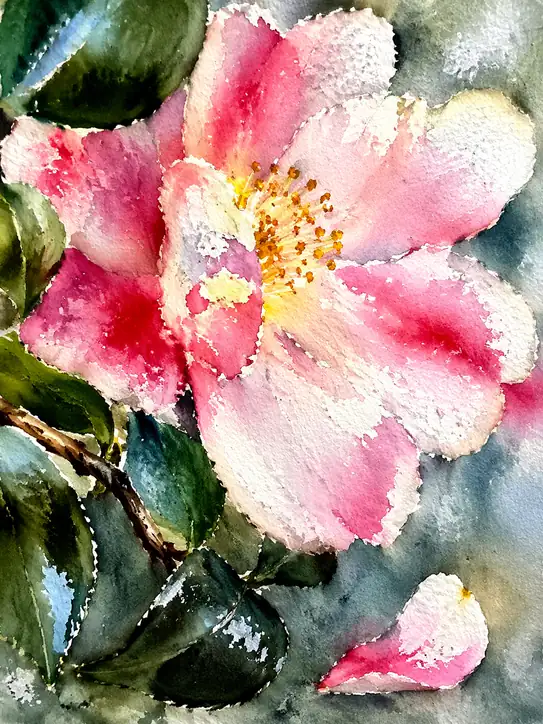 Transience on a Pink Canvas
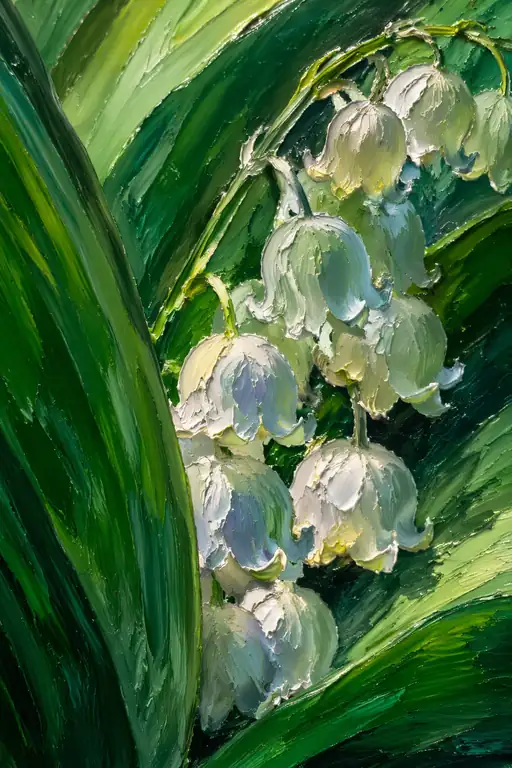 Luminous Cascade of Spring