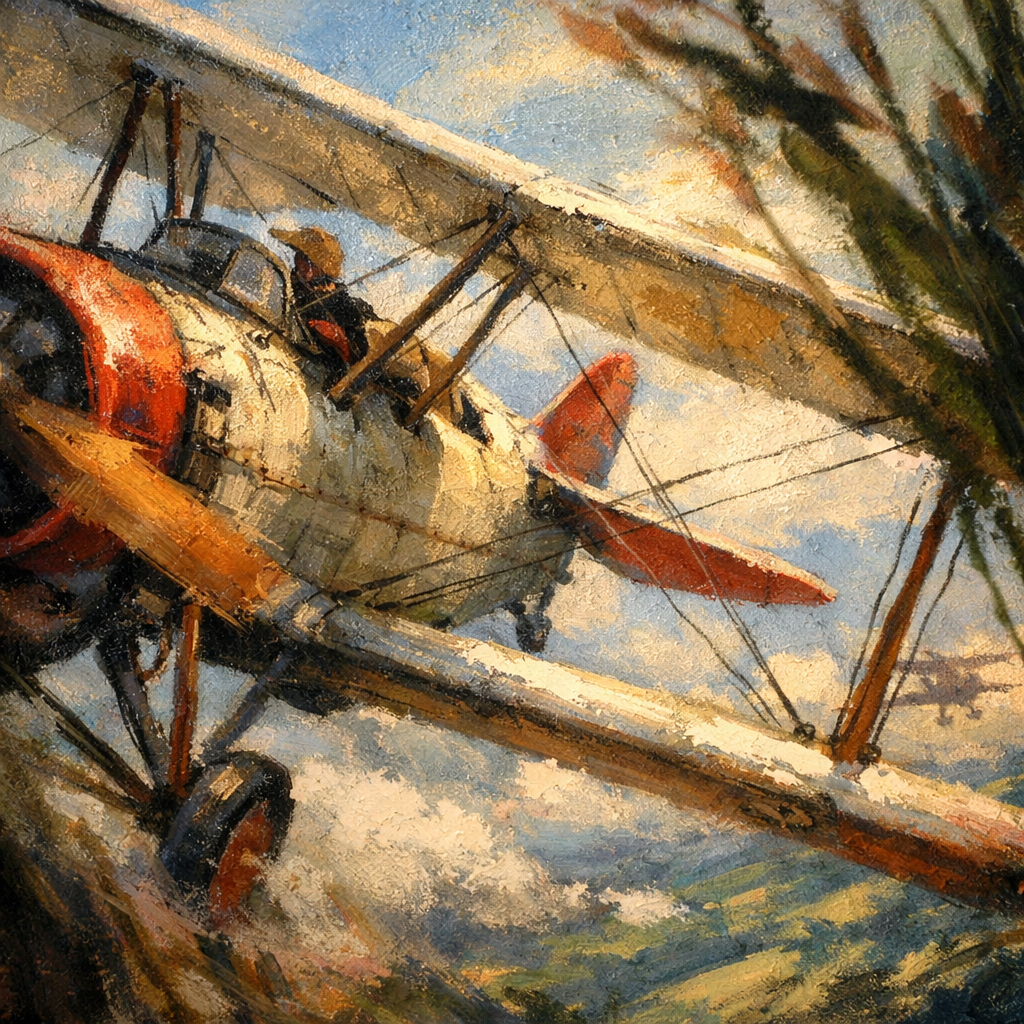
Biplane Ballet: Roaming the Orange Sky
Critique
1. Introduction This oil painting presents a dynamic scene featuring a vintage biplane in flight, rendered with a focus on movement and texture. The work captures the essence of early 20th-century aviation through a spirited application of paint and a bold, close-up perspective. It serves as an exploration of both mechanical form and atmospheric light. 2. Description The composition is dominated by a biplane viewed from a low, diagonal angle, showcasing its orange and white fuselage and complex wing structure. A pilot is visible within the open cockpit, wearing traditional flight gear. Behind the aircraft, a bright, clouded sky is depicted with vigorous strokes, while dark foliage clips the right edge of the frame. 3. Analysis Technically, the artist utilizes a heavy impasto technique, where thick layers of paint create a tactile surface that mimics the ruggedness of early machinery. The strong diagonal lines of the wings create a powerful sense of upward momentum. A contrast between the warm oranges of the plane and the cool blues of the sky enhances the visual depth. 4. Interpretation and Evaluation The work interprets the theme of flight not just as a technical feat, but as a visceral experience of freedom and adventure. The lighting is effectively handled, suggesting a bright sun that reflects off the wings and fuselage. The artist’s ability to balance the rigid structure of the aircraft with the fluid, expressive brushwork of the environment is particularly noteworthy. 5. Conclusion While initially appearing as a straightforward study of a vintage aircraft, the painting reveals a deeper interest in the interplay of light and texture. It successfully conveys the nostalgic charm and the kinetic energy associated with the dawn of aviation. The piece stands as a robust example of modern representational painting with a strong emphasis on material presence.
Same Subcategory
Similar Artworks
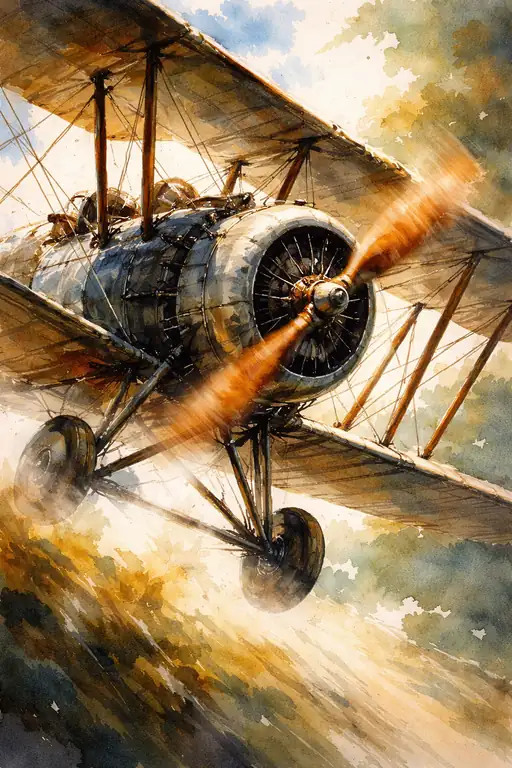 Leap of the Golden Wings
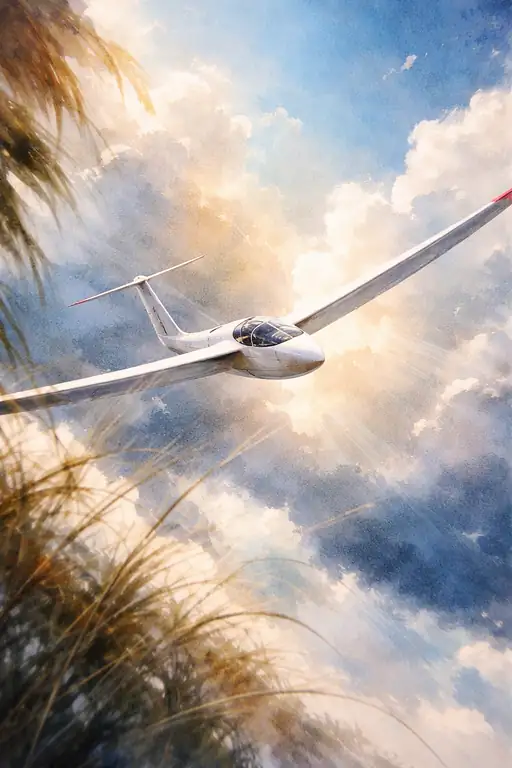 Silent Dance Among the Clouds
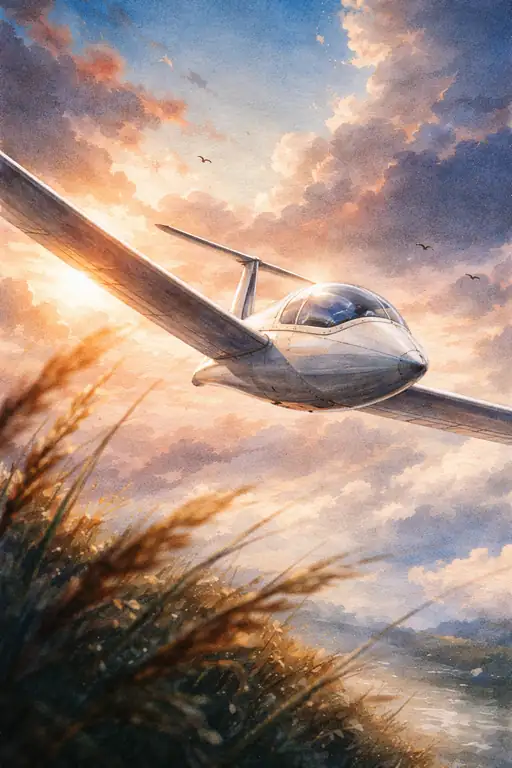 Golden Glide: The Silent Wings of Dusk
 Soaring Above the Metropolis
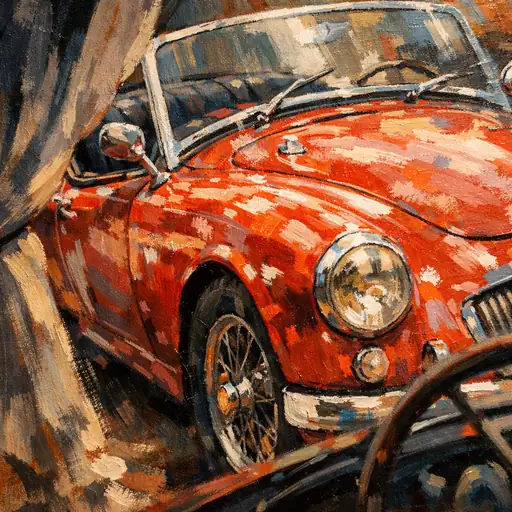 Scarlet Secrets: The Classic Reveal
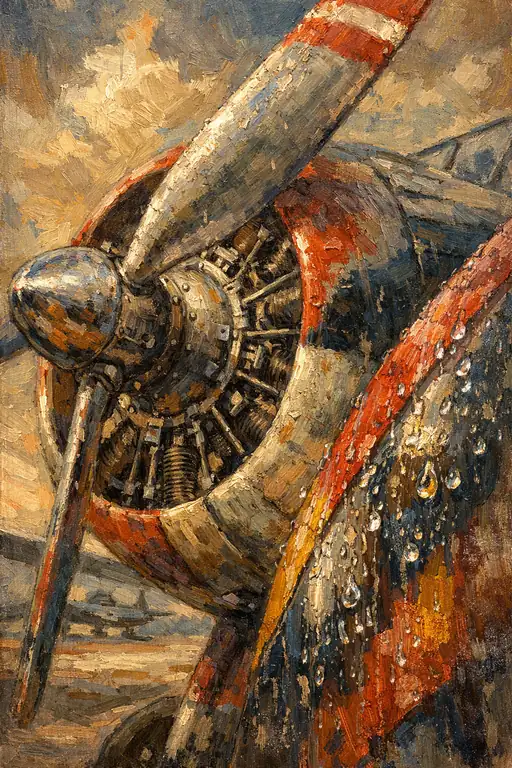 Tears on Steel Wings
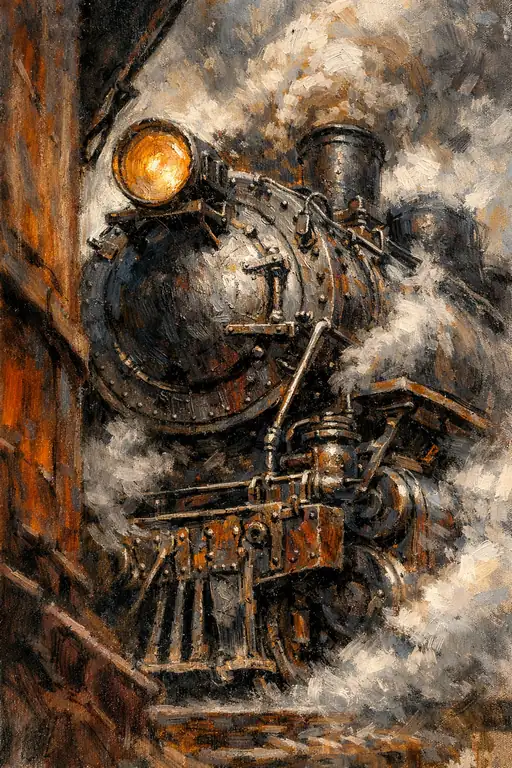 Iron Giant Pulsing with Steam
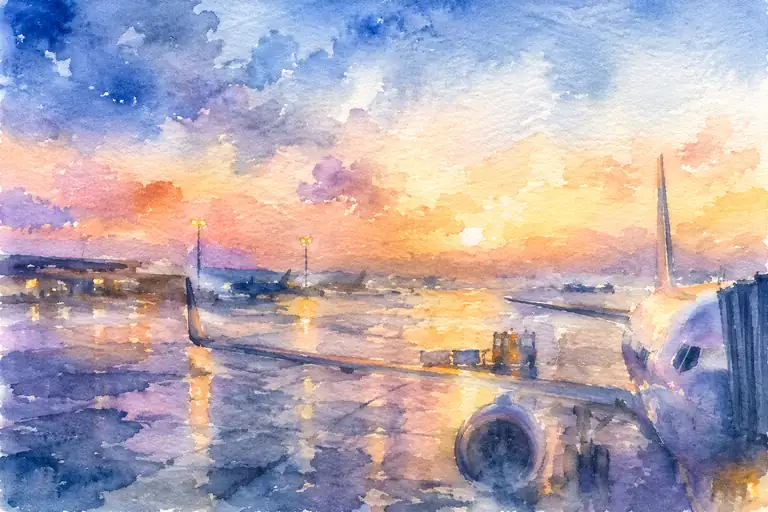 Dawn's Reflected Journey
 Ascension's Hue: A Skyward Celebration
 Midnight Momentum: Fire on Iron