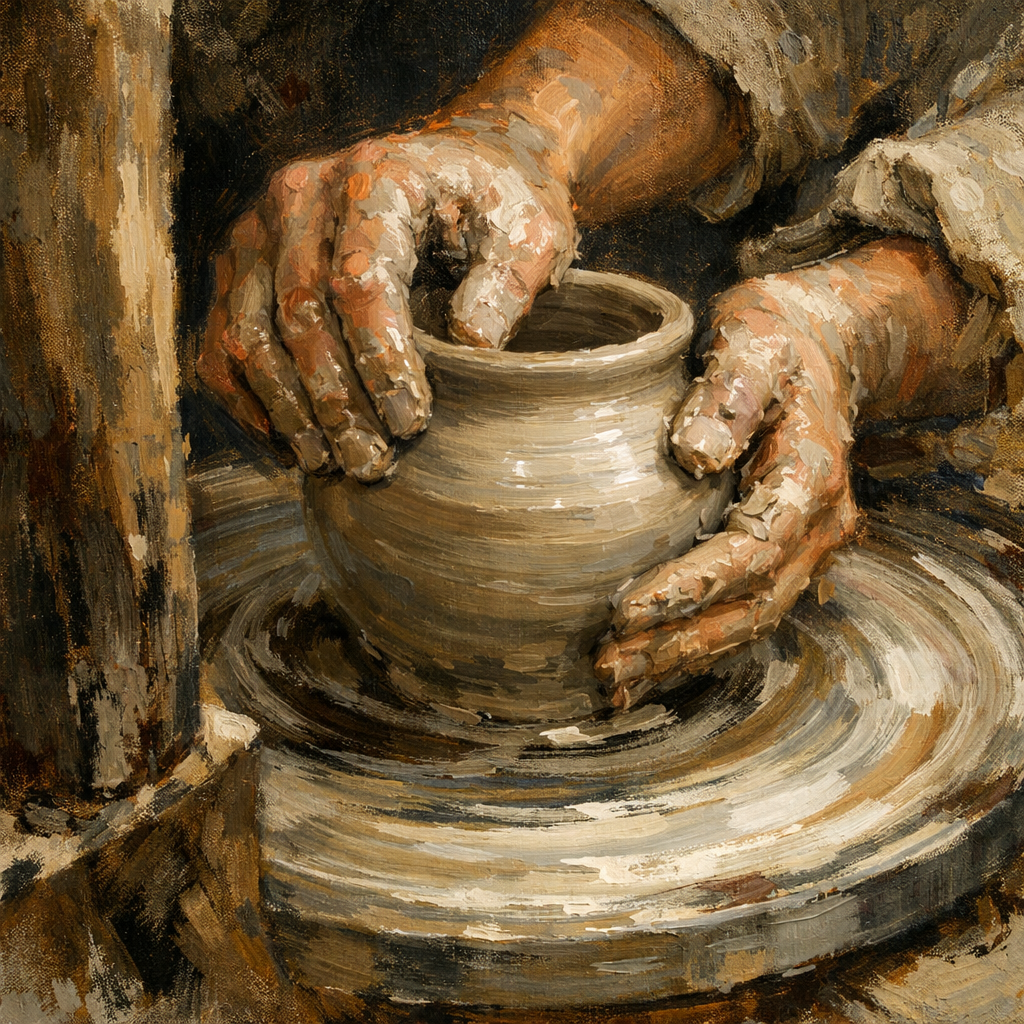
The Meditative Rhythm of the Wheel
Critique
1. Introduction This evocative oil painting explores the primal act of creation, focusing on a potter's hands molding a vessel on a spinning wheel. The work captures the tactile nature of the medium, emphasizing the physical connection between the artist and the earth. Through its expressive brushwork and earthy palette, the piece celebrates the ancient tradition of ceramics and the beauty found in utilitarian objects. 2. Description The composition centers on two clay-covered hands cradling a nascent pot. The vessel is smooth and reflective, showing marks of the artisan's fingers, while the potter's wheel below is a blur of circular motion rendered in thick strokes. Both hands and the forming pot are covered in wet grey clay that glistens under soft light. The background is dark and minimal, keeping attention fixed on the central act of shaping. 3. Analysis The artist utilizes heavy impasto to mimic the viscous texture of wet clay. The circular composition of the wheel creates a rhythmic movement radiating from the central focal point. A focused light source highlights the moist surfaces of the hands and pot, creating subtle gradations of tone that define their three-dimensional forms. The restricted earth-tone palette reinforces the connection to natural materials. 4. Interpretation and Evaluation The painting serves as a metaphor for the transformative power of human touch, turning raw earth into a functional object. The weathered hands suggest a history of labor and a deep understanding of the material. Technically, the rendering of wet surfaces and the motion of the wheel are highly successful. This piece effectively conveys the meditative nature of the pottery craft. 5. Conclusion What begins as a study of a physical process evolves into a celebration of the relationship between humanity and nature. The contrast between the rough paint and the emerging smoothness of the vessel creates a dynamic visual dialogue. This painting leaves a lasting impression of the focus required for such work, honoring the legacy of the potter's wheel.
Same Subcategory
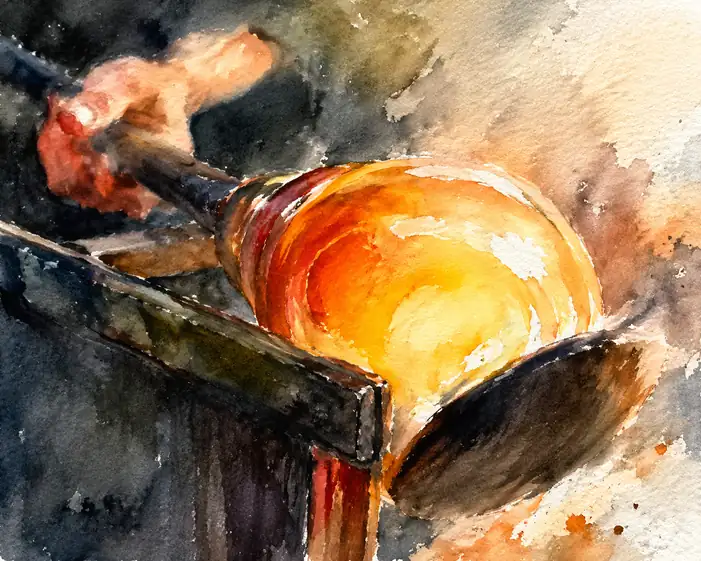 The Intense Heat of Creation
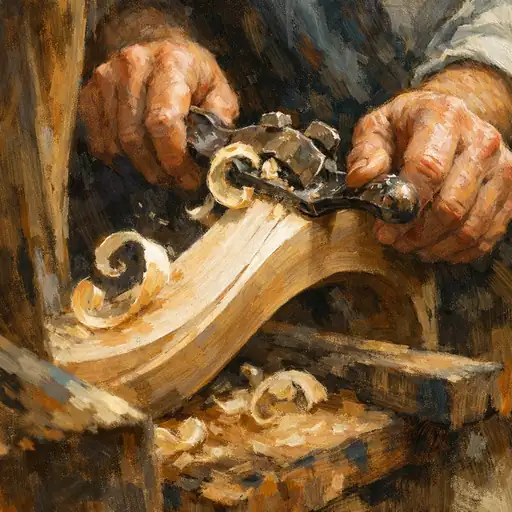 The Graceful Curve of Craftsmanship
Similar Artworks
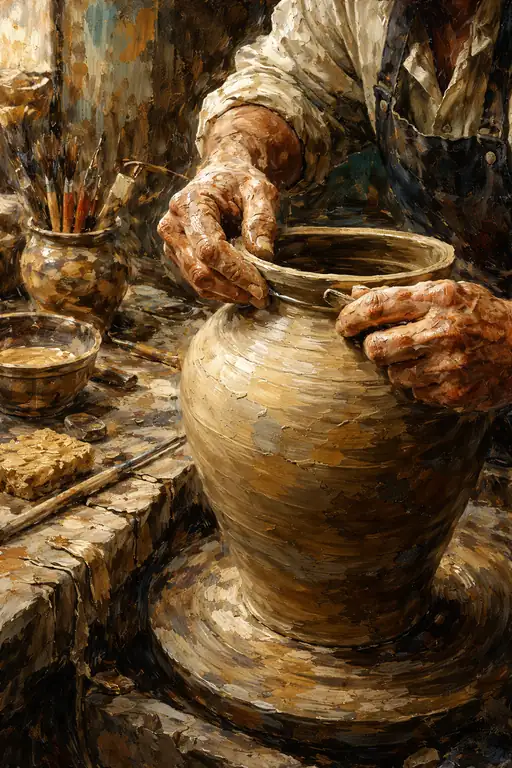 Hands of the Earth: A Silent Symphony of Clay
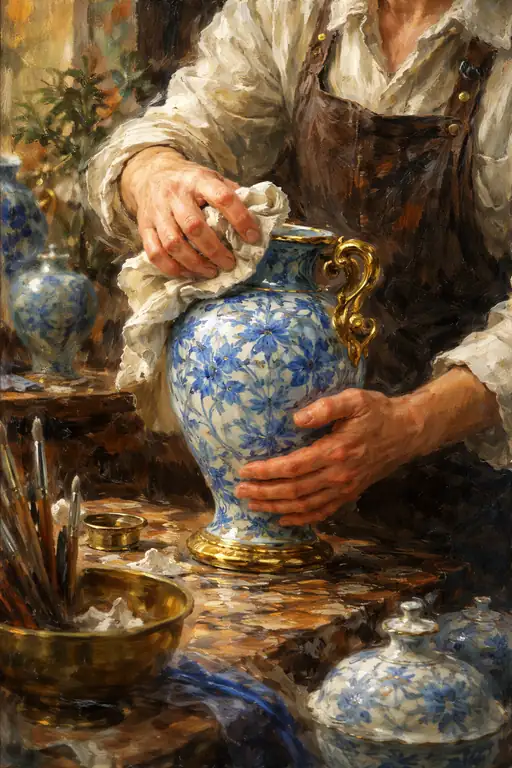 Gentle Hands of the Blue Heritage
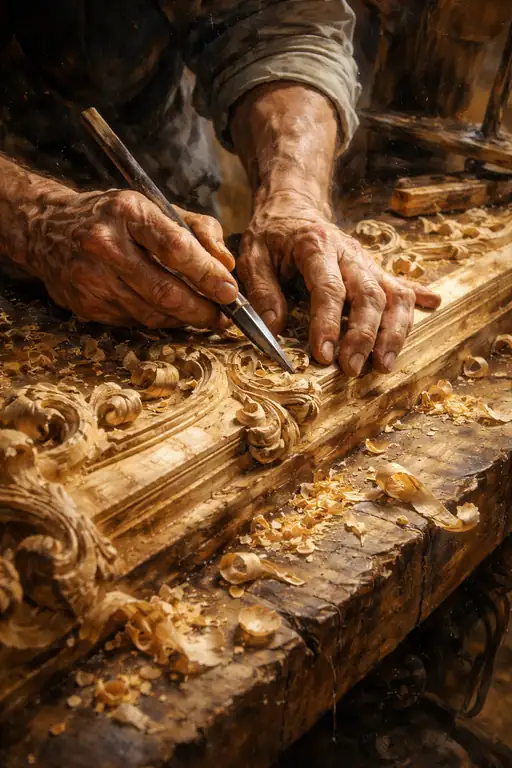 The Enduring Legacy of Woodcarving
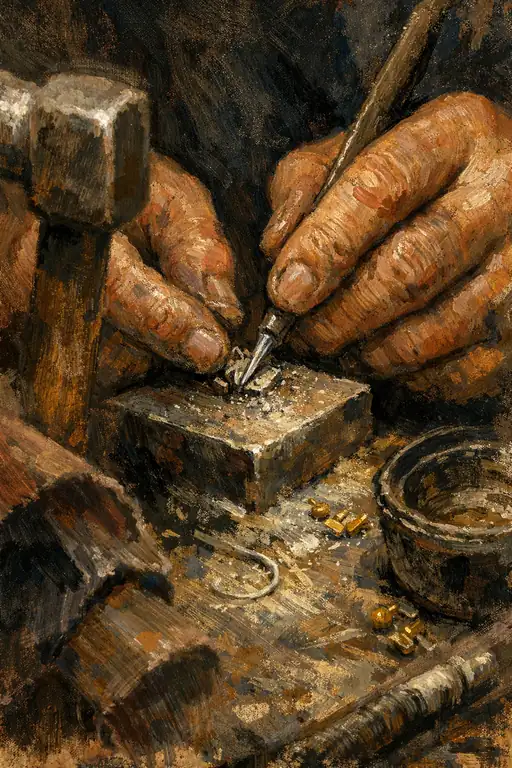 The Weight of Time in Calloused Hands
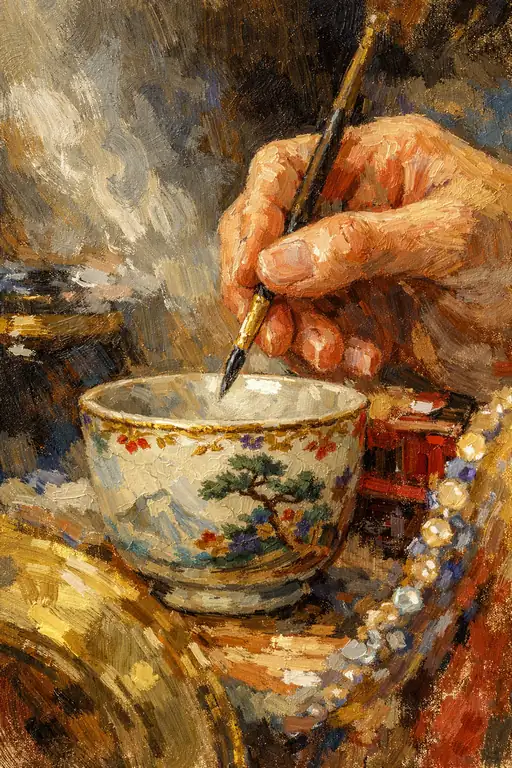 The Pulse of Creation
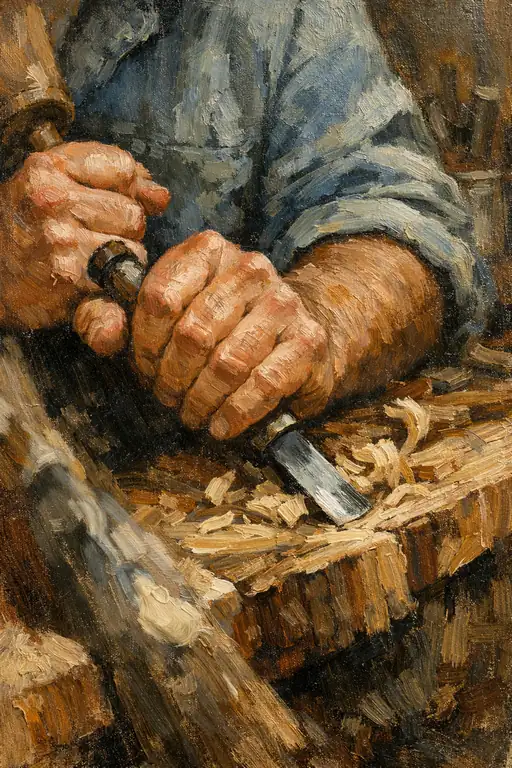 Carving Time with Weathered Hands
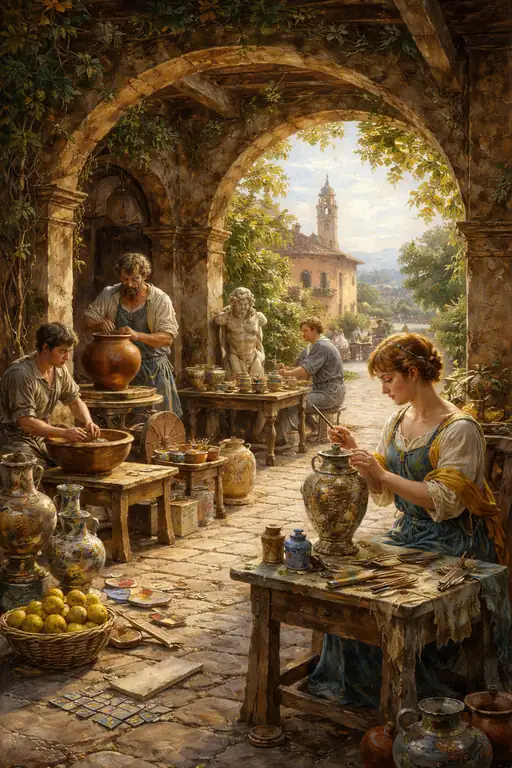 Sunlit Clay and the Artisan's Soul
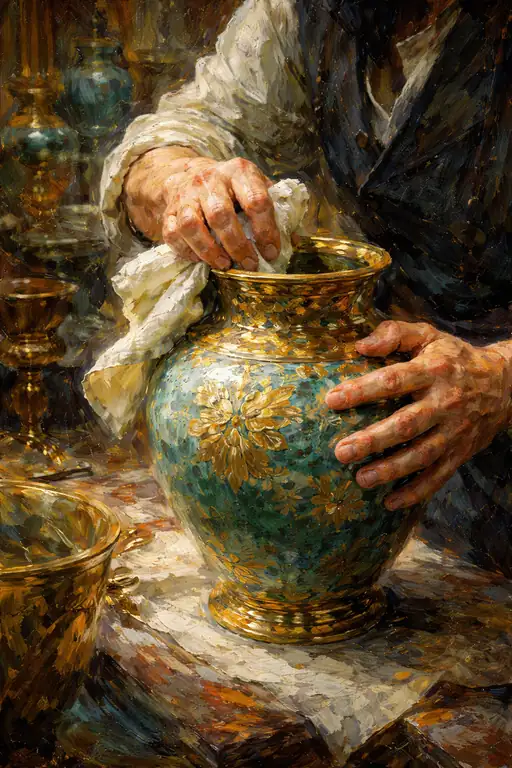 Polishing the Echoes of Time
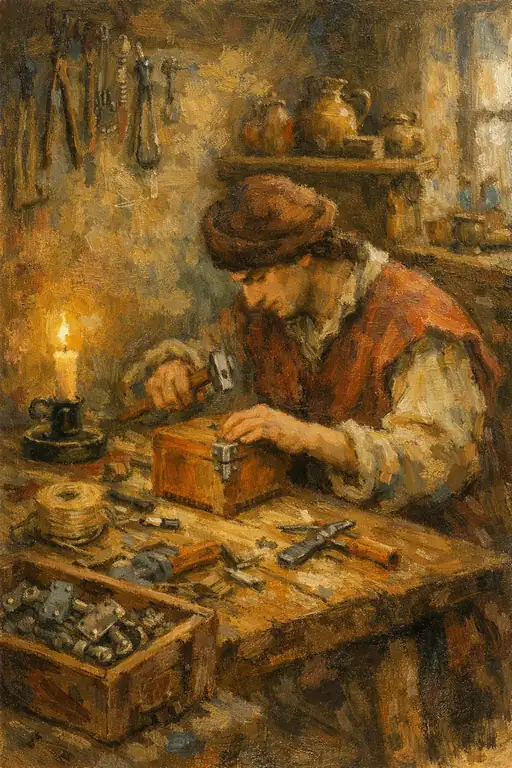 The Warmth of a Single Spark
 The Polished Pride: A Artisan's Touch