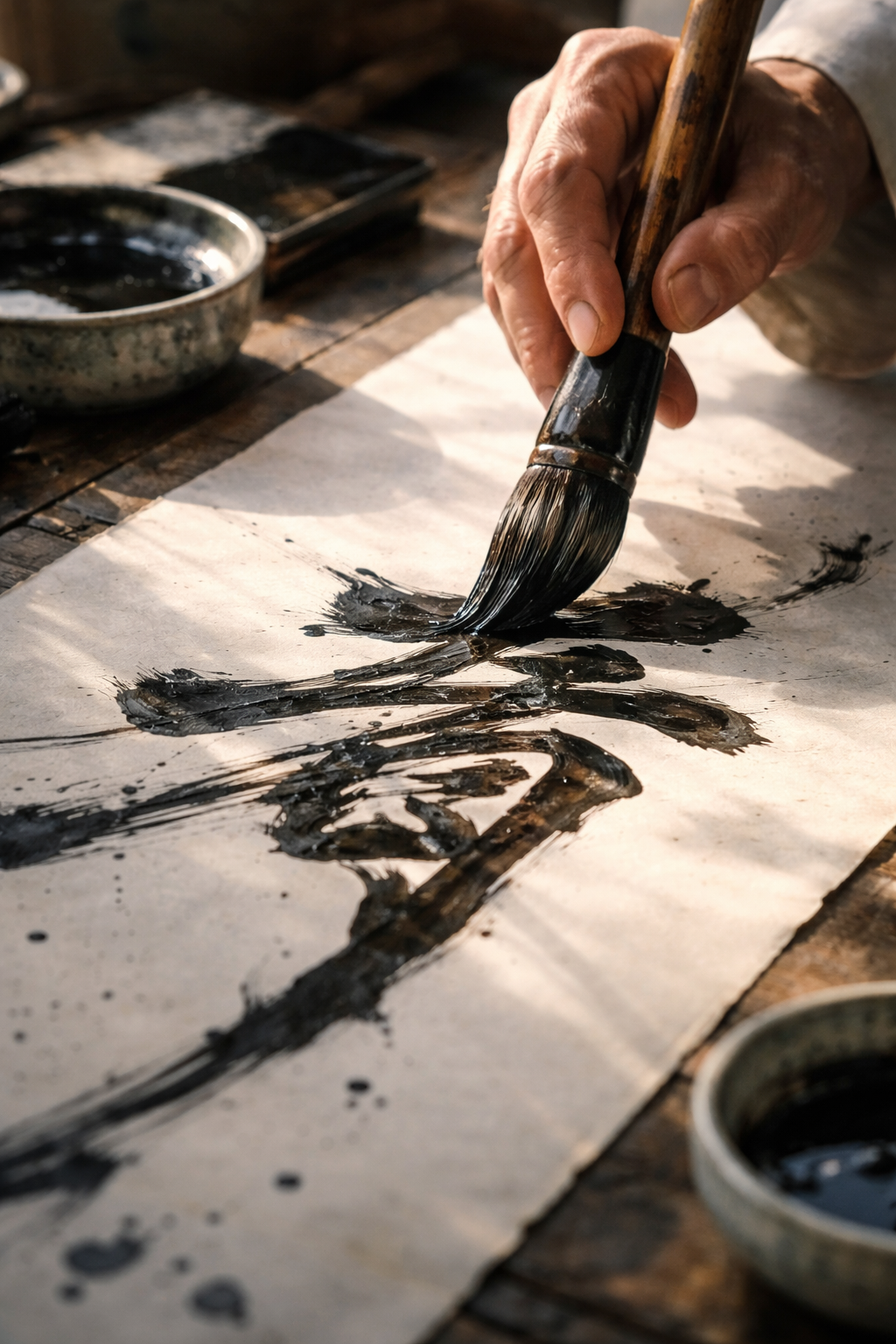
The Vigorous Stroke of Black Ink
Critique
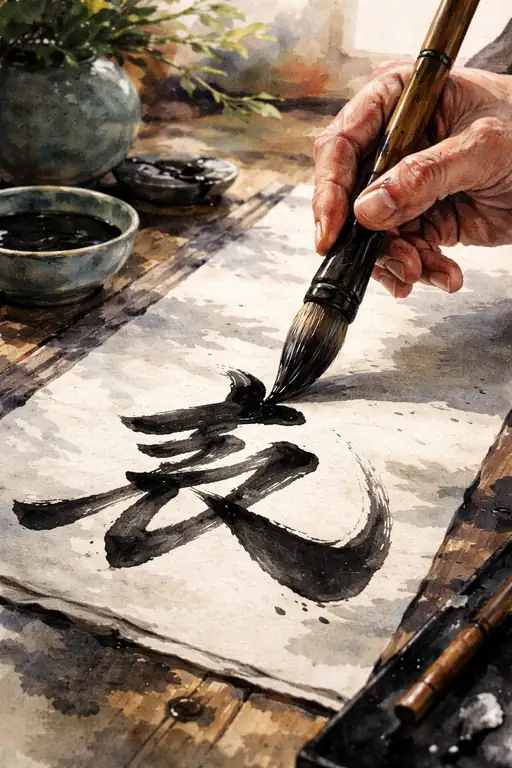
1. Introduction This oil painting captures a singular, dynamic moment where a brush laden with dark ink meets the surface of paper to forge a powerful calligraphic stroke. By rendering the act of traditional calligraphy through the medium of oil, the artist bridges the gap between two distinct artistic worlds, emphasizing the physical intensity and spiritual focus required for such an expressive act. The result is a work that pulsates with the raw energy of creation, inviting the viewer into the very heart of the process. 2. Description The composition features a weathered hand descending from the upper right, gripping an aged bamboo brush with practiced precision. As the bristles press against the textured cream-colored paper, a rich, glossy black ink spreads in a sweeping, fluid motion, creating a complex series of strokes. Tiny droplets of ink are scattered across the paper, evidence of the speed and force of the movement. In the periphery, rustic ceramic bowls of ink and the dark, grained wood of the table provide a grounded, domestic context for the artistic ritual. 3. Analysis The visual structure is organized around a strong diagonal axis formed by the brush and the primary ink stroke, which creates a sense of forward momentum. Soft side-lighting from the left accentuates the minute details of the hand’s anatomy and the delicate individual fibers of the brush. The color palette is strictly limited to shades of black, sepia, and warm skin tones, allowing the viewer to focus entirely on the interplay of texture and light. The contrast between the matte paper and the shimmering, wet ink is handled with exceptional technical skill. 4. Interpretation and Evaluation The painting can be interpreted as a meditation on the marriage between the artist’s intent and the physical medium. It successfully conveys the internal discipline and external explosiveness that define traditional ink-wash techniques. The work is highly commendable for its realism, which never feels clinical but rather serves to elevate the soul of the subject. The artist’s ability to render the fluidity of ink using the relative stillness of oil paint demonstrates a remarkable mastery of both style and substance. 5. Conclusion At first glance, the painting seems to be a straightforward documentation of an artisan at work, yet it gradually reveals itself as a profound exploration of the creative spark. It effectively reminds the audience of the human element behind every brushstroke and the transformative power of focused expression. Ultimately, the work stands as a testament to the enduring beauty of traditional practices, leaving a lasting impression of vitality and reverence.
Same Subcategory
Similar Artworks
 The Gestural Echo of a Fleeting Moment
 Tears of the Bamboo Grove
 A Timeless Harmony in Monochrome
 The Silent Pour of Meditations
 The Soul's Imprint: A Breath in Black Ink
 Dance of Ink and Mist
 Fleeting Elegance: A Sip of Golden Serenity
 Contemplation Beneath the Spring Petals
 Whispers of the Golden Sun
 Symphony of the Golden Ginkgo