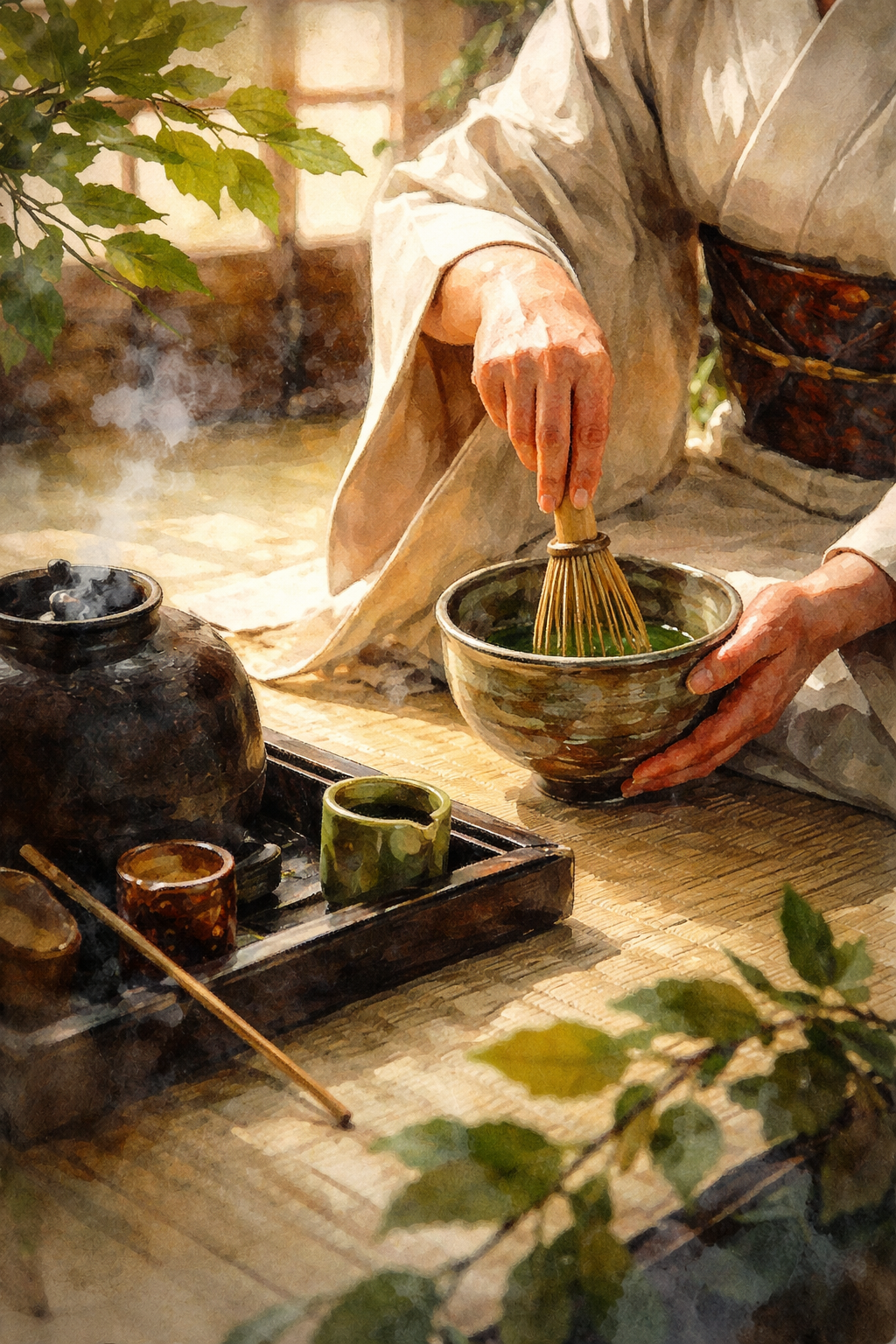
The Meditative Flow of Matcha
Critique
1. Introduction This watercolor painting depicts a moment of profound serenity during a Japanese tea ceremony, capturing the essence of spiritual discipline and hospitality. Through a delicate interplay of light and soft washes, the artist renders the ritualistic preparation of matcha, evoking a sense of timeless grace. The work transcends mere cultural documentation, offering a sensory experience that invites the viewer to share in the warmth and focused tranquility of the tea room. 2. Description The composition centers on the hands of a figure dressed in a pristine white kimono, carefully whisking vibrant green tea in a rustic ceramic bowl. To the left, a dark, heavy iron kettle rests on a wooden tray, with wisps of white steam curling into the soft light. The foreground and background are framed by lush green leaves, suggesting an outdoor or garden setting nearby. The tactile surface of the tatami mat is suggested through subtle repetitive strokes, anchoring the scene in a traditional architectural space. 3. Analysis The visual structure is defined by a stable triangular arrangement that prioritizes the delicate movements of the hands. Soft light filters from the background, creating gentle gradations on the fabric and highlighting the frothy texture of the tea. The artist shows exceptional command of watercolor techniques, utilizing wet-on-dry applications for sharp details of the utensils and broad, atmospheric washes for the diffused steam. The color story is one of natural harmony, contrasting the stark white of the garment with the deep, organic tones of the earth and the brilliant emerald of the tea. 4. Interpretation and Evaluation This work can be interpreted as an exploration of the "ichi-go ichi-e" philosophy, celebrating the unique beauty of a single encounter. It successfully balances the solidity of the tea equipment with the ethereal nature of the rising steam, creating a dynamic visual tension. The artist’s ability to convey both physical texture and a meditative atmosphere is commendable. The painting stands as a sophisticated representational piece, blending rigorous observation with a poetic sensibility that elevates the everyday act of tea preparation into a sacred art form. 5. Conclusion Upon initial inspection, the painting offers a glimpse into a refined tradition, but further contemplation reveals a spiritual depth that resonates with themes of peace and presence. It effectively captures the invisible energy of the ceremony, making the intangible elements of warmth and silence palpable. Ultimately, the bowl of tea becomes a focal point for unity and reflection, leaving a lasting impression of cultural richness and aesthetic harmony as a luminous vessel of cultural heritage.
Same Subcategory
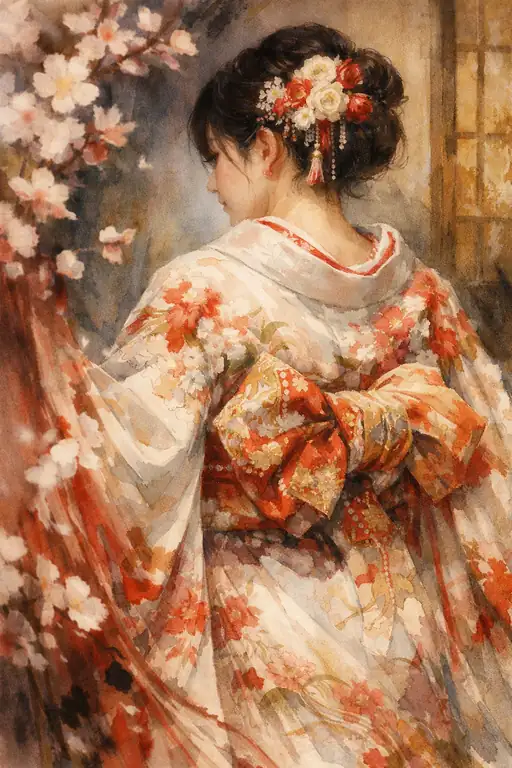 Whispers of the Spring Breeze
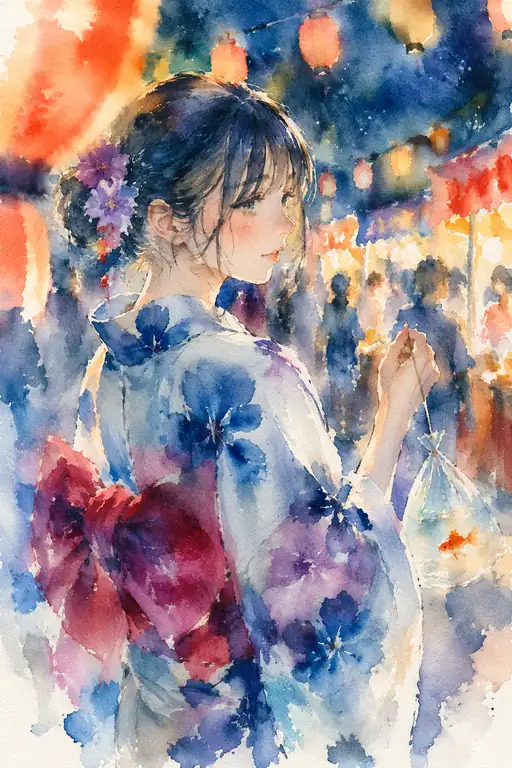 Flickering Memories of a Summer Festival
Similar Artworks
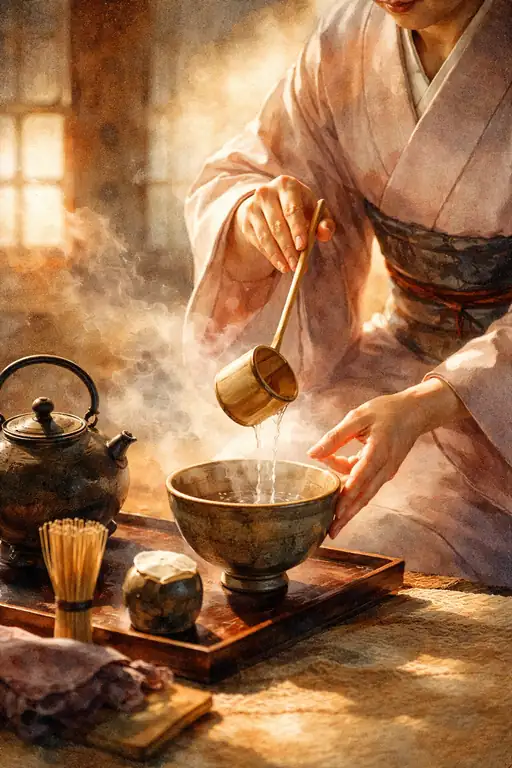 Fleeting Elegance: A Sip of Golden Serenity
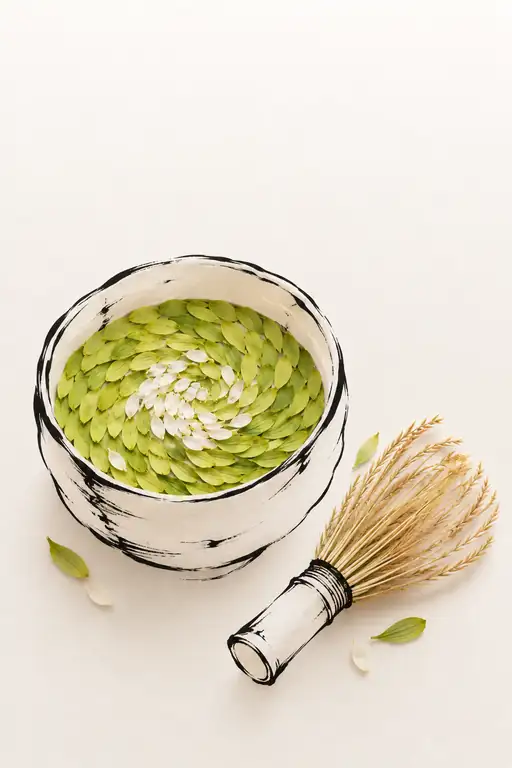 Where Quiet Turns Green
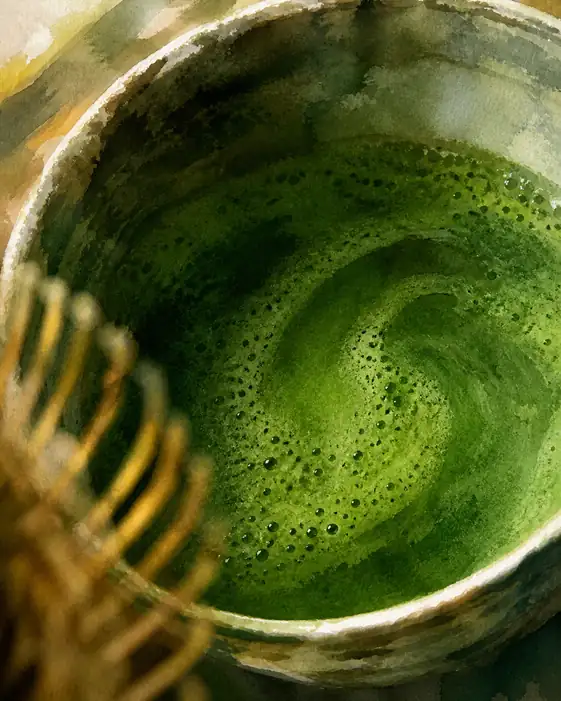 Where the Heart Rests in Green
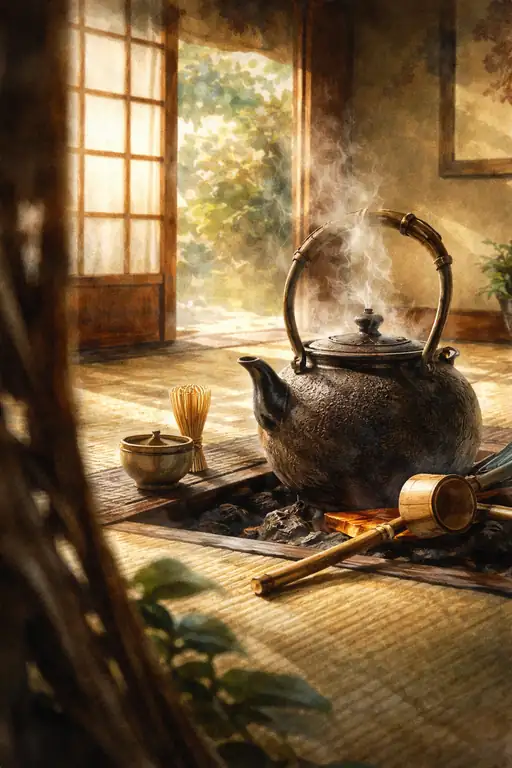 Whispers of the Boiling Kettle
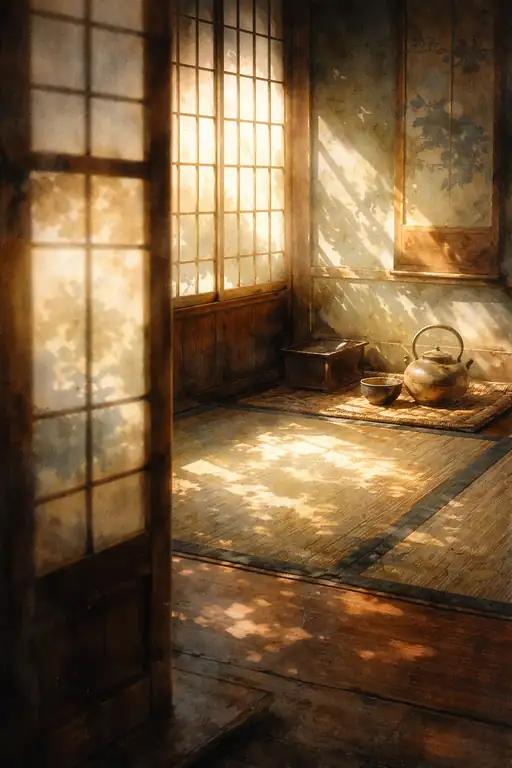 Shadows Dancing on Tatami
 Silent Verdure
 A Green Pause Before the Day
 The Green Whisper of the Veranda
 Stillness of the Tea Room
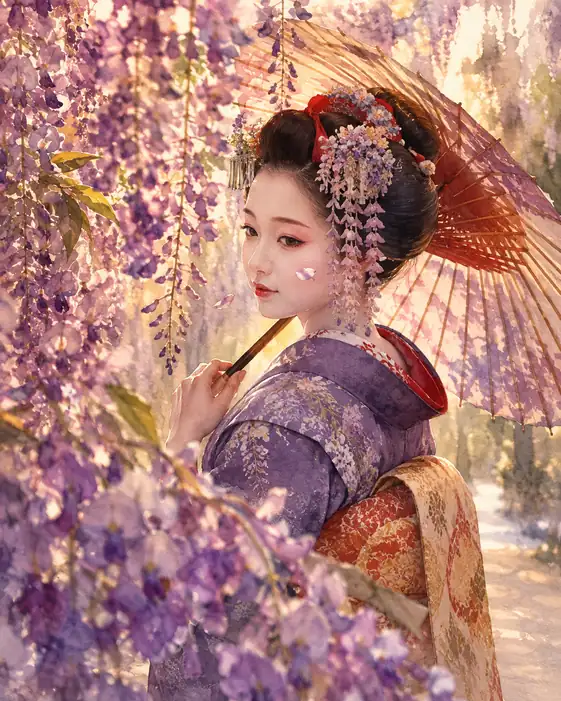 Graceful Glance Beneath Cascading Wisteria