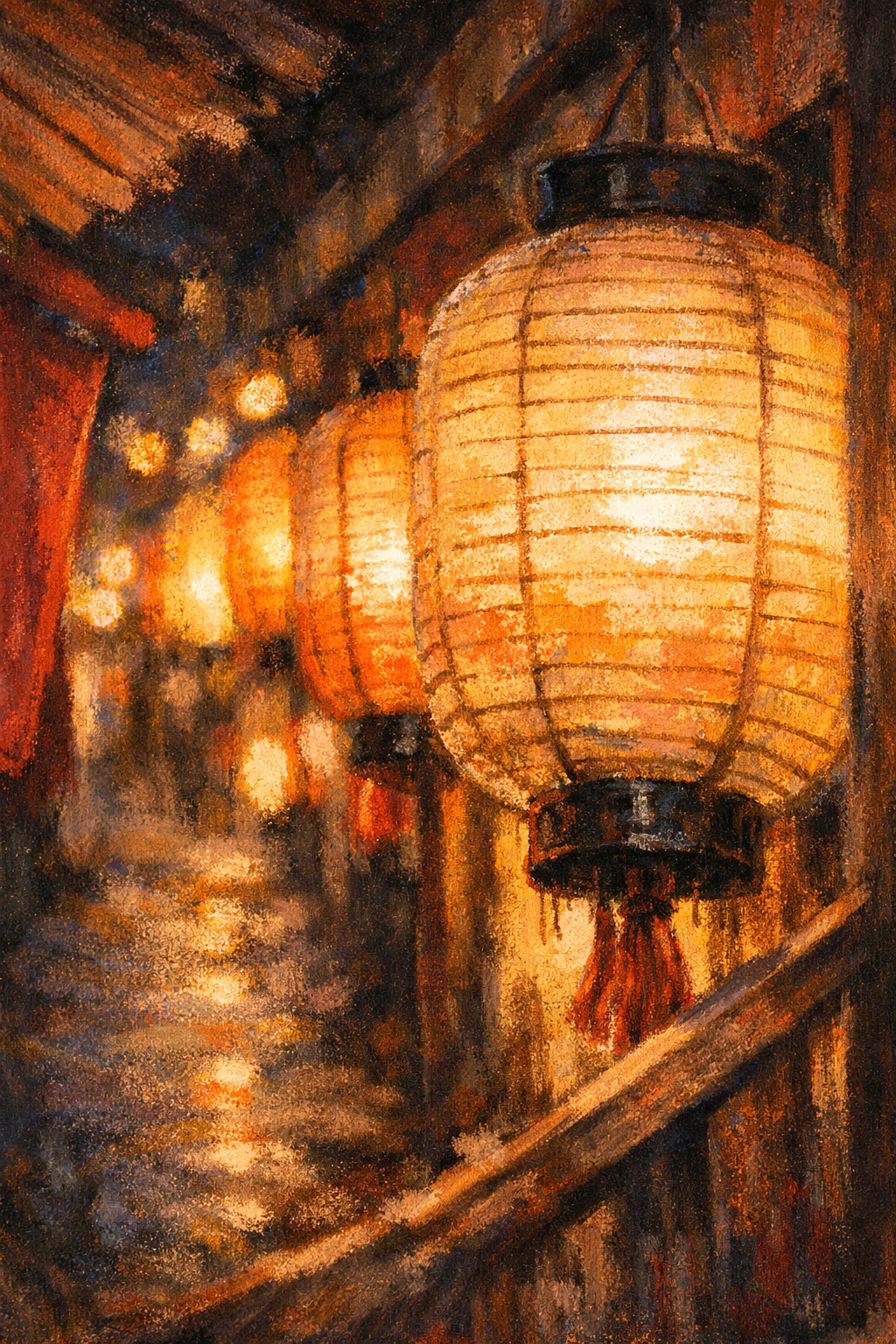
Warm Glowing Alley Paper Lantern
Critique
1. Introduction The artwork is a evocative oil painting focusing on traditional Japanese paper lanterns, known as chouchin, capturing the dramatic interplay between warm light and encroaching shadows in a nighttime setting. Dominating the right foreground is a large, meticulously detailed lantern whose internal glow illuminates the surrounding space with a rich, inviting atmosphere. By utilizing a heavy impasto technique, the artist successfully translates the materiality of paper and bamboo into a tangible visual experience. This critique explores the nostalgic formal elements and the profound sense of warmth conveyed through this masterfully executed piece. 2. Description The primary subject is a large lantern, featuring a rhythmic pattern of bamboo rings and the textured, golden-hued surface of traditional washi paper. Below the main body, a red tassel and dark lacquer finish add a touch of color and weight to the structure. In the background, a series of glowing lanterns recedes into the distance, reflecting off what appears to be a rain-slicked cobblestone street. The brushwork is incredibly bold, with physical ridges of paint catching the light and creating a sense of shimmering movement, as if the light itself is vibrating within the air. 3. Analysis The color palette is composed of intense golds, oranges, and deep ambers, creating a warm, monochromatic harmony that contrasts sharply with the dark browns of the shadows. This high-contrast approach provides the image with significant depth and visual impact. The diagonal composition, leading from the prominent lantern in the foreground toward the vanishing point in the upper left, effectively communicates a sense of spatial perspective. The handling of light involves both direct radiance and subtle reflections, emphasizing the three-dimensional form of the lantern and the atmospheric depth of the alleyway. 4. Interpretation and Evaluation This work can be interpreted as a study in the "aesthetics of shadows," reimagining Japanese traditional beauty through the lens of Western oil techniques. By elevating a common street lantern into a majestic, glowing object of contemplation, the artist finds holiness within everyday life. The technical execution is exceptional, particularly in representing the saturated glow of light filtered through paper. The original perspective on traditional motifs results in a high-quality composition that successfully resonates with memory and desire, offering the viewer a deep sense of cultural appreciation and refined tranquility. 5. Conclusion While initially striking for its brilliant golden surfaces, closer observation reveals a meticulous orchestration of shadow and a profound command of the medium. The harmony between the physical weight of the paint and the ethereal quality of the light ensures the work remains dynamic rather than purely illustrative. The individual brushstrokes breathe life into the scene, making the simple subject feel monumental and significant. Ultimately, the painting succeeds in capturing a moment of serene brilliance, standing as a highly accomplished work that honors traditional crafts while demonstrating contemporary artistic excellence.
Same Subcategory
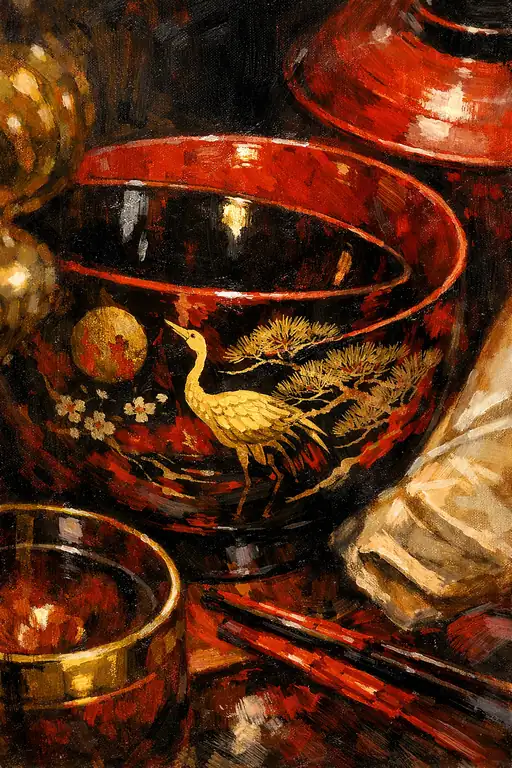 Golden Grace of the Crane's Flight
Similar Artworks
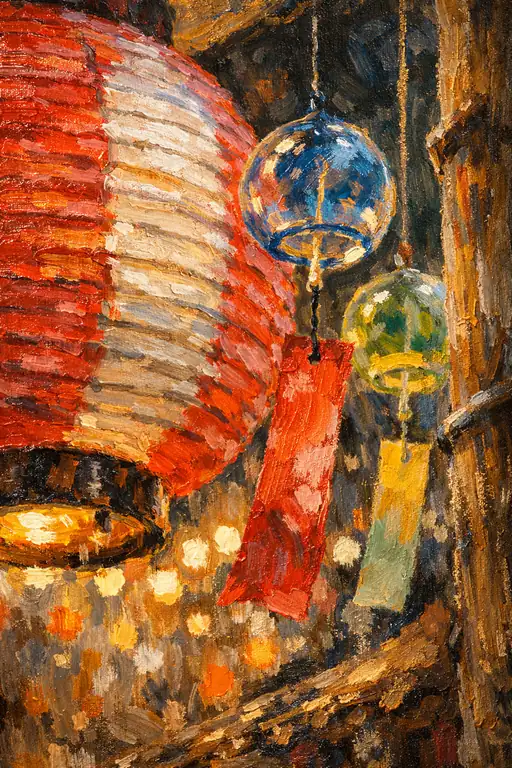 Whispers of the Golden Sun
 Dancing Ripples in the Sunlit Garden: A Koi's Peaceful Journey
 Raindrop on a Traditional Glass Wind Chime
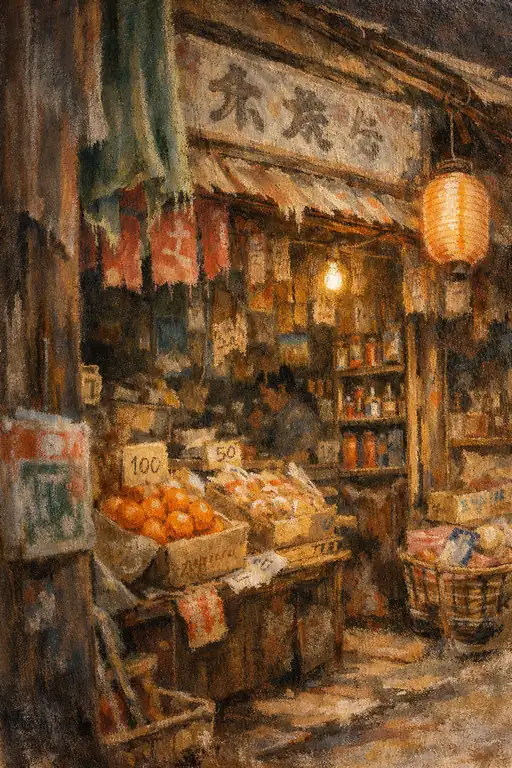 Nostalgia under the Lantern Glow
 Dance of the Crimson Phoenix
 Illuminated Solitude: The Crimson Glow of a Nostalgic Night
 Memories in the Lantern Light
 Echoes of Playtime Past
 Nostalgia in the Amber Glow
 Warmth of the Midnight Springs